
 Save 15% on your 1st Autoship learn more

 Email us
 Live Chat
 FAQs
FAQs





Introduction
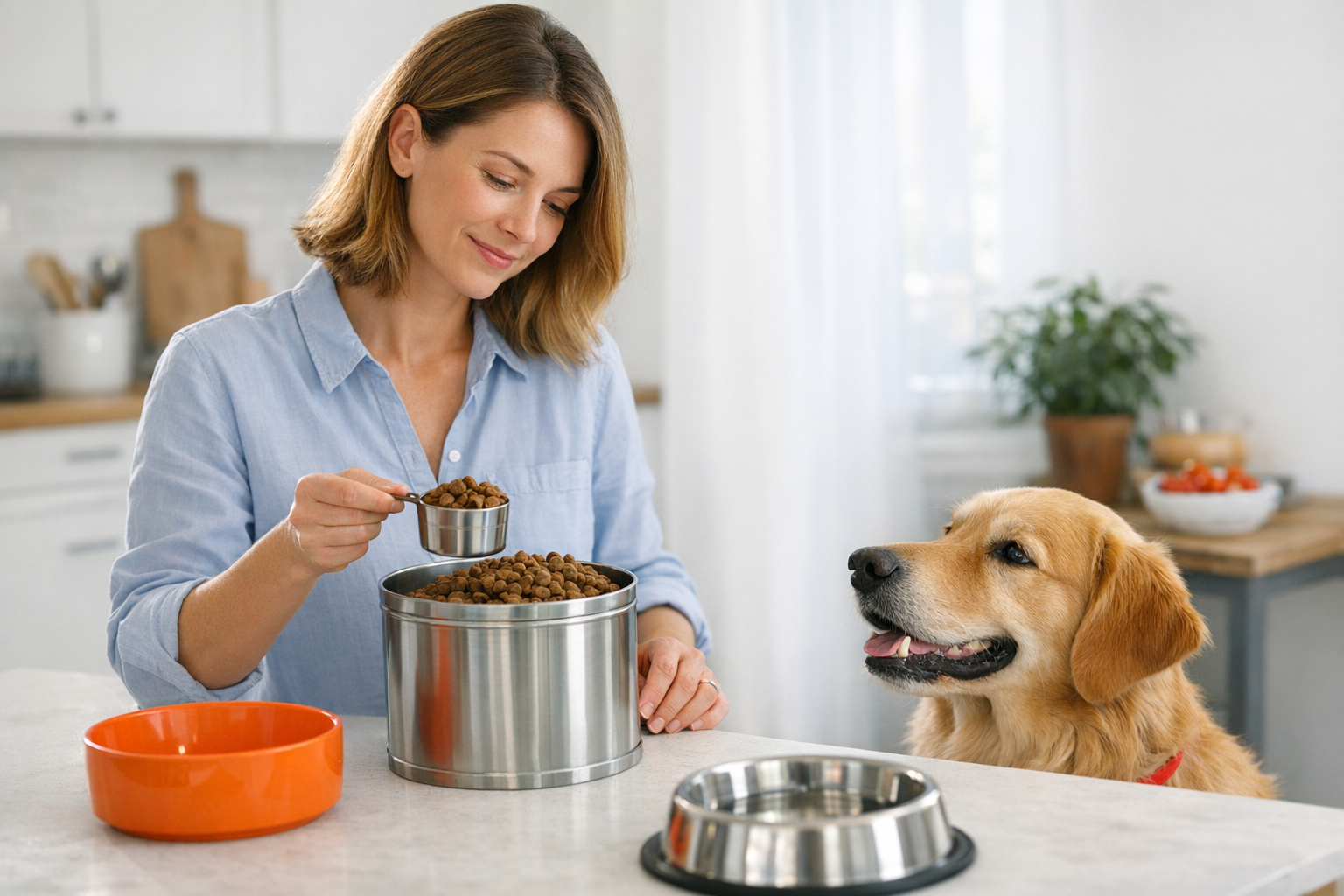
You are standing in your kitchen with a scoop in one hand and your dog watching your every move. You look at the back of the heavy kibble bag and see a chart with wide ranges. It suggests a certain amount for a fifty pound dog, but your dog is exactly fifty pounds and seems either too thin or a bit too round. This moment of uncertainty is common for every pet owner. At BaxterBoo, we know that feeding your dog is not just a chore but a foundational part of their health. This guide will help you move past the guesswork of the measuring cup. We will cover how age, activity, and health change your dog's caloric needs. You will learn how to read food labels and adjust portions for your dog's specific lifestyle.
Quick Answer: The amount of dry food your dog needs depends on their weight, age, activity level, and the specific calorie count of the kibble. Start with the feeding guide on the bag and adjust by ten percent based on whether your dog is gaining or losing weight. Always consult your veterinarian to determine your dog's ideal body condition score.
The Core Factors of Canine Nutrition
Feeding your dog is not a one size fits all calculation. Several biological and lifestyle factors determine how much energy your dog burns each day. If you feed a high energy Border Collie the same amount as a sleepy Bulldog of the same weight, one will starve while the other gains weight. Understanding these variables is the first step in mastering portion control.
Age and Life Stage
Puppies are growing machines. They require significantly more calories per pound of body weight than adult dogs. This is because they are building bone, muscle, and organ tissue at a rapid rate. Adult dogs usually need a maintenance level of calories. Senior dogs often experience a slowing metabolism. They may also become less active due to joint stiffness or lower energy.
Activity Level
A dog that walks three miles a day has different needs than a dog that only goes into the backyard for quick breaks. Working dogs or canine athletes require calorie dense formulas and larger portions. If your dog spends most of the day napping on the sofa, they are considered sedentary. These dogs can easily become overweight if their portions are not strictly managed.
Metabolism and Breed
Some breeds are known as easy keepers. This means they gain weight very easily. Breeds like Labradors, Beagles, and Pugs often have slower metabolisms. Other breeds like Greyhounds or many small terriers have very high metabolic rates. They may need more food than you expect to maintain a healthy weight.
Spay and Neuter Status
Research shows that spaying or neutering a dog can lower their metabolic rate. Once a dog is fixed, their energy requirements can drop by as much as twenty percent. If you do not adjust their food intake after surgery, they are at a much higher risk for obesity.
Key Takeaway: Every dog is an individual. Use the bag's feeding chart as a starting point, but always adjust based on your dog's specific energy output and metabolic rate.
Reading the Feeding Chart on the Bag
Every bag of dry dog food must include a feeding guide. However, these charts are often based on un-neutered, active adult dogs. This can lead to overfeeding for the average house pet.
When you look at a brand like NutriSource or Acana, you will see a table. This table usually lists the dog's weight on one side and the daily total of cups on the other. It is vital to remember that this number is the total for the whole day. If the bag says two cups and you feed twice a day, you should give one cup in the morning and one at night.
Different brands have different caloric densities. One cup of a high protein food like Stella and Chewy's might have 450 calories. A weight management formula might only have 300 calories per cup. This is why you must re-evaluate the portion size every time you switch brands or formulas.
Checklist for Evaluating a Feeding Chart:
- Find your dog's ideal weight, not their current weight.
- Check the calorie count per cup (kcal/cup) listed on the bag.
- Identify if the chart is for puppies, adults, or seniors.
- Note if the amounts are for active or inactive dogs.
- Divide the daily total into the number of meals you plan to provide.
Portions for Puppies
Puppies require a specialized feeding schedule to support their development. Because their stomachs are small but their energy needs are high, they usually need to eat more frequently.
For the first six months, most puppies do well with three or four meals per day. This helps keep their blood sugar stable. As they approach one year of age, you can usually transition to two meals a day. Large breed puppies are a special case. They must grow slowly to avoid joint issues. Feeding a large breed puppy formula from brands like Royal Canin or Open Farm helps control their growth rate.
Transitioning Your Puppy to Adult Portions
Step 1: Determine when your dog reaches maturity. This is usually 12 months for small dogs and up to 24 months for giant breeds. Step 2: Slowly decrease the frequency of meals from three to two. Step 3: Gradually mix in adult dry food over seven to ten days. Step 4: Monitor their weight closely during this transition.
Vet Tip: Puppies are prone to skeletal issues if they grow too fast. Always use a measuring cup to ensure you are not accidentally overfeeding during their peak growth months. Talk to your vet about the right time to switch to adult kibble.
Managing the Senior Dog's Diet
As dogs age, their bodies change. A senior dog might not burn calories as efficiently as they once did. Many seniors also develop conditions like arthritis. This makes them less likely to run and play.
Overweight senior dogs face much higher risks of joint pain and heart disease. At this stage, you may need to reduce their dry food portion by ten to fifteen percent. Alternatively, you can switch to a senior specific formula. These foods often have fewer calories but more fiber to help the dog feel full. Brands like Royal Canin offer excellent options for older dogs that need balanced nutrition without excess calories.
The Role of Health and Prescription Diets
Sometimes a standard dry food is not enough. If your dog has a chronic health condition, their feeding requirements will change. Dogs with kidney disease, diabetes, or severe allergies often require prescription diets.
Our pharmacy carries FDA approved medications and prescription pet foods through our partnership with Pet's Choice. If your veterinarian prescribes a specific diet like Farmina Vet Life or Royal Canin Veterinary Diet, we can help fulfill that need. These foods are precisely formulated to manage specific symptoms. In these cases, your veterinarian will provide a very specific feeding amount. It is critical to follow their dosing instructions exactly. Do not add toppers or treats unless your vet approves them.
Note: Prescription diets are medical tools. If your dog is struggling with chronic allergies or weight issues that do not respond to portion changes, a veterinary consultation is the best next step.
How to Tell if Your Dog is at a Healthy Weight
The scale is helpful, but it does not tell the whole story. Muscle weighs more than fat. A very muscular dog might be heavy on the scale but lean in person. You should use a body condition assessment at home every month.
The Rib Test
Place your hands on your dog's ribcage. You should be able to feel the ribs easily with a light touch. They should feel like the knuckles on the back of your hand when your hand is flat. If you have to press hard to find the ribs, your dog is likely carrying too much weight. If the ribs are visible and poking out sharply, your dog may be underweight.
The Waistline View
Look at your dog from above. They should have a visible tuck behind the ribs. This is their waist. If they look like a solid rectangle or an oval from above, they are likely overweight. From the side, their belly should slant upward toward their back legs.
Bottom line: Visual and physical checks are more accurate than the scale for determining if your portion sizes are correct.
Measuring Tools and Techniques
Many owners use a random coffee mug or a plastic scoop to dish out kibble. This is a common mistake. A standard measuring cup is the only way to be precise. Even a small overage of a quarter cup per day can lead to significant weight gain over a year.
If you have a very small dog, even a tiny change matters. For a ten pound dog, an extra twenty calories is a large percentage of their daily intake. Consider using a digital kitchen scale to weigh the dry food in grams. This is the most accurate method used by professional trainers and veterinarians.
Incorporating Treats into the Total
Treats are a great way to bond, but they have calories too. Treats should never make up more than ten percent of your dog's daily caloric intake. If you give a lot of treats during training, you must reduce the amount of dry food you put in their bowl that evening.
- Use small, low calorie treats like Zesty Paws or broken pieces of kibble for training.
- Subtract the caloric value of treats from the daily meal total.
- Avoid high fat table scraps which can cause digestive upset or pancreatitis.
Setting a Consistent Feeding Schedule
Dogs thrive on routine. Feeding your dog at the same time every day helps regulate their digestion. It also makes house training easier because their elimination schedule will become predictable.
Most adult dogs do best with two meals a day. This prevents the stomach from being empty for too long, which can lead to bile vomiting or hunger induced anxiety. For dogs that eat too fast, consider using a slow feeder bowl or a puzzle toy. These tools force the dog to work for their food. This provides mental stimulation and prevents choking or bloat.
We offer a wide variety of puzzle toys and slow feeders at BaxterBoo to help with mealtime management. Using these tools can turn a thirty second meal into a ten minute enrichment activity.
Common Feeding Mistakes to Avoid
Even well meaning owners can fall into bad habits. One of the most common mistakes is free feeding. This is when you leave a large bowl of food out all day for the dog to graze on. Free feeding makes it impossible to track exactly how much your dog is eating. It can also lead to resource guarding in multi-dog households.
Another mistake is using the wrong life stage food. Feeding puppy food to an adult dog will lead to rapid weight gain. Feeding adult food to a puppy can cause nutritional deficiencies. Always ensure the food matches your dog's current age.
Finally, do not forget to account for toppers. If you add a spoonful of wet food or a splash of goat milk to the dry kibble, those calories count. Adjust the dry portion accordingly to keep the total energy intake stable.
Adjusting for Seasonal Changes
Your dog's needs may change with the weather. In the winter, a dog that spends a lot of time outside may burn more calories just to stay warm. In the summer, many dogs become less active because of the heat. They may spend more time sleeping in the air conditioning.
Pay attention to your dog's energy levels as the seasons shift. You might find that you need to add a little more food in the fall and pull back in the spring. Monitoring their body condition throughout the year ensures they stay at their ideal weight regardless of the temperature.
Transitioning Between Foods
If you decide to change your dog's dry food, do it slowly. A sudden change can cause diarrhea or vomiting. This is because the gut bacteria need time to adjust to new ingredients and protein levels.
Step 1: Days one and two: Feed 75 percent old food and 25 percent new food. Step 2: Days three and four: Feed 50 percent old food and 50 percent new food. Step 3: Days five and six: Feed 25 percent old food and 75 percent new food. Step 4: Day seven: Feed 100 percent new food.
During this week, watch your dog's stool consistency. If it becomes loose, slow down the transition. Once they are fully on the new food, wait at least four weeks before deciding if the portion size is correct. It takes time for the body to show changes in weight or coat quality.
Conclusion
Determining how much dry food to give your dog is a continuous process. You start with the guidelines on the bag, but you finish with careful observation. By monitoring your dog's ribs, waistline, and energy levels, you can find the perfect balance. Remember to account for treats and seasonal changes. If your dog has special medical needs, our pharmacy is a great resource for prescription diets. We invite you to explore our selection of premium dry foods and take advantage of our Autoship programme to save on every order. Staying consistent with high quality nutrition is the best gift you can give your pet.
Bottom line: Use the bag's chart as a baseline, but use your dog's body condition as the ultimate guide for portion adjustments.
FAQ
How many cups of food should I feed my 50 pound dog?
A 50 pound adult dog typically needs between two and three cups of dry food per day. This depends entirely on the calorie density of the specific brand you are using. Always check the kcal per cup listed on your bag and adjust based on your dog's daily exercise.
Can I just leave food out for my dog to eat whenever they want?
Free feeding is generally discouraged because it often leads to obesity. It also makes it harder to notice if your dog has lost their appetite, which is often an early sign of illness. Scheduled mealtimes are better for weight management and establishing a healthy routine.
What should I do if my dog is always acting hungry?
If your dog is at a healthy weight but acts hungry, try adding low calorie fillers like green beans or plain canned pumpkin to their meal. You should also ensure you are feeding a high quality food with adequate fiber. If the hunger is sudden and intense, consult your vet to rule out metabolic issues like diabetes or parasites.
How do I know if the dry food I am feeding is high quality?
Look for a food that lists a specific animal protein like chicken or beef as the first ingredient. High quality brands carried at BaxterBoo, such as Stella and Chewy's or Open Farm, avoid generic meat meals and artificial fillers. A good food will also have a statement from the Association of American Feed Control Officials (AAFCO) confirming it is complete and balanced.






