
 Save 15% on your 1st Autoship learn more

 Email us
 Live Chat
 FAQs
FAQs





Introduction
You are relaxing on the sofa when you run your hand down your dog's side and feel a hard, tight knot nestled right against the skin. That moment of realization usually comes with a bit of guilt. You wonder if you should have pulled the brush out yesterday or perhaps the day before. At BaxterBoo, we talk to pet owners every day who are trying to balance a busy schedule with the grooming needs of their furry companions. Knowing exactly how often to brush depends entirely on your dog's specific coat type, lifestyle, and even the time of year. This article covers the ideal frequency for coat maintenance and dental hygiene to keep your pet comfortable and healthy. Our goal is to help you build a routine that prevents painful matting and supports long term wellness.
Quick Answer: Most dogs benefit from being brushed two to three times per week to remove loose fur and distribute skin oils. However, long haired or curly breeds often require daily brushing to prevent mats, while short haired dogs may only need a weekly session.
Understanding the Needs of Different Coat Types
The most important factor in your grooming schedule is the type of hair your dog grows. A Doberman and a Poodle have vastly different requirements because their fur behaves differently when it sheds. While all dogs shed to some degree, the way that dead hair leaves the body determines how often you must intervene with a brush.
For dogs with very short, smooth coats like Boxers or Great Danes, brushing is less about preventing tangles and more about skin health. These dogs still lose hair, but it falls away easily. Brushing them once a week is usually sufficient. This helps to remove dander and spread natural oils across the skin, which gives them that signature healthy shine.
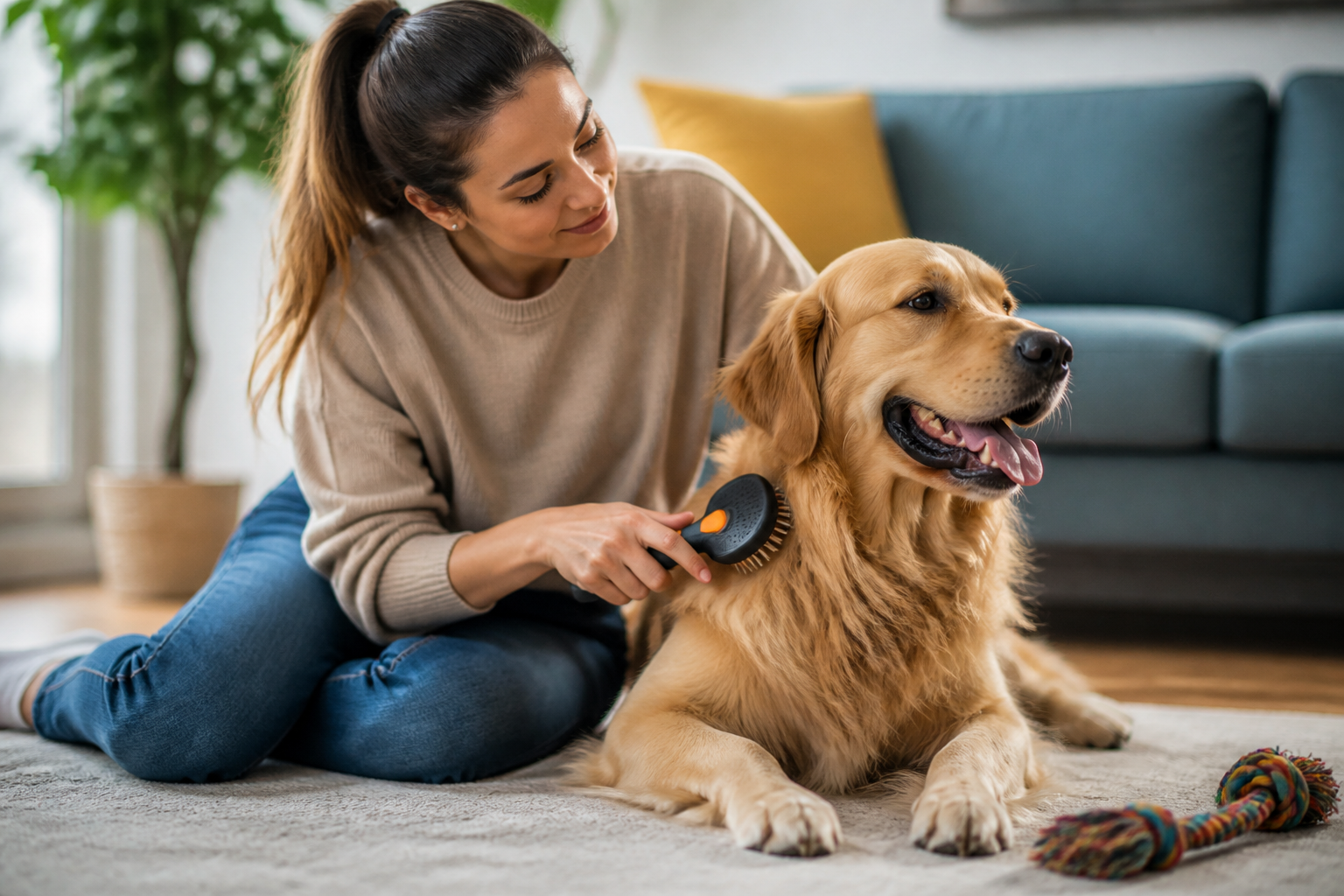
If you have a dog with a double coat, such as a Siberian Husky, a Labrador, or a Golden Retriever, your schedule will change with the seasons. These dogs have a soft undercoat for insulation and a tougher outer coat for protection. During the heavy shedding seasons in the spring and fall, you may find yourself brushing them every single day to keep up with the volume of fur. During the rest of the year, two to three times a week is a solid baseline.
For more tools and supplies suited to different coat types, browse our dog grooming collection.
Curly and Continuous Growth Coats
Dogs like Poodles, Bichon Frises, and various Doodle mixes present a unique challenge. Their hair does not fall out in the traditional sense. Instead, the dead hair gets trapped within the curls. If you do not brush these dogs daily, those trapped hairs quickly turn into mats. Mats are not just an aesthetic issue. They can pull on the skin, cause sores, and hide infections or parasites.
For additional guidance on managing curly coats, read our guide to grooming a curly-haired dog.
Wire Haired Breeds
Terriers with wire coats, like the Airedale or Jack Russell, have a different texture entirely. Their hair is somewhat weather resistant and stiff. While they do not mat as easily as a Maltese, they still need a good brushing two times a week. This helps to remove the dead, "blown" coat so that new, healthy wire hair can grow in its place.
Key Takeaway: Match your brushing frequency to the hair length and texture. When in doubt, more frequent sessions are always safer for preventing mats than waiting too long.
The Physical Benefits of Regular Brushing
Brushing is about much more than just looking tidy for a walk in the park. It is a vital part of preventative healthcare. When you brush your dog regularly, you are performing a mini physical exam. You will notice new lumps, bumps, or skin irritations long before they become serious problems.
Regular sessions also help with temperature regulation. A coat that is clogged with dead undercoat cannot properly insulate a dog in the winter or allow airflow in the summer. By removing that "dead" weight, you are helping your dog stay comfortable regardless of the weather.
- Stimulates blood flow to the skin surface.
- Distributes natural sebum to prevent dry, itchy skin.
- Reduces the amount of fur left on your furniture and clothing.
- Allows you to check for fleas, ticks, or unusual skin redness.
For more products that support skin and coat maintenance, explore our dog skin and coat care selection.
Vet Tip: If you notice your dog's skin is flaky or red during brushing, or if they seem painful when the brush touches certain areas, consult your veterinarian. These can be signs of underlying allergies or skin infections that require medical attention rather than just grooming.
How Often Should You Brush Your Dog's Teeth?
When we think about brushing, we often forget about the mouth. However, dental health is one of the most neglected aspects of pet care. According to many veterinary experts, most dogs show signs of periodontal disease by the time they are three years old.
The gold standard is to brush your dog's teeth every single day. Plaque begins to harden into tartar within 24 to 48 hours. Once that tartar, also known as calculus, forms, it cannot be removed with a toothbrush at home. It requires a professional cleaning under anesthesia. If daily brushing is not possible for your lifestyle, you should aim for a minimum of three times per week.
Our pharmacy at BaxterBoo offers various dental health aids through our partnership with Pet's Choice. This includes prescription diets and oral rinses that can support your home brushing efforts. While treats and chews help, nothing replaces the mechanical action of a brush against the tooth and gum line.
For more oral-care ideas, see our dog healthcare category.
Signs of Dental Trouble
- Extremely bad breath that does not go away.
- Gums that look red, swollen, or bleed during brushing.
- Yellow or brown buildup on the teeth near the gum line.
- Dropping food or hesitating to eat hard kibble.
You can also review these pet dental care tips as you build a consistent routine.
Bottom line: Daily dental brushing is the best way to prevent expensive veterinary dental surgeries and protect your dog's heart and kidney health.
Choosing the Right Tools for the Job
Using the wrong brush can make the experience unpleasant for your dog and ineffective for you. At BaxterBoo, we carry a wide range of grooming tools from trusted brands like Kong and RC Pets to ensure you have exactly what you need for your dog's specific coat.
For short haired dogs, a rubber curry brush or a soft bristle brush is perfect. These tools massage the skin and pull away loose surface hair without being abrasive. For double coated dogs, an undercoat rake or a de-shedding tool is necessary to reach through the top layer and pull out the loose fluff underneath.
Long haired and curly dogs usually require a slicker brush and a metal comb. The slicker brush works through the top layers, while the comb is used to "check" your work. If the comb cannot pass through the hair all the way to the skin, there is a hidden mat that needs attention.
- Select a brush based on coat length: Bristle for short, slicker for medium/long, rake for double coats.
- Get a metal "greyhound" comb to verify that no mats remain near the skin.
- Choose a dog specific toothpaste: Never use human toothpaste as it often contains Xylitol, which is toxic to pets.
- Introduce the tools slowly with plenty of rewards to build a positive association.
Making Brushing a Positive Experience
If your dog hides the moment they see the brush, the frequency of your grooming sessions will naturally decline. The goal is to make this a bonding time rather than a chore. Start by brushing for only one or two minutes at a time while your dog is calm.
Use high value treats to reward them for staying still. If you find a small knot, do not yank on it. Hold the hair near the skin so you do not pull on their sensitive nerves, and gently pick the knot apart with your fingers or a comb. If the matting is severe or covers a large area, it is much kinder to have a professional groomer or vet shave the area than to try and brush it out.
For dental brushing, let the dog lick the toothpaste off your finger first. Dog toothpastes usually come in flavors like poultry or beef to make them more appealing. Gradually move to rubbing their teeth with your finger, then eventually introduce the brush.
Key Takeaway: Short, happy sessions are more effective than one long, stressful grooming marathon once a month.
Managing the Shedding Seasons
Many owners ask if they can brush their dog too much. While it is rare, you can cause "brush burn" if you use a metal slicker brush or a de-shedding tool too vigorously on the same patch of skin. During high shedding seasons, it is better to brush for 10 minutes every day than to brush for an hour once a week.
If your dog's shedding seems excessive or if you notice bald patches, this might not be a grooming issue. Hormonal imbalances, poor nutrition, or skin parasites can all cause hair loss. If the coat looks dull or thinning, a visit to the vet is the right next step to rule out medical concerns.
For more seasonal shedding guidance, read how shedding can change throughout the year.
We offer several supplements that support skin and coat health, including options from Zesty Paws and Honest Paws. These can help maintain the skin's moisture barrier from the inside out, making the hair easier to manage and less prone to breakage.
Professional Grooming vs. Home Care
Even if you are diligent about brushing at home, most dogs still benefit from professional grooming every 6 to 8 weeks. Professionals have the tools to perform deep cleaning baths, blow out the undercoat with high speed dryers, and safely trim nails and paw pad hair.
Home brushing is the maintenance that keeps your dog comfortable between those appointments. If you wait for the professional to handle all the brushing, your dog is much more likely to end up with mats that require a "reset" shave. Consistent home care also keeps the cost of professional grooming down, as many shops charge extra for the time required to handle matted coats.
For senior dogs or those with mobility issues, frequent home brushing is especially important. These dogs may have trouble grooming themselves or may find it difficult to stand for long periods at a groomer. Keeping them clean and brushed at home reduces the frequency of stressful outings. Our Medical and Mobility section includes aids that can make it easier to support your senior pet during these home care sessions.
The Connection Between Grooming and Health
A well groomed dog is often a healthier dog. By staying on top of the brushing schedule, you reduce the risk of skin infections and hotspot developments. In many ways, the act of brushing is a form of communication. It tells your dog that you are looking out for them and it gives you a baseline for what is normal for their body.
If you ever notice a sudden change in their coat quality, such as it becoming greasy or brittle, take note. These changes often mirror internal health shifts. Regular grooming ensures you are the first to know when something is off.
When you shop with us, you can take advantage of the MVP Rewards programme to earn points on all your grooming supplies and dental care items. This makes it easier to keep the right tools on hand without overspending. For items you use frequently, like toothpaste or grooming wipes, our Autoship programme provides a convenient way to ensure you never run out, with the added benefit of a free MVP Gold membership.
Vet Tip: For dogs with chronic skin allergies or recurring ear infections, your vet might prescribe specific medicated shampoos or topical treatments. Our pharmacy can fulfill these prescriptions through our Pet's Choice partnership, ensuring your grooming routine follows your vet's medical plan.
Summary of Brushing Best Practices
Managing your dog's coat and dental health does not have to be an overwhelming task. It is all about consistency and using the right equipment for your dog's specific needs. By breaking the work into small, daily or weekly tasks, you ensure your pet stays comfortable and avoids the pain of tangled fur or dental decay.
- Brush short coats weekly and long or curly coats daily.
- Check for mats behind the ears, under the armpits, and around the tail.
- Aim for daily teeth brushing but settle for no less than three times a week.
- Use species specific tools and toothpaste to ensure safety and effectiveness.
- Combine home care with professional grooming for the best results.
Our warehouse superstore in Vernon Hills, Illinois, has been serving pet owners since 2006. We pride ourselves on carrying over 500 trusted brands to help you provide the best possible care. Whether you visit us in person or order online for home delivery, we are here to support your journey as a pet owner.
For prescription grooming treatments, explore our pet pharmacy with guidance from your veterinarian.
Bottom line: Regular brushing is a simple, low cost way to improve your dog's quality of life and catch health issues before they become expensive emergencies.
FAQ
Can I use human hairbrushes on my dog?
While a human hairbrush might work on some long, silky coats, it is usually not the best tool for a dog. Human brushes are designed for human hair density and scalp sensitivity. Pet specific brushes, like those from Kong or RC Pets, are engineered to handle the thicker texture of canine fur and the specific needs of a dog's skin.
What should I do if my dog has a large mat?
If a mat is tight against the skin, do not try to cut it out with scissors, as it is very easy to accidentally cut the dog's thin skin. Try using a detangling spray and your fingers to gently loosen the fibers. If that does not work, it is safest to have a professional groomer or a veterinarian remove the mat with electric clippers.
Is it okay to brush a dog's coat when it is wet?
Generally, it is better to brush your dog before a bath. Water can actually cause existing knots to tighten and become permanent mats. Always ensure your dog is thoroughly brushed out before they get wet, and if you do brush while wet, use a dedicated wet brush or a wide tooth comb with plenty of conditioner.
How do I get my dog to stay still for teeth brushing?
Start very slowly by letting them lick dog friendly toothpaste off your finger. Gradually progress to rubbing their gums with your finger for a few seconds. Once they are comfortable with that, introduce a finger brush or a soft pet toothbrush. Always follow the session with a reward or a favorite activity to build a positive association with the routine.






