
 Save 15% on your 1st Autoship learn more

 Email us
 Live Chat
 FAQs
FAQs





Introduction
You are sitting on the rug and notice a trail of hair across the floor, or perhaps you catch a sharp whiff of "dog breath" while your pup tries to give you kisses. These are the moments when every pet owner asks themselves if they are keeping up with their grooming routine. At BaxterBoo, we know that brushing is not just about keeping your pet looking pretty for a photo. It is a fundamental part of health that prevents painful skin mats and serious dental infections. This guide covers exactly how often you should brush your dog’s coat and teeth based on their specific breed and lifestyle. Understanding these timelines helps you catch health problems early and keeps your dog comfortable throughout their life. Regular maintenance is the best way to ensure your dog stays happy and healthy from their head to their paws.
Quick Answer: Most dogs need their coats brushed one to three times per week depending on hair length. However, dental brushing should ideally happen every single day to prevent the rapid buildup of plaque and tartar.
The Importance of Coat Maintenance
Brushing a dog’s coat serves several purposes beyond removing loose fur. It acts as a mini-massage that increases blood flow to the skin. This process distributes natural oils that keep the fur shiny and provide a protective barrier against the elements. When you skip brushing, these oils can sit on the skin and cause irritation or a dull appearance.
Neglected coats often develop mats. These are tight clumps of fur that pull on the skin every time your dog moves. Over time, mats can become so tight that they restrict blood flow or hide skin infections and parasites like ticks or fleas. Regular brushing allows you to feel for new lumps, bumps, or sore spots that might need a veterinarian's attention.
Key Takeaway: Brushing is a primary health check that allows you to monitor your dog's skin condition while preventing painful matting and excessive shedding.
How Often to Brush by Coat Type
Not every dog has the same grooming needs. A short-haired Boxer and a long-haired Afghan Hound require very different schedules. Using the wrong frequency can lead to either a messy home or a very uncomfortable dog.
Short and Smooth Coats
Dogs like Labradors, Beagles, and Great Danes have short, sleek hair. You might think they do not need much brushing because they do not get tangles. However, these breeds often shed more than long-haired dogs.
For short-haired breeds, brushing once or twice a week is usually sufficient. Use a firm bristle brush or a rubber grooming mitt. These tools effectively pull away loose hair before it ends up on your furniture. It also helps to remove dander and dust that your dog picks up outside. Explore our dog brushes and combs to find tools for different coat types.
Double Coats
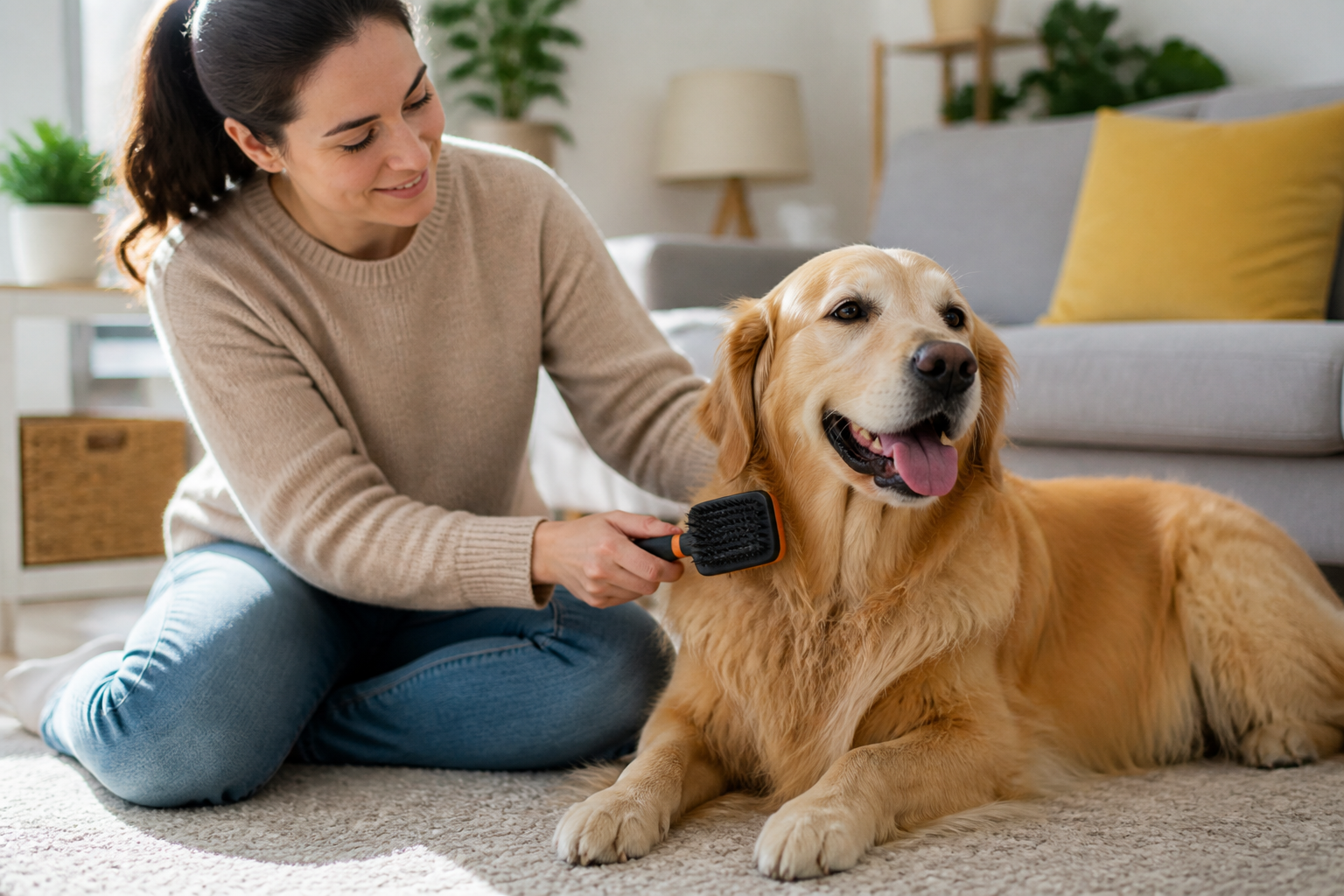
Breeds such as Huskies, Golden Retrievers, and German Shepherds have a soft undercoat and a tougher outer coat. These dogs go through "blowouts" twice a year where they lose massive amounts of hair.
During normal times of the year, brush these dogs two to three times per week. You will need an undercoat rake or a slicker brush to reach the dense layer of fur near the skin. During shedding season, you should move to daily brushing. If you miss even a few days during a blowout, the undercoat can trap moisture and heat against the skin.
Long or Silky Coats
Dogs like Setters, Spaniels, and Yorkies have hair that continues to grow. This hair is fine and prone to tangling. If your dog has long feathers on their legs or a long tail, those areas need special attention.
Plan to brush long-haired dogs every day or at least every other day. Focus on the high-friction areas. These include the spots behind the ears, under the front legs, and where their collar or harness sits. These areas mat almost instantly if they are not maintained.
Curly and Wire Coats
Poodles, Doodles, and many Terrier breeds fall into this category. These coats do not shed much in the traditional sense. Instead, the loose hair gets trapped within the curls or the wiry texture.
Daily brushing is the safest routine for curly coats. If the trapped loose hair is not brushed out, it creates a "pelt" of matted fur close to the skin. This can be very painful for the dog and often requires a professional groomer to shave them down to the skin for relief.
The Vital Role of Dental Brushing
While coat brushing is about comfort and cleanliness, dental brushing is about longevity. Many owners assume that dental chews or hard kibble are enough to keep teeth clean. This is a common misconception. While those products help, they cannot reach the gum line where the most dangerous bacteria live.
Bacteria in the mouth form a sticky film called plaque within hours of eating. If this is not brushed away, it combines with minerals in the saliva to form tartar. Tartar is a hard, brownish substance that cannot be removed with a toothbrush. It requires a professional veterinary cleaning. For additional guidance, read these pet dental care tips.
Vet Tip: If your dog has persistent bad breath, red gums, or difficulty chewing, consult your veterinarian for a dental exam. These symptoms often indicate underlying periodontal disease that requires professional treatment rather than just home brushing.
Why Daily Dental Care is the Goal
Ideally, you should brush your dog’s teeth every day. This might sound like a lot of work, but it only takes about sixty seconds once your dog is used to the process. Our dog dental and breath care collection includes products designed to support an at-home dental routine.
When bacteria sit on the gums, they cause inflammation known as gingivitis. If this continues, the bacteria can enter the bloodstream. From there, the infection can travel to the heart, liver, and kidneys. Regular dental care can literally add years to a dog's life by preventing these systemic infections.
If daily brushing is not possible, aim for at least three times a week. Anything less than that allows tartar to gain a foothold. Our pharmacy carries professional-grade dental products and prescription diets through our partnership with Pet's Choice. If your veterinarian recommends a specific medicated dental rinse or a prescription diet to manage oral health, we can help you fulfill those needs easily through our pet pharmacy.
Tools for Effective Brushing
Having the right gear makes the job easier for you and more pleasant for your dog. We carry over 500 trusted brands at BaxterBoo to ensure you have access to the best grooming and dental tools.
Coat Grooming Tools
- Slicker Brushes: These have fine wire bristles. They are excellent for removing mats and loose hair from medium to long-haired dogs.
- Bristle Brushes: These are best for short-haired dogs to remove surface debris and add shine.
- Undercoat Rakes: These reach through the topcoat to pull out the dead hair from the dense undercoat.
- Grooming Mitts: These are perfect for puppies or sensitive dogs who are afraid of traditional brushes.
Dental Brushing Tools
- Dog-Safe Toothpaste: Never use human toothpaste. It contains xylitol and fluoride which are toxic to dogs. Dog toothpaste comes in flavors like poultry or beef to make the experience a treat.
- Finger Brushes: These slip over your fingertip. They give you more control and are less intimidating for small dogs or beginners.
- Long-Handled Brushes: These help you reach the back molars where most tartar builds up.
Step-by-Step: Introducing a Brushing Routine
If your dog is not used to being handled, jumping straight into a full brushing session can be stressful. You want the experience to be a bonding moment, not a struggle.
Step 1: Choose a calm time. / Wait until your dog is relaxed after a walk or a meal.
Step 2: Let them investigate the tools. / Place the brush or the toothpaste on the floor and let your dog sniff it. Give them a reward for showing curiosity.
Step 3: Start with short sessions. / Brush one small area of the coat or one or two teeth. Stop while the dog is still behaving well.
Step 4: Use high-value rewards. / Give your dog a special treat they only get during grooming. This creates a positive association with the brush.
Step 5: Gradually increase the duration. / Over a week or two, move from brushing for thirty seconds to a full session.
Key Takeaway: Consistency and positive reinforcement are more important than finishing the entire job in one day. It is better to do a little bit every day than to have a monthly battle.
Monitoring Health During Grooming
Every time you brush your dog, you should perform a quick health scan. This is especially important for senior dogs or dogs with chronic health conditions.
Check the skin for redness, flakes, or oiliness. Look at the ears for any dark discharge or a yeasty smell. Look at the paws for broken nails or grass seeds stuck between the toes. When you are brushing the teeth, look for broken teeth or any growths on the gums.
If you notice something unusual, it is always better to call your vet early. For dogs with ongoing skin allergies or chronic ear infections, our pet pharmacy provides FDA-approved medications and prescription treatments. We work closely with Pet's Choice to make sure you can get the specific items your vet prescribes without any hassle.
Common Brushing Mistakes to Avoid
Many well-meaning owners make small errors that can make brushing less effective or even painful for the dog.
- Brushing only the top layer: This is common with double-coated dogs. The top looks great, but the undercoat is a solid mat. Make sure you can see the skin as you brush.
- Using too much pressure: You do not need to scrub. Gentle, repetitive strokes are more effective and won't cause brush burn on the skin.
- Ignoring the "hot spots": People often skip the belly, the tail, and the back of the legs because dogs can be sensitive there. These are the areas most likely to mat.
- Using human products: As mentioned with toothpaste, human shampoos and brushes can also be problematic. Human skin has a different pH level than dog skin. Using our shampoo can lead to dryness and irritation.
When to See a Professional
Even with a perfect home routine, some dogs need professional help. If your dog is severely matted, do not try to cut the mats out with scissors. Dog skin is very thin and moves easily. It is very common for owners to accidentally cut the skin while trying to remove a mat. A professional groomer has the right clippers to handle this safely.
For dental care, a professional cleaning under anesthesia is usually necessary once a year for most dogs. This allows the vet to take X-rays and clean under the gum line where a toothbrush cannot reach. This is a standard part of responsible pet ownership. See warning signs of dental disease in dogs if you are unsure whether your dog needs an exam.
Handling a Reluctant Dog
Some dogs truly dislike being brushed. This often stems from a past experience where a mat was pulled too hard or they were forced to stay still.
If your dog runs away when they see the brush, try changing the environment. Brush them in a different room or while they are distracted by a lick mat covered in peanut butter. You can also try different types of brushes. Some dogs find the sensation of a metal slicker brush irritating but will tolerate a soft bristle brush or a grooming glove.
If the resistance is due to pain, such as joint stiffness in a senior dog, you may need to adjust their position. Let them lie down while you work on one side at a time. For dogs with mobility issues or arthritis that makes grooming difficult, we offer a range of supportive products in our Medical & Mobility section.
Bottom line: Patience and the right tools can turn a stressful grooming chore into a relaxing routine for both you and your dog.
Seasonal Changes in Brushing
Your dog's coat reacts to the environment. In the winter, many dogs grow a thicker coat that requires more frequent brushing to prevent it from trapping dampness. In the summer, brushing helps remove the insulating undercoat so your dog can stay cool.
Heating in the winter can also dry out a dog's skin, making it prone to dandruff and itching. Increasing your brushing frequency during the dry months can help distribute those important skin oils to combat dryness. If you notice your dog is itching more than usual, it might be time to check in with your vet about seasonal allergies.
The Role of Nutrition in Coat and Dental Health
What goes into your dog's body shows up on the outside. A diet rich in Omega fatty acids supports a healthy skin barrier and a shiny coat. If your dog has a dull, brittle coat despite regular brushing, their nutrition might be the cause.
We carry premium brands like Farmina, Orijen, and Open Farm that focus on high-quality ingredients. For dogs with specific health needs, the Farmina Vet Life range offers targeted nutrition. Feeding a high-quality kibble can also provide a mechanical scraping action on the teeth, though it still does not replace the need for a brush. Browse our dog food selection when reviewing your dog's daily nutrition.
Conclusion
Setting a regular schedule for brushing your dog’s coat and teeth is one of the most effective ways to manage their overall wellness. For most dogs, a coat brushing session two to three times a week and a daily tooth brushing routine will keep them in peak condition. These habits prevent the pain of matted fur and the danger of systemic infections from dental disease. At BaxterBoo, we are here to support your journey with expertly curated products and a pharmacy that puts your pet's health first.
- Brush short coats weekly and long coats daily.
- Aim for daily dental brushing with dog-safe paste.
- Check for skin and gum changes during every session.
- Use positive reinforcement to make grooming a bonding time.
Bottom line: Investing a few minutes in brushing today saves your dog from discomfort and saves you from expensive veterinary bills later.
If you are ready to start a new routine or need to restock your grooming kit, browse our dog grooming collection. You can even set up our Autoship programme for your favorite dog toothpaste to ensure you never run out and save on every order.
FAQ
Is it okay to brush my dog's coat every day?
Yes, daily brushing is perfectly fine and often recommended for dogs with long, curly, or double coats. It helps prevent mats from forming and keeps shedding under control. For short-haired dogs, daily brushing is not strictly necessary but can still be a great way to bond and keep their coat shiny.
What should I do if my dog's teeth are already brown?
If you see brown or yellow buildup on your dog's teeth, this is likely tartar, which cannot be removed by a regular toothbrush. You should schedule a dental exam with your veterinarian for a professional cleaning. Once the vet removes the tartar, you can start a daily brushing routine to prevent it from coming back.
Can I use a human toothbrush on my dog?
You can use a soft-bristled human toothbrush if the head is small enough for your dog's mouth, but you must never use human toothpaste. Human toothbrushes are often shaped differently than dog-specific brushes, so you might find it harder to reach the back molars. Many owners find that finger brushes or angled dog brushes are much easier to navigate.
How do I know if my dog's coat is matted?
A mat feels like a hard clump or a knot of hair that does not come apart when you gently pull on it. You can check for mats by running a metal comb through your dog's fur; if the comb catches and cannot pass through, you have found a mat or a tangle. Check common friction areas like the armpits and behind the ears frequently, as these are the first places mats usually appear.






