
 Save 15% on your 1st Autoship learn more

 Email us
 Live Chat
 FAQs
FAQs





Introduction
You reach down to pet your dog after a long day and notice a few extra tufts of fur drifting across the rug. Maybe you see a small tangle behind their ears or feel a bit of grit in their coat that was not there yesterday. These are the small moments when every pet owner asks themselves exactly how often they should be picking up the brush. At BaxterBoo, we see these questions every day in our Vernon Hills warehouse and from our online community. Brushing is not just about keeping your furniture clean or making your dog look like they just left a dog show. It is a fundamental part of their physical health and emotional wellbeing. This guide will walk you through the specific needs of different coat types and seasonal changes. We will help you build a routine that keeps your dog comfortable and your home hair-free.
The Importance of Regular Brushing
Brushing your dog does more than just remove loose hair. It acts as a mini-massage that distributes natural skin oils throughout the coat. These oils are what give a dog that healthy, glossy shine. Without regular movement, these oils can sit on the skin and lead to clogged pores or a dull, brittle coat.
Brushing is also your best opportunity to check for health changes. When you are moving the hair aside, you can see things that a quick pat might miss. You are looking for bumps, ticks, red spots, or dry patches. Catching a small skin irritation early can prevent a much more expensive trip to the veterinarian later.
Quick Answer: Most dogs benefit from a thorough brushing at least once or twice a week. However, dogs with long hair or thick undercoats may need daily attention to prevent painful mats and tangles.
Brushing Frequency by Coat Type
Every dog is different, but their coat type is the best starting point for setting a schedule. A Pug and a Poodle have very different needs because their hair grows and sheds in completely different ways.
Short and Smooth Coats
Dogs like Boxers, Bulldogs, and Greyhounds have short hair that lies close to the skin. These dogs are the lowest maintenance in terms of tangles, but they still need regular care. We recommend brushing these breeds once a week. Using a rubber curry brush or a soft bristle brush helps pull away the fine, prickly hairs that tend to weave themselves into your upholstery.
Short to Medium Double Coats
Labrador Retrievers, German Shepherds, and Huskies have a dense undercoat protected by a tougher outer layer. These dogs shed year-round and "blow" their coats twice a year. For these breeds, two to three times a week is the minimum. During heavy shedding seasons, you will likely need to brush them every single day to keep up with the volume of fur.
Long Double Coats
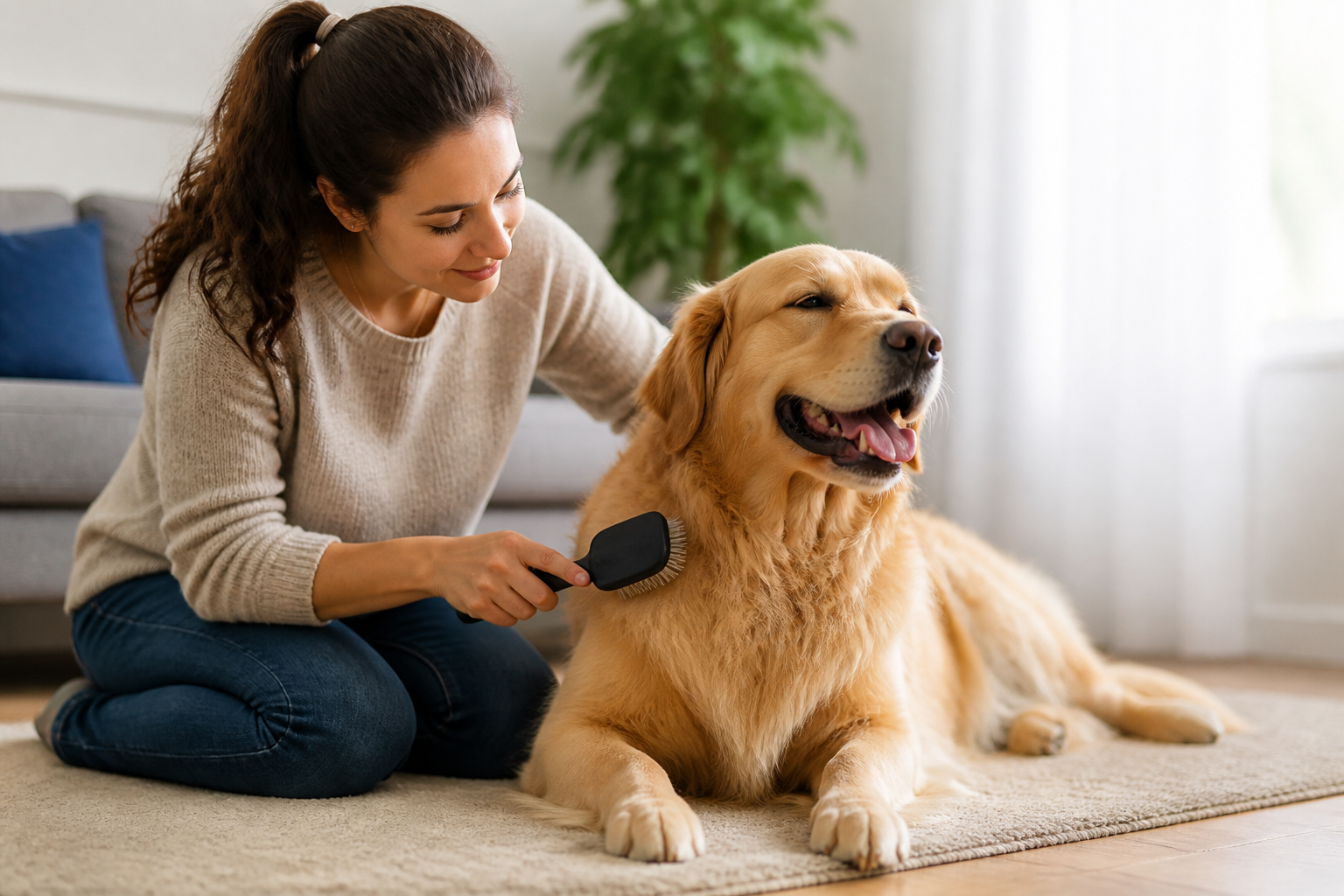
Golden Retrievers and Australian Shepherds have long, flowing hair that is prone to matting, especially behind the ears and under the legs. You should aim for three to four times a week. Frequent brushing prevents the fine undercoat from tangling with the longer guard hairs.
Curly and Wavy Coats
Poodles, Bichons, and Doodles often have hair that does not shed in the traditional sense. Instead, the loose hair gets trapped in the curls. If you do not brush these dogs daily, those trapped hairs will form tight mats against the skin. These mats can pull on the skin and cause significant pain or even infections. For more guidance, read our guide to grooming dogs with curly hair.
Wire Coats
Terriers like the Airedale or Schnauzer have a crisp, wiry texture. These coats need brushing two or three times a week to keep the hair from becoming brittle. They also require "stripping" or professional clipping every few months to maintain the proper texture.
Key Takeaway: Your dog's breed and coat length are the primary drivers of your grooming schedule. When in doubt, start with twice a week and adjust based on how much hair you find on your brush.
Essential Tools for the Job
Having the right tool makes the job faster and more comfortable for your pet. Using the wrong brush can actually scrape the skin or fail to reach the layers where the loose hair is hiding. Our warehouse team at BaxterBoo often recommends keeping a few specific tools on hand for different needs. Explore our dog grooming supplies to find brushes, combs, shampoos, and other grooming essentials.
- Slicker Brushes: These have fine wire bristles and are great for removing mats and tangles in medium to long-haired dogs.
- Bristle Brushes: Best for short-haired or smooth-coated dogs to add shine and remove surface debris.
- Undercoat Rakes: These reach through the topcoat to pull out the thick, fuzzy undercoat. They are essential for Huskies and Labs.
- Rubber Curry Brushes: These are perfect for short-haired dogs and for use during bath time to massage the skin.
- Metal Combs: Use these after brushing to check for any tiny knots you might have missed.
How to Choose Your Tool
Step 1: Identify your dog's coat length and density. Step 2: Choose a primary tool, like a slicker or bristle brush, for surface work. Step 3: Select a secondary tool, like a rake or comb, for deep cleaning and finishing.
Managing Shedding Seasons
Twice a year, many dogs go through a major shedding event. This is often called "blowing the coat." It usually happens in the spring as they lose their heavy winter layer and again in the fall as they prepare for the cold. During these times, your normal once-a-week routine will not be enough.
You should plan to brush your dog every day during these transitions. This prevents the hair from ending up all over your house and helps the new coat grow in cleanly. Using a deshedding tool like a Furminator can be very helpful here. These tools are designed to pull out the dead undercoat without cutting the healthy topcoat.
Vet Tip: If you notice your dog is losing hair in patches or has very itchy, red skin, regular brushing may not be the only answer. Consult your vet to rule out allergies or parasites. Our pet pharmacy through our partnership with Pet's Choice carries prescription skin treatments and allergy medications if your vet determines they are necessary.
Brushing and Skin Health
Brushing is a form of preventative healthcare. When you brush, you are checking for more than just hair. You are looking for signs of the "big three" skin issues: parasites, infections, and growths.
If you find fleas or ticks during your grooming session, you need to act quickly. We carry a wide range of flea and tick preventatives to help keep those pests away. If you find a new lump or a suspicious mole, take a photo and monitor its size. Mention it to your vet at your next checkup.
Regular grooming also helps you manage dry skin. If you see white flakes like dandruff, your dog might need a different diet or a supplement. Omega fatty acids are excellent for skin health. We offer various supplements, such as Zesty Paws or Cosequin, that support a healthy coat from the inside out. Explore our dog skin and coat care selection for additional options.
How to Brush Correctly
Technique matters as much as frequency. If you are too rough, your dog will learn to hide when they see the brush. If you are too light, you will only be grooming the very top of the hair.
- Brush in the direction of hair growth. Start at the head and work your way back to the tail.
- Be gentle with sensitive areas. The belly, paws, and ears have thinner skin. Use less pressure here.
- Work in sections. For long-haired dogs, tackle one leg or one side at a time so you do not get overwhelmed.
- Handle mats with care. Never pull on a mat. Use a detangling spray and a slicker brush to slowly pick it apart from the ends toward the skin.
- Use a comb for the "final pass." If a metal comb can slide through the hair without catching, you have done a thorough job.
For a brush designed for wet or dry grooming, consider the BASS Slicker Style Dog Brush.
Key Takeaway: Consistent, gentle brushing builds trust and keeps the coat functional. A well-groomed coat keeps a dog warm in the winter and cool in the summer by allowing air to circulate near the skin.
The Pre-Bath Brush
One of the most common mistakes pet owners make is bathing a dog that has mats or tangles. Water acts like a glue for hair knots. If you put a matted dog in the tub, those mats will tighten as they dry, making them almost impossible to remove without shaving the dog.
Always do a full brushing session before the bath. Remove as much loose hair as possible. This also means you will have less hair clogging your drain. After the bath, once the dog is completely dry, do a quick follow-up brush to ensure no new tangles formed during the scrubbing process. For additional bathing guidance, see our tips for bathing your dog.
Brushing for Different Life Stages
Puppies
Start brushing your puppy as soon as you bring them home, even if they do not have much hair yet. The goal here is socialization. Use a very soft brush and give them plenty of treats. You want them to think the brush is a magic wand that delivers snacks and affection. This makes grooming much easier when they are 80 pounds and have a full adult coat.
Seniors
Older dogs often have thinner skin and may have arthritis. Be very careful around their joints. They might find it uncomfortable to stand for a long time, so let them lie down while you brush them. Brushing is also vital for seniors because they may stop grooming themselves as effectively as they used to.
Dogs with Anxiety
If your dog is terrified of the brush, take it slow. Let them sniff the tool. Give them a treat. Brush one single stroke, then stop. Slowly build up the time over several weeks. Using calming supplements or a lick mat covered in peanut butter can help distract them and create a positive association.
When to See a Professional
Even with the best home routine, some dogs need a professional groomer. If your dog's coat has become severely matted down to the skin, do not try to cut the mats out with scissors. Dog skin is very thin and moves easily. It is very common for owners to accidentally cut their pets this way.
A professional has the tools and experience to safely shave out mats or handle difficult areas like nail trimming and ear cleaning. Use your home brushing sessions to maintain the coat between these professional appointments. This will save you money at the groomer because they will not have to spend extra hours dematting your dog.
The Role of Nutrition in Coat Quality
You cannot brush away a poor diet. If your dog's hair is constantly brittle, breaking, or falling out in excess, take a look at what is in their bowl. High-quality protein and healthy fats are the building blocks of hair.
Brands like Farmina, Orijen, and Open Farm focus on nutrient-dense ingredients that support skin and coat health. If your vet recommends a specific diet for skin sensitivities, our pharmacy can help you fulfill those prescription food orders easily.
Bottom line: Brushing is the external half of coat care, while high-quality nutrition and hydration are the internal half.
Conclusion
Determining how often to brush dog hair depends mostly on your individual pet, but consistency is the key for everyone. Whether it is a quick weekly session for a shorthaired breed or a daily ritual for a long-haired companion, this time is an investment in their health. Regular brushing prevents pain, reduces the mess in your home, and strengthens the bond between you and your dog. At BaxterBoo, we want to help you make these moments easy and enjoyable. From the right slicker brush to the perfect supplement, we have the supplies you need to keep your dog's coat in peak condition.
- Brush short coats weekly and long coats daily.
- Increase frequency during spring and fall shedding seasons.
- Always brush before bathing to prevent permanent mats.
- Use grooming time to check for skin issues or parasites.
Note: For ongoing savings on grooming supplies and food, consider signing up for our Autoship program. You will get regular deliveries at a discount and a free MVP Gold membership to earn rewards on every purchase.
FAQ
Can I brush my dog too much?
It is difficult to brush too much, but you can brush too hard. If you use a firm metal brush with too much pressure, you can cause "brush burn," which is a skin irritation. As long as you are gentle and your dog’s skin looks healthy and pink (not red or scraped), daily brushing is perfectly safe and often beneficial.
Why does my dog still smell after I brush them?
Brushing removes loose hair and dirt, but it does not remove bacteria or oils that have already gone rancid on the skin. If your dog has a persistent odor even after grooming, they may need a bath with a deodorizing shampoo or have an underlying skin infection. If the smell is yeasty or very strong, a visit to the vet is a good idea.
Does brushing help with my allergies?
Yes, regular brushing can significantly help human allergy sufferers. Most people are allergic to the dander (dead skin cells) and saliva attached to the hair, rather than the hair itself. By brushing your dog frequently, you trap that dander in the brush and remove it before it can float into the air or settle on your furniture.
What is the best way to remove a mat?
Never pull or yank on a mat. Apply a pet-safe detangling spray to the area and let it sit for a minute. Use a slicker brush or a dematting tool to gently pick at the hair starting from the very end of the knot and working your way toward the skin. If the mat is tight against the skin, it is safest to have a professional groomer or vet remove it with clippers.






