
 Save 15% on your 1st Autoship learn more

 Email us
 Live Chat
 FAQs
FAQs





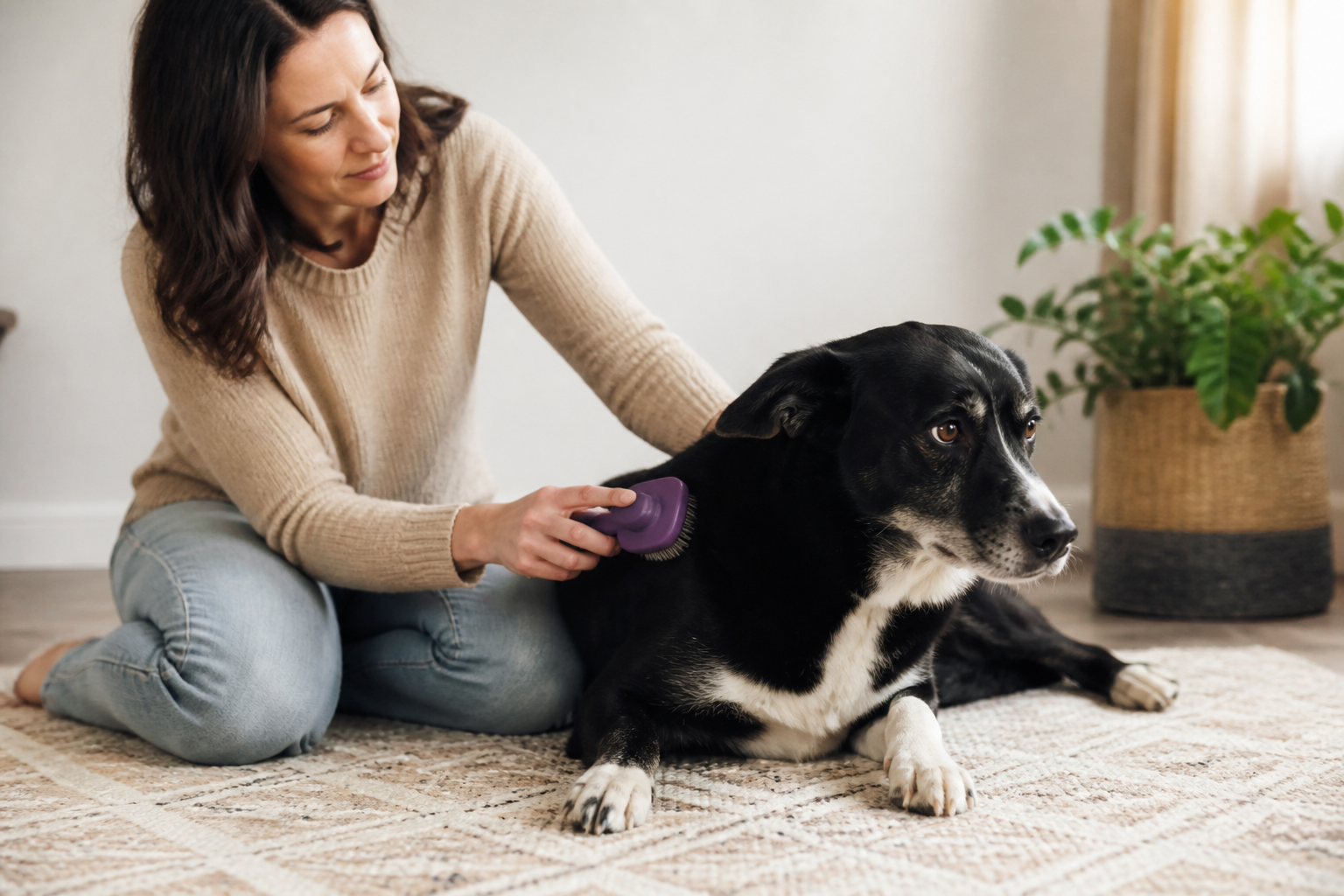
Introduction
You reach for the grooming kit, and your dog is already halfway under the guest bed. Or perhaps they stand their ground, but their body goes stiff the moment a bristle touches their fur. At BaxterBoo, we see this struggle often with dogs who have had poor past experiences or simply have sensitive skin. Brushing is not just about making your dog look good for the park. It is a vital health habit that prevents painful mats and allows you to check for skin issues. This guide will help you understand why your dog resists the brush and how to change their mind using patience and positive reinforcement. You can turn a daily battle into a calm bonding session with the right approach.
Quick Answer: To brush a dog who hates it, start by desensitizing them to the sight of the brush using high-value treats. Keep sessions very short and focus on one small area at a time. Use soft tools like grooming gloves or rubber brushes to build trust before moving to standard grooming tools.
Understanding Why Dogs Resist Brushing
Before you can fix the behavior, you must understand the cause. Some dogs are naturally more touch-sensitive than others. If your dog has a thin coat or sensitive skin, a stiff wire brush can feel like scratching a sunburn. Other dogs may have experienced a painful "tug" when a groomer hit a mat in the past. They remember that pain and associate the tool with discomfort.
Impatience is another common factor. Many dogs would rather be chasing a ball or sniffing the yard than sitting still for ten minutes. If your dog is high-energy, they may view the brush as a restraint rather than a massage. Fear also plays a role. A long, strange object coming toward their face or belly can be intimidating for a nervous pet.
Vet Tip: If your dog suddenly starts snapping or hiding when you brush a specific area, consult your veterinarian. New sensitivity to touch can indicate underlying health issues. Conditions like arthritis, skin infections, or even ear problems can make grooming sessions physically painful for a senior dog or one with chronic issues.
Choosing the Right Tools for Sensitive Dogs
Using the wrong brush is like using a coarse sandpaper on your own skin. If your dog hates the slicker brush, put it away for now. You need to start with the gentlest options available to rebuild their confidence. Explore our dog grooming collection for brushes, combs, and other coat-care tools.
Grooming Gloves and Rubber Brushes
A grooming glove is often the best starting point for a fearful dog. These fit over your hand, so it feels like you are simply petting your dog. The soft rubber nubs remove loose hair without scratching the skin. Brands like Kong make rubber brushes that are flexible and gentle. These are excellent for short-haired dogs or for starting the desensitization process with long-haired breeds.
Pin Brushes and Bristle Brushes
Once your dog tolerates a glove, you can move to a pin brush. Look for one with rounded tips or "balls" on the end of the pins. These prevent the metal from poking the skin. Bristle brushes are also a great middle-ground tool. They use soft, natural, or synthetic hairs to smooth the coat and distribute natural oils without any sharp edges.
Detangling Sprays
If your dog has long hair, never brush them "dry" if they have tangles. Pulling on a knot is the fastest way to make a dog hate grooming. Use a high-quality detangling spray to lubricate the hair. This allows the brush to slide through more easily. It also reduces static, which can sometimes give a dog a tiny, annoying shock during dry winter months.
Key Takeaway: The goal is to make the tool feel like an extension of your hand. Start with the softest rubber or fabric tools before moving to metal pins or slicker brushes.
The Step-by-Step Desensitization Process
Desensitization means slowly getting your dog used to something they fear. This process cannot be rushed. If you push too fast, you will set your progress back by weeks.
Step 1: The introduction phase.
Place the brush on the floor and put a few high-value treats around it. Let your dog investigate the tool on their own terms. Do not pick it up or move it. You want them to realize that the presence of the brush means good things happen.
Step 2: Touch without brushing.
Hold the brush in your hand but do not use the bristles. Pet your dog with your other hand, then gently touch their shoulder with the back of the brush. Give a treat immediately. Repeat this until the dog does not flinch when the brush touches them.
Step 3: The single stroke.
Turn the brush over. Give your dog a lickable treat or a puzzle toy to keep them busy. While they are distracted, do one very short, gentle stroke on their shoulder or back. This is usually the least sensitive area. Stop immediately and praise them.
Step 4: Gradually increasing time.
If the dog stays calm, do two strokes, then three. Always end the session while the dog is still happy. You want them to walk away feeling like they succeeded, not like they narrowly escaped a chore.
The Power of High-Value Rewards
If you are using standard kibble for grooming, it might not be enough to win over a fearful dog. You need "jackpot" treats. Think about small pieces of plain cooked chicken, freeze-dried liver, or a squeeze of peanut butter.
Lick mats are a highly effective tool for this. You can smear a lick mat with wet food or pumpkin and stick it to a wall or the floor. While your dog is focused on licking, their brain is occupied. Licking is also a naturally calming behavior for dogs. This distraction allows you to work on their coat while they are in a relaxed state. A slow feeder licking mat can help keep a dog engaged during short grooming sessions.
We carry a wide variety of premium treats at BaxterBoo, such as Stella and Chewy's or The Honest Kitchen. These are perfect for keeping a dog's focus during difficult tasks. If your dog is particularly anxious, you might also consider calming supplements from brands like Zesty Paws or Honest Paws. These can help take the edge off before you begin a session. You can also read more about calming toys for dogs for additional distraction ideas.
Managing Mats and Tangles Humanely
Mats are the primary reason grooming becomes painful. When hair clumps together, it pulls on the skin 24 hours a day. This causes irritation and can even lead to skin infections. If your dog is already matted, you must handle these areas with extreme care.
Never use scissors to cut out a mat. Dog skin is incredibly thin and moves easily. It is very common for owners to accidentally snip the skin while trying to cut hair. Instead, use a specialized dematting tool or a seam ripper very carefully. Hold the base of the hair near the skin with your fingers so you are not pulling the skin while you work on the knot.
If the mats are close to the skin or cover a large portion of the body, it is time to see a professional. A groomer can safely shave the mats away. This provides your dog with an immediate "reset." Once the hair starts growing back, you can begin your new, positive brushing routine without the baggage of painful tangles. For more bathing and detangling guidance, see these dos and don'ts for bathing your dog.
Bottom line: Never pull on a mat with a brush. If you cannot gently work it out with your fingers and a detangling spray, seek professional help to avoid causing a traumatic experience.
When Anxiety Requires More Than Training
Sometimes, a dog's fear is too deep for treats and toys alone. If your dog growls, snaps, or shows extreme signs of distress like trembling or panting, do not force the issue. Forcing a terrified dog to be brushed can lead to a bite or a permanent fear of being touched.
In these situations, it is best to talk to your veterinarian about a calming plan. This might include behavioral therapy or prescription anxiety medication to help the dog stay below their "stress threshold" during training.
Our pharmacy carries a range of FDA-approved medications through our partnership with Pet's Choice. These can be helpful for dogs who suffer from generalized anxiety or specific grooming phobias. Having a prescription on hand for grooming days can make the process safer for everyone involved. You can manage your pet's ongoing health needs and prescriptions directly through our site for home delivery.
Creating a Grooming Environment
Where you brush your dog matters. If you try to do it in a high-traffic area with kids running around or other pets playing, your dog will be distracted. Choose a quiet corner of the house.
- Use a non-slip surface: Dogs feel vulnerable when they are sliding around. Put a towel or a rubber mat on the floor or table.
- Check the lighting: Make sure you can see what you are doing so you do not accidentally poke a sensitive area like the ears or eyes.
- Keep it short: Three sessions of two minutes each are much better than one ten-minute session that ends in a struggle.
- Stay calm: Your dog picks up on your frustration. If you feel yourself getting annoyed, stop the session and try again later.
Coat Specific Tips
Different coats require different approaches. A one-size-fits-all method does not work for every breed.
Double-Coated Dogs
Breeds like Huskies or Golden Retrievers have a soft undercoat and a tougher outer coat. These dogs shed heavily. For these pets, a de-shedding tool like a Furminator can be useful, but use it sparingly. These tools have blades that can irritate the skin if used too hard. Stick to an undercoat rake for a gentler experience.
Wire-Haired Dogs
Terriers often have wire coats that do not shed in the traditional sense. These coats can get very dry. Using a soft bristle brush helps move the skin's natural oils down the hair shaft, which keeps the coat healthy and reduces the need for frequent baths.
Curly and Poodle Mixes
Doodles and Poodles are prone to "hidden" mats. The top of the coat might look fluffy, but the hair near the skin can be a solid mass. For these dogs, you must use the "line brushing" technique. Part the hair so you can see the skin and brush from the skin outward in small sections. For more coat-specific guidance, read how to groom a dog with curly hair.
Summary of the Stress-Free Approach
Brushing a dog who hates it is a marathon, not a sprint. Your primary goal is to protect the bond you have with your pet. If the brush becomes a symbol of fear, it damages that trust. By using high-value rewards, choosing the right tools, and keeping sessions short, you can gradually change your dog's emotional response.
- Start with a grooming glove or rubber brush.
- Use lick mats and high-value treats to create a positive association.
- Keep training sessions under five minutes.
- Never pull or yank on tangles.
- Consult a vet if the behavior is driven by pain or extreme anxiety.
Key Takeaway: Patience is your most important tool. Rewarding small successes will eventually lead to a dog that sits calmly for their daily grooming.
If you are ready to start a new routine, we recommend checking out our dog healthcare selection for calming aids or browsing our grooming collection for gentler brush options. For dogs with severe anxiety, our pharmacy partnership with Pet's Choice is available to help with prescription support as directed by your vet.
FAQ
How often should I brush a dog that hates it?
You should aim for very short sessions daily rather than one long session once a week. Frequent, one-minute sessions help the dog get used to the routine without feeling overwhelmed. Consistent practice builds muscle memory and helps the dog realize that the brush always goes away quickly.
Can I use human hairbrushes on my dog?
It is generally better to use tools designed for pets. Human brushes often have bristles that are too soft to get through a dog's undercoat or pins that are too sharp for a dog's thin skin. Pet-specific tools are balanced for the density of animal fur and are less likely to cause accidental scratches.
Why does my dog try to bite the brush?
Biting the brush is usually a defensive behavior or a sign of overstimulation. The dog is trying to "kill" the object that is causing them stress or pain. If your dog does this, go back to the earliest stage of desensitization and use a much softer tool, like a washcloth or your bare hand, before reintroducing the brush.
Should I bathe my dog before or after brushing?
Always brush your dog before a bath. Water tends to "set" mats and make them much tighter and harder to remove. Once a mat gets wet and then air-dries, it can become almost impossible to brush out without causing pain. Ensure the coat is smooth and tangle-free before the dog gets in the tub.






