
 Save 15% on your 1st Autoship learn more

 Email us
 Live Chat
 FAQs
FAQs





Introduction
You are ready for a quick grooming session before guests arrive but the slicker brush is nowhere to be found. Or perhaps your dog ducks under the dining table the second a traditional brush comes out of the drawer. Many dogs find the scraping sensation of metal bristles uncomfortable or frightening. At BaxterBoo, we know that grooming is about more than just looking good. It is a vital part of skin health and a great way to bond with your pet. You do not always need a standard brush to keep a coat healthy and shiny. This guide covers practical ways to remove loose fur, distribute natural oils, and manage tangles using everyday items or gentle alternatives. We will help you navigate the best techniques for every coat type so you can maintain a clean home and a happy dog.
Why You Might Go Brushless
There are several reasons you might look for alternatives to a standard dog brush. Some dogs have extremely sensitive skin that reacts poorly to the sharp pins of a slicker brush. Puppies often find the sensation of a brush overwhelming during their first few months of life. If you are traveling or realized your main grooming kit is missing, you need a solution that works right now.
Grooming without a brush can also be a strategic choice for high-anxiety pets. Using your hands or a soft cloth feels more like a petting session than a medical procedure. This helps build trust and makes future grooming easier. It also allows you to feel the skin directly. You can spot small lumps, ticks, or dry patches that a brush might skip over.
Quick Answer: You can use grooming gloves, a damp washcloth, or even your own fingers to remove loose fur and dirt. These methods are gentler for sensitive dogs and help distribute natural oils throughout the coat without the scraping sensation of metal bristles.
Using Grooming Gloves and Mitts
Grooming gloves are perhaps the most popular alternative to a traditional brush. These are usually made of rubber or silicone with soft nubs on the palms. You wear them like regular gloves and pet your dog as you normally would. This is an excellent choice for dogs that are "brush shy" because the action is familiar and comforting.
The rubber nubs create friction that grabs loose hair and pulls it away from the skin. This is particularly effective for short-haired breeds like Boxers, Labradors, or Pugs. As you pet the dog, the glove massages the skin. This increases blood flow and helps move natural oils from the skin down the hair shaft.
Benefits of Grooming Mitts
- They provide a massaging sensation that lowers canine stress.
- The flexible material follows the natural curves of the dog's body.
- They are easier to use on wiggly puppies than a stiff brush.
- Most rubber mitts can be used during bath time to scrub in shampoo.
If you have a dog with a thick undercoat, a glove might not reach deep enough to pull out all the shed. However, it is a perfect tool for daily maintenance and surface cleaning. We often recommend rubber tools like the KONG Zoom Groom Natural Rubber Dog Grooming Brush for this purpose. It fits in the palm of your hand and feels like a massage while it works.
Key Takeaway: Grooming gloves turn a chore into a bonding activity. They are the best choice for short-haired dogs and pets that fear traditional grooming tools.
The Damp Washcloth Method
For dogs with very short, smooth coats, a damp washcloth is one of the most effective tools you already own. This method does not pull out huge clumps of fur. Instead, it focuses on removing surface dust, dander, and loose individual hairs.
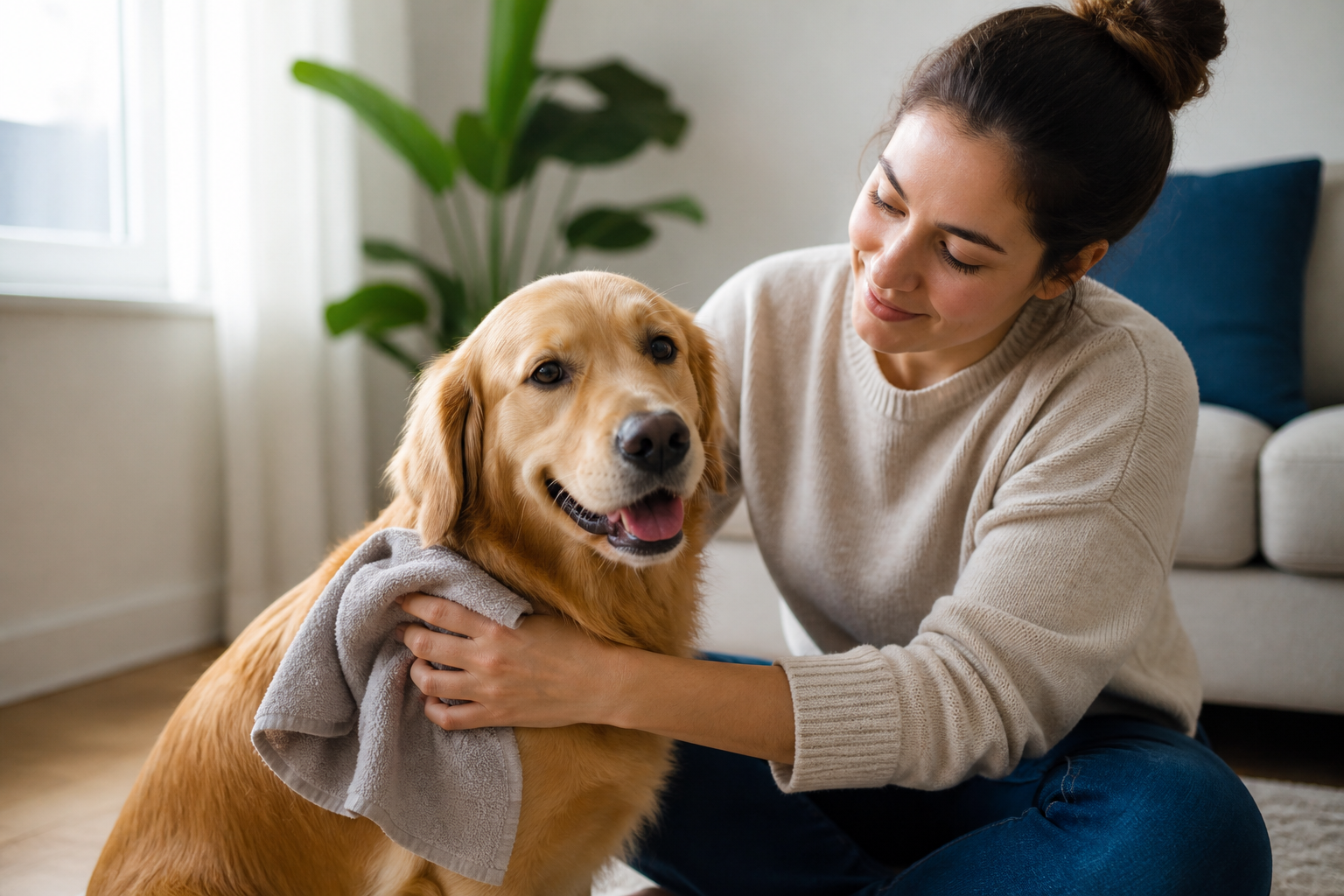
To start, take a clean microfiber cloth or a standard washcloth. Dampen it with lukewarm water. It should not be dripping wet. Wipe your dog down in the direction of hair growth. Use firm but gentle pressure. The moisture helps the hair stick to the cloth rather than floating into the air.
Why Microfiber Works
Microfiber is especially good for this because the tiny fibers are designed to trap particles. It picks up pollen and dust that a brush might leave behind. This is a great routine to follow after a walk to prevent outdoor allergens from entering your home.
This method is also perfect for cleaning sensitive areas. You can gently wipe the face, the base of the ears, and the paws. Many dogs that will not tolerate a brush near their eyes are perfectly fine with a soft cloth. For more ideas about gentle cleaning tools, explore our dog grooming collection.
Finger Brushing and Manual Deshedding
Your own hands are powerful grooming tools. Finger brushing is the process of using your fingers to work through the coat. For long-haired dogs, this means gently pulling apart small tangles before they turn into tight mats. For short-haired dogs, it involves a "scruffing" motion to loosen dead fur.
When you use your fingers, you have the highest level of control. You can feel exactly how much tension you are putting on the hair. This prevents the "brush burn" that can happen when a human pulls too hard with a metal tool.
How to Finger Groom
Step 1: Run your hands over the dog's entire body to find any knots or debris.
Step 2: Use your thumb and forefinger to gently massage the base of any small tangles.
Step 3: Slide your fingers through the coat like a comb to pull away loose hairs.
This is a fantastic way to check for health issues. While finger brushing, look for any changes in skin texture or temperature. If you find something unusual, it is time to consult your veterinarian.
Vet Tip: Use your hands to check for fleas, ticks, or unusual skin bumps every time you groom. If you notice persistent redness or scratching, consult your vet about allergy management or prescription skin support.
Managing Tangles with a Metal Comb
If your dog has long or curly hair, you might find that "brushless" options do not quite get the job done. In these cases, a metal comb is the best alternative. While it is still a grooming tool, it is very different from a brush. A wide-tooth metal comb can reach through the top layer of hair to the skin without the scratchy feeling of a slicker brush.
Metal combs are essential for breeds like Poodles or Goldendoodles. These dogs have hair that grows continuously. If you do not reach the skin, the hair will mat at the base while the top looks fine. A comb allows you to be precise. You can work on one small section at a time. Browse our dog brushes, combs, and clippers for tools suited to different coat types.
The Technique
Always start at the ends of the hair and work your way toward the skin. This prevents you from pulling on a knot and hurting the dog. If the comb gets stuck, do not yank it. Use your fingers to loosen the hair and then try again.
The Importance of Lubrication
One mistake many owners make is grooming a dry coat. Brushing or wiping a dry coat can create static electricity. This makes the hair more prone to tangling and can cause breakage. It can also be uncomfortable for the dog.
Even if you are not using a brush, a grooming spray or a leave-in conditioner makes the process much better. Sprays like those from Chris Christensen provide "slip" to the hair. This allows your fingers or a cloth to glide through without snagging. You can also find detangling options among our bath and shower supplies.
Benefits of Using a Spray
- Reduces static electricity during dry winter months.
- Adds a protective layer to the hair shaft to prevent dirt from sticking.
- Softens mats so they are easier to pull apart with your fingers.
- Leaves the dog smelling fresh between baths.
If you do not have a professional spray, a very small amount of coconut oil rubbed between your palms can help. Be careful not to use too much, or your dog will look greasy and attract more dirt.
Handling Mats Without a Brush
Mats are clusters of tangled hair that have become packed together. They are often painful because they pull on the skin. If your dog has a mat and you do not have a brush, you must be very careful.
Never use regular scissors to cut out a mat. A dog's skin is very thin and can easily be pulled into the mat. It is extremely common for owners to accidentally cut their pets when trying to "snipe" a knot. Instead, use your fingers to slowly pick the mat apart.
Key Takeaway: Patience is your best tool for mats. Use a detangling spray and your fingers to work the hair loose from the outside in.
For additional bath and detangling guidance, read these dos and don'ts for bathing your dog.
Coat Specific Guidance
Every dog has different needs based on their genetics. What works for a Doberman will not work for a Pomeranian. At our warehouse in Vernon Hills, we see every type of coat imaginable. Here is how to adapt brushless grooming for your dog.
Short, Smooth Coats
Breeds like Boxers, Beagles, and Great Danes are the easiest to groom without a brush. A rubber mitt or a damp cloth once a week is usually enough. Focus on the back and sides where shedding is most common.
Double Coats
Labs, Shepherds, and Huskies have a soft undercoat and a coarse outer coat. These dogs shed heavily. A rubber tool like the ZoomGroom is your best friend here. It can reach through the guard hairs to pull out the fuzzy undercoat. You will likely need to do this outdoors, as the hair will fly.
For more information about managing heavy shedding, read how Australian Shepherds shed.
Curly or Wire Coats
Poodles and Terriers need more structure. While you can use your fingers for daily checks, you will eventually need a comb. These coats do not shed in the traditional sense. The dead hair gets trapped in the curls. If you do not remove it, it will mat quickly.
| Coat Type | Best Brushless Tool | Frequency |
|---|---|---|
| Smooth (Boxer, Lab) | Damp Washcloth / Rubber Mitt | Weekly |
| Double (Huskie, Shepherd) | Grooming Glove / Finger Massage | 2-3 Times Weekly |
| Curly (Poodle, Doodle) | Metal Comb / Finger Detangling | Daily |
| Long (Yorkie, Maltese) | Finger Detangling / Silk Spray | Daily |
Health and Wellness During Grooming
Grooming is the front line of your dog's health care. When you remove a brush from the equation and use your hands, you become much more aware of your dog's physical condition. You might feel a tick that has just attached or a hot spot starting to form.
If you find that your dog's skin is consistently flaky, red, or smelly, it might be more than a grooming issue. Allergies and skin infections are common. We provide access to a full pharmacy through our partnership with Pet's Choice. This allows you to get FDA-approved medications and prescription diets for chronic skin conditions.
Our pharmacy carries everything from flea and tick preventives like NexGard and Frontline to medicated shampoos. If you find signs of parasites or irritation while grooming, talk to your vet. Having a prescription on file with us makes it easy to get the treatment delivered to your door or picked up at our store. You can also browse our dog skin and coat care selection for everyday wellness products.
Bottom line: Using your hands to groom gives you a direct link to your dog's health and helps you spot issues before they become emergencies.
Step-by-Step: The Brushless Grooming Routine
If you want to try a full grooming session without a brush, follow these steps to ensure you cover everything.
Step 1: Apply a light mist of detangling spray or a damp cloth over the entire coat. This prevents static and breakage.
Step 2: Use a grooming glove or rubber mitt to pet the dog from head to tail. Focus on the areas that shed the most, like the haunches and shoulders.
Step 3: Switch to finger grooming. Feel for any knots under the ears, in the "armpits," and around the tail.
Step 4: Use your fingers to gently pull apart any small tangles you found.
Step 5: Finish with a final wipe down using a clean, dry microfiber cloth. This removes any loosened fur that is still sitting on the surface and gives the coat a polished shine.
Choosing the Right Alternatives
When looking for alternatives at BaxterBoo, think about your dog's personality. If they love being petted, go with a glove. If they are sensitive to touch, start with a very soft microfiber cloth. We carry over 500 brands, so we have plenty of options that do not involve traditional metal brushes.
Don't forget that nutrition plays a huge role in how much your dog sheds. A high-quality diet rich in Omega-3 fatty acids can reduce the amount of loose fur you have to deal with. Brands like Stella & Chewy's or Open Farm dog food offer excellent nutritional support for skin and coat health.
The Role of Training and Rewards
Grooming should be a positive experience. If your dog is afraid of brushes, the goal is to show them that being handled is rewarding. Use small, high-value treats throughout the process. Give a treat for sniffing the grooming glove. Give another for one minute of finger grooming.
Over time, your dog will associate these sessions with snacks and affection. You might find that once they are comfortable with your hands and a soft cloth, they become less afraid of a brush. It is all about building a foundation of trust.
Vet Tip: If your dog becomes aggressive or extremely distressed during grooming, stop immediately. Consult a professional trainer or your veterinarian to rule out pain or deep-seated anxiety.
Conclusion
Brushing your dog without a brush is not only possible but often beneficial. Whether you use a rubber mitt, a damp washcloth, or your own fingers, the goal is the same: a clean, healthy pet. These methods are gentler on the skin and provide a unique opportunity to check for health issues. At BaxterBoo, we are here to support your grooming journey with expert advice and the right supplies. From detangling sprays to our specialized pharmacy for skin conditions, we have the tools you need to keep your dog's coat in top shape.
- Grooming gloves are the best all-around alternative for most breeds.
- Damp cloths are perfect for surface cleaning and removing allergens.
- Finger grooming allows for the most detailed health and skin checks.
- Always use a spray or conditioner to prevent hair breakage and static.
The most important part of grooming is consistency. Find a method that you and your dog both enjoy, and stick with it. Visit our Medical & Mobility section or our Pharmacy page if you need specific help with skin issues or prescription care.
FAQ
Can I use a human hairbrush on my dog?
It is generally not recommended to use human brushes on dogs. Human brushes are designed for human hair and scalps, which are different in thickness and sensitivity. The bristles may be too soft to reach a dog's undercoat or too sharp for their skin. It is better to use a damp cloth or a dedicated pet grooming glove if you do not have a dog brush.
How do I get loose hair off my dog without a brush?
The most effective way is to use a rubber grooming mitt or a damp microfiber cloth. The rubber creates friction that grabs loose fur, while the damp cloth helps the hair stick to the fabric. You can also "scruff" the fur with your hands while outdoors to let the loose hair fly away. Following up with a high-quality coat spray will help loosen even more dead hair.
What can I use if my dog is terrified of brushes?
Start with your bare hands to get them used to being touched in grooming areas like the paws and ears. Once they are comfortable, graduate to a soft washcloth and then a grooming glove. These tools feel more like petting than grooming. Always use positive reinforcement with treats to create a happy association with the process.
Is it okay to never brush my dog?
All dogs need some form of coat maintenance to remove dead skin, loose fur, and dirt. While you do not necessarily need a "brush," you must use some method to prevent matting and skin irritation. Neglecting the coat can lead to painful mats, hidden parasites, and skin infections. Using the brushless methods described above can satisfy your dog's grooming needs effectively.






