
 Save 15% on your 1st Autoship learn more

 Email us
 Live Chat
 FAQs
FAQs





Introduction
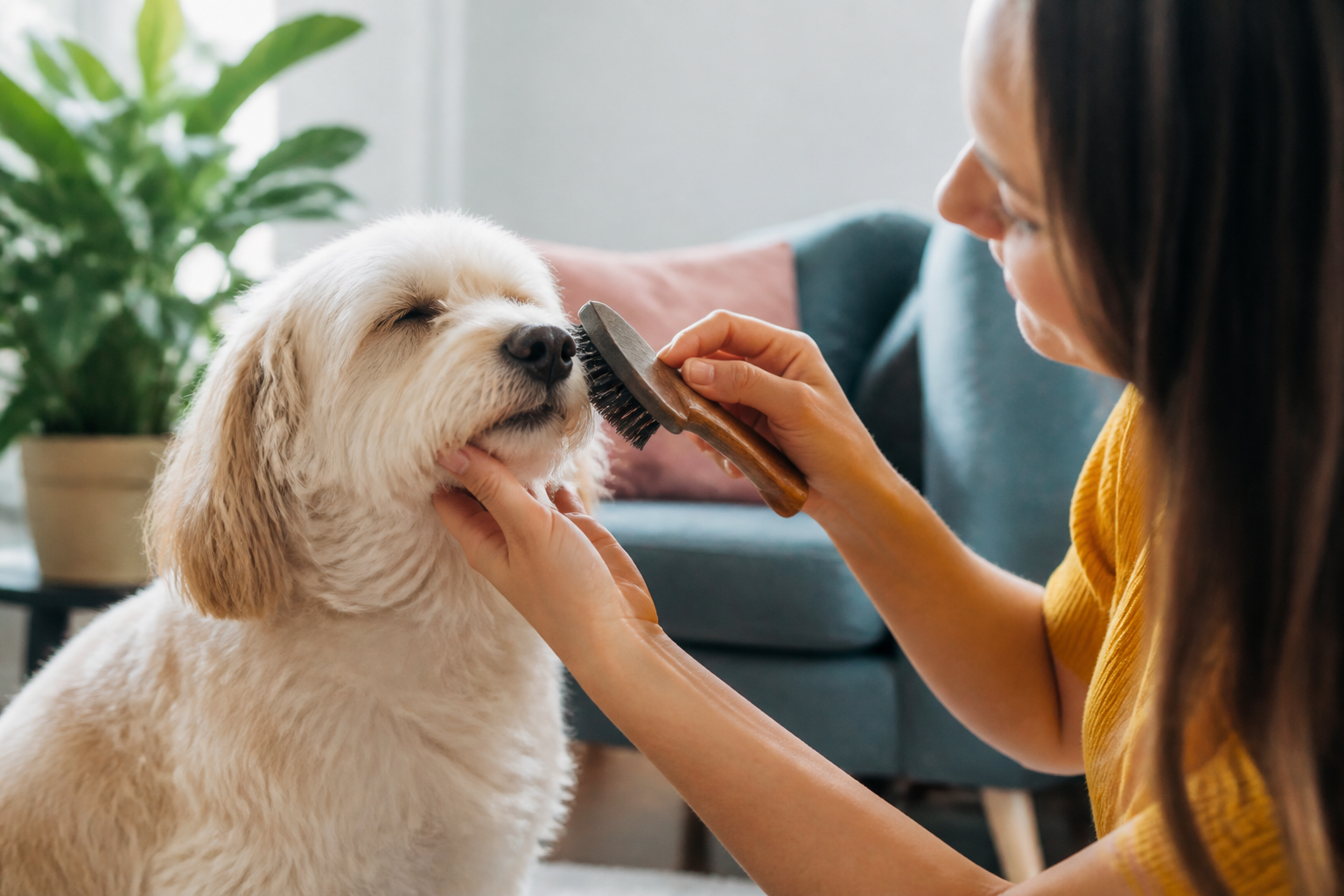
You might notice your dog pulling away the moment you reach for their chin or forehead. Many owners find that while their dog enjoys a full body massage with a brush, the face is a different story. At BaxterBoo, we understand that the face is a highly sensitive area filled with sensory nerves and delicate structures like eyes and ears. Brushing this area is about more than just looking good. It is a vital part of hygiene that prevents painful mats, eye infections, and skin irritation from trapped food or debris. This guide will walk you through the best techniques for different coat types and how to help a nervous dog feel comfortable. By the end, you will know how to maintain a clean, happy face for your pet with confidence.
Why Face Brushing Is Challenging
The canine face is a complex landscape of sensory inputs. Your dog relies on their whiskers, also known as vibrissae, to sense their surroundings. These whiskers are rooted deep in follicles packed with nerves. When you move a brush haphazardly around their muzzle, it can feel overwhelming or even painful to them. Some dogs also have negative associations with being handled if a previous grooming session involved accidental nicks or tugging.
Another common reason for resistance is underlying discomfort. If a dog has dental issues or an ear infection, any pressure near the jaw or ears will cause them to flinch. This is why paying attention to their body language is so important. A dog that was fine with face brushing last week but suddenly snaps or hides today might be telling you something is wrong.
Quick Answer: Brushing a dog's face requires a gentle touch and specific tools like a fine-toothed comb or a soft-bristle brush. Always support the skin with your fingers to prevent pulling, and move in the direction of hair growth while avoiding the eyes.
Essential Tools for Facial Grooming
You should not use the same large, heavy brush for your dog's face that you use for their back. The skin on the face is much thinner and more prone to scrapes. We carry a wide variety of tools at BaxterBoo that are specifically designed for these smaller, more delicate areas. Having a dedicated facial kit will make the job much safer. You can explore our dog grooming collection for brushes, combs, wipes, and other grooming supplies.
Consider these essential items:
- A small slicker brush with protective tips for long-haired beards.
- A fine-toothed flea comb for removing "eye goop" and crustiness.
- A soft-bristle brush for short-haired breeds or sensitive puppies.
- Facial wipes or a damp microfiber cloth for cleaning tear stains.
- A metal finishing comb to check for hidden knots.
Choosing the right size is the most important step. A standard slicker brush is often too wide to navigate the bridge of the nose or the space between the eyes. A "mini" or "pocket" sized brush allows for much greater precision and reduces the risk of poking your pet in the eye. Our dog brushes and combs include tools in different shapes and sizes.
Step-By-Step: Brushing a Long-Haired Dog's Face
Breeds with long facial hair, such as Shih Tzus, Schnauzers, and Doodles, require the most attention. Their beards act like sponges for water, food, and mud. If left unbrushed, these areas can develop tight mats that pull on the skin every time the dog opens its mouth or blinks. For additional guidance on managing tangles in curly coats, read how to groom a dog with curly hair.
Step 1: Inspect the area. / Use your fingers to gently feel for any large clumps of debris or hard mats around the mouth and ears. Step 2: Clean the eyes. / Use a damp cloth or a facial wipe to soften any dried discharge around the corners of the eyes before you start brushing. Step 3: Support the hair. / Place your thumb and forefinger at the base of the hair near the skin. This ensures that the tension from the brush stays on your fingers rather than pulling on the dog's skin. Step 4: Use short strokes. / Work in small sections, starting from the ends of the hair and moving toward the root. Step 5: Finishing touches. / Run a metal comb through the beard and mustache to ensure the teeth glide through without catching on any remaining tangles.
Key Takeaway: Always support the base of the hair with your fingers when brushing a long beard. This prevents the brush from pulling directly on the sensitive skin of the muzzle.
Step-By-Step: Brushing a Short-Haired Dog's Face
Short-haired dogs like Labradors or Boxers still benefit from facial brushing. While they do not get mats, they do shed, and they can develop skin issues in their facial folds. Brushing helps distribute natural oils and removes dead hair that can cause itching. For more general grooming advice, see these tips for bathing your dog.
Step 1: Choose a soft tool. / Use a soft-bristle brush or a rubber grooming mitt designed for faces. Step 2: Follow the grain. / Brush in the direction the hair grows. On the face, hair often grows in different directions around the eyes and bridge of the nose. Step 3: Clear the folds. / For breeds with wrinkles, use the brush or a soft cloth to gently clean inside the folds where moisture can hide. Step 4: Wipe down. / Finish by wiping the face with a clean, damp cloth to remove any loosened hair and dander.
Even with short hair, be mindful of the bony areas of the skull. There is very little padding over the brow bones and jawline. Using a heavy hand can be painful, even if the brush itself is soft.
Managing Tear Stains and Facial Folds
Tear staining is a common issue, especially for light-colored dogs or breeds with prominent eyes. These stains are caused by porphyrins, which are iron-containing molecules found in tears. When tears sit on the fur, they oxidize and turn a reddish-brown color. Regular brushing and cleaning can significantly reduce this buildup. For suitable cleaning supplies, browse our dog eye care collection.
Use a fine-toothed comb to gently flick away dried discharge. If the debris is hard, do not pull on it. Instead, soak a cotton ball in warm water or a specialized eye rinse and hold it against the area for thirty seconds. This softens the "gunk" so it can be combed out without hurting the dog. Pure and Natural Pet Tear Stain Removing Under Eye Wipes are another option for cleaning around the eyes.
For dogs with deep facial folds, such as Bulldogs or Pugs, brushing is only half the battle. You must ensure the skin between the folds is dry. Moisture trapped in these areas can lead to yeast infections or "fold dermatitis." After brushing, check the skin for any redness or an unusual odor.
Vet Tip: If your dog has persistent, foul-smelling discharge from the eyes or skin folds, consult your veterinarian. These can be signs of infection or allergies that may require prescription treatments.
Handling a Dog That Resists Face Brushing
If your dog runs away at the sight of a brush, you need to go back to the basics. This process is called desensitization. The goal is to change your dog's emotional response from fear to a neutral or positive feeling.
Start by just showing the brush to your dog and giving them a high-value treat. Do not even touch them with it yet. Once they are happy to see the brush, touch them with the back of the brush (the non-bristled side) on their shoulder or neck. Slowly move toward the face over several sessions.
When you finally begin brushing the face, do only one or two strokes before stopping and giving a treat. Keep sessions very short. It is better to do thirty seconds of successful brushing than five minutes of struggling. If the dog becomes stressed, they will remember that stress the next time you bring the tools out.
Bottom line: Patience and positive reinforcement are more effective than force when grooming a sensitive area like the face.
When Face Sensitivity Signals a Health Issue
Sometimes, resistance to brushing is not about behavior. It is about physical pain. Because we are a specialty pet retailer with a dedicated pharmacy, we often talk to owners whose dogs have developed "grooming aggression" due to health problems. You can browse our dog pharmacy when your veterinarian recommends prescription care.
If you notice any of the following, stop brushing and schedule a vet visit:
- Red, swollen, or bleeding gums.
- Persistent bad breath that does not go away with tooth brushing.
- Pawning at the ears or shaking the head frequently.
- Cloudiness in the eyes or excessive squinting.
- A sudden change in temperament when the face is touched.
Our pharmacy carries FDA-approved medications for many of these conditions, including ear treatments and dental health aids, through our partnership with Pet's Choice. Treating the underlying pain is the only way to make your dog comfortable with grooming again. For related oral-care guidance, read these pet dental care tips.
Safe Positioning for Grooming the Face
Your physical position can make a big difference in how your dog perceives the grooming session. Looming over a dog or reaching directly over their head can be very intimidating. This is especially true for dogs with limited vision or senior pets with cataracts.
Try sitting at the same level as your dog. Instead of approaching from the front, try working from the side or even from behind the dog. By standing behind them and gently cupping their chin, you can reach the sides of the face and the forehead without your hands being directly in their line of sight. This "blind" approach is often much less frightening for nervous pets.
If you have a small dog, placing them on a non-slip surface like a grooming table or a rubber mat on a counter can help. It prevents them from scurrying away and keeps them at a comfortable height for you to see what you are doing.
Making Face Brushing a Positive Experience
Grooming should be a bonding activity, not a chore that you both dread. You can turn face brushing into a relaxing ritual by incorporating massage. Use your fingertips to gently rub your dog's cheeks and the base of their ears before introducing the brush. This relaxes the facial muscles and puts the dog in a calmer state of mind.
Always end the session on a good note. Even if you only managed to brush one side of the beard, stop while the dog is still behaving well. Give them a favorite toy or a special treat. Over time, they will learn that the "scary" brush leads to something wonderful.
Consistency is also key. Brushing the face for two minutes every day is much better than trying to do a twenty-minute session once a week. Frequent, short sessions keep the hair manageable and keep the training fresh in your dog's mind.
Conclusion
Brushing a dog's face is a delicate task that requires the right tools and a lot of patience. Whether you are managing a long beard or cleaning the folds of a short-haired pup, the goal is always safety and comfort. Remember to support the skin, use small strokes, and watch for any signs of physical pain. We carry everything you need to keep your pet looking their best, from specialized combs to soothing facial wipes. If you find that your dog needs regular preventives or medications to manage eye or dental health, consider our pharmacy for convenient home delivery. You can also save on your favorite grooming supplies by using our Autoship programme, which ensures you never run out of the essentials.
FAQ
How often should I brush my dog's face? For long-haired breeds or dogs with beards, you should aim to brush the face daily to remove food particles and prevent mats. Short-haired breeds may only need a facial brush-down once or twice a week to manage shedding and keep skin folds clean. Frequent, short sessions are always better than infrequent, long ones.
What should I do if my dog tries to bite the brush? Biting the brush is usually a sign of fear or over-stimulation. Stop the session immediately and give the dog space. You can try using a softer brush or a grooming mitt to make the sensation less intense. Work on desensitization by pairing the sight of the brush with high-value treats without actually touching the face until the dog is calm.
Is it safe to use a slicker brush near the eyes? You must be extremely careful when using a slicker brush near the eyes because the wire bristles can easily scratch the cornea. It is often safer to use a very small, tipped slicker brush or switch to a fine-toothed metal comb for the area directly around the eyes. Always use your free hand to shield the dog's eye while you work nearby.
How do I get rid of hard, crusty buildup under my dog's eyes? Never pull or tug on hard eye crust, as this can tear the delicate skin. Soak the area with a warm, damp cloth for at least thirty seconds to soften the debris. Once it is soft, use a fine-toothed flea comb to gently lift the buildup away from the fur. Repeat this daily to prevent the crust from becoming hard again.






