
 Save 15% on your 1st Autoship learn more

 Email us
 Live Chat
 FAQs
FAQs





Introduction
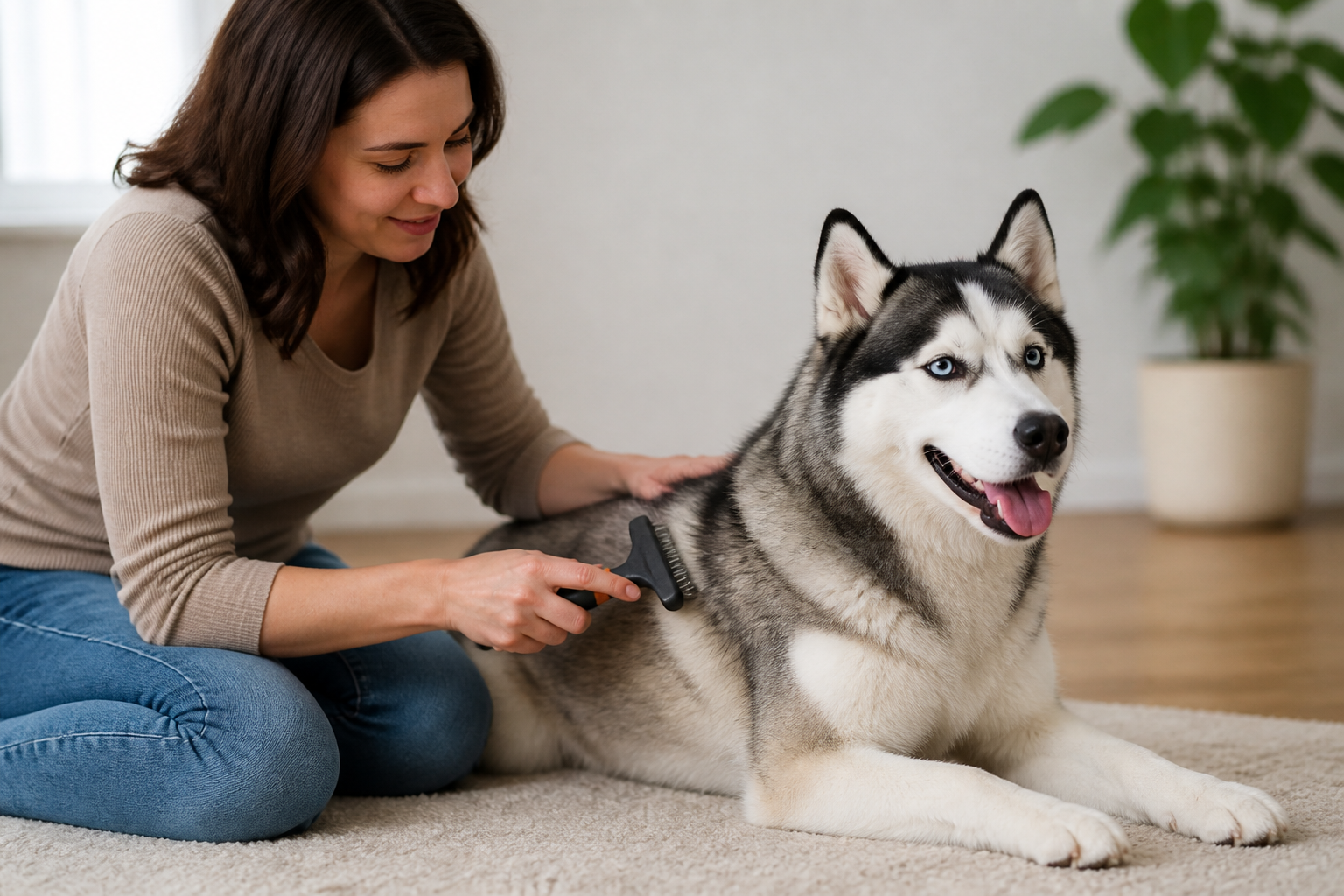
If you have ever looked at your floor and wondered if a small, white cloud exploded in your living room, you likely own a Siberian Husky. These dogs are famous for their stunning, thick coats, but that beauty comes with a significant amount of maintenance. Brushing a husky is not just about keeping your furniture clean: it is a vital part of their health and temperature regulation. At BaxterBoo, we know that the right technique makes the difference between a frustrating chore and a bonding moment with your dog. This guide covers the specific tools you need, the best techniques for managing their double coat, and how to handle the heavy shedding seasons known as the "blow out." By understanding how to work with their unique fur, you can keep your dog comfortable and your home manageable.
Understanding the Husky Double Coat
Before you pick up a brush, you need to understand what you are working with. A husky does not have hair like a human or a single-layered coat like a Poodle. They possess a dense double coat designed to protect them from extreme temperatures. The first layer is a soft, downy undercoat. This layer acts as insulation, trapping air to keep the dog warm in the winter and cool in the summer. The second layer consists of longer, coarser guard hairs. These hairs repel water and protect the skin from dirt and sun.
This two-layer system is highly efficient, but it creates a lot of loose fur. The undercoat naturally dies and sheds, but it often gets trapped underneath the guard hairs. If you only brush the surface, you leave all that dead fur sitting against the skin. This can lead to painful mats, skin irritation, and even hotspots.
Quick Answer: Brushing a husky requires a two-step approach using an undercoat rake to reach the inner layer and a slicker brush for the topcoat. You should brush your husky at least two to three times a week, increasing to daily sessions during their twice-yearly shedding seasons.
The Essential Toolkit for Husky Grooming
You cannot brush a husky effectively with a standard grocery store dog brush. Because their fur is so thick, you need tools that can penetrate several inches of hair without scratching the skin. We have found that having a specific set of tools makes the process much faster and more effective. Explore our dog grooming supplies to find tools for brushing, bathing, and coat care.
The Undercoat Rake
This is the most important tool in your kit. An undercoat rake has long, sturdy metal pins that reach through the topcoat to pull out loose fur from the undercoat. Look for one with rounded tips so you do not accidentally poke your dog's skin. This tool is designed to glide through the hair rather than pull it.
The Slicker Brush
A slicker brush has fine, short wires close together. It is perfect for catching loose guard hairs and smoothing out the top layer of the coat. After you use the rake to clear out the bulk of the shedding fur, the slicker brush adds a finished, polished look to the coat. Our dog brushes and combs include slicker brushes, shedding brushes, and combs for different coat types.
The Stainless Steel Comb
A simple "greyhound comb" or metal comb is excellent for checking your work. After you think you are finished brushing, run the comb through the fur. If it snags, you still have a small mat or a clump of loose hair that needs attention. These are especially helpful for the long fur on the "trousers" (the back of the thighs) and the tail.
DeShedding Tools
Tools like the Furminator are popular for a reason. They are designed specifically to grab onto the dead undercoat and pull it out before it hits your carpet. However, these must be used with a light touch. Because they are so efficient, over-using them in one spot can cause "brush burn" or thin out the coat too much.
Key Takeaway: Quality tools are an investment that saves time and prevents skin irritation. A husky-specific kit must include an undercoat rake to address the insulating layer and a slicker brush for the protective top layer.
How to Brush Your Husky: A Step-by-Step Guide
Brushing a husky is not a quick five-minute task. To do it right, you need to be systematic. If you just brush the back and sides, you will miss the areas where mats most commonly form.
Step 1: Perform a visual inspection. / Run your hands over your dog to feel for any large mats, burrs, or skin lumps. Check high-friction areas like the armpits and behind the ears.
Step 2: Start with the undercoat rake. / Use long, gentle strokes in the direction of the hair growth. Do not press down into the skin; let the tool do the work of grabbing the loose fur.
Step 3: Use the "line brushing" technique. / Part the hair with one hand so you can see the skin. Brush that "line" of hair from the root out. Work your way up the body in sections.
Step 4: Finish with the slicker brush. / Once the rake is no longer pulling up large clumps, use the slicker brush to smooth the guard hairs and remove surface debris.
Step 5: Check with the comb. / Run your metal comb through the fur, especially on the legs and tail. If the comb glides through, your grooming session is complete.
Managing the Seasonal Blow Out
Twice a year, usually in the spring and fall, huskies "blow" their coats. This is a period of intense shedding where the entire undercoat comes out in large clumps. It can last for three to six weeks. During this time, your normal brushing routine will not be enough.
During a blow out, you should aim to brush your dog every single day. If you skip a few days, the loose fur can quickly felt together, creating mats that are difficult to remove without cutting the hair. This is also the time when many owners choose to use a high-velocity dryer. These dryers use a powerful stream of air to literally blow the loose undercoat right off the dog. If you do this at home, we recommend doing it outside to avoid a fur-storm in your bathroom. For more coat-care ideas, read how to groom a dog with curly hair.
Vet Tip: If your husky is shedding excessively outside of the normal spring and fall windows, or if you notice bald patches and red skin, consult your veterinarian. While shedding is normal, sudden changes in coat quality can sometimes point to underlying thyroid issues or nutritional deficiencies.
Caring for Skin and Coat Health
A healthy coat starts from the inside. If your husky's skin is dry and flaky, the fur will be more prone to tangling and breakage. We recommend looking for foods and supplements rich in Omega-3 and Omega-6 fatty acids. Brands like Zesty Paws or Grizzly offer easy ways to add these nutrients to your dog's diet.
If you notice your husky is scratching frequently, it could be due to allergies or pests. Fleas and ticks love to hide in the dense forest of a husky's coat. Our pet pharmacy offers FDA-approved flea and tick preventives through our partnership with Pet's Choice. These medications are essential because a dog that is constantly scratching will create mats and potentially damage their skin, leading to infections.
When it comes to bathing, less is more. Huskies are relatively clean dogs and do not have a strong "doggy odor." Bathing them too often can strip away the natural oils that keep their coat waterproof. Aim for a bath every few months, or only when they have rolled in something particularly unpleasant. Always make sure the dog is brushed thoroughly before the bath. Water can act like glue for loose undercoat fur, making mats nearly impossible to remove once they get wet and then dry. For additional bathing guidance, see these dos and don'ts for bathing your dog.
The Golden Rule: Never Shave Your Husky
It is a common mistake for owners to think that shaving their husky in the summer will help them stay cool. This is actually dangerous for the dog. The double coat provides a thermal barrier. In the summer, it keeps the heat out and the cool air in against the skin.
When you shave a husky, you remove their natural cooling system. Furthermore, their skin is very fair and not used to direct sunlight. A shaved husky is at high risk for sunburn and heatstroke. The guard hairs also may not grow back correctly, leading to a patchy, coarse coat that no longer protects them from the elements. Instead of shaving, focus on thorough brushing to ensure air can circulate through the fur to the skin.
Bottom line: Shaving a husky destroys their natural ability to regulate temperature and exposes them to sun damage: stick to regular brushing to keep them cool.
Making Grooming a Positive Experience
Huskies are known for being vocal and sometimes dramatic. If your dog views the brush as an enemy, grooming will be a struggle for both of you. It is best to start grooming routines when they are puppies, but even older dogs can learn to enjoy it.
Use high-value rewards to create a positive association. We often suggest using a lick mat smeared with peanut butter or wet food. While your husky is focused on the treat, you can work on the grooming. Keep the sessions short at first. Five minutes of stress-free brushing is better than twenty minutes of fighting.
- Start with the least sensitive areas like the back.
- Offer treats and verbal praise throughout the session.
- Take frequent breaks if the dog becomes restless.
- Always end on a positive note with a favorite toy like a Kong or a game of fetch.
If you are just starting out with a new husky, we offer a $10 reward on your first order of $39 or more when you are signed in at checkout. This is a great way to stock up on the rakes, brushes, and treats you will need for a successful grooming routine. You can also explore the MVP Rewards programme for additional value on eligible purchases.
Common Brushing Mistakes to Avoid
Even well-meaning owners can make mistakes that lead to an uncomfortable dog or a messy house. One of the biggest errors is "surface brushing." This happens when you use a soft brush on the very top of the fur but never reach the skin. This leads to a coat that looks good on top but is a solid mass of mats underneath.
Another mistake is rushing. If you pull too hard on a tangle, you will hurt your dog and make them fearful of the brush. If you encounter a mat, hold the fur at the base near the skin so you do not pull on the skin itself. Use a detangling spray or a small amount of conditioner to help break the mat apart with your fingers or a comb.
Finally, do not forget the "hidden" areas. The tail, the back of the legs, and the belly often get neglected. These areas are prone to matting because the fur is longer or subject to more friction. Make it a habit to check these spots every time you pick up the brush.
Key Takeaway: Consistency is the secret to husky grooming. Brushing for ten minutes three times a week is much more effective than one marathon session once a month.
Summary of Husky Brushing Essentials
Keeping a husky well-groomed requires patience and the right equipment. You are not just managing the fur on your floor; you are maintaining the complex biological tool that keeps your dog safe from the weather.
- Use an undercoat rake to reach the insulating layer.
- Practice line brushing to ensure you reach the skin.
- Increase frequency during the spring and fall blow outs.
- Support coat health with Omega supplements.
- Never shave the coat, as it protects against both heat and cold.
Regular grooming sessions are also a great time to check for any physical changes in your pet. If you find a new lump or notice your dog seems stiff when you move their legs, it may be time to talk to your vet about joint support or other health needs. Our MVP Rewards program can help you earn up to 5% back on these essential health supplies, making it easier to provide the best care for your dog.
Our pharmacy at BaxterBoo is here to help with any prescription needs your veterinarian recommends for skin health or allergy management. By staying consistent with your grooming and health routines, you can ensure your husky stays as majestic and comfortable as possible. Learn more about our Autoship programme for regularly ordered care supplies.
FAQ
How often should I brush my husky?
For most of the year, you should brush your husky two to three times per week to remove loose fur and prevent mats. During the "blow out" seasons in the spring and fall, you will need to brush them daily to keep up with the heavy shedding. Consistent brushing reduces the amount of fur in your home and keeps your dog's skin healthy.
Can I use a human hairbrush on my husky?
No, human hairbrushes are not designed to penetrate the thick double coat of a husky and will only slide over the surface. You need an undercoat rake to reach the downy inner layer and a slicker brush for the topcoat. Using the wrong tools can leave mats behind and may even irritate your dog's skin.
Why does my husky shed in huge clumps?
This is a natural process called "blowing the coat," where the dog sheds its entire undercoat to prepare for a change in season. It usually happens twice a year and can look like your dog is losing an alarming amount of hair. Regular use of an undercoat rake during this time will help remove these clumps safely and efficiently.
Is it okay to bathe my husky before brushing them?
It is usually better to brush your husky thoroughly before giving them a bath. If you get a matted or heavily shedding coat wet, the water can cause the loose fur to tighten into even tougher mats. Brushing first removes the bulk of the dead hair, making the washing and drying process much easier for both you and your dog.






