
 Save 15% on your 1st Autoship learn more

 Email us
 Live Chat
 FAQs
FAQs





Introduction
You are relaxing on the sofa when you run your hand over your dog's back and feel it. A hard, tight knot is tucked right against the skin behind their ear. If you have a Poodle, a Bichon Frise, or a curly haired doodle mix, you know this feeling well. Curly coats are beautiful but they act like a magnet for burrs, dust, and loose fur. Without the right technique, brushing becomes a battle of wills that leaves your dog hiding under the table. At BaxterBoo, we know that grooming is about more than just looking good. It is a vital part of your dog's physical health and comfort. This guide explains exactly how to handle those curls without causing pain. You will learn the professional techniques and tools needed to keep your dog's coat soft and springy.
The Unique Challenge of Curly Dog Hair
Curly dog hair does not work like human hair or straight dog fur. Most curly breeds are considered low shedding. This label is slightly misleading. These dogs still lose hair, but the loose strands do not fall onto your carpet. Instead, the dead hair gets trapped inside the tight curls of the living coat.
When loose hair, skin oils, and dirt sit together, they begin to weave themselves into knots. If you only brush the top layer of the curls, these knots tighten into mats near the skin. Mats are painful because they pull on the skin every time your dog moves. They also trap moisture, which can lead to sores or fungal infections.
Quick Answer: To brush curly dog hair effectively, you must use a technique called line brushing. This involves parting the hair to the skin and brushing small sections with a slicker brush and a metal comb. Regular brushing prevents painful matting and maintains skin health.
For additional guidance on curly coats, see our guide to grooming a dog with curly hair.
Essential Tools for Curly Coats
You cannot manage a curly coat with a standard plastic brush from a grocery store. Curly hair is dense and requires tools that can penetrate deep into the fluff. We recommend building a dedicated grooming kit to make the process easier for everyone.
The Slicker Brush
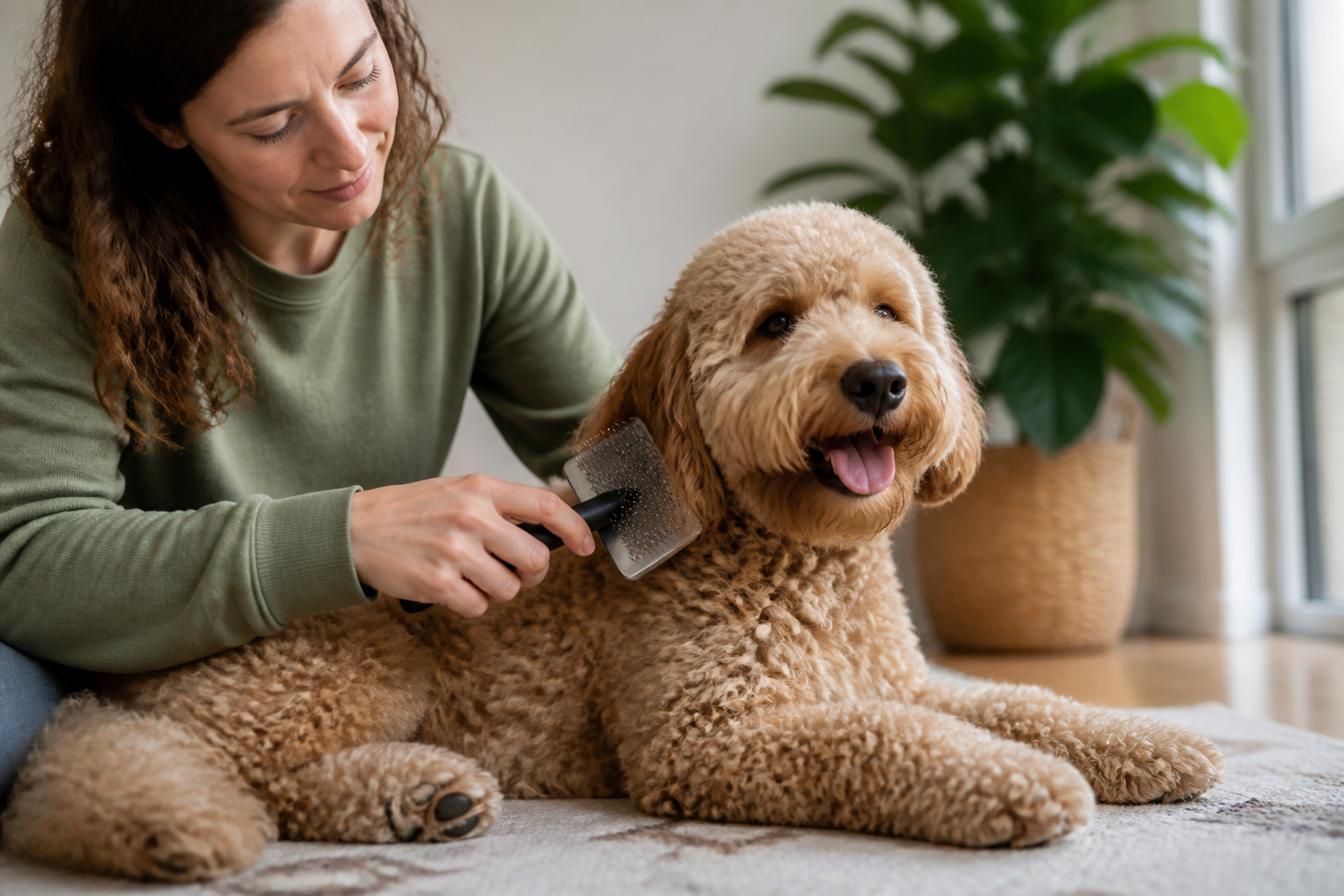
This is the workhorse for curly hair. A slicker brush has fine wire bristles that are slightly hooked. These bristles reach into the curls to grab loose hair and break up small tangles. Look for one with a comfortable handle, as you will be using it frequently.
The Metal Finishing Comb
Often called a Greyhound comb, this tool is non-negotiable. It has two sides with different tooth spacing. The wide side helps you find deep knots. The fine side ensures the hair is completely clear of debris. If the comb cannot pass through the hair, you are not finished brushing.
Detangling Spray and Leave-in Conditioner
Dry hair is brittle and prone to breaking. Brushing dry curls can also cause static and frizz. A high quality detangling spray adds "slip" to the hair. This allows knots to slide apart more easily. It also protects the hair shaft from damage during the grooming session.
The Pin Brush
A pin brush is useful for a quick daily refresh. It features long metal pins with rounded ends. While it will not remove deep mats, it is excellent for fluffing the coat and removing surface dirt after a walk.
You can find slicker brushes, combs, and other essentials in our dog brushes and combs collection.
Key Takeaway: Using the wrong tools is the most common cause of grooming frustration. A metal comb and a slicker brush are the two most important items for maintaining a curly coat.
The Line Brushing Technique
Most owners make the mistake of brushing over the top of the coat. This makes the dog look fluffy but leaves the base of the hair a tangled mess. Professionals use line brushing to ensure they reach the skin.
Step 1: Apply detangling spray. / Lightly mist a section of the coat. Do not soak the hair, but ensure it feels slightly damp to the touch.
Step 2: Part the hair. / Use your hand to push a section of hair upward. You should see a straight line of skin.
Step 3: Brush the "line." / Use your slicker brush to brush the hair downward away from the part. Use short, gentle strokes.
Step 4: Move the part. / Move your hand up an inch to create a new line of skin. Brush that new section of hair down into the section you just finished.
Step 5: Check with the comb. / Once you finish an entire area, run your metal comb through it. If the comb catches, go back to the slicker brush for that spot.
Vet Tip: If you find a mat that is too tight to brush out, do not try to cut it out with kitchen scissors. It is very easy to accidentally snip the dog's skin. Use a specialized mat splitter or consult a professional groomer to safely shave the area.
For more detailed brushing guidance before trimming, read about how to prepare a curly-haired dog for grooming.
Managing Trouble Spots
Certain areas of a curly dog's body are more prone to matting. These spots experience more friction or collect more moisture. You should check these areas every single day, even if you do not do a full body brushing.
- Behind the ears: This is the number one spot for mats. The hair here is often finer and softer.
- The armpits: Friction from walking causes the hair under the front legs to felt together quickly.
- The "trousers": The back of the thighs often collects grass seeds and burrs.
- The chin and beard: If your dog eats wet food or drinks deeply, the moisture in the beard leads to tangles.
- Between the toes: Mud and ice balls can get trapped in foot hair, leading to irritation.
Keeping the hair in these areas trimmed shorter can help. We carry various grooming shears and clippers for home maintenance between professional visits. If you notice your dog licking their paws or scratching their ears excessively, check for hidden mats first.
If you need help with stubborn tangles, consider a coat mat and tangle splitter.
Bathing and Curly Hair
One of the biggest mistakes you can make is bathing a matted curly dog. Water acts like a glue for knots. When a mat gets wet and then air dries, it shrinks and tightens. This can make a manageable tangle nearly impossible to remove without shaving the dog.
Always brush your dog thoroughly before they get in the tub. Use the metal comb to ensure there are zero tangles. After the bath, use a high velocity dryer or a hair dryer on a cool setting. As you dry, use your pin brush to "fluff" the hair. This prevents the curls from clumped together while wet.
For more bathing guidance, read these dos and don'ts for bathing your dog.
Bottom line: Never bathe a curly coated dog until you have completely brushed out every knot and mat.
Nutrition and Coat Quality
The health of a curly coat starts from the inside. If the hair is dry and brittle, it will tangle much faster than healthy, hydrated hair. Omega-3 and Omega-6 fatty acids are essential for skin and coat health.
Many owners find that adding a fish oil supplement or a specific skin and coat formula helps. Our pharmacy offers various supplements and prescription diets that support skin barrier function. You can also earn points on these health essentials through our MVP Rewards program. If your dog has chronically dry skin or dull fur, talk to your veterinarian about their nutritional needs.
For health-related products and prescription options, browse our pet pharmacy.
When to Call a Professional
Even with the best home care, most curly breeds need a professional groomer every six to eight weeks. Professionals have the equipment to dry the coat deeply and perform precision clips.
If your dog's coat becomes severely matted, a professional is the safest option. Shaving a matted dog is a delicate process. The mats pull the skin up into the hair, making it very easy to cut the dog. A groomer has the experience to handle this safely.
Vet Tip: Sudden changes in coat texture or excessive hair loss can indicate underlying health issues like thyroid problems or allergies. If your dog's hair becomes thin or their skin looks red, schedule a checkup with your veterinarian.
Training Your Dog to Enjoy Brushing
Because curly hair requires so much maintenance, your dog needs to be comfortable with the process. Start when they are puppies if possible. If you have an adult dog, start slow.
Keep grooming sessions short, perhaps only five minutes at a time. Offer high value treats throughout the process. Brush one leg, give a treat, and then stop. Gradually increase the time as your dog becomes more relaxed. Always end the session on a positive note.
If your dog is very anxious about grooming, we carry calming aids and pheromone sprays. These can help take the edge off during your weekly sessions. Regularity is the key. A dog who is brushed every day expects the routine and is less likely to fight it.
Explore our dog grooming supplies to build a routine that works for your dog.
Conclusion
Brushing a curly coated dog is a commitment, but it is one that pays off in comfort and health. By using the line brushing technique and the right metal tools, you can keep your dog's coat in top condition. Remember to focus on high friction areas and always brush before bathing. Our warehouse in Vernon Hills is stocked with the best brushes, combs, and sprays to help you succeed.
- Use a slicker brush and metal comb daily.
- Never bathe a dog that has existing mats.
- Check behind the ears and under the legs for hidden tangles.
- Support coat health with proper nutrition and supplements.
Key Takeaway: Consistent home maintenance prevents painful matting and strengthens the bond between you and your dog.
If you need to restock your grooming kit or start a new supplement routine, consider signing up for our Autoship programme. You will save on your first order and ensure you never run out of the supplies your curly dog needs.
FAQ
How often should I brush my curly haired dog?
Most curly breeds require brushing at least three to four times a week. If you keep the coat long, daily brushing is necessary to prevent mats from forming near the skin. Short clips may only need a thorough brushing twice a week.
Can I use a human hairbrush on my dog's curls?
Human brushes are generally not effective for curly dog hair. They lack the bristle density and strength to reach through the thick coat to the skin. A professional slicker brush and metal comb are much more effective and safer for your dog's skin.
Why does my dog's hair get matted even though I brush it?
You may only be brushing the top layer of the fur. This is called "surface brushing." If you do not part the hair and brush from the skin out using the line brushing method, the hair underneath will continue to tangle and mat.
What should I do if my dog hates being brushed?
Start with very short sessions and use plenty of rewards. Focus on one small area at a time and use a detangling spray to minimize pulling. If the dog is extremely stressed, consult a professional groomer or your vet to rule out skin sensitivity or pain.






