
 Save 15% on your 1st Autoship learn more

 Email us
 Live Chat
 FAQs
FAQs





Introduction
You are sitting on the couch after a long day. Your dog leans in for a belly rub. As your hand moves through their fur, your fingers snag on a hard, tight clump of hair. This moment is familiar to many pet owners. A small tangle can quickly turn into a dense mat if you do not handle it correctly. These knots are more than just a cosmetic issue. They can pull on the skin and cause real discomfort.
At BaxterBoo, we know that grooming at home can feel like a daunting task. You want your dog to be comfortable and look their best without a stressful trip to the groomer every time a knot appears. This guide covers the best tools to use and the safest techniques for your dog. You will learn how to identify different types of tangles and how to remove them without reaching for the scissors.
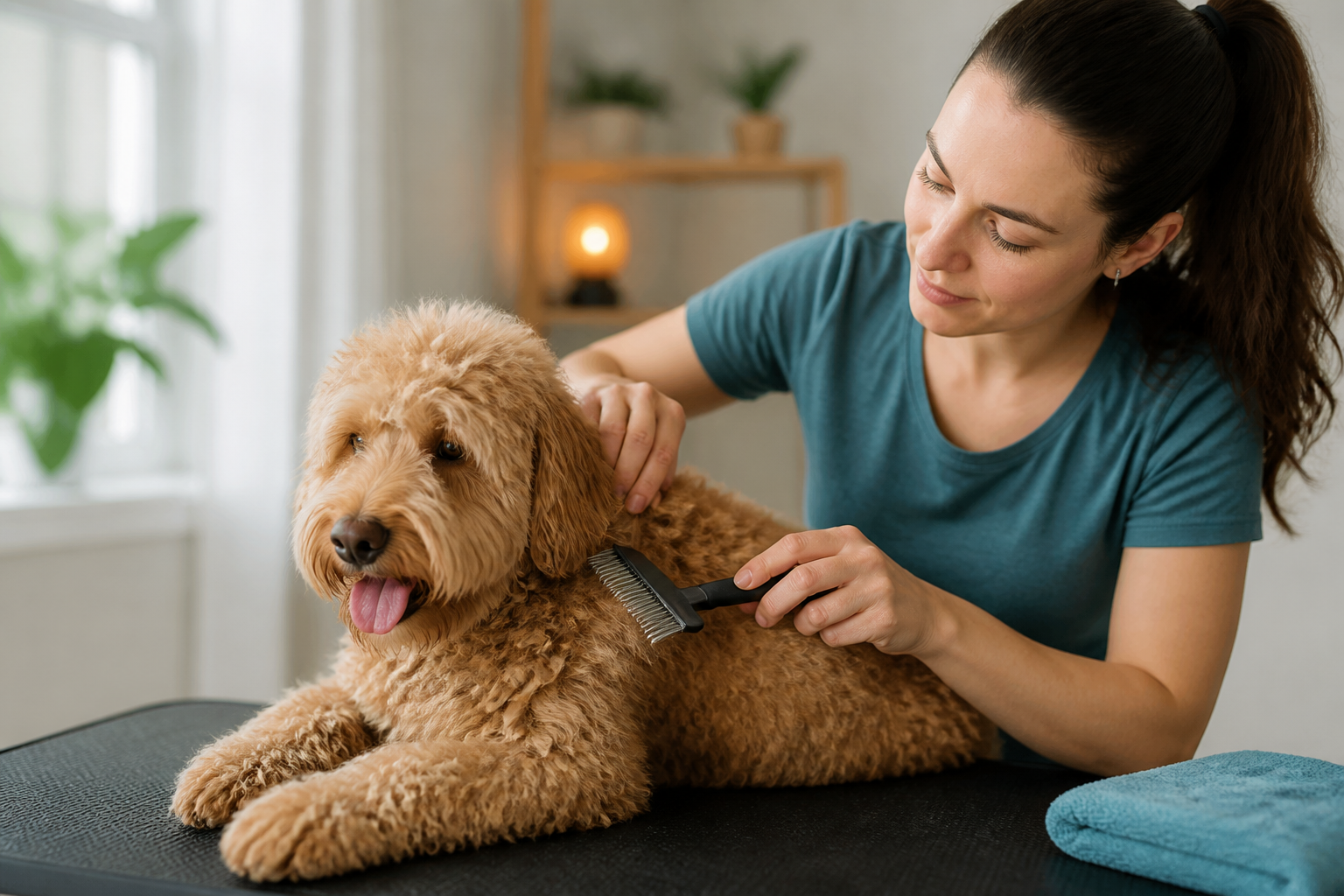
Quick Answer: To brush out knots safely, start by teasing the hair apart with your fingers. Apply a detangling spray to lubricate the fibers. Use a slicker brush to work through the knot from the ends toward the skin while holding the base of the hair to prevent pulling.
Why Dog Hair Mats and Where to Look
Understanding why hair tangles is the first step in preventing it. Friction is the most common culprit. When hair rubs against itself or another surface, the cuticles of the hair shafts can interlock. This creates a tiny knot that acts like a magnet for loose fur and debris.
Moisture also plays a massive role. If your dog goes for a swim or takes a bath, the hair can curl and shrink as it dries. If you do not brush the coat while it is damp or immediately after it dries, those curls turn into tight mats. If bath-time grooming is also part of your routine, our dog bathing and grooming tips can help you keep the experience more comfortable.
Seasonal changes are another factor. Many dogs have a double coat. They shed their undercoat twice a year. If that dead hair is not brushed out, it gets trapped against the skin by the topcoat. This creates a thick layer of felted fur.
You should check these common friction zones regularly:
- Behind the ears where the skin is very thin
- In the armpits and the "groin" area
- Between the toes and around the paw pads
- Under the collar or harness straps
- Along the back of the thighs (the "trousers")
The Essential Tool Kit for Removing Knots
You cannot effectively remove knots with a standard human hairbrush. The hair on a dog is often denser and has a different texture. Having the right supplies will make the process faster and less painful for your dog. We carry a wide variety of professional-grade grooming tools in our dog grooming collection to help you manage every coat type.
The Slicker Brush
A slicker brush has fine, short wires spaced closely together on a flat or curved surface. It is designed to grab loose hair and break up small tangles. It is the workhorse of dog grooming. Look for one with protective tips if your dog has sensitive skin.
The Metal Greyhound Comb
A metal comb is essential for checking your work. It has two different spacing widths for the teeth. Once you think a knot is gone, run the comb through. If it catches, there is still a small tangle that needs attention.
Detangling Spray
Never brush a dry knot. Dry hair is more likely to break or snap. A good detangling spray or a leave-in conditioner provides "slip." This allows the hair shafts to slide past each other rather than gripping together. You can find sprays and conditioners in our dog shampoo and conditioner category.
Cornstarch
This is a common household item that works wonders on greasy or stubborn mats. It helps dry out any oils and provides a powdery coating that makes the hair easier to separate.
Key Takeaway: Always use a lubricant like a detangling spray before attempting to brush out a knot. Brushing dry hair causes breakage and increases the likelihood of future matting.
Step-by-Step Guide to Brushing Out Knots
Removing a knot requires patience. If you rush, you will pull the skin and make your dog fear the grooming brush. Follow these steps to keep the experience positive.
Step 1: Isolate the knot. / Use your fingers to separate the matted hair from the surrounding clear fur. This prevents you from accidentally pulling on healthy, untangled hair.
Step 2: Apply detangler. / Spray the knot directly. Use your fingers to massage the product into the center of the mat. If the mat is very tight, let the product sit for two minutes.
Step 3: Pick it apart. / Use your fingers or the end tooth of a metal comb to gently tease the edges of the knot. Do not pull. Try to separate just a few hairs at a time from the outer edges.
Step 4: Hold the base. / This is the most important part. Grip the hair between the knot and the skin with your free hand. This ensures that when you brush, the tension is on your hand and not on the dog's skin.
Step 5: Use the slicker brush. / Start at the very tip of the hair, furthest from the skin. Use short, flicking motions. Slowly work your way toward the base of the knot as it begins to loosen.
Step 6: Finish with the comb. / Once the slicker brush moves through easily, use the wide-toothed side of your metal comb. Gradually move to the fine-toothed side until it glides through from skin to tip.
The Secret Cornstarch Method
If you encounter a mat that feels slightly damp or greasy, a detangling spray might not be enough. This often happens behind the ears or on the belly. Cornstarch is a safe, non-toxic way to help.
Rub a small amount of cornstarch directly into the mat. Work it in with your fingers. The starch absorbs moisture and grease that might be "gluing" the hairs together. It acts as a dry lubricant. Many professional groomers use this trick for fine-haired breeds like Malteses or Yorkies. After the cornstarch is worked in, the knot often becomes much easier to pick apart with a metal comb.
When You Should Stop Brushing
There is a point where brushing becomes inhumane. If the mat is tight against the skin, your dog will feel every movement. This can lead to "brush burn" or skin tears.
You should stop and consult a professional if:
- The mat is larger than a two-dollar coin and rests against the skin.
- The skin underneath the mat is red, moist, or has a foul odor.
- Your dog is growling, snapping, or showing extreme signs of distress.
- The hair is "pelted," meaning the mats have joined together to form a solid layer.
Vet Tip: If your dog has a severe mat that has caused skin irritation, do not apply home remedies to the raw skin. Shaving the mat may reveal a hot spot or infection. Consult your veterinarian for a proper exam. Our pharmacy carries FDA-approved treatments for skin infections through our partnership with Pet's Choice if your vet issues a prescription.
Understanding Different Coat Types
Not all knots are created equal. The way you handle a Poodle’s curls is different from how you manage a Golden Retriever’s undercoat. Knowing your dog's specific hair type will change your approach. For more guidance, read how to groom a curly-haired dog.
Curly and Wavy Coats
Breeds like Poodles, Bichons, and Doodles have hair that grows continuously. It does not shed out on its own. Instead, the dead hair gets caught in the curls. This creates deep, dense mats. These dogs need daily brushing and a high-quality slicker brush to stay knot-free.
Double Coats
Golden Retrievers, Huskies, and Shepherds have a soft undercoat and a coarse topcoat. Mats usually form when the undercoat "blows" and gets stuck. For these dogs, an undercoat rake is a better tool for prevention. It reaches through the topcoat to pull out the fuzzy undercoat before it can knot up.
Silky and Drop Coats
Yorkies and Shih Tzus have hair very similar to human hair. It is fine and prone to static. Static electricity makes the hairs cling together. A metal comb and a moisturizing spray are your best friends for these breeds.
Bottom line: Identify your dog's coat type to choose the right tools; curly coats need slickers, while double coats need undercoat rakes.
Prevention is Better Than Dematting
The goal is to never have to "rescue" your dog from a mat again. Consistency is the only way to achieve this. A five-minute brush every day is much better than a two-hour session once a month.
- Check after play: Always check for tangles after your dog plays with other dogs or runs through tall grass.
- Remove gear at home: Do not leave harnesses or sweaters on your dog all day. The friction from the fabric creates knots very quickly.
- Dry thoroughly: If your dog gets wet, dry them with a towel or a pet-safe dryer. Brush the hair as it dries to keep it straight.
- Use the right shampoo: Use a high-quality dog shampoo and conditioner. Brands like Zesty Paws or Earthbath offer formulas that keep the coat hydrated and less likely to tangle.
Training Your Dog to Enjoy Grooming
Many dogs hate the brush because it has always meant pain or discomfort. You can change this association with time and positive reinforcement. Start by just showing the brush to your dog and giving them a high-value treat.
Move on to touching them with the back of the brush. Once they are comfortable, try one or two gentle strokes. Do this while they are relaxed, perhaps during a quiet evening at home. Use "movie night" as a time to slowly work through their coat. If you find a knot, do not make a big deal of it. Reward them for staying still while you apply the spray.
If your dog is very anxious, you may want to look into calming supplements. Products from brands like Honest Paws or Zesty Paws can help take the edge off during grooming sessions. This makes it easier for them to sit still while you work through a tricky spot.
Managing Skin Health After Knot Removal
Once a knot is gone, the skin underneath might be sensitive. The hair has been pulling on that spot for days or even weeks. Air can finally reach the skin, which might cause the dog to lick or scratch at the area.
Keep a close eye on the spot for 48 hours. If the skin looks red or irritated, you can use a soothing topical spray. If the irritation does not go away, it is time to call the vet. Our pharmacy at BaxterBoo offers a range of prescription medications for chronic skin issues and allergies. This ensures that once the hair is healthy, the skin underneath stays healthy too.
Key Takeaway: Removing a mat is only half the battle. Monitoring the skin for irritation and preventing future knots through a routine is essential for long-term health.
The Role of Diet in Coat Quality
What goes into your dog's body shows up on their coat. A dog with dry, brittle hair will experience more matting than a dog with a supple, hydrated coat. This is because healthy hair has a smooth cuticle that does not snag as easily.
Look for foods and supplements rich in Omega-3 fatty acids. Ingredients like salmon oil or flaxseed help nourish the skin and hair from the inside out. We carry premium brands like Farmina, Orijen, and Open Farm that prioritize high-quality fats for coat health. If your dog is a picky eater, a simple pump of fish oil over their kibble can make a world of difference.
Conclusion
Brushing knots out of your dog's hair does not have to be a battle. With the right combination of detangling spray, a quality slicker brush, and a gentle hand, you can keep your dog's coat in top condition. Remember to always work from the ends of the hair toward the skin and use your fingers to do the heavy lifting first.
Our team at BaxterBoo is here to support your grooming journey. Whether you need a new set of brushes or a high-quality conditioner to prevent future tangles, we have the expert-picked supplies you need. For dogs with persistent skin issues caused by matting, our dog pharmacy provides easy access to the medications your vet prescribes.
- Check friction zones like armpits and ears daily.
- Never cut mats out with scissors.
- Use detangling spray to protect the hair shaft.
- Reward your dog for their patience during grooming.
Bottom line: Regular maintenance and the right tools from our dog grooming collection will keep your dog's coat smooth and pain-free.
FAQ
Should I wash my dog before brushing out knots?
No, you should never bathe a matted dog before brushing. Water acts like a glue for tangles. It causes the hair fibers to swell and then tighten as they dry, making the knots much harder to remove. Always demat the coat completely before getting the hair wet.
Can I use human detangler or conditioner on my dog?
It is best to avoid human products. A dog's skin has a different pH level than human skin. Using human products can strip the natural oils from their coat or cause irritation. Stick to products specifically formulated for pets to ensure they are safe if your dog licks their fur.
Is it safe to use scissors to cut out a stubborn mat?
Using scissors is very risky. A dog's skin is thin and moves easily. It is very common for owners to accidentally snip the skin because they cannot see where the mat ends and the body begins. If a mat is too tight to brush, it is much safer to use electric clippers or see a professional groomer.
How often do I need to brush my dog to prevent mats?
This depends on the breed and coat length. Long-haired or curly-coated breeds usually need a thorough brushing every day. For short-haired dogs or those with a smooth coat, once or twice a week is usually enough to keep them in good shape. Regular checks are key to catching tangles before they become mats.






