
 Save 15% on your 1st Autoship learn more

 Email us
 Live Chat
 FAQs
FAQs





Introduction
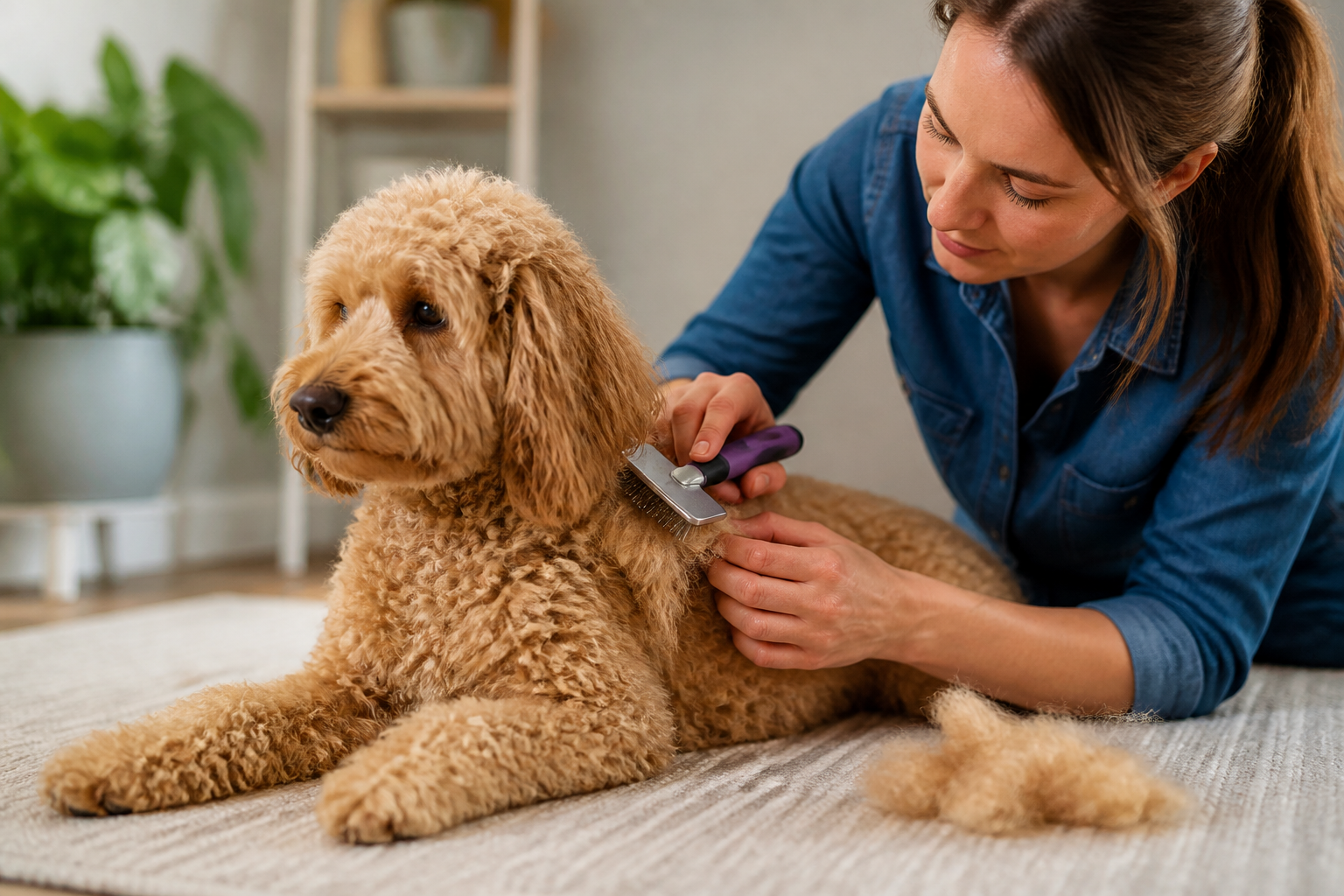
You are sitting on the sofa with your dog and running your hand along their side when you feel it. There is a hard, dense lump of fur tucked right behind their ear or deep in their armpit. It is not a burr or a bump on the skin, but a tight knot of hair that seems to have appeared overnight. These mats are a common frustration for many owners, especially those with long-haired or curly-coated breeds. At BaxterBoo, we know that grooming is more than just making your pet look good. It is a vital part of their physical comfort and overall health. This guide covers how to identify, safely remove, and prevent mats using the right tools and techniques. You will learn how to turn a stressful grooming session into a bonding moment that keeps your dog's skin healthy and their coat beautiful.
Why Mats Form in Dog Hair
Mats are not just simple tangles. They are dense clusters of live and dead hair that have become entwined. This often happens when the undercoat sheds but stays trapped against the skin instead of falling away. If you do not brush this loose hair out, it wraps around the healthy, growing hair. Friction is the most common culprit. You will often find mats in high-motion areas like the armpits, behind the ears, and where the legs meet the body. These are spots where the fur is constantly rubbing against itself.
External factors play a big role as well. Moisture is a major cause of sudden matting. If your dog goes for a swim or gets a bath and dries without a thorough brushing, the wet hair can curl and tighten as it dries. This creates knots that are much harder to remove later. Accessories like collars, harnesses, and sweaters also cause friction. If your dog wears a harness all day, the hair underneath is constantly being compressed and rubbed, which leads to quick tangling.
Seasonal changes also trigger matting. Many dogs "blow" their coat twice a year as they transition between their summer and winter fur. During these times, the sheer volume of shedding hair can overwhelm a standard grooming routine. Puppies also go through a difficult phase when their soft puppy coat is replaced by adult hair. The two different textures of fur often tangle together during this transition.
Identifying the Risks of Matted Fur
It is easy to think of mats as just a cosmetic issue, but they can actually be quite painful. As a mat grows larger, it begins to pull on the skin. Every time your dog moves, the knot tugs on the sensitive skin underneath. This constant tension can cause redness, irritation, and even bruising. In severe cases, mats can become so tight that they restrict blood flow to the skin or limbs.
Mats also hide what is happening on your dog’s body. A thick layer of matted fur makes it impossible to see fleas, ticks, or hot spots. It also traps moisture and heat against the skin. This creates the perfect environment for bacteria and yeast to grow. If your dog is scratching at a mat, they might be trying to find relief from an underlying infection that you cannot see.
Vet Tip: If you notice your dog is constantly biting or scratching at a specific matted area, it may have an underlying skin infection. Consult your veterinarian to ensure there are no sores or parasites hidden beneath the fur. Our pet pharmacy carries prescription treatments if your vet identifies a medical need.
The Right Tools for the Job
You cannot effectively remove mats with a standard human hairbrush or a cheap plastic comb. Dog fur is much denser and requires tools designed for the task. Having the right kit makes the process faster and less painful for your dog. Explore our dog brushes and combs to find tools for everyday brushing and dematting.
- Slicker Brush: This is your primary tool. It has fine wire bristles that are slightly angled. It is excellent for pulling loose hair out of the undercoat and breaking up light tangles.
- Metal Greyhound Comb: This is a long, thin comb made of stainless steel. One side usually has wider teeth, and the other has finer teeth. It is the best tool for checking your work and finding hidden knots.
- Dematting Rake or Tool: These have sharp, curved blades designed to cut through the core of a mat without cutting the dog's skin. They are for serious knots that a slicker brush cannot handle.
- Detangling Spray: These sprays provide "slip" to the hair. They lubricate the hair shafts so they slide past each other instead of gripping.
Key Takeaway: Always use metal tools for dematting. Plastic brushes tend to flex or break when they hit a tough knot, which can snap the hair and make the matting worse over time.
Step-by-Step Guide to Brushing Out Mats
Before you start, ensure your dog is calm. If they are already stressed, the pulling sensation of grooming will make them associate the brush with pain. Choose a time when they are tired, perhaps after a long walk.
Step 1: Apply Detangling Spray
Saturate the mat with a high-quality detangling spray or grooming oil. Let it sit for several minutes. This allows the product to penetrate the center of the knot. Never try to brush a dry, tight mat, as this causes maximum friction and pain. A product such as Pure and Natural Pet Lavender Detangling & Conditioning Spray can be used as part of your grooming routine.
Step 2: Finger Detangle
Use your fingers to gently pull the mat apart. Do not pull away from the skin. Instead, try to tease the hair outwards from the center of the clump. If you can loosen even a small amount of hair with your fingers, the brush will have an easier time later.
Step 3: Support the Skin
This is the most important step for your dog's comfort. Hold the base of the mat between your thumb and forefinger, close to the skin. This ensures that when you brush, you are pulling against your own hand rather than tugging on the dog’s sensitive skin.
Step 4: Work from the Ends Inward
Start at the very tip of the hair, furthest from the skin. Use short, gentle strokes with your slicker brush. Slowly work your way down toward the base of the knot. If the brush gets stuck, stop and go back to the tips. The Master Grooming Tools Ergonomic Slicker Dog and Cat Brush is designed for brush-outs and mat removal.
Step 5: The Finishing Touch
Once you think the mat is gone, run your metal comb through the area. Start with the wide-toothed side. If the comb glides through without catching, switch to the fine-toothed side. If it still passes through easily, the mat is fully removed.
Quick Answer: To brush out a mat, apply a detangling spray and hold the fur at the base to prevent pulling the skin. Use a slicker brush to gently work from the ends of the hair toward the skin in short strokes. Finish by combing through with a metal comb to ensure no small knots remain.
When to Stop and See a Professional
There are times when brushing is no longer a safe option. If the matting is too close to the skin, you risk causing a skin tear. This is especially true in areas with thin skin, like the ears or the groin. If the mats have merged into a solid "pelt" that covers large areas of the body, brushing it out would be a long and agonizing process for the dog.
In these cases, the safest and most humane option is to have a professional groomer shave the mats out. They use electric clippers with specific blades that can safely slide between the skin and the mat. While your dog might end up with a very short haircut, their skin will finally be able to breathe, and the pain will be gone instantly.
Vet Tip: Never use household scissors to cut out a mat. A dog’s skin is very thin and can easily be pulled into the knot of hair. It is incredibly common for owners to accidentally snip the skin, resulting in a wound that requires stitches.
Breed-Specific Grooming Needs
Not all coats are created equal. The way you handle a Golden Retriever's fur is very different from how you manage a Poodle or a Yorkie. Understanding the "why" behind your dog's coat type helps you choose the right frequency for grooming.
Curly and Wavy Coats
Breeds like Poodles, Bichon Frises, and "Doodles" have hair that grows continuously. It does not shed in the traditional sense. Instead, the dead hair gets trapped in the curls. If you do not brush these dogs down to the skin every day, they will mat. These breeds often require a professional haircut every six to eight weeks to keep the length manageable.
Double-Coated Breeds
Huskies, Shepherds, and Golden Retrievers have a soft, insulating undercoat and a tougher outer coat. They shed heavily. For these dogs, mats usually form because the undercoat has become "impacted." This means the dead fur is stuck. You need an undercoat rake to reach through the top layer and pull that loose fur out before it can knot up.
Silky and Drop Coats
Yorkshire Terriers and Maltese dogs have hair very similar to human hair. It is fine and easily broken. These dogs need frequent brushing with a soft slicker brush and a metal comb. Because their hair is so fine, even a small amount of static can cause a tangle to form.
Nutrition and Coat Health
What your dog eats directly affects how easily their hair tangles. A dry, brittle coat is much more prone to matting than a hydrated, oily one. If the hair shaft is healthy and smooth, it will naturally slide against other hairs rather than hooking onto them.
Omega-3 fatty acids are the building blocks of a healthy coat. If your dog has flaky skin or a dull coat, they may benefit from a supplement or a food higher in fish oils. At BaxterBoo, we carry a variety of supplements like Zesty Paws skin and coat products or Nordic Naturals that support skin and coat health.
If your dog is constantly scratching due to allergies, they are likely creating their own mats. The act of scratching and licking tangles the hair and introduces moisture. In these cases, treating the underlying allergy is the only way to stop the matting cycle. Our pet pharmacy carries prescription allergy medications that can help stop the itch-scratch cycle if recommended by your vet.
Training Your Dog to Enjoy Brushing
If your dog hides the moment they see a brush, you have a training hurdle to overcome. Grooming should be a relaxing experience. You can change their mind by using high-value treats and keeping sessions very short.
Start by just showing the brush and giving a treat. Then, touch the brush to their side without actually brushing, and give another treat. Gradually work up to one or two strokes. If you find a mat, do not try to get it all out in one sitting. Work on it for five minutes, give a big reward, and let the dog go.
Building this trust takes time, but it is worth the effort. A dog that stands calmly for grooming is much less likely to get injured. It also allows you to be more thorough, which prevents mats from forming in the first place.
Preventing Future Mats
The best way to handle mats is to make sure they never form. A routine of five to ten minutes of brushing every day is much easier than a two-hour dematting session once a month. For additional bathing and brushing guidance, see these tips for bathing your dog.
- Remove Gear Indoors: Take off your dog’s collar or harness when they are inside the house. This gives the hair in high-friction areas a chance to rest and prevents compression knots.
- Brush Before the Bath: Water acts like glue for existing tangles. Always brush your dog thoroughly before they get wet. If you wash a matted dog, those knots will tighten into hard "rocks" as they dry.
- Use the "Line Brushing" Technique: Part the hair so you can see the skin. Brush that small section, then move the part over an inch. This ensures you are reaching the undercoat and not just "skimming" the top of the fur.
- Check the Trouble Spots: Every night, do a quick check behind the ears and in the armpits. These are the "canary in the coal mine" areas for mats.
Key Takeaway: Consistency is the enemy of mats. Even a quick daily comb-through can save you and your dog from the pain of a pelted coat.
Summary of the Brushing Process
Managing your dog's coat is a balance of the right tools, the right technique, and a healthy lifestyle. While finding a mat can be frustrating, most can be handled at home with patience and a gentle hand.
- Always use a detangling spray to protect the hair.
- Hold the fur at the base so you aren't pulling the skin.
- Work in small sections from the tips toward the root.
- Use metal tools for durability and effectiveness.
- Know when a mat is too tight and requires a professional groomer or vet.
At BaxterBoo, we are committed to providing the gear and the guidance you need to keep your pet comfortable. Whether you need a new slicker brush, a high-quality conditioner, or prescription skin support from our pharmacy, we are here to help. You can even set up our Autoship programme for your favorite grooming supplies to ensure you never run out of the essentials.
Bottom line: Regular grooming prevents pain, protects skin health, and strengthens the bond between you and your dog.
FAQ
Can I just cut a mat out with scissors if it is too hard to brush?
You should never use scissors to cut mats out at home. A dog's skin is extremely stretchy and can easily be pulled up into the knot without you realizing it. It is very common to accidentally cut the skin, which can lead to deep wounds. If a mat cannot be brushed out, it is much safer to use electric clippers or visit a professional groomer.
Why does my dog get mats even though I brush them every week?
You might be "top-brushing," which means you are only smoothing the outer layer of fur. Mats usually form in the undercoat, closest to the skin. To prevent this, use a technique called line brushing, where you part the hair to ensure you are reaching the skin with your brush. Using a metal comb after brushing will help you find the deep tangles your brush might have missed.
Does the type of shampoo I use affect how much my dog mats?
Yes, using a high-quality dog shampoo and conditioner can significantly reduce matting. Human shampoos often have the wrong pH for a dog's skin, which can dry out the hair and make it brittle. Brittle hair is more likely to break and tangle. A good conditioner helps smooth the hair cuticle, making it harder for individual hairs to hook onto each other and form knots. Browse our dog shampoo and conditioner selection for grooming products suited to dogs.
How do I know if my dog's mats are a medical emergency?
While most mats are not an immediate emergency, they can become one if they are "pelted" or if they are cutting off circulation. If a limb is swollen or if the skin beneath a mat is oozing, bleeding, or has a foul odor, you should see a veterinarian immediately. These can be signs of a severe infection or a hematoma caused by the constant pulling of the fur.






