
 Save 15% on your 1st Autoship learn more

 Email us
 Live Chat
 FAQs





Introduction
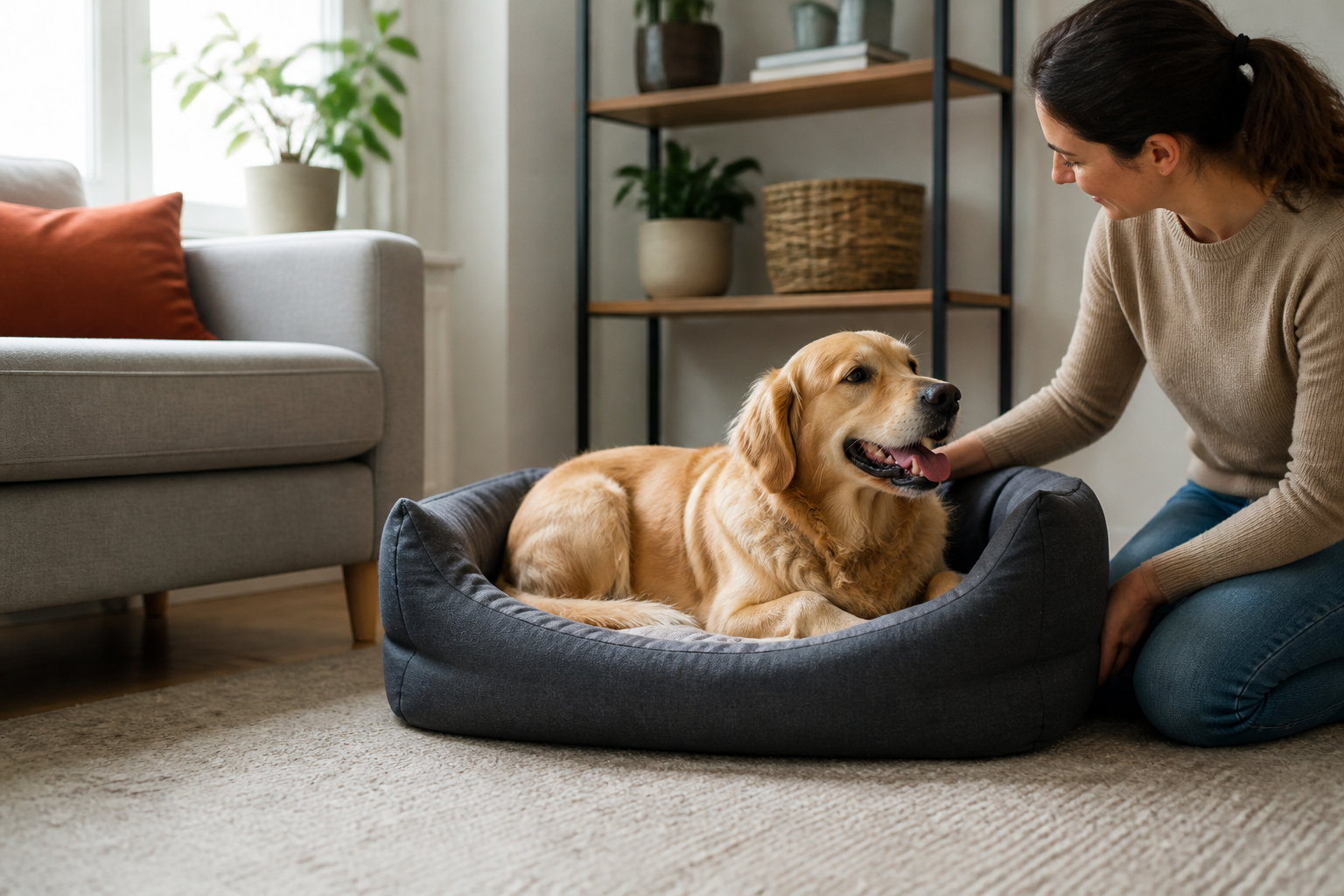
Your dog sprawls across the rug, curls up on the couch or follows you from room to room, looking for a comfortable place to rest. A bed of their own gives them another option, but choosing one can be tricky. A small dog may want room to stretch, while a large dog may need firmer padding than a fluffy pillow provides.
At BaxterBoo, we think the best place to start is with your dog’s size, sleeping style and daily routine. Puppies, senior dogs and enthusiastic chewers may need different features. Measure your dog, compare the usable sleeping space and choose a bed you can keep clean.
Start With Your Dog’s Sleeping Style
Watch your dog settle down over a few naps. Dogs often change position, so the curled-up pose you see in the morning may not tell the whole story.
A dog who stretches out on their side needs a broad, open sleeping surface. A rectangular mattress or pillow bed can work well because there are no raised sides taking up space.
A dog who curls into a ball or rests their head on the couch arm may appreciate a bed with bolsters. Bolsters are the raised cushions around some or all of the bed’s edge. They offer a place to lean, though they also reduce the flat space inside.
Some dogs like to rest near the household activity. Others move to a quieter corner. Think about the available floor space before choosing a shape, but don’t choose a bed so small that your dog has to hang off the edge.
How to Measure for a Dog Bed
Step 1: Measure your dog while they’re resting. Measure from the tip of the nose to the base of the tail, then across the widest part of their relaxed body.
Step 2: Leave room to move. Choose a sleeping surface with extra space beyond those measurements so your dog can stretch and change positions.
Step 3: Check the inside dimensions. On a bed with thick bolsters, compare your measurements with the usable sleeping area, not just the outside dimensions.
Step 4: Measure the spot at home. Check that the entire bed fits where you want it, with enough clear space for your dog to step on and off.
A size label such as “medium” or “large” is only a starting point. Your dog’s measurements are more useful than the label, especially if they are long-bodied or like to sprawl.
Dog Beds


Compare Common Dog Bed Styles
The right style depends on how your dog rests and how easy the bed is to use. Here’s a comparison to help narrow the options.
| Bed style | Good fit for | What to check |
|---|---|---|
| Flat mattress | Dogs who stretch out or prefer an open edge | Padding, usable surface area and cover care |
| Bolster or sofa bed | Dogs who like to lean or rest their head on an edge | Inside dimensions and an accessible entry |
| Pillow bed | Dogs who enjoy a soft, roomy surface | Whether the filling stays comfortable under your dog’s weight |
| Orthopedic bed | Dogs who may benefit from a supportive resting surface | Foam construction, support, entry height and cover |
| Elevated cot | Dogs who prefer resting off the floor | Stable frame, fabric tension and how easily your dog can get on |
| Crate mat | Dogs who rest in a crate | Exact crate fit, washability and chewing habits |
A plush bed can look inviting but compress too much for a heavier dog. A firmer mattress may suit that dog better, while a small dog may prefer a softer surface. The goal is a bed that feels comfortable under your dog’s weight and gives them room to settle.
Raised sides are a matter of preference, too. A dog who likes a headrest may use them every day, but a dog who steps over a high edge reluctantly may do better with an open-front design.
Is an Orthopedic Dog Bed Worth Considering?
An orthopedic dog bed is worth considering if you want a more supportive resting surface, particularly for an older or larger dog. Many use foam rather than loose filling. Construction varies, so the word “orthopedic” alone doesn’t tell you how a particular bed will feel.
Look at the type and thickness of the padding, along with your dog’s weight. The surface should provide support without making it difficult for your dog to settle. A bed that looks substantial in a photo may feel different once your dog lies on it.
Entry matters as much as the cushion. For a dog who moves stiffly or has trouble stepping over things, consider a flat bed or one with a low, open side. Place it where the floor is easy to navigate, and check that the bed doesn’t slide when your dog gets up.
An orthopedic bed is a comfort choice, not a treatment for a medical condition. If your dog is newly stiff, reluctant to get up or having ongoing trouble moving, contact your veterinarian.
Vet Tip: Tell your veterinarian what you’ve noticed and when it happens. That information can help them assess your dog’s needs and recommend an appropriate care plan.
Before choosing an orthopedic style, check:
- The size of the flat sleeping area.
- The padding and the weight it needs to support.
- The height of the entry.
- Whether the cover and liner can be cleaned easily.
- How the bed sits on your floor.
Choosing a Puppy’s Sleeping Bed
A puppy’s first bed needs to fit their current habits as well as their body. Accidents can happen during house training, and some puppies investigate bedding with their teeth. A simple, washable bed or mat can be easier to manage than one with elaborate covers or loose accessories.
Choose enough room for your puppy to lie comfortably, but consider how quickly they may outgrow the bed. A larger bed can give a growing puppy room to stretch. If you choose one for a crate, check the crate’s interior measurements so the mat sits flat instead of bunching up.
Watch how your puppy uses the bed, particularly at first. If they pull at seams or try to swallow filling, remove the damaged bed and choose an appropriate alternative. No fabric bed should be assumed safe for every persistent chewer.
Place the bed somewhere your puppy can rest without being constantly disturbed. A spot near your sleeping area may also make it easier to hear when they wake and need a nighttime potty trip.
Can Your Puppy Sleep in Your Bed?
Some people choose to share a bed with their puppy, while others prefer the puppy to sleep in their own bed or crate. Your choice depends on your puppy, your sleeping setup and what works for your household.
For a very small puppy, an adult bed can present risks. A puppy could fall, become trapped in bedding or be accidentally rolled onto. A puppy who isn’t reliably house trained may also have accidents or need to get down during the night.
A separate puppy bed near yours is a practical starting point. It lets you keep your puppy close while giving them a space at floor level. As your puppy grows and settles into a routine, you can decide whether sharing your bed makes sense.
If you do invite your puppy onto your bed, supervise them and consider how they will get down safely. Keep the arrangement consistent enough that your puppy can learn where you expect them to sleep.
Make Cleaning Part of the Decision
A washable cover makes routine cleanup simpler, especially for a puppy or a dog who brings dirt indoors. Check the care label before buying. “Washable” may refer only to the cover, not the foam or entire bed.
A removable cover should be easy to take off and put back on. Look at the zipper placement and any instructions for drying. A cover that’s difficult to replace may make a bed harder to maintain than it first appears.
If spills or accidents are a concern, consider a bed with a protective liner. Check the wording: a water-resistant cover and a waterproof liner are not necessarily the same thing. A liner that protects the inner cushion can be useful, but the outer cover may still need washing after an accident.
Follow the manufacturer’s cleaning instructions and let each component dry fully before reassembling the bed. Between washes, remove loose hair and check seams for damage. Replace a torn cover or exposed filling before your dog has a chance to chew it.
A Quick Care Checklist
- Confirm which parts can go in the washing machine.
- Check whether the inner cushion has a protective liner.
- Keep the care instructions for the cover and filling.
- Inspect the bed for loose seams, holes and exposed stuffing.
- Make sure the bed is fully dry after cleaning.
Help Your Dog Get Comfortable With the Bed
A new bed may feel unfamiliar, so give your dog time to investigate it. Put it in a place they already like to rest, rather than a busy walkway. If the bed slides on the floor, move it to a more stable spot or use an appropriate nonslip layer underneath.
You can encourage your dog to approach the bed with a treat or a favorite toy. Let them step on and off freely. Avoid forcing them to stay there, since the aim is to make the bed a comfortable place they choose to use.
If your dog ignores it, check the location and the bed itself. The room may be too busy, the raised edge may be awkward, or the surface may not suit the way your dog sleeps. Try moving the bed before assuming your dog doesn’t want one.
For a crate, use a mat that fits flat inside and check it regularly for damage. Some puppies or chewers may do better with a simpler setup while you work on safe resting habits.
Get Good Value From Your Choice
A useful bed doesn’t need every available feature. Prioritize the ones your dog will use and you can maintain. For one household, that may mean a removable cover. For another, it may mean a low entry and supportive padding.
Compare beds by the same details: sleeping area, construction, cleaning instructions and entry height. Also consider what happens when the cover wears out or the filling loses its shape. A bed that fits your dog and holds up to your cleaning routine may be a better value than one chosen for appearance alone.
If you’re deciding between a decorative bolster bed and a simpler mattress, return to your dog’s habits. A headrest is useful for a dog who likes to lean. For a committed sprawler, the extra open space may matter more.
Find Their Place to Rest
A good dog bed fits your dog’s body, suits their sleeping style and works in your home. Start with measurements, then choose the padding and cover that make sense for your routine.
- Pick an open surface for a dog who likes to stretch.
- Check the usable space inside a bolster bed.
- Consider supportive padding and a low entry for a dog who needs easier access.
- Choose a washable setup that suits your puppy’s or adult dog’s habits.
Key Takeaway: The best bed is one your dog can get onto comfortably, settle into and use regularly.
Explore dog bedding at BaxterBoo with those measurements and priorities in mind.
FAQ
How big should a bed for a dog be?
The sleeping surface should give your dog enough room to lie comfortably and change positions. Measure your dog while they’re resting, allow extra space, and check the inside dimensions if the bed has raised sides.
Does my dog need an orthopedic bed?
Not every dog needs one, but an orthopedic bed can be worth considering if you want a more supportive resting surface. Compare the padding, size and entry height rather than relying on the label alone. Ask your veterinarian about ongoing stiffness or difficulty getting up.
Should a puppy sleep in a crate or on a dog bed?
A puppy can rest on a suitable mat inside a crate or on a separate bed, depending on your setup and their habits. Check the fit, choose washable materials and watch for chewing or damage.
Is it OK to sleep with a puppy in your bed?
It can be a personal choice, but a very small puppy may be at risk of falling, getting trapped in bedding or being accidentally rolled onto. A separate bed near yours is a practical way to keep your puppy close while you establish a nighttime routine.





- Site & Contents BaxterBoo.com. BaxterBoo is located in the United States.
- Privacy & Security
- Terms of Use
- Accessibility Statement
