
 Save 15% on your 1st Autoship learn more

 Email us
 Live Chat
 FAQs





Introduction
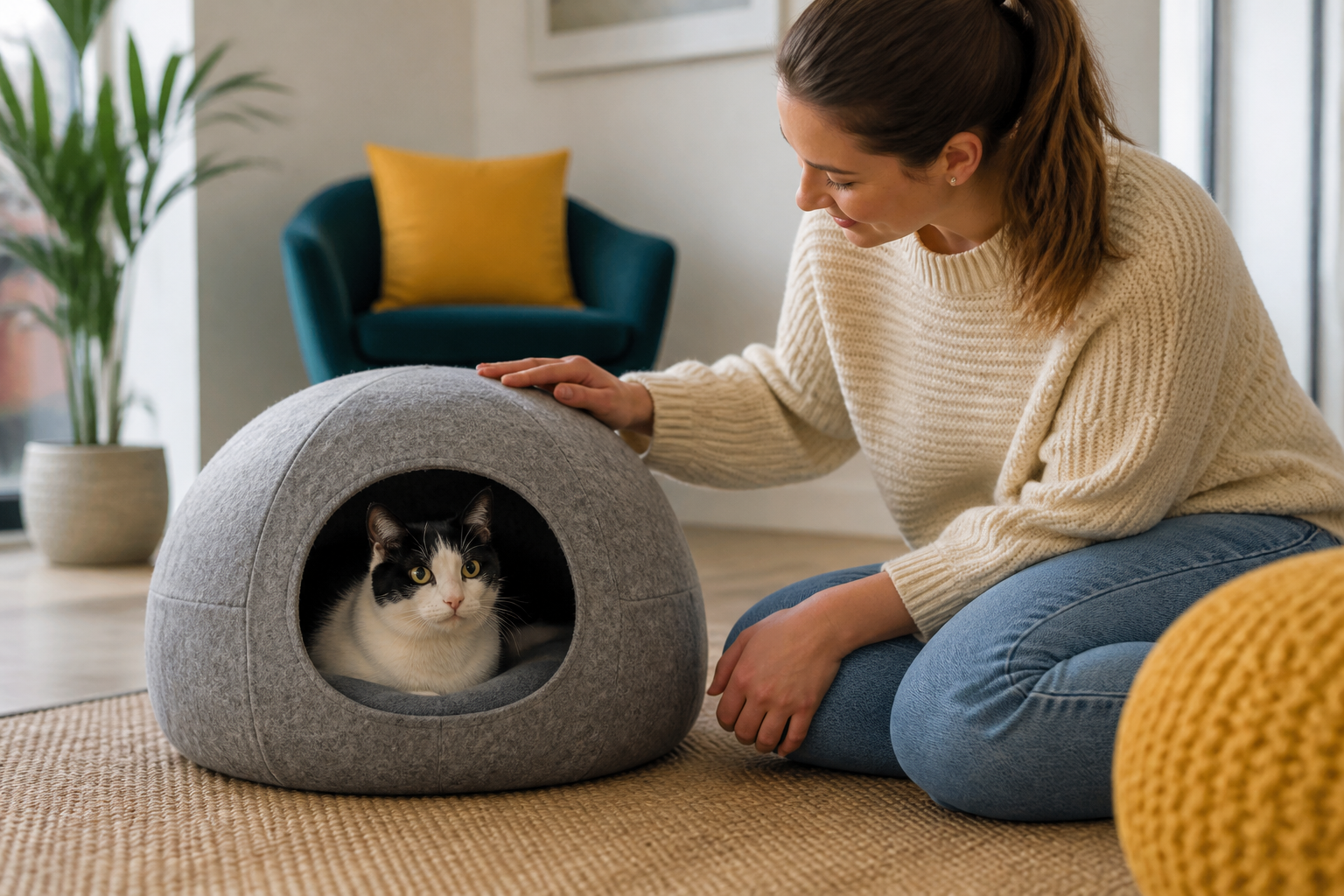
Your cat loves squeezing into a cardboard box, but the box isn’t exactly a lasting addition to your living room. A cat bed cave offers a covered place to curl up, with an opening your cat can use to come and go. The trick is finding one that fits your cat as well as your space.
At BaxterBoo, we know that a cozy-looking bed is only useful if your cat wants to get inside. Size, entrance shape, material and cleaning instructions all matter. Here’s how to compare felted wool caves, soft beds and other designs, including larger options and beds for two cats. The best choice gives your cat room to settle comfortably and is easy for you to care for.
What Is a Cat Bed Cave?
A cat bed cave is a partly enclosed bed with a roof or covered sides. Some have a single rounded opening, while others have several openings or a tunnel-like shape. They give a cat a place to rest with more cover than an open cushion provides.
A cave can be a good fit for a cat that already naps under furniture or inside boxes. Still, every cat has preferences. One may tuck into a covered bed immediately, while another prefers to sit on top or watch the room from an open bed.
Look at how your cat rests now. A cat that curls into a tight ball may appreciate a rounded cave, while one that stretches out may need a wider sleeping area.
Cat Covered Beds


Compare Cat Cave Styles
The shape affects more than appearance. It determines how much your cat can see, how easy the bed is to enter and where you can put it.
| Style | What to look for | Good fit for |
|---|---|---|
| Felted cave | A shaped shell with an opening; check the fiber and care label | A cat that likes a covered nook |
| Soft fabric cave | Padded sides or a flexible roof; check whether the opening stays accessible | A cat that likes a cushioned surface |
| Peek-a-boo style | An opening or openings that let a cat look out | A cat that likes some cover but still watches the room |
| Donut or tunnel cave | A round form that may include a covered tunnel, a central bed or both | A cat that likes exploring as well as resting |
| Large cave | A roomy interior and entrance, not just a generous outside measurement | A bigger cat or one that likes to stretch |
Names can overlap, so check the photos and dimensions rather than relying on the style name. A bed described as “peek-a-boo” might have a small viewing opening, a wide entrance or another design that lets your cat look out.
The same goes for a cat cave donut. Some are circular tunnels with a resting spot in the middle. Others resemble a round, raised-edge bed and may not offer much overhead cover. Decide whether your cat would use the tunnel, the center bed or both.
How Much Cover Does Your Cat Want?
A small opening can give the interior a more tucked-away feel, but it also limits your cat’s view. A wide opening makes it easier to see into the room and may suit a cat that likes to keep an eye on household activity.
If you’re unsure, start with the places your cat already chooses. A cat that sleeps under a chair may enjoy a covered shape with a view. A cat that naps in the open may prefer a soft bed with only a partial cover.
Felt and Wool Cat Caves: What to Check
Felted cat caves have a shell made from fibers pressed together to form felt. Some are made from wool, while others use different fibers or a blend. “Felt” describes the material’s construction, so check the label if you specifically want a wool cat cave.
A felted wool cave can hold a rounded shape without the look of a bulky cushion. The surface and flexibility vary, though. Check whether the opening stays open and whether the sleeping area feels suitable for your cat.
A few things are worth checking before you buy:
- Fiber content: Look for the material listing rather than assuming every felt cave is all wool.
- Interior room: A thick shell can take up space inside the bed.
- Shape: Check whether the roof stands up on its own or is meant to fold down.
- Care instructions: Some beds need hand-cleaning or other specific care.
- Variation: If a cave is handmade, its shape and measurements may vary.
A wool cave and a soft fabric cave can both be comfortable choices. Choose the surface your cat is likely to use and the care routine you can reasonably maintain.
Soft Cat Caves and Cozy Cushions
A soft cat cave may have padded walls, a plush lining or a removable cushion. Some have a flexible roof that folds down, giving your cat a choice between resting inside and lying on top. Check the product description before assuming a particular bed converts.
Padding can make a firm floor feel more comfortable, but it also changes the usable space. A thick cushion may leave less headroom or make the entrance harder to navigate. If the cushion is removable, check how it fits and whether it can be cleaned separately.
For a cat that likes to knead or scratch before settling, inspect the fabric and seams. Loose threads, damaged seams or filling coming out are reasons to repair or replace a bed. Avoid adding a blanket with long, loose strands if your cat tends to chew or swallow fabric.
A cute cave might look like the obvious winner, but check its construction as closely as its shape. Decorative ears, hanging toys and other extras should not get in the way of the entrance or create loose parts your cat can pull off.
How to Size a Cat Cave
The best cat cave gives your cat enough room to enter, turn around and settle in a natural position. A “large” or “extra large” label is a starting point, not a measurement. Compare the entrance and usable interior with your cat’s size and sleeping habits.
Step 1: Measure Your Cat at Rest
When your cat is relaxed, note the length and width of their usual sleeping position. Measure a curled-up position if that’s how they normally nap. If they often stretch out, take note of that space too.
You don’t need to make your cat hold a pose. A relaxed estimate is more useful than trying to measure a cat that wants to leave.
Step 2: Check the Interior, Not Just the Outside
Look for the length, width and height of the sleeping area. The outside dimensions include the walls, roof and any decorative features, so they may make the bed appear roomier than it is.
For a rounded cave, check how quickly the sides curve inward. The widest point may not offer the same headroom as the center.
Step 3: Compare the Entrance
Check the opening’s width, height and distance from the floor. Your cat should be able to enter and leave without squeezing awkwardly or having to climb over a high edge.
For a larger cat, the opening can be just as important as the bed’s overall size. A roomy interior won’t help much if the entrance is difficult to use.
Step 4: Account for the Cushion and Placement
If the bed includes a pillow, check whether the listed interior dimensions include it. A thick pillow can raise the sleeping surface and reduce headroom.
Measure the spot where you plan to put the cave as well. Leave the entrance clear so your cat can approach it without squeezing between furniture.
Vet Tip: If your cat has new or worsening difficulty climbing into a familiar bed, ask your veterinarian for advice rather than assuming a different bed is all they need.
Is a Large Cat Cave Right for Two Cats?
A large cat cave can give two cats room to rest together, but size alone doesn’t tell you whether they’ll want to share. Start by watching their existing habits. Cats that regularly nap close together may be more interested in a shared space than cats that prefer separate resting spots.
If you’re considering one bed for two cats, compare the interior space with the way both cats lie together. Each should have room to settle and leave without climbing over the other. A design with more than one opening may make it easier for either cat to come and go.
Keep separate resting places available too. Even cats that usually cuddle may sometimes want a bed of their own.
Before choosing a shared cave, check:
- The usable interior fits both cats in their normal resting positions.
- The entrance is easy for each cat to use.
- Neither cat has to block the other’s way in or out.
- You have another comfortable resting spot nearby.
- The bed can be cleaned often enough for the way both cats use it.
Choosing a Color and Design
A black cat cave can blend into darker furniture or make a contrast against a light floor. It may also show light-colored fur, so consider how often you want to brush or vacuum the outside. A lighter fabric can make dark fur more noticeable.
Color is a matter of household preference. For your cat, prioritize the entrance, interior space and surface first. You can then choose a design you enjoy seeing in the room.
Cute details can be fun, but they shouldn’t narrow the opening or take up sleeping space. Check that any attached decoration is secure, especially if your cat likes to tug at fabric.
Where to Put a Cat Cave
Choose a stable spot where your cat can reach the entrance easily. A quiet corner near a favorite resting area is a sensible place to start. Avoid putting the cave where a door might hit it or where someone could trip over it.
Give your cat a clear route in and out. If the bed is near a wall, turn the entrance toward an open area rather than trapping it against furniture. Keep it away from food, water and the litter box so it remains a separate place to rest.
Some cats prefer to observe the household instead of being tucked into a distant room. If your cat ignores the cave after having time to investigate, try moving it closer to a place they already like.
Help Your Cat Get Used to the Bed
Let your cat inspect the cave at their own pace. Place it in the chosen spot, make sure the entrance is open and give your cat room to approach. Don’t push them inside or close the opening behind them.
A familiar small blanket may make the new bed more inviting, as long as it doesn’t crowd the interior. You can also place a favorite toy nearby. Let your cat decide whether to investigate the bed.
If your cat sits on top rather than inside, check whether the bed is designed to support that use. They may simply prefer a flatter resting surface. If the roof or seams start to deform or tear, consider an open bed instead.
Cleaning and Caring for a Cat Cave
Read the care label before washing any cat cave. Different fibers, cushions and fillings need different care, and a machine-washable cover doesn’t necessarily mean the whole bed can go in the washer.
Between deeper cleanings, remove loose fur and check the inside for crumbs, dirt or loose threads. A removable cushion can make routine cleaning easier, but check its label separately from the outer shell.
For a felted wool cave, follow the maker’s directions for cleaning and drying. Don’t assume that a method suitable for a fabric cushion is suitable for felt. Make sure the bed and any insert are completely dry before your cat uses them again.
Inspect the bed regularly for damage. Replace it if the structure no longer supports normal use or if your cat can pull out and swallow pieces of fabric or filling.
Finding the Best Cat Bed Cave for Your Home
The best cat bed cave is the one your cat can use comfortably and you can keep clean. Start with your cat’s sleeping position, then compare the interior, entrance and care instructions before choosing a color or decorative design.
- Choose felted wool or soft fabric based on the surface and care routine you prefer.
- Check measurements rather than relying on “large” or “extra large.”
- Give two cats separate resting options, even if they enjoy sharing.
- Let your cat explore the new bed without being forced inside.
Key Takeaway: A cave should be easy to enter, roomy enough to settle in and practical to clean.
Explore cat furniture and bedding at BaxterBoo as your next step.
FAQ
Do cats like cave beds?
Some cats enjoy resting in covered spaces, while others prefer an open view. Look at where your cat already naps for a clue, and let them investigate a new cave at their own pace.
Is a felted wool cat cave better than a soft fabric bed?
Neither is best for every cat. Compare the sleeping surface, entrance, interior space and cleaning instructions, then choose the design that suits your cat’s habits and your home.
What size cat cave should I buy for a large cat?
Check the usable interior and entrance measurements rather than relying on a size label. Your cat should have room to enter, turn around and settle comfortably, with enough headroom above any cushion.
Can two cats share one cat cave?
They can if both cats choose to share and the interior gives each enough room to settle and leave. Keep separate comfortable resting places available so either cat has another option.




- Site & Contents BaxterBoo.com. BaxterBoo is located in the United States.
- Privacy & Security
- Terms of Use
- Accessibility Statement
