
 Save 15% on your 1st Autoship learn more

 Email us
 Live Chat
 FAQs
FAQs





Introduction
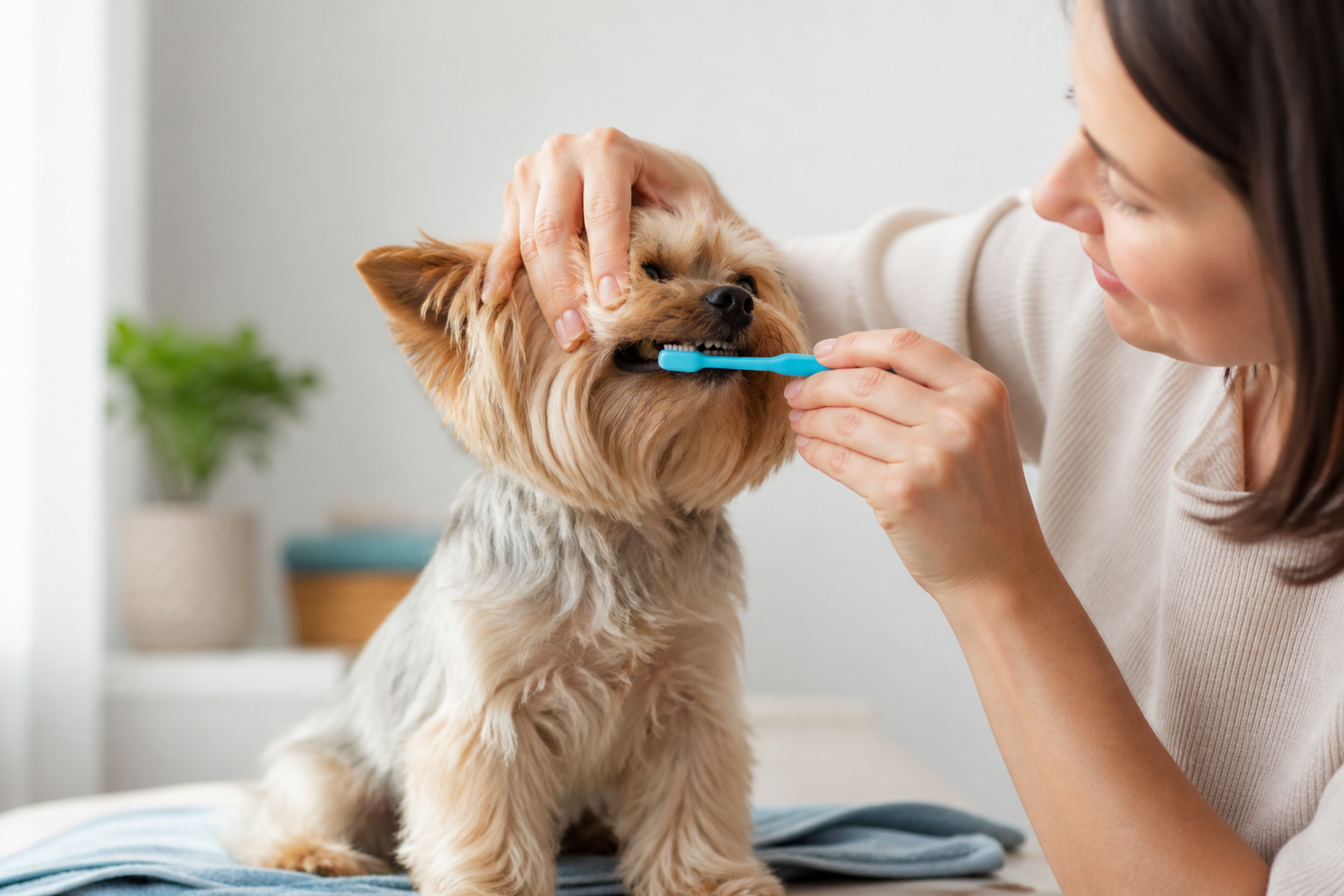
You are sitting on the sofa when your small dog jumps up to give you a lick, and the smell is enough to make you turn away. That "dog breath" is often the first sign that plaque and tartar are taking over those tiny teeth. Small breeds like Chihuahuas, Yorkies, and Pugs have the same 42 teeth as a German Shepherd but in a much smaller mouth. This crowding creates perfect hiding spots for bacteria and food particles. At BaxterBoo, we see many pet owners struggling to manage the dental health of their pint-sized companions. This guide will walk you through the best tools, techniques, and habits to keep your dog's mouth fresh. Learning how to clean a small dogs teeth now can save them from pain and save you from expensive veterinary bills later.
Why Small Dogs Face Higher Dental Risks
The anatomy of a small dog is their biggest disadvantage when it refers to oral hygiene. Because their jaws are compact, their teeth are often crowded or even rotated. This leaves very little space between the teeth, making it easy for hair, food, and debris to get stuck. When these particles stay in the mouth, they combine with saliva to form plaque. Within just a few days, that plaque hardens into tartar.
Tartar is porous and provides a surface for even more bacteria to grow. In small breeds, this process happens faster than in large dogs. The roots of their teeth are also relatively long compared to the depth of their jawbones. This means that a minor gum infection can quickly reach the bone, leading to tooth loss or even a fractured jaw.
Regular cleaning is not just about fresh breath. It is about preventing systemic health issues. Bacteria from an infected mouth can enter the bloodstream and travel to the heart, liver, and kidneys. By staying on top of dental care, you are protecting their entire body.
Quick Answer: Clean your small dog's teeth by using a finger brush and pet-safe enzymatic toothpaste. Start by letting them lick the paste, then gently rub the teeth in circular motions, focusing on the outside surfaces.
Gathering the Right Dental Supplies
You cannot use your own toothpaste to clean your dog's teeth. Human toothpaste contains fluoride and detergents like Xylitol, which are toxic to dogs if swallowed. Since dogs do not know how to spit, they will ingest everything you put in their mouth. You need a dedicated kit designed for their specific needs.
Enzymatic Toothpaste
This is the most important part of the kit. Enzymatic toothpaste contains proteins that help break down plaque chemically. Even if you cannot reach every corner of the mouth with a brush, the enzymes continue to work after you are finished. Most brands come in flavors like poultry, beef, or peanut butter to make the experience more pleasant for your pet.
Choosing the Right Brush
For a small dog, a standard toothbrush is often too bulky. It can be difficult to navigate around their tiny molars without hitting the roof of their mouth or their tongue.
- Finger Brushes: These are soft rubber or silicone caps that fit over your index finger. They allow you to feel exactly where you are in the dog's mouth.
- Small Bristle Brushes: These look like human toothbrushes but have a much smaller head and very soft bristles.
- Micro-Brushes: Some brushes are designed specifically for toy breeds and have heads no larger than a pea.
A starter option such as the Virbac C.E.T. Pet Oral Hygiene Kit for Dogs and Cats - Poultry Flavored includes a finger brush, toothbrush, and enzymatic toothpaste.
Dental Wipes
If your dog is very resistant to brushing, dental wipes are a great starting point. These are pre-moistened pads that you wrap around your finger. They are textured to help scrub away surface plaque and are usually soaked in a minty or enzymatic solution.
Vet Tip: If your dog has red, swollen, or bleeding gums, consult your veterinarian before you start a brushing routine. Brushing inflamed gums can be painful and may cause your dog to develop a negative association with dental care.
Step-By-Step Guide to Brushing Small Teeth
The goal is to make dental care a positive part of your day, not a chore that leaves both of you stressed. Patience is the key to success.
Step 1: The Flavor Test
Start by letting your dog lick a small amount of the toothpaste off your finger. You want them to view the paste as a treat. Do this for a few days without even trying to touch their mouth. Once they are excited to see the tube, you can move to the next step.
Step 2: Touch the Mouth
Gently lift your dog's upper lip and rub your bare finger along their gums and teeth. This gets them used to the sensation of having their mouth handled. Keep these sessions very short, usually under thirty seconds. Reward them with a small, healthy treat or praise immediately after.
Step 3: Introduce the Finger Brush
Apply a small amount of toothpaste to your finger brush or a soft micro-brush. Let the dog lick the paste off the brush. While they are busy licking, gently rub the front teeth. Do not worry about the back teeth yet. Focus on the incisors and canines at the very front of the mouth.
Step 4: The Circular Motion
Once they are comfortable with the front, move toward the back molars. This is where the most tartar usually builds up. Aim the brush at a 45-degree angle toward the gum line. Use small, circular motions. You only need to brush the outside of the teeth. A dog's tongue usually does a decent job of keeping the inside surfaces clean.
Step 5: Consistency is Key
Ideally, you should brush your small dog's teeth every single day. Plaque begins to harden into tartar in as little as 24 to 48 hours. If daily brushing is not possible, aim for at least three times a week.
- Find a quiet spot with good lighting.
- Keep the dog's head steady but do not grip them too tightly.
- Talk in a calm, soothing voice throughout the process.
- End every session on a high note with a favorite toy or a walk.
For additional guidance, read these pet dental care tips.
Key Takeaway: Success with small dog dental care comes from slow introductions and high-value rewards. Focusing on the outside of the molars and the gum line provides the most protection against disease.
Beyond Brushing: Dental Chews and Toys
Brushing is the gold standard, but it is not the only tool available. Many small dogs benefit from "passive" cleaning methods that work while they play or eat.
Textured Rubber Toys
Certain toys are designed with nubs, ridges, or grooves. As your dog chews, these textures scrape against the teeth to help dislodge food. Some toys even allow you to smear a bit of pet-safe toothpaste into the grooves, turning playtime into a cleaning session.
Dental Chews
Dental chews are edible treats formulated to reduce plaque. Many are shaped like brushes or stars to maximize the surface area that touches the teeth. Look for products that have the Veterinary Oral Health Council (VOHC) seal of approval. This seal means the product has been tested and proven to reduce plaque or tartar.
For small dogs, the size of the chew is critical. A chew that is too large can be a choking hazard or provide too many calories. A chew that is too small might be swallowed whole, which provides no dental benefit at all. Our Frequent Buyer Program at BaxterBoo is a great way to save on these essential items if you find a brand your dog loves.
For more ideas, browse these dental chews for dogs.
Water Additives
Water additives are tasteless or lightly flavored liquids you add to your dog's water bowl. They contain ingredients that help kill the bacteria that cause bad breath and plaque. While they are not a replacement for brushing, they are an excellent supplement for dogs that are difficult to handle.
One convenient option is Synergy Labs Dental Fresh Water Additive Dog Original Formula.
Bottom line: Dental chews and toys are effective supplements, but they should be used alongside brushing rather than as a total replacement.
Managing Dental Health Through Diet
What your dog eats plays a role in how fast tartar accumulates. Many owners of small dogs prefer wet food because it is easier for tiny jaws to chew. However, wet food can sometimes stick to the teeth more than dry kibble.
The Role of Dry Kibble
Some dry kibbles are specially formulated for dental health. These kibbles are usually larger and have a fibrous texture that does not shatter immediately when the dog bites down. Instead, the tooth sinks into the kibble, which creates a scrubbing effect.
Prescription Dental Diets
If your dog is prone to rapid tartar buildup, your veterinarian might recommend a prescription dental diet. These foods are specifically designed to be larger and more abrasive than standard kibble. They often contain minerals that bind to calcium in the saliva, preventing it from turning plaque into tartar.
Our pet pharmacy at BaxterBoo offers these specialized prescription diets through our partnership with Pet's Choice. If your vet provides a script for a dental diet like Royal Canin or Farmina Vet Life, we can help you get it delivered to your door through our Autoship programme.
Recognizing Signs of Dental Disease
Even with the best at-home care, dental issues can still arise. Small dogs are masters at hiding pain, so you need to be a detective. Check your dog's mouth at least once a week for these warning signs:
- Bad Breath: A faint odor is normal, but a strong, foul smell usually indicates an infection.
- Yellow or Brown Buildup: This is tartar. Once it has hardened to this stage, a toothbrush will not remove it.
- Red or Bleeding Gums: Healthy gums should be a pale pink. Bright red or bleeding edges are signs of gingivitis.
- Difficulty Eating: If your dog drops food, chews on only one side, or avoids hard kibble, they may have a painful tooth.
- Mouth Shyness: If your normally friendly dog pulls away when you touch their face, they could be experiencing dental pain.
If you notice any of these signs, it is time for a professional exam. Trying to brush teeth that are already infected can be extremely painful for your pet.
For more warning signs, review what to do when your dog may be hiding bad teeth.
Vet Tip: Professional cleanings are a necessary part of small dog healthcare. Your vet can clean under the gum line and take X-rays to find problems that are invisible to the naked eye.
The Importance of Professional Cleanings
At-home care is about prevention, but a professional cleaning is about treatment. During a veterinary dental cleaning, your dog is typically placed under general anesthesia. This allows the vet to perform a thorough examination of every tooth.
Scaling and Polishing
The veterinarian uses ultrasonic tools to scale away tartar from the surface of the teeth and, more importantly, from underneath the gum line. After scaling, the teeth are polished to smooth out any micro-scratches. Smooth teeth are much harder for plaque to stick to in the future.
Dental X-rays
Since a large portion of the tooth is hidden beneath the gums, X-rays are the only way to see the roots. Many small dogs have "silent" infections or abscesses that are only found through imaging. Finding these early can prevent the infection from spreading to the jawbone.
Some owners worry about anesthesia, especially for very small or senior dogs. Modern veterinary anesthesia is very safe, and vets perform blood work beforehand to ensure your pet can handle the procedure. The risk of untreated dental disease is often much higher than the risk of the anesthesia itself.
Professional Care and Pharmacy Support
When your dog needs more than just a toothbrush, we are here to support their medical journey. Beyond standard toys and treats, our pharmacy provides access to FDA-approved medications and prescription-strength oral care products.
Through our partnership with Pet's Choice, you can manage chronic dental conditions with ease. If your vet prescribes an oral antibiotic for an infection or a medicated rinse to use after a dental surgery, our pharmacy can fulfill those needs. This integrated approach ensures that your small dog gets the specific care required for their breed and health status.
Managing a small dog's health requires a mix of daily habits and professional intervention. We pride ourselves on offering the curated products you need to stay consistent with your home care routine.
Key Takeaway: A combination of daily brushing, dental-friendly diets, and regular veterinary checkups is the only way to fully protect a small dog's oral health.
Conclusion
Cleaning a small dog's teeth does not have to be a daily battle. By starting slow and using the right tools, you can turn brushing into a simple routine that takes less than two minutes. Remember that small dogs are at a natural disadvantage because of their jaw structure, so they rely on us to be their advocates. Start with a high-quality enzymatic toothpaste and a soft finger brush. Supplement your efforts with dental chews and a diet that supports oral health. If you notice persistent bad breath or red gums, consult your veterinarian for a professional evaluation. Our team at BaxterBoo is dedicated to providing the gear and pharmacy access you need to keep those tiny smiles bright.
- Brush daily with enzymatic toothpaste.
- Use small-scale tools like finger brushes or micro-brushes.
- Provide VOHC-approved dental chews for passive cleaning.
- Schedule annual dental exams with your veterinarian.
Check out our dog dental care products to find the perfect fit for your small dog's routine.
FAQ
How often should I clean my small dog's teeth?
Ideally, you should brush your small dog's teeth every day because plaque can harden into tartar within 48 hours. If daily brushing is too difficult, aim for a minimum of three times per week to maintain basic oral hygiene. Consistency is more important than the length of each session.
Can I use human toothpaste on my dog?
No, you should never use human toothpaste on a dog. It contains ingredients like fluoride and Xylitol that are toxic to pets and can cause serious illness if swallowed. Always use a pet-safe enzymatic toothpaste designed for dogs, which is safe to ingest and comes in flavors they enjoy.
Why does my small dog's breath smell so bad?
Bad breath is usually caused by an accumulation of bacteria, plaque, and tartar in the mouth. In small dogs, crowded teeth make it easier for food to get trapped and rot, leading to a foul odor. Persistent bad breath can also be a sign of an underlying infection or periodontal disease that requires a vet visit.
Are dental chews as good as brushing?
Dental chews are a helpful supplement, but they are not as effective as manual brushing. Brushing allows you to target the gum line and specific areas where plaque accumulates. Think of dental chews as a way to assist in the cleaning process on days when you cannot brush.






