
 Save 15% on your 1st Autoship learn more

 Email us
 Live Chat
 FAQs
FAQs





Introduction
It usually happens during a quiet moment on the couch. Your dog leans in for a friendly lick or a happy pant, and you are suddenly hit with a wave of foul-smelling breath. While we often joke about "dog breath," a truly stinky mouth is usually a sign that bacteria are making themselves at home. At BaxterBoo, we talk to pet owners every day who want to get back to those close-up snuggles without the smell. This guide will walk you through the most effective ways to clean your dog’s teeth, from daily brushing routines to the best dental chews and water additives. We will also help you identify when a smell is a simple hygiene issue and when it might be a sign of a deeper health problem. Caring for your dog’s mouth is one of the best ways to ensure they live a long, comfortable life.
Quick Answer: The most effective way to clean a dog's teeth is daily brushing with dog-safe toothpaste. You can supplement this with dental chews, water additives, and professional veterinary cleanings to remove hardened tartar.
Why Your Dog Has Bad Breath
Understanding the cause of the odor is the first step in fixing it. Most bad breath in dogs comes from the same source as human bad breath: bacteria. When your dog eats, food particles mix with saliva to form plaque. If that plaque is not brushed away, it hardens into tartar within 48 hours. Tartar provides a rough surface where even more bacteria can grow. This cycle eventually leads to periodontal disease, which is an infection of the gums and the structures supporting the teeth.
Bacteria do more than just smell bad. They produce gases that cause that signature "swampy" scent. However, sometimes the smell is not just about oral hygiene. If your dog has been scavenging in the yard or eating "cat box treats," the source is obvious. In other cases, the smell can come from the gut or even the organs. For example, a sweet or fruity smell can sometimes point toward diabetes. A smell like ammonia or urine might suggest kidney issues. Most of the time, though, it is simply a matter of needing a better cleaning routine.
Key Takeaway: Bad breath is usually caused by the buildup of plaque and tartar, which trap odor-causing bacteria against the gums.
How to Brush Your Dog’s Teeth
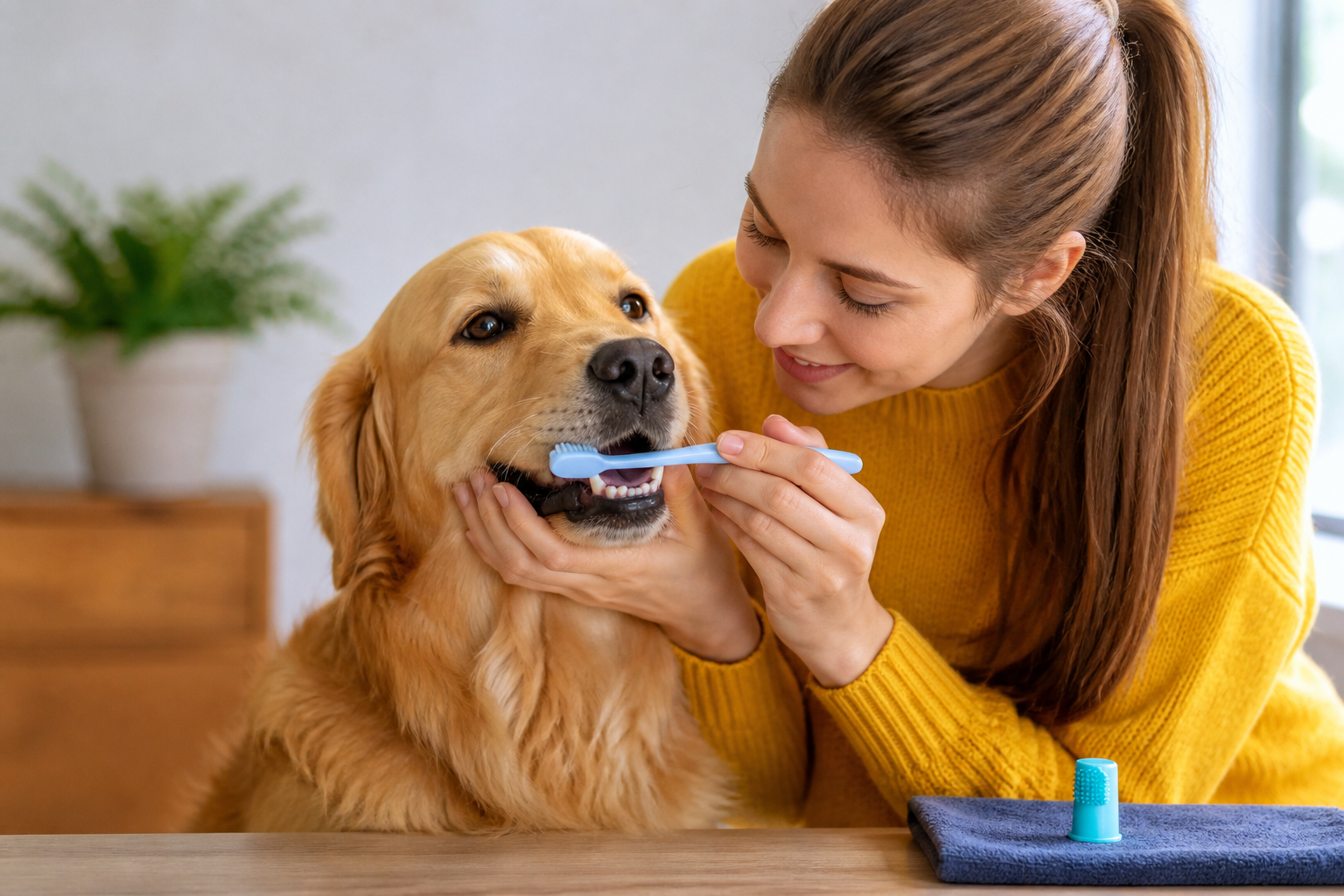
Brushing is the gold standard for pet dental care. While it might feel intimidating at first, most dogs can learn to accept it if you move slowly. You cannot use human toothpaste because it contains fluoride and xylitol, both of which are toxic to dogs. Pet toothpaste is formulated to be swallowed and usually comes in flavors like poultry, beef, or peanut butter. A pet-safe option such as Virbac C.E.T. Enzymatic Pet Toothpaste for Dogs and Cats - Poultry can help make brushing easier to introduce.
Choose Your Tools
You have a few options for the actual brush. A standard long-handled pet toothbrush is great for reaching the back molars. A finger brush, which fits over your fingertip, can offer more control and might be less scary for a puppy or a nervous dog. Some owners even use a clean piece of gauze wrapped around their finger to wipe away slime and plaque.
The Training Process
Do not expect to do a full brushing on the first day. It takes time for a dog to get used to someone touching their mouth.
Step 1: Introduce the paste. / Let your dog lick a small amount of poultry or beef-flavored toothpaste off your finger so they associate the brush with a treat.
Step 2: Touch the teeth. / Gently lift your dog’s lip and rub your finger along their gums and teeth without any brush involved.
Step 3: Introduce the brush. / Put a small amount of paste on the brush and let the dog lick it off while the brush is held still.
Step 4: Start brushing. / Aim for a 45-degree angle toward the gum line. Use small, circular motions on the outside surfaces of the teeth.
Step 5: Reward and repeat. / Give your dog plenty of praise or a dental-friendly treat afterward to end the session on a high note.
For more guidance on building a routine, read our top pet dental care tips.
Vet Tip: You do not need to worry about brushing the inside surfaces of the teeth (the side near the tongue). A dog's tongue does a decent job of keeping that area clean. Focus your energy on the outside surfaces where tartar builds up the fastest.
Alternatives to Traditional Brushing
We know that not every dog will sit still for a toothbrush. If your dog struggles with the process, you can still make a massive difference in their oral health using other tools. At BaxterBoo, we carry a wide variety of mechanical cleaning options that work while your dog plays.
Dental Chews and Treats
Dental treats like Greenies or specific dental chews from brands like RedBarn are designed to be abrasive. As your dog chews, the texture of the treat scrapes against the surface of the tooth. This action helps "scrub" away plaque before it can harden. Many of these treats also contain ingredients that help freshen breath instantly. For the best results, look for products that carry the VOHC (Veterinary Oral Health Council) seal of approval. Explore our dental chews and treats for options to supplement brushing.
You can also compare different options in our guide to the best dental chews for dogs.
Dental Toys
Hard rubber toys or rope toys can also help. When a dog bites down on a textured toy, the fibers or rubber nubs act like a natural toothbrush. Some toys, like those from Kong, are designed with grooves that you can fill with pet toothpaste or dental gels. This encourages the dog to "brush" their own teeth as they try to get the paste out.
Water Additives and Gels
Dental water additives are an easy way to fight bacteria without any scrubbing at all. You simply add a capful to your dog’s water bowl. These additives usually contain enzymes or safe antibacterial agents that break down plaque and kill odor-causing germs. OxyFresh Pet Dental Water Additive is one brushless option designed for a pet’s water bowl. Dental gels work similarly but are applied directly to the gum line. The dog licks the gel, spreading it around their mouth with their tongue.
Natural Remedies for Fresher Breath
If you want to supplement your dog's dental routine with natural options, there are several kitchen staples that can help. These are not replacements for brushing, but they can provide a boost to your efforts.
- Fresh Mint or Parsley: Chopping up a small amount of fresh mint or parsley and adding it to your dog’s food can help neutralize odors. These herbs contain chlorophyll, which is a natural deodorizer.
- Coconut Oil: Many pet owners use coconut oil as a natural toothpaste. It has antibacterial properties that can help reduce the bacterial load in the mouth. Plus, most dogs love the taste.
- Carrots and Apples: Crunchy, fresh vegetables and fruits act as a natural abrasive. Giving your dog a cold carrot stick to chew on can help scrape away some of the daily plaque buildup. Just be sure to remove apple seeds and cores first.
- Probiotics: Sometimes bad breath starts in the gut. If your dog has a bacterial imbalance in their digestive system, it can lead to "stinky breath" that brushing cannot fix. A daily pet probiotic can help balance the microbiome and improve breath from the inside out.
Key Takeaway: Combining mechanical cleaning (brushing or chews) with enzymatic tools (additives or gels) provides the most comprehensive protection against bad breath.
When Bad Breath Is a Medical Emergency
While most cases of stinky breath are due to a lack of cleaning, some odors are red flags for serious health conditions. If you notice any of the following symptoms, it is time to skip the home remedies and call your veterinarian immediately.
- Bleeding or Bright Red Gums: This is a sign of advanced gingivitis or periodontal disease. It can be very painful for your dog and may lead to tooth loss.
- Excessive Drooling: If your dog is suddenly drooling more than usual, they may have a broken tooth, an oral tumor, or a foreign object stuck in their gums.
- Difficulty Eating: A dog that drops their food or avoids dry kibble is often in dental pain.
- Ammonia Breath: A breath smell that reminds you of window cleaner or urine can indicate that the kidneys are not properly filtering waste.
- Fruity or Sweet Breath: This is a classic sign of ketoacidosis, which is a complication of diabetes.
Our pet pharmacy carries a range of FDA-approved medications and prescription diets through our partnership with Pet's Choice. If your vet diagnoses a specific condition like an oral infection or a systemic health issue, we can help you manage it with the right professional products.
Vet Tip: Persistent bad breath despite regular brushing should always be evaluated by a vet. They can perform a professional cleaning under anesthesia to reach the areas beneath the gum line that a toothbrush cannot touch.
For additional warning signs, read how to recognize hidden dental problems in dogs.
Choosing the Right Diet for Dental Health
The food your dog eats every day plays a role in how clean their teeth stay. There is a long-standing debate about whether wet food or dry food is better for teeth. While dry kibble provides a small amount of "crunch" that can help scrape teeth, most dogs swallow kibble whole or break it into only a few pieces. This means the dental benefit is often minimal.
However, specific "dental diets" are designed differently. These kibbles are usually larger and have a fibrous texture that does not shatter immediately. Instead, the tooth sinks into the kibble, which scrubs the surface of the tooth as the dog chews. Brands like Royal Canin and Hill's Science Diet offer these specialized formulas. If your dog is prone to rapid tartar buildup, your vet might suggest one of these prescription dental foods. You can often find these options in our dog healthcare selection once you have a prescription from your clinic.
Things to Avoid in Your Dog's Diet
To keep breath fresh, avoid feeding your dog table scraps that are high in sugar or simple carbohydrates. Bacteria in the mouth thrive on sugar, which leads to faster plaque formation. You should also be careful with very hard chews like antlers or certain bones. While they are great for scraping teeth, they are hard enough to cause "slab fractures," where a piece of the tooth breaks off. This exposes the nerve and can lead to a painful abscess and even worse breath.
Practical Steps to Start Today
Improving your dog's oral hygiene does not have to happen all at once. Small, consistent changes are much more effective than a single deep cleaning once a year. Use this checklist to get started.
- Inspect the mouth: Gently lift your dog's lips to look for yellow or brown buildup and red gum lines.
- Set a schedule: Pick a time of day for dental care, such as right before bed or after the evening walk.
- Start with a wipe: If a brush is too much, use a dental wipe or a piece of gauze to clean the teeth today.
- Refresh the water: Add a dental water additive to the bowl to start fighting bacteria immediately.
- Check the treats: Swap one of your dog's regular treats for a VOHC-approved dental chew.
Bottom line: Consistency is the most important part of any dental routine; five minutes of care a day can save you thousands in veterinary dental surgeries later.
Senior Dogs and Dental Care
As dogs age, their dental needs become more critical. Senior dogs are much more likely to have existing periodontal disease, which can impact their overall health. Bacteria from an infected mouth can enter the bloodstream and cause damage to the heart valves, kidneys, and liver. If you have an older dog, you might notice that their breath has become significantly worse over the last year or two.
For seniors, you must be extra gentle. Their gums may be more sensitive, and they may already have loose teeth. If you are starting a routine with an older dog, a soft finger brush or a dental gel might be the most comfortable option. It is also vital to keep up with regular vet visits. A professional cleaning can take a massive load off an older dog's immune system by removing the constant source of infection in their mouth.
If your senior dog needs ongoing medication for heart or kidney issues related to dental infections, our pharmacy can help manage those prescriptions easily. We work to make sure you have everything you need to keep your senior pet comfortable in their golden years.
Conclusion
Keeping your dog's teeth clean is about more than just a fresh-smelling house. It is a fundamental part of their health and comfort. By combining regular brushing, smart chew choices, and the right diet, you can significantly reduce the risk of painful dental disease. We at BaxterBoo are committed to providing the tools you need, from high-quality toothbrushes and pastes to specialized dental treats. If you ever notice a sudden change in your dog's breath or behavior, remember to consult your veterinarian to rule out underlying issues.
- Start a daily brushing routine using dog-specific toothpaste.
- Use dental chews and water additives to supplement your cleaning.
- Watch for red flags like bleeding gums or ammonia-scented breath.
- Maintain regular veterinary checkups for professional cleanings.
Key Takeaway: A proactive dental routine at home is the best defense against bad breath and long-term health complications.
For all your dental supplies, from brushes to specialized treats, check out our dog dental care category. You can also sign up for our Autoship programme to ensure you never run out of the dental chews your dog loves, all while earning rewards through the MVP Rewards programme.
FAQ
How often should I brush my dog’s teeth to stop bad breath?
You should ideally brush your dog’s teeth every day to prevent the buildup of plaque and tartar. Plaque can harden into tartar in as little as 48 hours, so brushing at least three times a week is the minimum for effective care. Daily brushing is the most reliable way to keep breath fresh and gums healthy.
Can I use human mouthwash or toothpaste for my dog?
No, you should never use human dental products on a dog because they contain ingredients that are toxic to pets. Human toothpaste often contains xylitol, an artificial sweetener that causes life-threatening low blood sugar in dogs, and fluoride, which can be poisonous when swallowed. Always use products specifically formulated for canines.
Do dental treats and chews actually work for cleaning teeth?
Yes, dental treats and chews can be very effective at reducing plaque and tartar when used as part of a larger routine. They work through mechanical action, scraping the teeth as the dog chews, and some contain enzymes to break down bacteria. Look for products with the VOHC seal to ensure they have been tested for effectiveness.
When should I worry about my dog's bad breath?
You should see a veterinarian if your dog’s bad breath is accompanied by bleeding gums, loose teeth, or difficulty eating. Additionally, if the breath smells like ammonia, urine, or has a sweet, fruity scent, it could indicate a systemic health problem like kidney disease or diabetes. A persistent, foul odor that does not improve with brushing always warrants a professional exam.






