
 Save 15% on your 1st Autoship learn more

 Email us
 Live Chat
 FAQs
FAQs





Introduction
You lean in for a happy morning snuggle only to be met with a cloud of breath that smells like a dumpster in July. We have all been there. It is easy to think that stinky breath is just a natural part of being a dog, but it is actually a primary indicator of oral health. At BaxterBoo, we know that keeping those pearly whites clean is about much more than just avoiding a smelly greeting. It is a vital part of your dog's overall longevity and comfort. This post covers the most effective ways to remove plaque, the best tools for the job, and when a foul odor might mean a trip to the vet is necessary. Establishing a solid routine today can prevent painful dental issues and expensive surgeries down the road.
Understanding the Root Cause of Bad Breath
Before you can fix the smell, you need to understand where it comes from. Most bad breath, or halitosis, is caused by the accumulation of bacteria in the mouth. When your dog eats, food particles mix with saliva to form plaque. This sticky film coats the teeth and hides under the gumline. If it is not removed within about 24 to 48 hours, it hardens into tartar or calculus.
Tartar is porous and provides the perfect home for even more bacteria to grow. These bacteria release sulfur compounds that create that signature "dog breath" smell. Over time, this buildup leads to periodontal disease. This is an infection of the tissues that hold the teeth in place. If the infection stays in the mouth, it causes pain and tooth loss. If it enters the bloodstream, it can damage the heart, liver, and kidneys.
Quick Answer: Clean a dog's teeth by brushing daily with pet-safe toothpaste and providing dental chews with the VOHC seal. Freshen breath by using water additives or dental powders that kill odor-causing bacteria at the source.
The Gold Standard: Daily Brushing
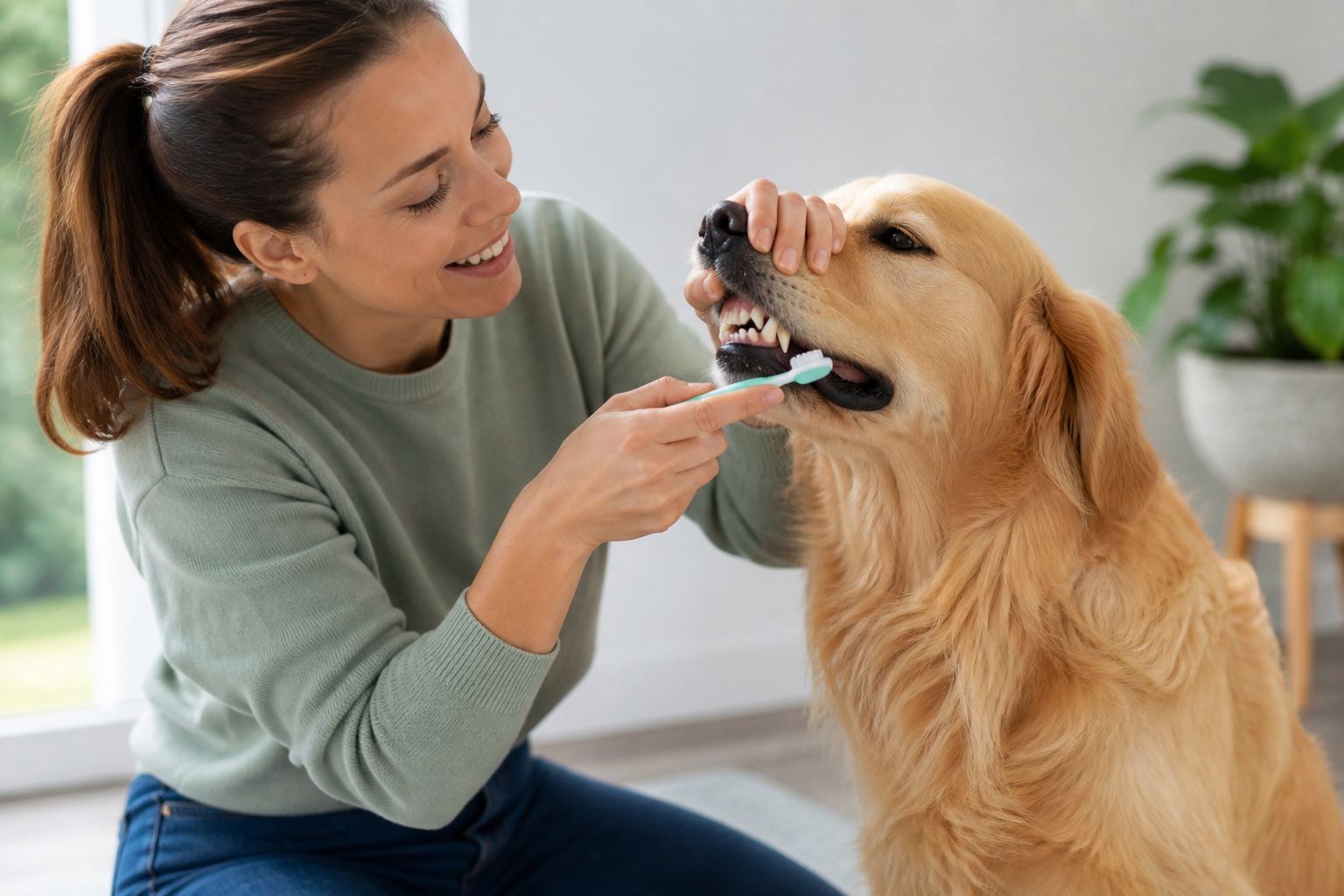
Brushing your dog's teeth is the single most effective way to prevent dental disease. Nothing else manually removes plaque as efficiently as a brush. While it might seem daunting, most dogs can learn to accept and even enjoy the process if you start slowly.
Choosing the Right Tools
Never use human toothpaste for your dog. It contains ingredients like fluoride and xylitol that are toxic to pets. Canine toothpaste comes in flavors like poultry, beef, and peanut butter to make the experience a treat. You also need a brush designed for a dog's mouth. Consider a dog-specific toothpaste formulated for canine dental care.
- Standard Pet Toothbrushes: These have long handles and angled heads to reach the back molars.
- Finger Brushes: These silicone sleeves fit over your fingertip. They offer better control and are less intimidating for small dogs or puppies.
- 360-Degree Brushes: These have bristles all the way around the head to clean multiple surfaces at once.
For smaller dogs or puppies, a single-ended pet toothbrush can offer soft bristles and an angled design for easier handling.
How to Start a Brushing Routine
Do not expect to do a full cleaning on the first day. The goal is to build trust and a positive association with the tools.
Step 1: Introduce the paste. / Let your dog lick a small amount of poultry or beef flavored toothpaste off your finger for several days.
Step 2: Touch the teeth. / While they lick the paste, gently lift their lips and rub your finger along their gums and teeth.
Step 3: Introduce the brush. / Put a bit of paste on the brush and let them lick it off without moving the brush around.
Step 4: Start brushing. / Aim for a 45-degree angle toward the gumline. Use small circular motions on the outside of the teeth.
Step 5: Reward. / Give them a favorite toy or a high-value dental treat immediately after you finish.
Vet Tip: Focus your brushing efforts on the outside of the teeth. A dog's tongue usually does a decent job of keeping the inside surfaces clean. If your dog resists, even thirty seconds of brushing is better than none at all.
Dental Additives and Easy Solutions
We understand that daily brushing is not always possible. Some dogs are too anxious, and some owners have packed schedules. This is where dental additives come in. These are "passive" cleaning methods that work while your dog goes about their normal day. You can explore our dental and breath care collection for brushing aids, additives, gels, and other oral-care options.
Water Additives
These solutions are often tasteless and odorless. You simply add a capful to your dog's fresh water bowl each morning. The ingredients are formulated to break down the biofilm that leads to plaque. They also help kill the bacteria that cause bad breath. This is a great "entry-level" step for owners who are just starting a dental care routine.
One option is Synergy Labs Dental Fresh Water Additive Dog Original Formula, which is designed to be added to your dog's drinking water.
Dental Powders
Dental powders, such as VetriScience Perio Support, are designed to be sprinkled directly onto your dog's food. These powders often contain probiotics and enzymes. The probiotics encourage healthy bacteria to grow in the mouth, which crowds out the "bad" bacteria that cause rot and smell. Many dogs love the flavor of these powders, so they can also act as a food topper for picky eaters.
Key Takeaway: While additives are helpful, they work best when used alongside mechanical cleaning like brushing or chewing. They are supplements to a routine, not a total replacement for manual plaque removal.
The Power of Chews and Toys
Dogs have a natural urge to chew. We can use this instinct to our advantage to help keep their mouths clean. Mechanical scraping is the main benefit here. As the dog chews, the material of the toy or treat rubs against the tooth surface to scrub away soft plaque.
Selecting the Best Dental Chews
Not all treats are created equal. When shopping at BaxterBoo, look for products that carry the Veterinary Oral Health Council (VOHC) Seal of Acceptance. This seal means the product has been scientifically tested and proven to reduce plaque or tartar by at least 20 percent.
Our dental dog treats collection includes a variety of chews and treats for different preferences and sizes.
- Greenies: These are highly digestible and have a unique texture that allows teeth to sink in for maximum contact.
- OraVet Chews: These create a protective barrier on the teeth to prevent bacteria from sticking.
- Enzymatic Chews: These often use a tough rawhide or starch base coated with enzymes that chemically break down food particles.
You can also browse our selection of Greenies products when looking for dental chews and other pet treats from the brand.
Interactive Dental Toys
Certain toys are specifically designed with ridges, nubs, or "bristles" that clean teeth during play. Kong makes several rubber toys with grooves that can be filled with pet-safe toothpaste or dental gel. As your dog works to get the treat out, they are inadvertently brushing their own teeth. This is a fantastic option for high-energy dogs that need mental stimulation.
Bottom line: Chewing is a vital part of oral health, but always supervise your dog with new chews to ensure they do not swallow large chunks that could cause a blockage.
Natural Remedies and Dietary Choices
What your dog eats every day plays a massive role in their oral environment. While many people believe kibble cleans teeth better than wet food, the truth is more complex. Most kibble is small enough that dogs swallow it whole or it crumbles immediately upon contact. This means it provides very little cleaning action.
Crunchy Fruits and Vegetables
You can use certain fresh foods as natural toothbrushes. These are low in calories and high in fiber, making them excellent snacks for weight management too.
- Carrots: The hard, crunchy texture of a raw carrot helps scrape teeth.
- Apples: Slices of apple (without seeds or the core) can help freshen breath. The fibrous skin acts like a mild scrub.
- Celery: This vegetable is mostly water and fiber. It encourages extra chewing and produces saliva, which naturally washes away bacteria.
Coconut Oil and Mint
Some owners find success using small amounts of coconut oil. It has natural antimicrobial properties. You can rub a tiny bit on their gums or use it as a base for a homemade pet toothpaste. Fresh mint or parsley can also be finely chopped and added to their food. These herbs contain chlorophyll, which is a natural deodorizer. They will not fix a rotten tooth, but they can provide a temporary boost in freshness.
When Bad Breath Signals a Major Health Crisis
Sometimes, no amount of brushing will fix the smell. This is because the odor is coming from inside the body, not just the mouth. It is important to pay attention to the specific "notes" of the smell. For more warning signs to watch for, read our guide to recognizing bad teeth in dogs.
Identifying Dangerous Scents
- Fruity or Sweet: This can be a major red flag for diabetes. When the body cannot process sugar, it produces ketones, which have a distinct sweet smell.
- Ammonia or Urine: If your dog's breath smells like a litter box, it may indicate kidney issues. When the kidneys fail to filter waste, urea builds up in the blood and can be smelled on the breath.
- Extremely Foul with Yellow Gums: This often points toward liver disease. If the liver is struggling, you might also notice a yellow tint to the whites of the eyes or the skin.
Recognizing Dental Pain
Dogs are notorious for hiding pain. By the time they stop eating, the dental disease is usually very advanced. Look for these subtle signs that your dog needs a professional exam:
- Dropping food while eating
- Chewing on only one side of the mouth
- Pawing at the face or muzzle
- Blood on chew toys or in the water bowl
- Excessive drooling that is new or unusual
Vet Tip: If you notice any of these "scent red flags" or signs of pain, schedule a veterinary visit immediately. These conditions require professional diagnosis and cannot be managed with over-the-counter products alone.
Professional Care and the BaxterBoo Pharmacy
Even with perfect home care, most dogs will eventually need a professional cleaning. Just like humans visit a dentist for deep cleaning, dogs need a veterinarian to scale away tartar from under the gumline. This procedure is done under general anesthesia to ensure the vet can safely examine every tooth and take X-rays if needed.
Prescription Dental Diets
For dogs prone to rapid tartar buildup, your vet might recommend a prescription dental diet. Brands like Royal Canin, Hill's, and Purina Pro Plan Veterinary Diets offer formulas with extra-large kibbles. These are designed not to crumble. Instead, the tooth sinks into the kibble, and the fibers scrub the surface as the dog bites down.
Our pharmacy at BaxterBoo offers a wide range of these prescription pet foods and FDA-approved medications. Through our partnership with Pet's Choice, we make it easy to get the specialized nutrition your dog needs delivered right to your door. If your vet prescribes an antibiotic for an oral infection or a specific diet for periodontal support, you can find it in our pharmacy section.
The Role of Supplements
In addition to food, certain supplements can bolster the immune system's ability to fight oral bacteria. Supplements containing fatty acids or specific antioxidants may help reduce gum inflammation. Always consult your veterinarian before starting a new supplement routine, especially if your dog is already on medication for other health conditions.
Key Takeaway: Professional cleanings and prescription diets are the "heavy hitters" of oral care. They address the issues that toothbrushes and treats cannot reach.
Conclusion
Keeping your dog's breath fresh is a journey that requires consistency. A combination of daily brushing, smart treat choices, and regular veterinary checkups is the best way to ensure your dog stays healthy. Start small by introducing a flavored toothpaste tonight. Even a few seconds of care can add years to your dog's life and make those morning snuggles much more enjoyable. We have been helping pet owners find the best dental solutions since 2006, and we are here to support you at every stage of your dog's life.
Your Quick Oral Care Checklist:
- Purchase a dog-specific toothbrush and flavored toothpaste.
- Look for the VOHC seal on all dental treats and chews.
- Add a dental water additive to your daily routine.
- Schedule an annual wellness exam to have your dog's teeth checked by a professional.
For all your dental supplies, from finger brushes to prescription diets, visit our dog healthcare category. If you need recurring deliveries of your favorite dental chews, consider signing up for our Autoship programme to save on every order and earn MVP Rewards.
FAQ
How often should I really be brushing my dog's teeth?
Ideally, you should brush your dog's teeth every single day. Plaque begins to harden into tartar within 24 to 48 hours, so daily brushing stops that process before it starts. If daily is not possible, aim for at least three times a week to maintain a basic level of oral hygiene.
Can I just use dental chews instead of brushing?
While dental chews are a great supplement, they are not a total replacement for brushing. Chews mostly clean the chewing surfaces of the back molars and may miss the gumline where periodontal disease starts. Think of chews like chewing gum for humans. It helps, but you still need to brush your teeth.
Is it safe for my dog to have a professional cleaning under anesthesia?
Modern veterinary anesthesia is very safe. Your vet will perform blood work beforehand to ensure your dog's organs are functioning well enough to handle the medication. The risks of untreated dental infections, which can lead to heart and kidney failure, are generally much higher than the risks of a supervised anesthetic procedure.
Why does my puppy have bad breath?
Puppies often have "teething breath" while their adult teeth are coming in. This is usually caused by small amounts of blood or bacteria around the erupting teeth and is often temporary. However, you should still introduce a toothbrush early so they are comfortable with the routine as they grow into adulthood.






