
 Save 15% on your 1st Autoship learn more

 Email us
 Live Chat
 FAQs
FAQs





Introduction
You lean in for a wet dog kiss and notice something new. Instead of the usual puppy breath, there is a sharp, metallic odor. When you lift your dog's lip, you see a hard, yellowish-brown crust cemented along the gum line. This is tartar, and if you have spotted it, you are likely wondering how to get those teeth white again without a massive vet bill. At BaxterBoo, we have spent years helping pet owners navigate everyday care challenges just like this. While hardened tartar is notoriously difficult to remove without professional tools, a consistent home routine can soften mild buildup and stop new plaque from turning into "tooth cement." This guide covers the most effective tools, techniques, and safety tips for managing your dog's dental health from your own living room.
The Difference Between Plaque and Tartar
Understanding what you are fighting is the first step to winning the battle. Many pet owners use the terms plaque and tartar interchangeably, but they are very different substances. Plaque is a sticky, colorless film of bacteria that forms on the teeth constantly. It is soft enough to be wiped away with a brush or even a rough cloth. If you do not remove it, plaque reacts with the minerals in your dog's saliva. Within 24 to 72 hours, it begins to harden into tartar, also known as dental calculus.
Once tartar forms, it creates a rough surface that acts like a magnet for more plaque. This creates a cycle of buildup that eventually moves under the gum line. Unlike plaque, tartar is porous and holds onto bacteria that can cause inflammation. This leads to gingivitis and, eventually, more serious periodontal disease.
Quick Answer: You can manage early tartar at home using enzymatic toothpastes, dental gels, and mechanical chewing. However, thick and hardened tartar usually requires a professional veterinary scaling to prevent damage to the enamel and gums.
Why Home Dental Care Matters
It is easy to think of dental care as a cosmetic issue. We all want our dogs to have bright smiles and fresh breath. However, oral health is a major factor in a dog's overall longevity. Bacteria from the mouth can enter the bloodstream through inflamed gums. From there, it can travel to the heart, kidneys, and liver, potentially causing systemic health issues over time.
By focusing on home care, you are not just saving money on cleanings. You are extending the time between professional procedures and protecting your dog's internal organs. We see many owners who start a routine once their dog hits the senior years. While it is never too late, starting early is the best way to prevent the painful tooth loss that many older dogs face. For additional guidance, read our article on warning signs of bad teeth in dogs.
The Gold Standard: Brushing for Tartar Prevention
Brushing is the most effective way to keep your dog's mouth healthy. It provides mechanical action to scrape away plaque before it can calcify. If your dog already has mild tartar, enzymatic toothpastes can help soften the edges of those deposits over time. You can find brushes, toothpaste, and other supplies in our dog dental care category.
Choosing the Right Tools
Never use human toothpaste on a dog. It contains fluoride and often xylitol, which are toxic to pets. Dog-specific toothpastes come in flavors like poultry or beef to make the experience a treat rather than a chore. They also contain enzymes like glucose oxidase that break down organic matter on the teeth.
For the brush, you have options based on your dog's comfort level:
- Standard pet toothbrushes with long handles for reaching back molars.
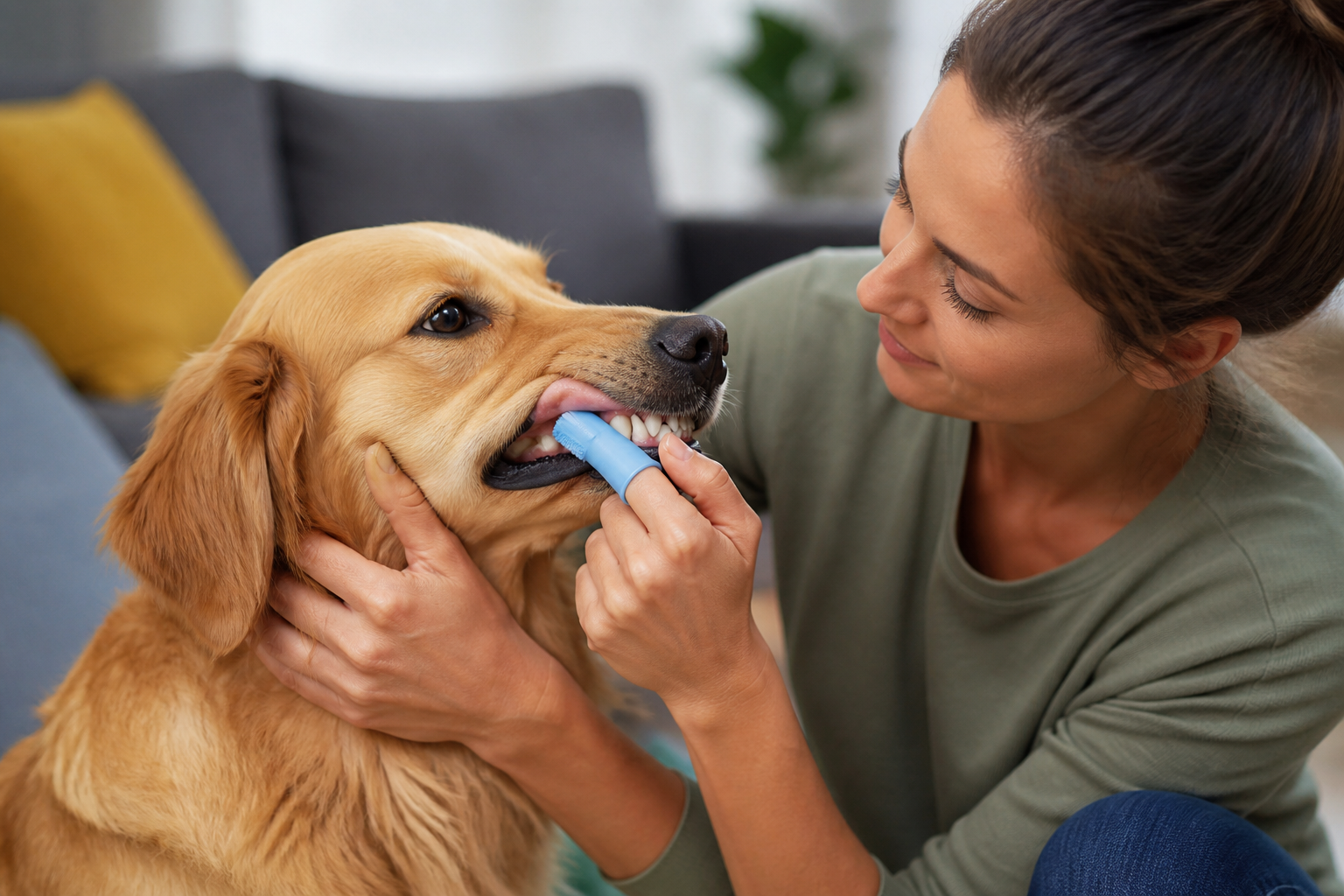
- Finger brushes that slip over your pointer finger for better control.
- Silicone brushes for dogs with sensitive or tender gums.
The Brushing Technique
If your dog is not used to the brush, do not try to do the whole mouth at once. Start by letting them lick the paste off your finger. Once they like the taste, move to rubbing their teeth with your finger alone.
When you introduce the brush, aim for a 45-degree angle toward the gum line. Focus on the outside surfaces of the teeth, as this is where most tartar accumulates. The tongue usually does a decent job of keeping the inside surfaces cleaner. Even 30 seconds of brushing two or three times a week makes a significant difference. For more brushing guidance, review these pet dental care tips.
Key Takeaway: Mechanical brushing with enzymatic toothpaste is the only home method that reliably removes the plaque that leads to tartar formation.
Using Dental Gels and Sprays
Not every dog will tolerate a toothbrush in their mouth. For these pets, dental gels and sprays are excellent alternatives. These products often contain natural antimicrobials like neem oil, grapefruit seed extract, or peppermint oil. They work by changing the pH of the mouth and killing the bacteria that create plaque.
Gels are usually applied with a finger or simply smeared on the side of the mouth. The dog's tongue will move the gel around, coating the teeth and gums. Sprays are even simpler but some dogs are startled by the "hiss" of the spray bottle. If your dog is sound-sensitive, spray the solution onto a cotton ball and wipe it onto the teeth instead.
The Power of Dental Chews and Toys
Chewing is a natural behavior that serves a functional purpose. When a dog chews on a firm object, the surface of that object scrapes against the tooth. This provides a "scrubbing" effect that can knock off soft plaque and even mild tartar. Browse our dental treats and chews for options that fit your dog's routine.
Recommended Chews
We carry a variety of trusted brands like Greenies and Kong that are designed with dental health in mind. Look for chews that have the Veterinary Oral Health Council (VOHC) seal of approval. This seal means the product has been tested and proven to reduce plaque or tartar by a specific percentage. You can also explore our selection of Greenies products or Greenies Original Dental Dog Chews for a specific option.
Interactive Toys
Rubber toys with ridges or "nubs" are great for cleaning teeth during play. You can even smear a little enzymatic toothpaste into the grooves of a Kong toy. As your dog works to get the paste out, the rubber ridges scrub the teeth. This is a stress-free way to incorporate dental care into their daily routine.
Natural Options
Raw, crunchy vegetables like carrots or apple slices can help. The fibrous texture acts as a mild abrasive. While a carrot will not remove a thick layer of tartar, it is a healthy, low-calorie way to supplement a dental routine.
Vet Tip: Always supervise your dog when they are using dental chews or hard toys. If a dog chews too aggressively on an object that is harder than their teeth, they risk fracturing a premolar.
Water Additives for Easy Maintenance
If you have a busy schedule or a very difficult dog, water additives are a "hands-off" approach. These are tasteless, odorless liquids that you pour into your dog's water bowl. They contain enzymes and minerals that help break down the biofilm of bacteria in the mouth.
While water additives are the least effective method on their own, they are fantastic when used as part of a multi-layered approach. They work 24/7 to keep the bacterial load low, making it harder for plaque to find a foothold.
Specialized Diets and the BaxterBoo Pharmacy
For some dogs, genetics play a huge role in how fast tartar forms. Small breeds, such as Chihuahuas or Yorkies, often have crowded teeth that trap food and bacteria. These dogs may benefit from a specialized dental diet.
These foods have a specific kibble shape and texture. Unlike standard kibble that crumbles immediately, dental kibble is designed to stay together longer so the tooth sinks into it. This creates a scrubbing action all the way down to the gum line.
Our pharmacy at BaxterBoo offers a range of prescription pet foods through our partnership with Pet's Choice. If your veterinarian recommends a specific dental diet like Royal Canin Dental or Farmina Vet Life, you can fulfill those needs through our pet pharmacy. Prescription diets often contain active ingredients like calcium chelators that prevent minerals in the saliva from hardening into tartar.
When Home Care is Not Enough
It is important to be realistic about what can be achieved at home. Once tartar has become a thick, dark brown "bridge" between teeth, it is likely too hard for a brush or chew to remove. Attempting to scrape this off with metal tools at home is dangerous. You can easily slip and gash the gums, or worse, scratch the tooth enamel. Scratched enamel is porous, which means tartar will return even faster and stick even harder.
If you notice any of the following, it is time to visit the veterinarian:
- Bleeding or very red gums (gingivitis).
- Loose or broken teeth.
- A "rotting" smell that persists after brushing.
- Your dog dropping food or crying out while eating.
- Lumps or bumps on the gums.
Professional Veterinary Cleaning
A professional cleaning is done under general anesthesia. This is the only way for a vet to get a full set of X-rays and clean the "pockets" under the gum line where the most damage occurs. During the procedure, the vet uses an ultrasonic scaler to vibrate the tartar off the teeth without damaging the enamel. They then polish the teeth to leave them smooth.
Bottom line: Home care is about prevention and maintenance, while professional cleanings are about restoration and medical treatment.
Creating a Dental Care Schedule
Consistency is more important than intensity. Brushing once a month does almost nothing because plaque turns to tartar in just a few days. Instead, try to build a "dental stack" that fits your lifestyle.
Step 1: Brushing / Aim for at least three times per week using a dog-safe paste.
Step 2: Daily Chew / Give one VOHC-approved dental chew every evening.
Step 3: Water Additive / Add a dental solution to their fresh water every morning.
Step 4: Weekly Check / Lift the lips and look for new redness or dark spots.
By combining these steps, you are attacking plaque from every angle. The water additive weakens the bacteria, the brushing removes the soft film, and the chews provide the mechanical force to keep the surfaces smooth.
Dietary Habits That Help
What your dog eats can influence how quickly tartar builds up. Diets very high in simple carbohydrates can feed the bacteria in the mouth. High-quality proteins and limited-ingredient diets, like those from Stella and Chewy's or The Honest Kitchen, can sometimes result in better oral health.
Also, consider when you give treats. Giving a dental chew right after a meal can help "clean up" the debris left behind by their food. Avoid giving sugary human snacks, which are a primary fuel source for oral bacteria.
Monitoring Senior Dogs
As dogs age, their immune systems change, and they may be more prone to oral infections. Senior dogs also frequently deal with dry mouth, which accelerates tartar formation because they have less saliva to wash away food particles. If you have a senior pet, you might need to increase the frequency of your home care.
If your senior dog has existing health conditions, such as heart or kidney issues, managing their tartar is even more critical. Our pharmacy carries medications for many chronic conditions, and keeping the mouth clean reduces the overall stress on your dog's system. We recommend regular vet checkups to ensure that any dental procedures are safe for your aging friend.
Summary of Home Tartar Management
Managing your dog's dental health is a lifelong commitment. While you might not be able to "pop" off a heavy piece of tartar with a toothbrush, you can certainly stop the progression of dental disease.
- Start slow and keep sessions positive with rewards.
- Use enzymatic products that work chemically to break down plaque.
- Incorporate different methods like gels, chews, and additives.
- Always consult your vet if you see signs of pain or infection.
At BaxterBoo, we are committed to providing the supplies you need to keep your dog healthy from head to tail. Whether you are looking for a new finger brush, a bag of enzymatic treats, or a prescription diet through our pharmacy, we are here to support your journey as a pet parent.
Key Takeaway: A multi-layered approach using brushing, chews, and water additives is the most effective way to manage dog tartar at home.
FAQ
Can I use baking soda to clean my dog's teeth?
Baking soda is a mild abrasive that can help clean teeth, but it should be used sparingly and only in very small amounts. It has a high salt content which can be an issue for dogs with certain health conditions, and most dogs dislike the taste. It is generally better to use a formulated dog toothpaste that contains enzymes specifically designed to break down pet-grade plaque.
How long does it take for plaque to turn into tartar?
Plaque can begin to mineralize and turn into tartar in as little as 24 to 72 hours. This is why daily brushing is the recommended standard for pet dental care. Once that window passes and the plaque hardens, it becomes much more difficult to remove with a standard toothbrush or chew.
Are there any natural ways to soften dog tartar?
Certain natural ingredients like coconut oil have antimicrobial properties that may help reduce the bacteria in the mouth. Some owners also use diluted apple cider vinegar on a cotton ball to wipe the teeth. While these can supplement a routine, they are rarely strong enough to remove established tartar on their own and should be used alongside mechanical brushing.
Is professional dental cleaning for dogs dangerous?
While every procedure involving anesthesia carries some risk, modern veterinary medicine is very safe. Vets perform pre-anesthetic blood work to ensure your dog is a good candidate for the procedure. The risks of untreated dental disease, including systemic organ failure and chronic pain, are often much higher than the risks of a supervised dental cleaning.






