
 Save 15% on your 1st Autoship learn more

 Email us
 Live Chat
 FAQs
FAQs





Introduction
You lean in for a happy morning nuzzle only to be met with a cloud of breath that smells like a damp gym bag. Bad dog breath is more than just a minor annoyance for pet owners. It often signals a buildup of plaque and bacteria that can impact your dog's long-term health. Many of us want to keep our dogs healthy without relying entirely on expensive professional cleanings or products filled with synthetic chemicals. At BaxterBoo, we know that consistent home care is the most effective way to prevent serious dental issues. This post covers safe DIY toothpaste recipes, gentle brushing techniques, and natural alternatives to keep those pearly whites sparkling. Taking control of your dog's oral hygiene at home builds a stronger bond and supports their overall wellness.
Why Dog Dental Health Cannot Be Ignored
Most dogs show some sign of oral health issues by the time they are three years old. This usually starts as plaque, which is a soft film of bacteria. If you do not remove plaque through cleaning, it hardens into tartar within about 48 hours. Tartar is much harder to remove at home and often requires a professional veterinary cleaning.
Poor oral hygiene does not stop at the mouth. Bacteria in the gums can enter the bloodstream. From there, it can travel to major organs like the heart, liver, and kidneys. This can lead to chronic infections or organ damage over time. Regular DIY cleaning helps keep these bacteria levels low. It also gives you a chance to inspect your dog's mouth for lumps, cuts, or loose teeth that might otherwise go unnoticed.
Quick Answer: Clean your dog's teeth DIY by using a homemade paste of coconut oil and baking soda. Use a soft brush or finger cloth to gently scrub the teeth at least three times per week. Combining this with natural chews like yak cheese or collagen sticks helps scrape away plaque naturally.
Creating Your Own DIY Dog Toothpaste
You should never use human toothpaste for your dog. Our toothpaste contains ingredients like xylitol and fluoride. Xylitol is extremely toxic to dogs, and fluoride can cause stomach upset or toxicity if swallowed. Since dogs cannot spit, they ingest everything you put in their mouth.
A DIY toothpaste allows you to control exactly what your dog consumes. Most recipes use a base of coconut oil. This oil contains lauric acid, which has natural antibacterial properties. It also tastes great to most dogs, making the cleaning process much easier.
The Basic Recipe
- 1/4 cup organic coconut oil (solid but soft)
- 2 tablespoons of baking soda
- 1 teaspoon of beef or chicken broth (low sodium, no onion or garlic)
- 1/2 teaspoon of dried parsley
Why These Ingredients Work
Baking soda acts as a very mild abrasive to help scrub away surface stains and plaque. The broth makes the paste enticing so your dog views cleaning time as a treat. Parsley is a natural deodorizer that helps freshen breath instantly. You can also add a drop of peppermint oil, but ensure it is safe for pets and used in very small amounts.
Step 1: Mix the ingredients. / Combine the oil, baking soda, and flavorings in a small bowl until they form a smooth paste.
Step 2: Store the mixture. / Place the paste in a small airtight glass jar. It does not need to be refrigerated as long as the coconut oil stays relatively cool.
Step 3: Test a small amount. / Let your dog lick a tiny bit off your finger to make sure they like the taste before you start brushing.
Key Takeaway: Homemade toothpaste is safer than human alternatives because it lacks toxic sweeteners like xylitol. Using a coconut oil base provides antibacterial benefits while making the flavor appealing to your pet.
The Best Tools for DIY Dental Care
The tool you choose depends on your dog's size and comfort level. A standard human toothbrush is often too hard and the head is too large for most dogs. You want something that allows you to reach the back molars without causing gagging. You can also explore our dog dental care selection for pet-focused oral care products.
Soft Bristle Dog Brushes
These look like human brushes but often have an angled head. This angle helps you reach the outside of the teeth while the dog's mouth is partially closed. For very small dogs or toy breeds, a child-sized soft toothbrush can work well.
Finger Brushes
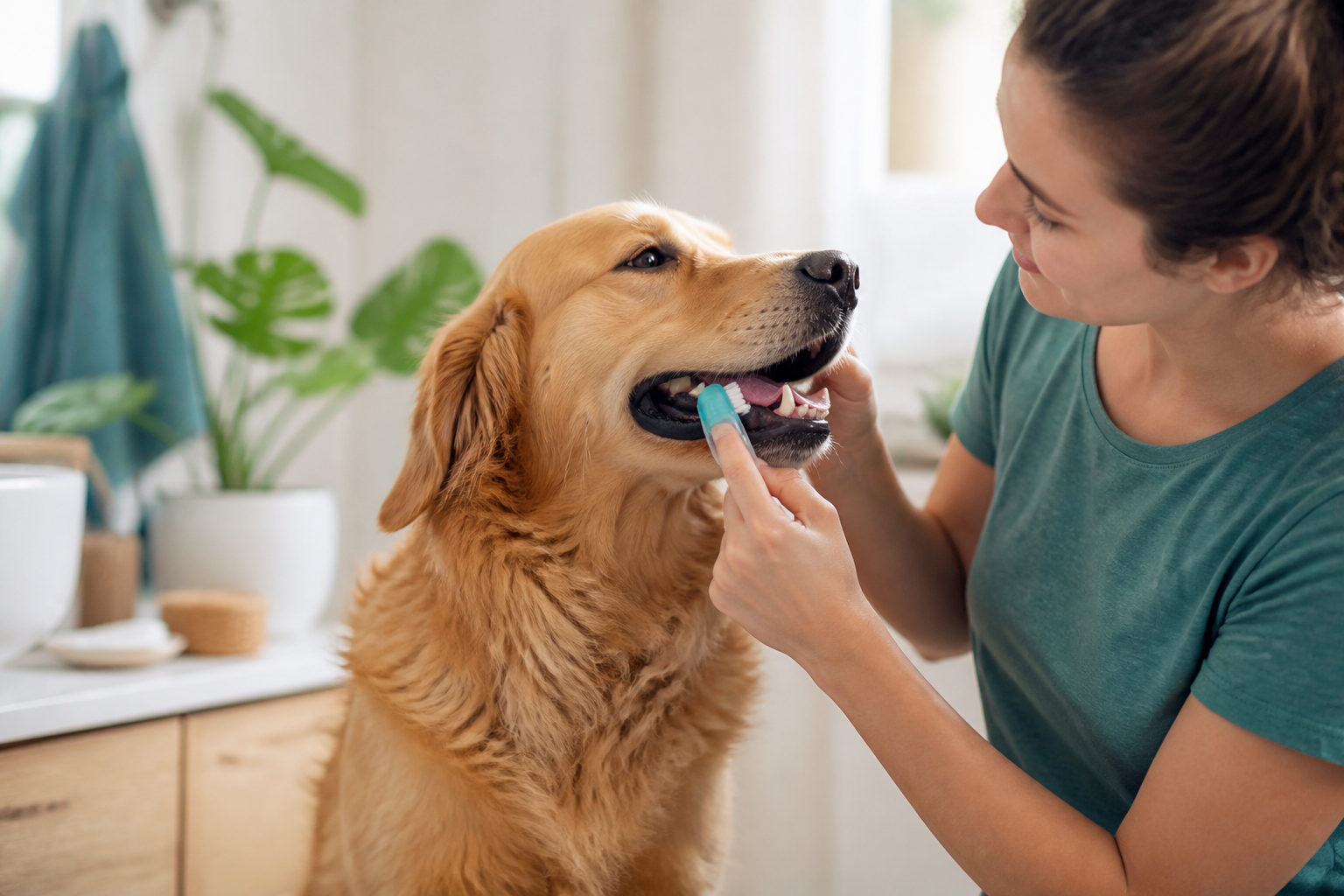
These are small silicone caps that fit over your pointer finger. They have tiny nubs on the end. These are excellent for dogs that are nervous about long objects being put in their mouth. Because you can feel exactly where your finger is, you are less likely to poke the gums too hard.
Gauze or Microfiber Cloths
If your dog is completely resistant to brushes, a simple piece of gauze wrapped around your finger is a great start. You can dip the gauze in your DIY paste and rub the teeth. This provides enough friction to remove soft plaque without the intrusive feeling of a brush.
A Step-By-Step Guide to Brushing
Do not expect to complete a full brushing on the first day. This is a process that requires patience. If you rush, your dog may become fearful of the routine. For additional guidance, read these pet dental care tips.
Week 1: The Flavor Introduction
Start by putting a little bit of your DIY paste on your finger. Let your dog lick it off. Do this for a few days without trying to touch their teeth. You want them to get excited when they see the jar.
Week 2: The Finger Rub
Once they like the taste, rub your finger along their gums and teeth while they lick the paste. Keep the sessions very short. Aim for ten seconds per side. Reward them with a high-value treat immediately after.
Week 3: Introducing the Brush
Put the paste on the brush or finger sleeve. Let them lick it off the bristles first. Then, gently lift the upper lip. Use small circular motions on the outside of the teeth. Focus on the area where the tooth meets the gum line. This is where most plaque accumulates.
Week 4: Reaching the Back
The back molars are the most prone to decay. Gently slide the brush back along the cheek. You do not need to brush the inside of the teeth (the tongue side). A dog's tongue does a decent job of cleaning the inside on its own. The outside is where your help is needed most.
Vet Tip: If your dog's gums bleed slightly when you first start brushing, it may be a sign of mild gingivitis. Continue to brush gently. However, if the bleeding is heavy or the gums look bright red and swollen, stop and consult your veterinarian for a professional evaluation.
Using Natural Chews as Passive Cleaners
Brushing is the gold standard, but natural chews are a fantastic supplement. When a dog chews on a hard, safe object, the mechanical action scrapes the surface of the tooth. This is often called "passive cleaning." At BaxterBoo, we prioritize chews that are single-ingredient and free from harsh chemicals. Browse our bones, bully, and natural chews for options that fit into a supervised chewing routine.
Yak Cheese Chews
These are made from yak and cow milk, lime juice, and a tiny bit of salt. They are very hard. As your dog chews, their saliva softens the edges, creating a surface that acts like a scrub brush for the teeth. They are long-lasting and do not splinter like cooked bones.
Beef Collagen Sticks
Collagen sticks are a safer alternative to rawhide. They are highly digestible and offer a tough texture that requires a lot of chewing. This consistent gnawing helps massage the gums and increase blood flow to the oral tissues. You can compare options in our beef collagen chew category.
Bully Sticks
Bully sticks are 100 percent beef muscle. They are tough enough to provide mechanical cleaning but flexible enough to prevent tooth fractures. They also help satisfy the natural urge to chew, which reduces stress and boredom.
- Always supervise your dog with any chew.
- Take the chew away when it becomes small enough to swallow whole.
- Ensure the chew is appropriate for your dog's size and jaw strength.
Bottom line: Natural chews provide mechanical scraping that complements regular brushing by reaching areas you might miss.
The Role of Diet in Oral Health
What your dog eats every day impacts how quickly plaque forms. There is a common myth that all dry kibble cleans teeth. While some prescription dental diets are specially formulated with large, fibrous kibbles that do not shatter, standard kibble usually crumbles too quickly to provide much benefit.
Raw and Fresh Foods
Some owners find that a diet including fresh, whole foods reduces dental issues. Raw meaty bones (never cooked) can act as a natural toothbrush. However, bones carry risks of splintering or choking. You must research the correct size of bone for your specific breed.
Water Additives and Sprays
If brushing is extremely difficult, you can use pet-safe water additives. These are tasteless liquids you add to the water bowl. They contain enzymes that help break down the protein film that plaque sticks to. Dental sprays work similarly but are applied directly to the teeth and gums. These are not a replacement for brushing, but they help keep the mouth cleaner between sessions.
Recognizing Signs of Dental Disease
Even the best DIY routine cannot fix advanced dental disease. You must know when to put the brush down and call a professional. For a closer look at warning signs, read how to recognize hidden dental problems in dogs.
Foul Odor
While "dog breath" is normal, a truly putrid or rotting smell is a sign of infection. This often indicates a pocket of bacteria under the gum line that you cannot reach with a brush.
Discoloration and Tartar
Plaque is clear or yellowish and soft. Tartar (calculus) is brown or grey and feels like a rock attached to the tooth. If you see significant brown buildup near the gums, your dog likely needs a professional scaling.
Behavioral Changes
If your dog starts dropping food, chewing on one side of the mouth, or pawing at their face, they may be in pain. Dental pain in dogs is often silent. They will continue to eat because they are hungry, but they may be suffering significantly.
Key Takeaway: DIY cleaning is a preventive measure. It cannot reverse established tartar or heal an infected tooth. Regular veterinary exams are essential to catch deep-seated issues.
The BaxterBoo Pharmacy and Prescription Care
Sometimes, despite your best efforts at home, a dog develops a condition that requires medical intervention. Chronic gingivitis or severe allergies that cause mouth inflammation might require specific medications. Through our partnership with Pet's Choice, we offer a full-service pharmacy. We carry FDA-approved medications and prescription dental diets that are specifically engineered to fight tartar.
If your vet discovers an infection, they may prescribe antibiotics or medicated oral rinses. You can have these prescriptions filled through our pet pharmacy for home delivery. Our pharmacy allows you to manage your dog's chronic health needs with the same convenience as buying their favorite toys.
Building a Sustainable Routine
The key to DIY success is consistency. Brushing once a month does very little. Plaque hardens into tartar very quickly, so you want to disrupt that film as often as possible.
Set a Schedule
Try to brush at the same time every day. Many owners find that brushing after the final walk of the evening works best. The dog is tired and more likely to sit still.
Join the MVP Rewards Program
Maintaining a dental routine requires a steady supply of brushes, toothpaste ingredients, and chews. By joining the MVP Rewards program, you earn up to 5 percent back on every purchase. This makes it easier to keep your dental kit stocked year-round without overspending.
Track Your Progress
Take a photo of your dog's teeth once a month. This helps you see if your DIY efforts are working or if tartar is starting to build up. If you see things getting worse despite your efforts, it is time for a vet visit.
Practical Tips for Stubborn Dogs
Not every dog will sit politely for a cleaning. If you have a high-energy or stubborn dog, you may need to adjust your approach.
- Use a grooming table or a raised surface to keep them focused.
- Have a partner hold a lick mat smeared with peanut butter (xylitol-free) to keep them occupied while you brush.
- Exercise them beforehand so they have less energy to wiggle.
- Keep sessions to under two minutes to prevent frustration.
Bottom line: A short, positive session is much better than a long, stressful one.
Conclusion
Cleaning your dog's teeth DIY is one of the most proactive steps you can take for their longevity. By mixing a simple coconut oil paste and committing to a few minutes of brushing each week, you can prevent painful infections and costly surgeries. Remember to use safe tools and introduce the process slowly to keep your dog comfortable. Supplements like yak chews and collagen sticks from BaxterBoo can handle the hard-to-reach spots through natural chewing. While home care is vital, it works best alongside regular checkups from your veterinarian to ensure no underlying issues are missed. For all your dental supplies, from finger brushes to prescription diets, visit our dog dental care category or our pet pharmacy to keep your pet's smile healthy and bright.
FAQ
Is baking soda safe for dogs' teeth?
Baking soda is safe for dogs in small amounts when used as a mild abrasive in toothpaste. It helps neutralize odors and scrub away surface plaque effectively. However, you should not let your dog eat large quantities of it, as it can upset their stomach or affect their electrolyte balance.
How often should I clean my dog's teeth at home?
Ideally, you should brush your dog's teeth every day to prevent plaque from hardening into tartar. If a daily schedule is not possible, aim for at least three times per week. Consistent cleaning is more important than the duration of each session.
Can I use a human toothbrush on my dog?
You can use a human toothbrush if it has very soft bristles, but a child-sized brush or a specialized dog brush is usually better. Dog brushes are angled to fit the shape of a canine's mouth, making it easier to reach the back molars. Many owners prefer finger brushes for better control and safety.
What should I do if my dog's gums are bleeding?
Mild bleeding can occur if you are just starting a routine and your dog has slight gingivitis. If the bleeding is persistent, heavy, or accompanied by very red and swollen gums, you should stop brushing and consult your vet. This may indicate more advanced periodontal disease that requires professional treatment rather than DIY care.






