
 Save 15% on your 1st Autoship learn more

 Email us
 Live Chat
 FAQs
FAQs





Introduction
You are relaxing on the couch when your dog hops up to give you a big, sloppy kiss. Instead of a sweet moment, you are hit with a wave of breath that smells like a dumpster in mid-July. This is a common scenario for many pet owners. While we often joke about "dog breath," persistent foul odors are usually a sign of plaque and tartar buildup. Taking care of your pet's mouth is just as important as grooming their coat or keeping up with their walks.
At BaxterBoo, we know that the idea of sticking a brush into a wiggly dog's mouth can feel overwhelming. This guide covers how to choose the right dental tools, how to get your dog to cooperate, and the safest way to maintain those pearly whites at home. Our goal is to help you build a routine that keeps your dog healthy and saves you from expensive vet bills later. Understanding the right way to use these tools is the first step toward a lifetime of healthy smiles.
The Essential Dental Toolkit for Dogs
Before you start, you need the right equipment. You cannot simply grab a spare toothbrush and human toothpaste from your bathroom cabinet. Human toothpaste often contains fluoride and xylitol. Xylitol is an artificial sweetener that is highly toxic to dogs even in small amounts. Since dogs do not know how to spit, they swallow everything you put in their mouths. You must use products specifically formulated for canines.
The primary tool in your kit should be a dog-specific toothbrush. These come in several styles. Standard dog brushes have long, angled handles that help you reach the way-back molars without sticking your entire hand in their mouth. Many have dual heads with a large side for flat surfaces and a smaller side for tight corners. If your dog is nervous about a long plastic stick, finger brushes are a great alternative. These are silicone or rubber sleeves that fit over your pointer finger. They allow you to feel exactly where you are brushing, which is helpful for small breeds.
Quick Answer: The best tools for cleaning a dog's teeth are a soft-bristled pet toothbrush or a silicone finger brush combined with enzymatic dog toothpaste. Never use human toothpaste as it contains ingredients like xylitol that are toxic to pets.
In addition to brushes, enzymatic toothpaste is a must-have. Unlike human paste that relies on foaming agents, dog toothpaste uses enzymes to break down organic matter. These enzymes keep working even after you stop brushing. Most come in flavors dogs actually like, such as poultry, beef, or peanut butter. This makes the process feel more like a treat than a chore. Explore our dog dental care collection for toothbrushes, toothpaste, gels, and other oral-care supplies.
Understanding Advanced Dental Tools
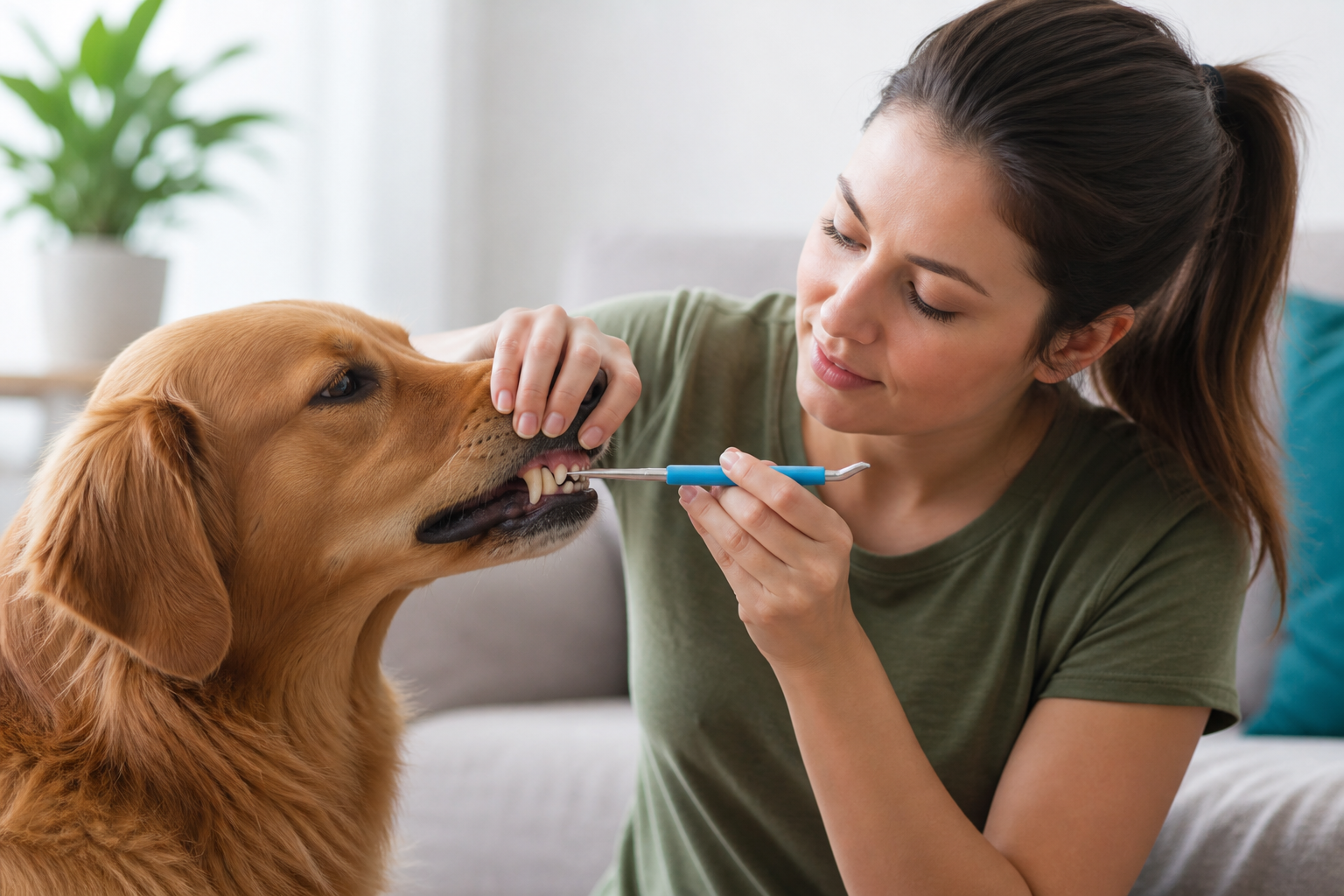
When people search for dental tools, they often see metal scalers or scrapers. These are the sharp instruments human dentists use to chip away hardened tartar. While these tools are available for purchase, they require extreme caution. Using a metal scaler on a moving dog can lead to serious injuries. If the dog jerks their head, you could puncture their gums or the roof of their mouth.
Furthermore, metal tools can scratch the tooth enamel. These tiny scratches create a rough surface where bacteria can cling even more easily than before. This often leads to faster plaque buildup in the future. Most professional groomers and vets suggest leaving the heavy scraping to the experts. However, there are other "tools" that are safe for home use, such as dental wipes. Wipes are pre-moistened pads that you wrap around your finger to rub away surface slime before it hardens into tartar.
Vet Tip: While you can buy metal dental scrapers online, we strongly recommend against using them at home. One slip can cause a painful mouth injury or permanent enamel damage. Stick to soft brushes and wipes and let your veterinarian handle professional scaling under anesthesia.
Choosing Between Brushes and Wipes
- Standard Brushes: Best for reaching the back molars and cleaning deep into the gum line.
- Finger Brushes: Ideal for puppies, small dogs, or pets that are intimidated by long objects.
- Dental Wipes: Great for dogs that absolutely refuse a brush or for a quick clean on busy days.
- Sponges: Some kits include small foam applicators for dogs with very sensitive or bleeding gums.
Preparing Your Dog for the Process
You cannot expect a dog to sit still for a dental cleaning without some preparation. The key is desensitization. This means getting your dog used to having their mouth touched in a very slow, positive way. Start when your dog is calm and relaxed. Do not try to brush their teeth right after a high-energy game of fetch.
Begin by gently lifting their lips to look at their teeth. Reward them with a small treat and lots of praise. Do this for a few days until they do not pull away. Next, put a little bit of the flavored toothpaste on your finger and let them lick it off. This builds a positive association with the taste. Once they are excited to see the toothpaste tube, you can start rubbing your finger along their gums.
Step 1: Get them used to mouth handling. Spend a few minutes each day gently lifting their jowls and touching their teeth with your bare finger.
Step 2: Introduce the flavor. Let your dog lick a pea-sized amount of dog toothpaste off your finger or a favorite toy.
Step 3: Combine touch and taste. Put toothpaste on your finger and rub it gently over the front teeth and gums.
Step 4: Introduce the tool. Let them sniff the brush and lick paste off the bristles before you ever try to put it inside their mouth.
For additional guidance on gradually introducing brushing, read these pet dental care tips.
How to Clean Dogs Teeth with Dental Tools Step by Step
Once your dog is comfortable with your hands in their mouth and likes the taste of the paste, you are ready for the real thing. Consistency is more important than perfection. If you can only brush three teeth today, that is fine. You can do three more tomorrow. Ideally, you want to reach a point where you can brush the entire mouth in about two minutes.
Start by placing the toothbrush at a 45-degree angle to the gum line. This is the area where plaque likes to hide. Use small, circular motions. You do not need to apply much pressure. The enzymatic paste and the motion of the bristles will do most of the work. Focus on the outside of the teeth, which are the surfaces facing the cheeks. Most dogs have a very rough tongue that naturally cleans the inside surfaces of the teeth, so the outside is where most tartar accumulates.
Key Takeaway: Focus your brushing efforts on the outside of the teeth near the gum line. Use a 45-degree angle and gentle circular motions to break up plaque without irritating the gums.
Be sure to reach the large molars in the very back. This is where the salivary glands are located, which means tartar forms there faster than anywhere else. To reach them, you may need to gently slide the brush back between the cheek and the teeth. If your dog starts to get stressed or tries to get away, stop immediately. End the session on a positive note with a treat or a favorite game. You want them to remember the experience as something that ends with a reward.
Recognizing Signs of Dental Trouble
While home cleaning is vital, it is not a cure for existing disease. You should regularly check your dog's mouth for red flags. Healthy gums should be a light pink color. If you see a bright red line along the base of the teeth, that is a sign of gingivitis. This is an early stage of periodontal disease that can often be reversed with better cleaning.
If you see thick, brown, or orange crust on the teeth, that is tartar. Tartar is hardened plaque that cannot be brushed away. It requires professional equipment to remove. Other signs of trouble include loose teeth, bleeding gums, or a sudden change in eating habits. If your dog starts dropping food or only chewing on one side, they might be in pain. Read more about warning signs of dental disease in dogs.
Bottom line: Brushing prevents new plaque from forming, but it cannot remove hardened tartar or treat deep infections that require veterinary intervention.
We recommend a veterinary dental exam at least once a year. Your vet can see things that are hidden under the gum line, such as abscesses or bone loss. For dogs with chronic dental issues, our pharmacy at BaxterBoo offers a variety of prescription solutions. Through our partnership with Pet's Choice, we provide FDA-approved medications and specialized prescription diets designed to support oral health.
The Role of the BaxterBoo Pharmacy
Sometimes, simple brushing is not enough. Some breeds, especially small dogs like Pugs or Yorkies, are genetically prone to dental disease because their teeth are crowded together. If your vet diagnoses an infection or severe inflammation, they may prescribe specific treatments. This is where we can help.
Our dog pharmacy provides a streamlined way to get the medications your pet needs. Whether it is an antibiotic for a mouth infection or a prescription-strength oral rinse, we carry trusted brands to help manage your dog's health. Having access to a real pharmacy means you can get your pet's food, toys, and medication all in one place. Using our Autoship programme for these items ensures you never run out of the supplies needed to keep your dog's mouth clean.
We also carry prescription dental diets from brands like Royal Canin and Farmina Vet Life. These foods are specially shaped to scrub the teeth as the dog eats, acting like a "mechanical" tool. If your vet suggests a specific diet for weight management or dental care, you can easily find those options through our pharmacy portal.
Alternatives and Supplements for Better Oral Health
If your dog is one of the few who absolutely will not tolerate a toothbrush, do not give up. There are other tools you can use to reduce the bacterial load in their mouth. Dental chews are a popular choice. Brands like Greenies are designed with a texture that helps scrape away plaque as the dog chews. However, these only work if the dog actually spends time chewing them. If they swallow the treat in two seconds, it will not do much for their teeth.
Water additives are another easy option. These are tasteless liquids you add to your dog's water bowl. They contain enzymes that help kill the bacteria that cause bad breath and plaque. While not as effective as brushing, they are a great "hands-off" supplement to a dental routine. You can also look for specific chew toys. Many Kong toys are designed with ridges that massage the gums and clean the teeth while the dog plays.
Key Takeaway: A multi-pronged approach is most effective. Combine daily brushing with dental chews, water additives, and appropriate chew toys to keep tartar at bay.
Using these alternatives alongside regular brushing is the best way to maintain health. You can also join our MVP Rewards programme to earn points on these recurring purchases. Since dental care is a lifelong commitment, earning 5% back on every bag of treats or tube of toothpaste adds up quickly.
For more ideas between brushing sessions, explore these dental chews for dogs.
Tips for Long-Term Success
The most common reason pet owners stop brushing is that they forget or the dog makes it difficult. To make it a habit, tie the brushing to something you already do every day. Maybe you brush your dog's teeth right after you brush your own at night, or right before their evening meal. When it becomes part of the daily schedule, it feels less like an extra chore.
Keep your tools in a visible place. If the toothbrush is buried in a drawer, you are less likely to use it. Keeping a small kit on the counter or near the dog's food bowl serves as a helpful reminder. Also, remember to replace the toothbrush every three to four months. Just like human brushes, the bristles wear down and become less effective over time.
Finally, be patient with yourself and your dog. It might take a month before you can do a full cleaning. That is okay. Every little bit of plaque you remove is a win for your dog's health. Small, consistent efforts lead to big results over time. You will notice the difference in their breath, and your vet will notice the difference during their annual checkup.
Conclusion
Cleaning your dog's teeth with dental tools does not have to be a battle. By choosing the right pet-safe products and taking the time to desensitize your dog, you can make oral hygiene a stress-free part of your routine. Remember to focus on the gum line, use gentle motions, and always reward your dog for their cooperation. While at-home care is essential, it works best when paired with professional veterinary checkups and the right supplements.
To get started on your dog's dental journey, explore our collection of dental care products. From enzymatic toothpastes to durable chew toys, we have everything you need to keep those tails wagging and breaths fresh. For those managing more serious dental conditions, remember that our pharmacy is here to provide the prescription support your vet recommends.
FAQ
Can I use a human toothbrush on my dog?
Yes, you can use a human toothbrush as long as it has soft bristles. A child-sized toothbrush often works best for smaller dogs because the head is more compact. However, you must still use dog-specific toothpaste, as human paste is dangerous if swallowed.
How often should I clean my dog's teeth with tools?
Ideally, you should brush your dog's teeth every single day. Plaque can turn into hardened tartar in as little as 24 to 48 hours. If daily brushing is not possible, aim for at least three times a week to see a meaningful benefit for their oral health.
What should I do if my dog's gums bleed during brushing?
Minor bleeding can occur if your dog has mild gingivitis and you are just starting a routine. However, if the bleeding is heavy or persistent, stop brushing and consult your veterinarian. This could be a sign of advanced periodontal disease that needs professional treatment.
Do dental treats really work as well as brushing?
While high-quality dental treats can help reduce plaque, they are generally not as effective as manual brushing. Brushing allows you to target the gum line and reach every tooth, whereas treats mostly clean the surfaces the dog uses to chew. Use treats as a supplement to, not a replacement for, brushing.






