
 Save 15% on your 1st Autoship learn more

 Email us
 Live Chat
 FAQs
FAQs





Introduction
You might be sitting on the floor with a toothbrush in one hand and a struggling dog in the other. Perhaps your dog hates the flavor of poultry-scented paste, or maybe you are concerned about the specific ingredients in commercial gels. At BaxterBoo, we meet pet owners every day who want to maintain their dog's oral health but struggle with the traditional brushing routine. Cleaning your dog's teeth does not always require a tube of toothpaste or a wrestling match. This guide covers effective alternatives like dental powders, VOHC-accepted chews, and specialized diets that work to reduce plaque without the mess. We will explain how these methods work and how to choose the right one for your dog's needs. Maintaining a clean mouth is possible through consistency and the right tools.
The Reality of Canine Dental Health
Plaque is a sticky film of bacteria that forms on your dog's teeth within hours of a meal. If you do not remove this film, it combines with minerals in the saliva. Within 48 hours, it begins to harden into tartar. Tartar is the yellow or brown substance you see at the gumline. Once tartar forms, you cannot remove it with a toothbrush or a chew. It requires a professional cleaning from a veterinarian.
Many owners feel guilty if they cannot brush their dog's teeth every day. While brushing is a great standard for care, it only works if you actually do it. A dog that hides when the toothbrush comes out is a dog that is not getting dental care. Finding a method your dog accepts is more important than sticking to a traditional routine that fails.
Quick Answer: You can clean a dog's teeth without toothpaste by using dental powders, VOHC-accepted dental chews, or water additives. These products use enzymes or mechanical action to break down plaque and prevent tartar buildup without the need for traditional brushing.
Dental Powders: The No-Handling Solution
If your dog refuses to let you touch their mouth, dental powders are often the best starting point. You do not need to scrub, rinse, or even touch your dog's teeth for these to work. The ProDen PlaqueOff Powder Dog and Cat Teeth Care is designed to be added to food as part of a daily routine.
The most effective powders usually contain a specific type of seaweed called Ascophyllum nodosum. This is a natural ingredient harvested from cold North Atlantic waters. When your dog eats the powder, the active ingredients are absorbed into the bloodstream. They then come out through the saliva.
The seaweed works systemically to break down the bacterial biofilm on the teeth. It makes the plaque softer and easier to remove through normal chewing or drinking. Over time, it can even help loosen existing tartar. Because it works through the saliva, it reaches every corner of the mouth. This includes the back molars where most buildup occurs.
Why Powders Are Effective
- They require zero mouth handling.
- They work 24 hours a day via the saliva.
- They are usually tasteless or have a mild sea-salt flavor that dogs enjoy.
- They are highly concentrated, so a small bottle lasts a long time.
VOHC-Accepted Dental Chews
Dental chews are the most popular alternative to toothpaste. They work through mechanical action. As your dog bites down, the texture of the chew scrapes against the surface of the tooth. This action wipes away plaque before it can harden. You can compare options in our dog dental chews collection.
However, not all chews are created equal. Many products claim to clean teeth but lack the evidence to prove it. You should look for the Veterinary Oral Health Council (VOHC) Seal of Acceptance. This seal means the product has undergone clinical trials. It has been proven to significantly reduce plaque or tartar in dogs.
We carry several brands at BaxterBoo that focus on this mechanical cleaning. Brands like Greenies and ProDen PlaqueOff offer chews specifically designed to be flexible. This flexibility allows the tooth to sink into the chew, cleaning all the way down to the gumline.
Key Takeaway: Always check for the VOHC seal on dental treats. This ensures the product is scientifically proven to reduce buildup rather than just being a hard treat.
Cleaning With Dental Wipes and Gauze
Some dogs do not mind having their mouths touched but hate the sensation of a plastic toothbrush. For these dogs, dental wipes or simple medical gauze are excellent alternatives to toothpaste. The TrueBlue Fast & Fresh Dog Dental Wipes are pre-moistened for convenient use.
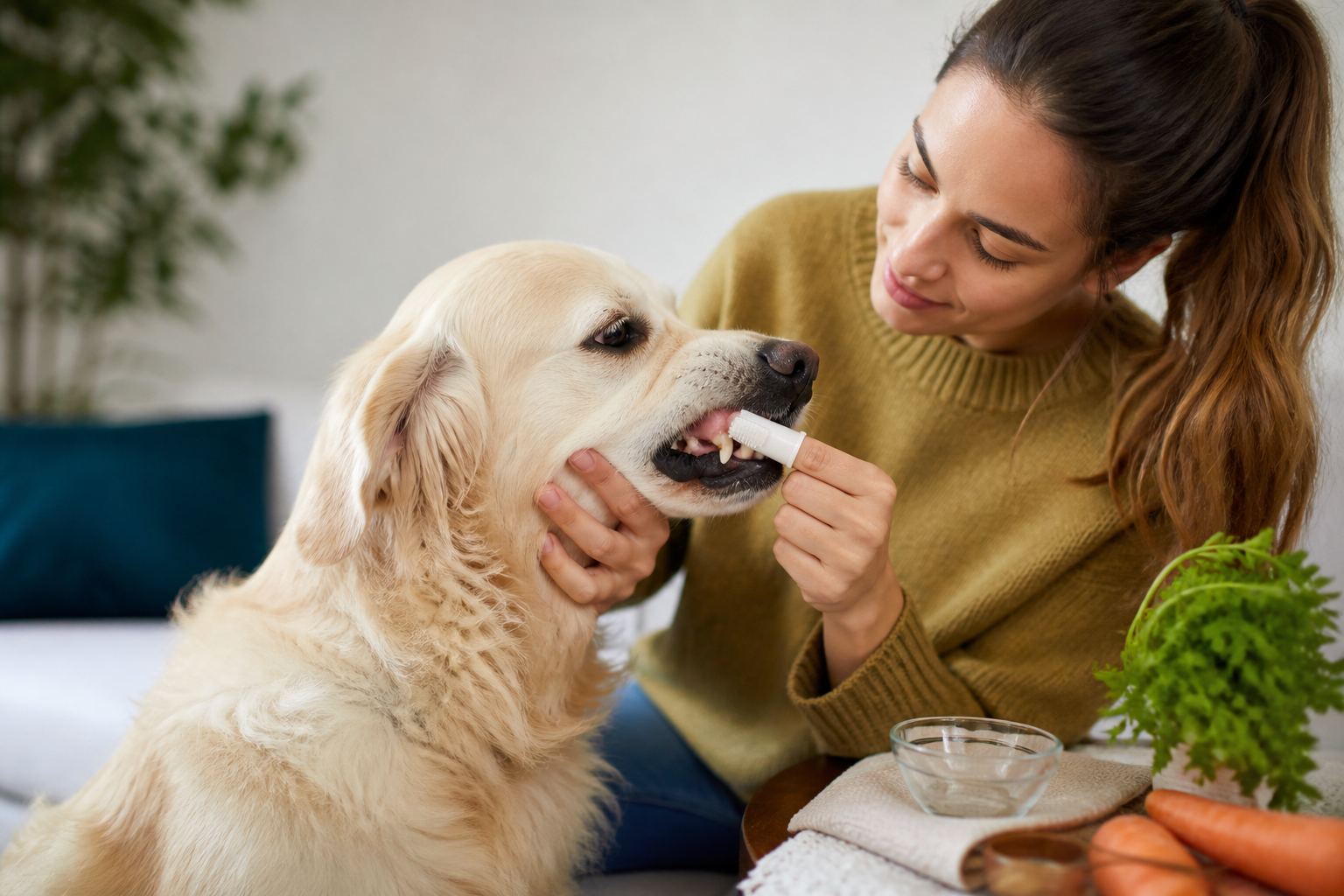
To use them, you simply wrap the wipe or gauze around your index finger. You then rub the surface of each tooth in a circular motion. This provides the physical friction needed to remove plaque. You do not need toothpaste because the friction and the enzymes in the wipe do the work.
Step-By-Step: Using Dental Wipes
Step 1: Get your dog comfortable. Let them sniff your finger and give them a small treat.
Step 2: Gently lift the lip. Rub one or two teeth at the front of the mouth.
Step 3: Move to the back teeth. Focus on the outside surfaces where the cheek touches the teeth.
Step 4: Keep sessions short. You only need about 30 to 60 seconds to wipe the entire mouth.
Water Additives for Passive Care
Water additives are liquid solutions you pour into your dog's water bowl. They usually contain enzymes or antibacterial agents like chlorhexidine. As your dog drinks throughout the day, the solution washes over their teeth and gums. For a brush-free option, consider the Zymox Oratene Brushless Enzyme Dog and Cat Oral Care Water Additive.
This is a supplemental method. It is rarely enough to keep teeth perfectly clean on its own. However, it is a great way to freshen breath and slow down the growth of new bacteria. It is especially useful for senior dogs who may have sensitive gums and cannot handle vigorous brushing or hard chews.
The Role of Prescription Dental Diets
Sometimes, the best way to clean teeth is through the food your dog eats every day. Standard kibble is often too small and brittle to provide dental benefits. It shatters as soon as the dog bites it. Prescription dental diets are different.
These kibbles are much larger and have a specific fibrous matrix. They do not shatter. Instead, the tooth must penetrate the kibble, which creates a scrubbing effect. Many of these diets also contain polyphosphates. These minerals bind to the calcium in the saliva to prevent tartar from forming.
Our pharmacy at BaxterBoo offers prescription pet foods through our partnership with Pet's Choice. If your dog has a history of rapid tartar buildup or gum disease, a prescription dental diet might be the right path. These foods are FDA-regulated and require a veterinarian's authorization. They are a powerful tool for owners who want a "hands-off" approach to dental hygiene.
Vet Tip: If your dog has persistent bad breath or bleeding gums, schedule a veterinary exam before starting a new dental routine. These can be signs of painful infections or periodontal disease that require professional treatment.
Natural Chew Options and Enrichment
In addition to manufactured products, certain natural items can help keep teeth clean. Raw vegetables like carrots or apple slices provide mild abrasion. They are also low in calories, making them a good choice for dogs watching their weight.
Rubber toys with ridges or nubs, such as those from Kong, can also help. You can even find toys designed to be used with dental gels or just used plain. As the dog gnaws on the rubber, the nubs massage the gums and scrape the teeth.
Bottom line: Mechanical friction from toys and vegetables is a great supplement but should be used alongside a VOHC-accepted product for the best results.
When to Transition to the Pharmacy
Home care is about prevention. It is not a cure for existing disease. If your dog already has heavy tartar or loose teeth, a chew or a powder will not fix the problem. This is where the BaxterBoo pharmacy becomes a vital resource.
We provide access to medications and prescription diets that support long-term oral health. This includes specialized rinses and treatments for dogs managing chronic conditions like gingivitis. Because these products are medical-grade, they offer a higher level of protection than standard retail treats.
Through our partnership with Pet's Choice, you can manage your dog's prescriptions alongside their regular gear. This integrated approach ensures your dog gets the professional-grade care they need to avoid painful dental surgeries later in life.
Monitoring Your Progress at Home
How do you know if your "no-toothpaste" routine is working? You need to perform a basic mouth check once a week. It only takes a few seconds and can save your dog from a lot of pain. For additional guidance, read how to recognize warning signs of dental problems in dogs.
- Check the Breath: While "dog breath" is normal, it should not be foul or rotten. A sharp, stinky smell usually indicates bacteria and decay.
- Look at the Gums: Healthy gums should be a soft pink. If you see a red line where the teeth meet the gums, that is inflammation (gingivitis).
- Inspect the Molars: Lift the back of the lip to see the large teeth in the rear. This is where tartar usually starts. If you see yellow or brown crust, your current routine might need an upgrade.
- Watch for Sensitivity: If your dog starts dropping food or refuses to play with tug toys, they may have a painful tooth.
Creating a Consistent Dental Schedule
Consistency is more important than the specific tool you use. Plaque never stops forming, so your care should never stop either. A simple daily routine is better than a deep clean once a month.
Sample Dental Routine
- Morning: Add dental powder, like PlaqueOff, to their breakfast.
- Afternoon: Give one VOHC-accepted dental chew as a treat.
- Evening: A quick 30-second wipe with a dental cloth or gauze if the dog allows it.
- Ongoing: Fresh water with a dental additive available all day.
This multi-layered approach covers all the bases. The powder works through the saliva. The chew provides mechanical cleaning. The wipe removes physical biofilm. This combination is often more effective than occasional brushing with toothpaste. You can also review these pet dental care tips for ideas on building a regular routine.
Avoiding Dangerous "Cleaning" Myths
In the search for toothpaste alternatives, you may encounter some dangerous advice. It is important to know what to avoid.
Never use human toothpaste. It contains fluoride and often xylitol, both of which are toxic to dogs. Dogs cannot spit, so they swallow everything you put in their mouth.
Avoid extremely hard chews like elk antlers, sterilized bones, or nylon toys. While these are often marketed as dental cleaners, they are harder than the tooth enamel itself. We frequently see dogs with "slab fractures," where a large piece of the tooth breaks off because the chew was too hard. A good rule of thumb is the "fingernail test." If you cannot indent the chew with your thumbnail, it is likely too hard for your dog's teeth.
Key Takeaway: Effective dental care is about consistent, gentle abrasion and enzymatic action, not about chewing on the hardest object possible.
The Importance of Professional Cleanings
No matter how well you clean your dog's teeth at home, most dogs will eventually need a professional cleaning. This is similar to how humans go to the dentist even if they brush and floss perfectly. A veterinarian can clean under the gumline where brushes and chews cannot reach.
During a professional cleaning, the vet will also take X-rays. This is the only way to see what is happening with the roots of the teeth. Many dental problems in dogs are hidden below the surface. By combining your at-home routine with annual vet visits, you can ensure your dog stays comfortable and healthy as they age.
Summary of At-Home Methods
| Method | Best For | Level of Effort |
|---|---|---|
| Dental Powders | Resistant dogs, back teeth | Very Low |
| Dental Chews | Active chewers, snack time | Low |
| Dental Wipes | Puppies, gentle dogs | Medium |
| Water Additives | Breath freshening, seniors | Very Low |
| Prescription Diets | High-risk breeds, tartar control | Low |
Each of these methods has its place in a healthy pet household. You do not have to feel like a failure if the toothbrush stays in the drawer. By choosing high-quality, VOHC-accepted alternatives, you are still providing excellent care for your pet.
Our goal at BaxterBoo is to make this process easier for you. We handpick the brands we carry to ensure they meet high standards for safety and efficacy. Whether you choose a simple powder or a specialized chew, you are taking a proactive step in your dog's wellness.
Conclusion
Cleaning your dog's teeth without toothpaste is a practical and effective way to manage their oral hygiene. By using tools like dental powders, VOHC-accepted chews, and dental wipes, you can significantly reduce plaque and tartar buildup. The key is to find a method that fits your dog's personality and your daily schedule. Remember that consistency is your best defense against dental disease. Start with one simple change, like adding a powder to their food, and monitor their progress. For more advanced needs, our pharmacy and the Pet's Choice partnership are here to provide prescription-level support.
Bottom line: A daily dental routine without toothpaste is vastly superior to an occasional routine with it. Choose the method your dog tolerates best and stick with it every day.
Visit our dog dental care category to find the VOHC-accepted products mentioned in this guide.
FAQ
Can I really clean my dog's teeth without brushing?
Yes, you can manage your dog's oral health without traditional brushing by using systemic supplements like dental powders and mechanical tools like dental chews. These methods target plaque biofilm through the saliva or through physical abrasion during chewing. While brushing is a gold standard, these alternatives are highly effective when used consistently every day.
Is baking soda safe for cleaning a dog's teeth?
While baking soda is not toxic in very small amounts, it is generally not recommended as a primary cleaning agent for dogs. It has a salty, bitter taste that most dogs dislike, which can make them even more resistant to mouth handling. Furthermore, if swallowed in large quantities, it can upset a dog's stomach or affect their electrolyte balance.
Do dental chews actually work?
Dental chews work if they have the right texture and are used daily. You should look for products with the VOHC Seal of Acceptance, as these have been clinically tested to prove they reduce plaque or tartar. The chew must be the correct size for your dog so they spend enough time gnawing on it to create the necessary friction.
How can I tell if my dog has dental disease?
The most common signs of dental disease include persistent bad breath, red or swollen gums, and yellow-brown tartar at the gumline. You might also notice your dog dropping food, favoring one side of their mouth while chewing, or becoming reluctant to play with toys. If you notice these symptoms, you should consult a veterinarian for a professional assessment.






