
 Save 15% on your 1st Autoship learn more

 Email us
 Live Chat
 FAQs
FAQs





Introduction
You might notice your older dog’s breath has become more than just a little smelly lately. For many senior dogs, bad breath is often the first sign that plaque and tartar have taken hold. At BaxterBoo, we understand that caring for an aging pet comes with a unique set of challenges and worries. You want to keep them comfortable and healthy without causing them unnecessary stress. Keeping a senior dog’s mouth clean is about much more than fresh breath. It is a vital part of protecting their heart, kidneys, and overall comfort during their golden years. This guide covers safe brushing techniques, effective alternatives for sensitive mouths, and when it is time to call the veterinarian. Regular dental care can help your dog enjoy their senior years with less pain and better health.
Quick Answer: Clean an old dog's teeth by using a soft-bristled brush or finger brush with dog-specific enzymatic toothpaste. If brushing is too stressful, use dental wipes, water additives, or prescription dental diets recommended by your veterinarian.
Why Senior Dog Dental Care is Different
As dogs age, their oral anatomy and health needs change. Their tooth enamel may become thinner after years of chewing. Their gums often recede, which exposes the sensitive roots of the teeth. This makes them more prone to discomfort during a cleaning routine that a younger dog might not mind. Senior dogs are also more likely to have existing periodontal disease. This is an inflammatory condition where bacteria attack the gums and the bone supporting the teeth.
Bacteria in the mouth do not stay in the mouth. They can enter the bloodstream through inflamed gum tissue. Once in the blood, these bacteria can travel to vital organs like the heart, liver, and kidneys. In older dogs whose organs may already be showing signs of wear, this extra bacterial load can lead to serious complications. Protecting the mouth is a direct way to protect the rest of the body.
Many owners worry that it is too late to start a dental routine. While it is best to start young, senior dogs can still benefit greatly from improved hygiene. Even a slight reduction in plaque can lower the risk of systemic infection. The goal for a senior dog is often maintenance and comfort rather than achieving a perfect puppy smile.
Signs Your Senior Dog Needs Help
It is important to look inside your dog's mouth regularly. You should look for more than just yellow teeth. Senior dogs are experts at hiding pain, so you must be a detective. If your dog starts dropping food or tilting their head while eating, they might have a painful tooth.
Watch for these specific signs of dental trouble:
- Extremely foul breath that does not go away.
- Gums that look bright red, purple, or bleed easily.
- Yellow or brown crusty buildup near the gum line.
- Excessive drooling or pawing at the face.
- Reluctance to eat hard kibble or crunchy treats.
- Loose or missing teeth.
For more warning signs, see our guide to recognizing hidden dental problems in dogs.
Vet Tip: If you notice a swelling under your dog's eye, it could be a tooth root abscess. This is a painful infection that requires immediate veterinary attention. Your vet may prescribe antibiotics or pain relief, which can be filled through our pharmacy partnership with Pet's Choice.
Step-by-Step Guide to Brushing Senior Teeth
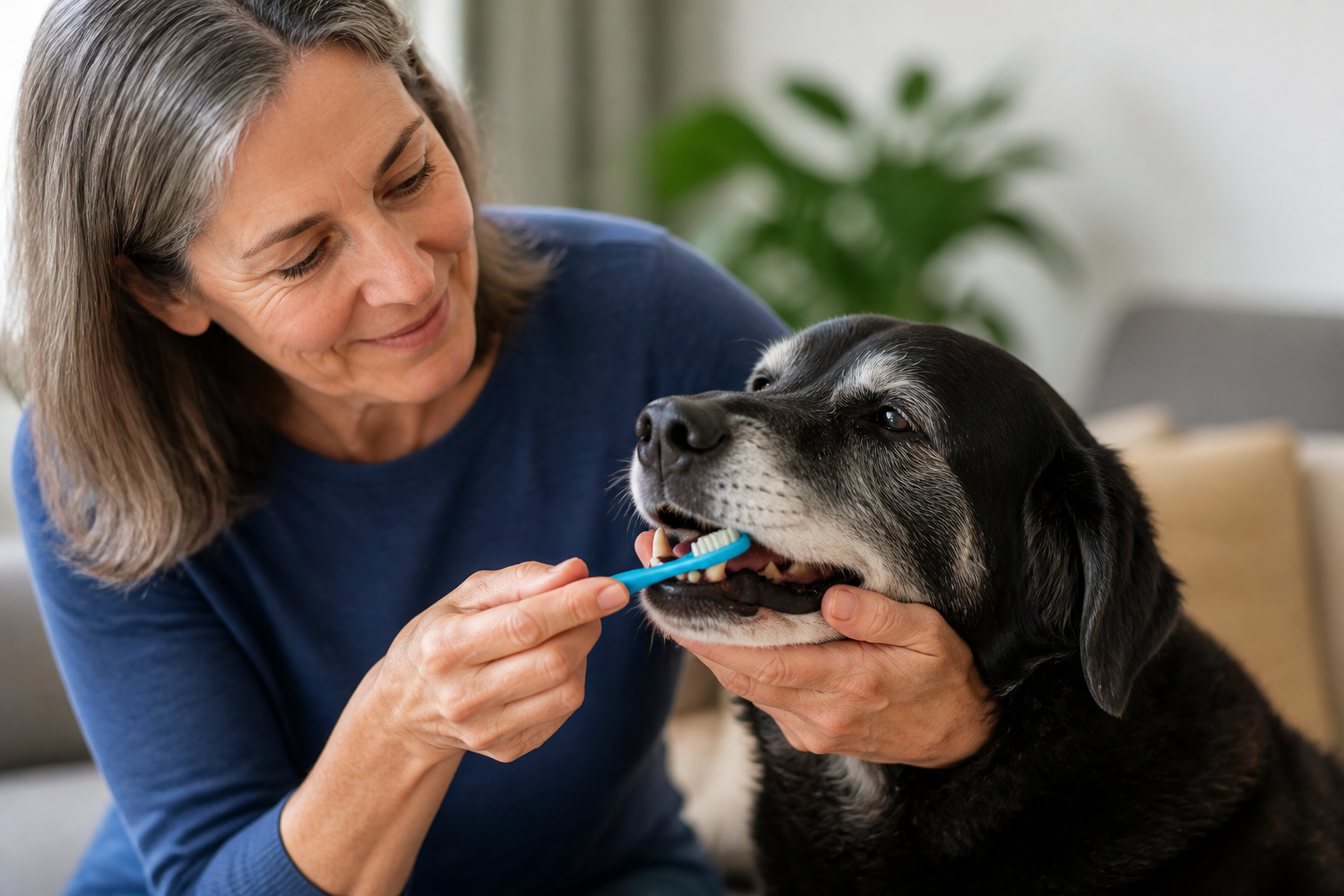
If your older dog is not used to having their teeth brushed, you must go slowly. Forcing the issue can lead to a bite or a broken bond of trust. You should aim for progress over perfection. Use a very soft brush or a silicone finger brush to prevent irritating sensitive gums.
Step 1: Choose the right time. / Pick a moment when your dog is relaxed and tired, such as after a long walk or a meal.
Step 2: Introduce the toothpaste flavor. / Let your dog lick a small amount of dog-safe enzymatic toothpaste off your finger. These pastes often come in poultry or beef flavors that dogs enjoy. A product such as Virbac C.E.T. Enzymatic Pet Toothpaste is formulated specifically for dogs and cats.
Step 3: Test the touch. / Gently lift your dog’s lip and rub your finger along their gums. If they pull away, stop and try again tomorrow.
Step 4: Introduce the brush. / Apply a small amount of paste to a soft brush and let them lick it. Gradually move the brush in a circular motion on the front teeth.
Step 5: Focus on the outside. / Most plaque builds up on the outside of the teeth near the cheeks. You do not need to worry as much about the inside surface, as the tongue helps keep that area clean.
Step 6: Reward the effort. / Give your dog a small, soft treat or a belly rub immediately after you finish. This creates a positive association with the routine.
For additional guidance, review these pet dental care tips for introducing brushing and other oral-care habits.
Safe Dental Tools for Aging Jaws
Not all dental products are suitable for older dogs. Some traditional chews are too hard and can fracture brittle senior teeth. You should look for products that are effective but gentle on the mouth. Our dog dental care collection includes brushes, toothpastes, wipes, water additives, and dental treats.
Dental wipes are an excellent option for dogs who will not tolerate a brush. These are textured pads pre-soaked with cleaning agents. You simply wrap the wipe around your finger and rub the surface of the teeth. This is often less invasive than a bulky toothbrush.
Water additives are another low-stress tool. These are liquids you add to your dog’s water bowl. They contain enzymes that help break down plaque and kill bacteria. This is a passive way to improve oral health for dogs who are head-shy or have very sensitive mouths.
When choosing a toothbrush, consider a finger brush. These fit over your index finger like a thimble. They allow you to feel exactly where you are in the dog's mouth. This helps you avoid hitting sore spots or pressing too hard on receding gums.
Key Takeaway: Success with senior dental care depends on using tools that match your dog's comfort level. Wipes and water additives are effective alternatives if a traditional brush causes stress or pain.
The Role of Professional Cleaning
Sometimes at-home care is not enough. If your dog has significant tartar buildup or loose teeth, they need a professional veterinary cleaning. Many owners of older dogs fear anesthesia. It is a common concern, but age itself is not a disease. Modern veterinary medicine has made anesthesia much safer for seniors.
Your vet will likely perform pre-anesthetic blood work. This checks how well the liver and kidneys are functioning. They may also do a chest X-ray to check the heart. If the results are good, the risk of anesthesia is often much lower than the risk of leaving a chronic infection in the mouth.
During a professional cleaning, the vet can scale away tartar from under the gum line. This is where the most damage happens. They can also take dental X-rays to see what is happening beneath the surface. Sometimes a tooth looks fine but has a painful infection in the root. Removing these "silent" sources of pain can make a senior dog act like a puppy again.
Vet Tip: Always discuss a customized anesthesia plan with your veterinarian. They can use specific medications and monitoring equipment to keep your senior dog safe throughout the procedure.
Diet and Nutrition for Oral Health
What your dog eats can impact how fast plaque builds up. We carry several brands at BaxterBoo that offer specialized senior formulas. Some senior diets include antioxidants and minerals like zinc that support gum health. Our dog food selection can help you compare everyday nutrition options.
Prescription dental diets are also an option. These kibbles are often larger and have a specific texture. They do not crumble when the dog bites them. Instead, the tooth sinks into the kibble, which gently scrapes away plaque. If your vet recommends a prescription diet for dental health or weight management, you can order it through our pharmacy service.
Be careful with treats. Hard bones, antlers, and hooves are very popular but can be dangerous for seniors. These items are often harder than the tooth itself. It is better to stick to softer dental chews that have the Veterinary Oral Health Council (VOHC) seal of approval. You can explore dental treats for dogs when looking for gentler alternatives.
For more nutrition considerations, read our guide to choosing the right dog food for senior pets.
Managing Dental Pain in Seniors
Dental disease is painful. An older dog might stop playing with toys or become grumpy because their mouth hurts. If your dog has advanced periodontal disease, cleaning their teeth at home might be too painful until the underlying issues are treated.
Your veterinarian may prescribe pain relief or anti-inflammatory medications. These can help reduce gum swelling and make your dog more comfortable. When the mouth is less inflamed, it is much easier to maintain a brushing routine.
You can also make eating easier for a dog with dental pain. Try soaking their dry kibble in warm water or low-sodium broth. This softens the food so they do not have to crunch down. Switching to a high-quality wet food can also provide relief while ensuring they get the calories they need to stay strong.
Bottom line: Addressing oral pain first is essential before you can successfully implement a long-term cleaning routine.
Using the BaxterBoo Pharmacy for Dental Needs
Ongoing health management for senior dogs often requires more than just a toothbrush. When your vet diagnoses a condition like severe gingivitis or a tooth infection, they may prescribe specific medications. Our pharmacy partnership with Pet's Choice allows you to get FDA-approved medications delivered to your door. You can explore our pharmacy options for dogs.
We provide access to:
- Antibiotics for oral infections and abscesses.
- Prescription-strength oral rinses and gels.
- Pain management medications for chronic dental issues.
- Prescription dental diets formulated for senior needs.
Using our pharmacy service is a convenient way to manage your dog's prescriptions alongside their favorite treats and gear. This ensures your senior pet gets the exact treatment your vet recommends to keep their mouth healthy.
Key Takeaway: Integrating veterinary prescriptions with daily at-home care is the most effective way to manage advanced dental issues in older dogs.
Creating a Sustainable Routine
Consistency is more important than intensity. Brushing for thirty seconds every day is better than a five-minute session once a month. For a senior dog, the routine should be predictable. They should know that after the "scary" brush comes a wonderful reward.
If you find that your schedule is too busy for daily brushing, use a combination of methods. You might brush on the weekends and use dental wipes and water additives during the week. Any effort you make to reduce the bacterial load in the mouth will help. For recurring supplies, consider our Autoship programme.
Monitor your dog's progress. Check their gums once a week. They should be a healthy pink color. If they start looking red or if you notice a new foul smell, it is time for a check-up. Early intervention is always cheaper and easier on the dog than waiting for a major problem to arise.
Checklist for Senior Dental Success
- Schedule a veterinary dental exam to rule out pain or infection.
- Select a soft-bristled toothbrush or silicone finger brush.
- Purchase dog-safe enzymatic toothpaste (never use human paste).
- Introduce the routine slowly over 7 to 10 days.
- Use water additives or wipes on days you cannot brush.
- Watch for signs of pain like dropping food or facial sensitivity.
- Reward your dog after every session to build a positive habit.
Maintaining a Healthy Smile in the Golden Years
Caring for an old dog's teeth is an act of love. It protects them from hidden pain and keeps their vital organs functioning better for longer. While it may take some patience to start a routine with a senior pet, the results are worth the effort. You will notice better breath, a more enthusiastic appetite, and a happier dog. At BaxterBoo, we are committed to helping you navigate these senior years with the best products and expert advice. Whether you need a soft brush, a prescription diet, or professional-grade medications through our pharmacy, we have the tools to help your dog thrive.
Bottom line: A clean mouth is a gateway to a longer and more comfortable life for your senior dog.
FAQ
Is it safe to brush an old dog's teeth if they have never had it done?
Yes, it is safe as long as you are gentle and use a soft-bristled brush or a finger brush. You should always check with your vet first to make sure there are no painful infections or loose teeth that might cause your dog to snap in pain. Start very slowly by letting them taste the toothpaste before you ever attempt to use a brush.
Can I clean my senior dog's teeth without using anesthesia?
You can perform surface cleaning and plaque prevention at home without anesthesia, but you cannot reach the bacteria under the gum line where the real damage happens. If your dog has significant tartar or gum disease, a professional cleaning under anesthesia is usually the only way to truly restore their oral health. At-home care is best used as a preventative measure after a professional cleaning.
What should I do if my senior dog's gums bleed during brushing?
If you see a small amount of blood and your dog has not had their teeth cleaned in a while, it is likely a sign of gingivitis or gum disease. You should stop brushing that area and consult your veterinarian for an exam. They can determine if the bleeding is from simple inflammation or if there is a more serious infection that requires medication from our pharmacy.
Are there any human toothpastes that are safe for dogs?
No, you should never use human toothpaste on a dog of any age. Human toothpaste often contains xylitol, which is highly toxic to dogs, or baking soda, which can upset their stomach. Dog-specific toothpastes are designed to be swallowed safely and come in flavors that make the experience much more enjoyable for your pet.






