
 Save 15% on your 1st Autoship learn more

 Email us
 Live Chat
 FAQs
FAQs





Introduction
You lean in for a snuggle with your longtime companion and notice it: that distinct, heavy scent often called "old dog breath." Many owners assume bad breath is just a natural part of the aging process. At BaxterBoo, we know that dental health is actually a window into your dog's overall wellness. A senior dog's mouth requires a more delicate touch than a puppy's mouth, but keeping those teeth clean is more important than ever. Bacteria from the gums can travel through the bloodstream to affect the heart, liver, and kidneys. This guide covers the best methods for cleaning senior teeth, from gentle brushing techniques to effective alternatives. You can maintain your dog's comfort and health throughout their golden years with a few simple habit changes.
Why Senior Dental Care is a Priority
Dental hygiene is not just about a sparkling smile. By the time most dogs reach age seven, they have some level of periodontal disease. This is an inflammatory condition caused by plaque and tartar buildup. In senior dogs, this inflammation can become chronic. The body stays in a constant state of immune response, which drains energy and taxes the organs.
Older dogs also have different mouth chemistry than younger ones. Their saliva production may decrease, leading to a drier mouth. Saliva is a natural cleanser that helps wash away food particles. Without it, plaque hardens into tartar much faster. Tartar is a rock-like substance that you cannot remove with a toothbrush alone. If your dog already has heavy tartar, you must address the underlying infection before starting a home cleaning routine.
Key Takeaway: Senior dental care is a whole-body health strategy. Reducing oral bacteria protects the heart and kidneys from strain caused by chronic infection.
Assessing the Mouth Before You Start
Before you grab a toothbrush, you need to know what you are working with. Senior dogs may have sensitive spots, loose teeth, or oral growths. Forcing a cleaning on a painful mouth will make your dog fearful. It might also cause unnecessary injury.
Follow these steps to check your dog's oral health:
- Lift the flews (the hanging part of the upper lip) gently to see the molars.
- Look for bright red, swollen, or bleeding gums.
- Check for "calculus," which is the brown or grey crusty buildup on the teeth.
- Notice if your dog flinches or pulls away when you touch a specific area.
- Check for any lumps or bumps on the gums or the roof of the mouth.
Healthy gums should be a soft pink color. If they are deep red or purple, there is significant inflammation. If you see blood when you touch the gums, your dog likely has gingivitis or advanced periodontal disease.
Vet Tip: If you notice your dog dropping food, chewing on only one side of the mouth, or pawing at their face, they may have a fractured or abscessed tooth. Consult your veterinarian for a full dental exam before starting a brushing routine. Our dog dental care category includes products for maintaining an at-home routine, while medical concerns require professional diagnosis and treatment.
How to Brush an Older Dog's Teeth
Brushing is the most effective way to remove plaque before it hardens. Even if you have never brushed your dog's teeth before, a senior dog can learn to tolerate it. The key is to move slowly and use positive reinforcement.
Choosing the Right Tools
You should never use human toothpaste on a dog. Human formulas contain xylitol, which is toxic to dogs. They also contain foaming agents that can upset a dog's stomach. Instead, choose an enzymatic pet toothpaste. These formulas use enzymes to break down organic matter even if you do not get a perfect scrub.
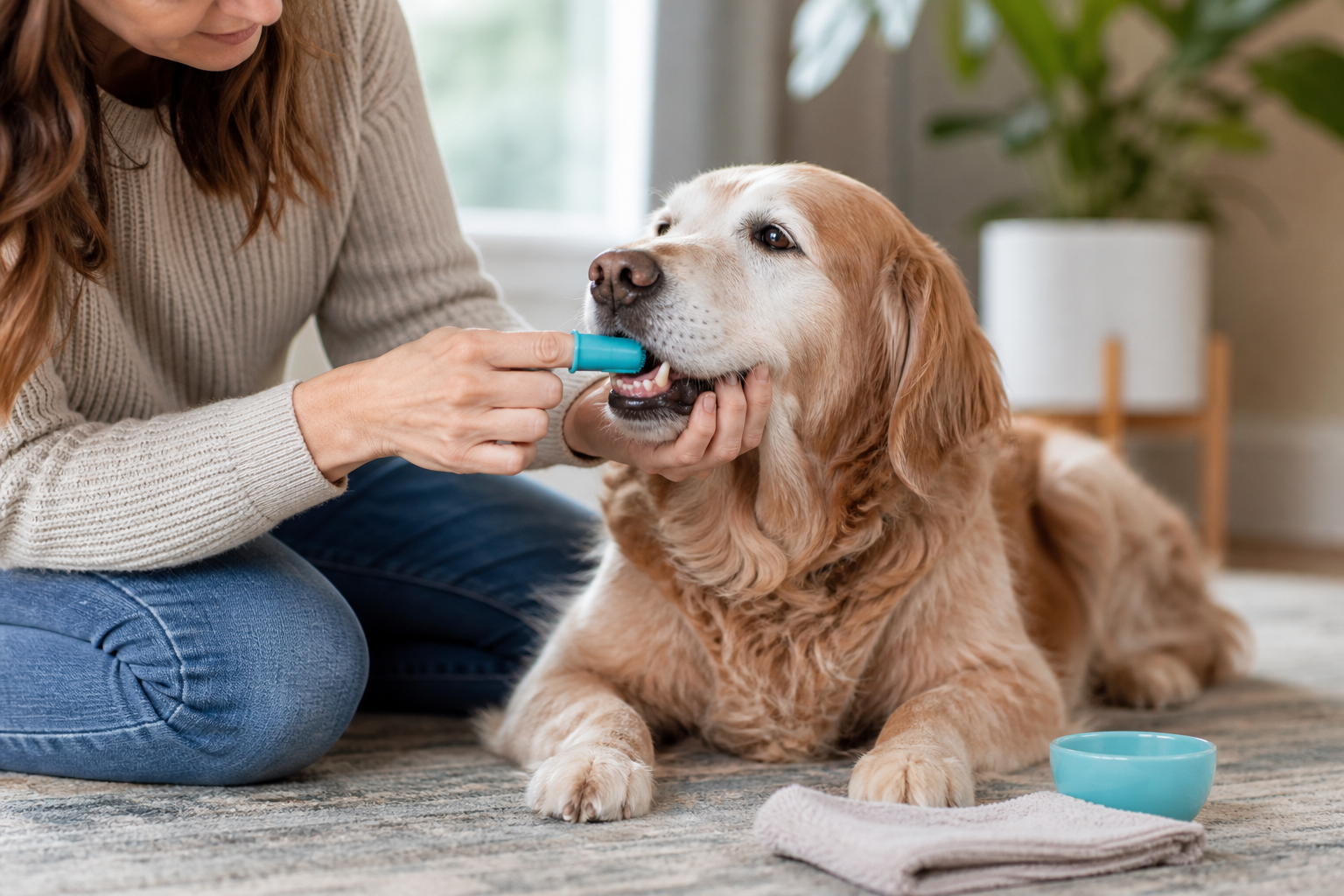
For the brush, a soft-bristled dog toothbrush is best. For smaller seniors or those with sensitive gums, a silicone finger brush is often more comfortable. It allows you to feel the pressure you are applying so you do not cause discomfort.
Our OxyFresh Pet Dental Kit combines dental gel, a water additive, and finger brushes for a gentle at-home routine.
The Brushing Process
Step 1: Introduce the paste.
Let your dog lick a small amount of the toothpaste off your finger. Most dog pastes come in flavors like poultry or beef to make the experience a treat.
Step 2: Get them used to the sensation.
Rub your finger gently along the outside of their gums and teeth. Do this for a few days until they are comfortable with you touching their mouth.
Step 3: Introduce the brush.
Apply a small amount of paste to the brush. Lift the lip and focus only on the large canine teeth at the front. Use a circular motion at a 45-degree angle toward the gum line.
Step 4: Move to the back.
The back molars are where most tartar accumulates. Gently slide the brush back toward the cheeks. You do not need to open the mouth wide. The outside of the teeth is where most plaque lives.
Step 5: Keep it short.
A senior dog might get tired or stiff holding their head up. Limit sessions to one or two minutes. Follow every session with a high-value reward.
Bottom line: Daily brushing for just sixty seconds is more effective than a deep cleaning once a month.
For additional guidance on warning signs and daily care, read our guide to recognizing hidden dental problems in dogs.
Alternatives for Dogs Who Hate Brushing
Not every senior dog will tolerate a toothbrush. If your dog has significant arthritis in the jaw or is simply too stressed by the process, there are other ways to help. While brushing is the gold standard, these alternatives still provide significant benefits.
Dental Chews and Treats
Dental chews work through mechanical abrasion. As the dog chews, the texture of the treat scrapes against the tooth surface. At BaxterBoo, we recommend looking for products with the Veterinary Oral Health Council (VOHC) seal. This seal confirms the product has been tested and proven to reduce plaque or tartar.
Brands like Greenies offer specific "Senior" formulas. These are often softer than the original versions. They are easier on aging teeth while still providing the necessary scrubbing action. Always supervise your senior dog while they enjoy a chew to ensure they do not swallow large pieces.
Explore our selection of Greenies products when looking for dental chews and treats.
Water Additives and Gels
Water additives are a "hands-off" way to manage oral bacteria. You simply add a capful of the liquid to your dog's water bowl. These products contain enzymes or zinc gluconate to slow the formation of plaque.
Dental gels are another option. You apply a small amount of gel to each side of the dog's mouth. The dog's natural licking action spreads the gel over the teeth and gums. These are excellent for dogs that will let you touch their mouth but will not tolerate the scrubbing of a brush.
Therapeutic Diets
Certain prescription diets are formulated specifically for oral health. The kibble is often larger and has a fibrous structure. Instead of shattering when bitten, the tooth sinks into the kibble, which wipes away plaque.
If your veterinarian recommends a dental diet, our pet pharmacy can help with eligible prescription products. These diets often contain minerals that bind calcium in the saliva to prevent it from hardening into tartar.
Managing Tartar and Professional Cleanings
If your older dog already has significant tartar, brushing will not remove it. Tartar is like concrete. At this stage, a professional dental cleaning under anesthesia is usually necessary. Many owners of senior dogs are afraid of anesthesia. They worry the dog is "too old" for the procedure.
Age is not a disease. While senior dogs have a higher risk profile, modern veterinary medicine has made anesthesia very safe. Your vet will perform a pre-anesthetic blood panel to check liver and kidney function. They will also use IV fluids and heart monitoring throughout the procedure.
A professional cleaning allows the vet to:
- Clean under the gum line where at-home brushes cannot reach.
- Take dental X-rays to check for bone loss or tooth root abscesses.
- Extract teeth that are loose, broken, or causing pain.
- Polish the enamel to smooth out scratches where bacteria like to hide.
Key Takeaway: A professional cleaning provides a "clean slate" for your at-home care routine. It removes the source of chronic pain that many owners mistake for "slowing down" due to old age.
For a broader overview of daily brushing, dental treats, and veterinary checkups, see these pet dental care tips.
Safe Toys for Senior Teeth
As dogs age, their tooth enamel can become more brittle. They are more prone to "slab fractures," which happen when a dog bites down on something harder than the tooth itself. You should audit your dog's toy box to remove potential hazards.
Avoid these items for senior dogs:
- Real animal bones (including marrow bones)
- Antlers or hooves
- Hard nylon chews that do not have any "give"
- Tennis balls (the fuzz can act like sandpaper and wear down enamel over time)
Instead, look for soft rubber toys from trusted brands like Kong. These provide a satisfying chew without the risk of breaking a tooth. If you can't indent the toy with your thumbnail, it is likely too hard for a senior dog's teeth.
The KONG Classic Hard Rubber Dental Dog Toy is one option to consider, but always choose an appropriate size and supervise your dog during use.
Supporting the Immune System
Dental health is also linked to nutrition. A dog with a strong immune system can better fight the bacteria that lead to gingivitis. Ensure your senior dog is on a high-quality diet rich in antioxidants and Omega-3 fatty acids.
Supplements can also play a role. Probiotics designed for oral health can introduce "good" bacteria to the mouth. This helps crowd out the harmful bacteria that cause bad breath and decay. Always consult your vet before adding new supplements to your dog's routine, especially if they are on medication for other senior health issues.
Vet Tip: Keep a close eye on your dog's water consumption. If they stop drinking or seem to have trouble with the water bowl, they may have oral pain. Conversely, excessive drinking can be a sign of systemic issues like kidney disease, which can be linked to long-term dental neglect.
Putting It All Together: A Weekly Routine
Consistency is the key to cleaning older dogs' teeth. You do not need to do everything at once. Creating a sustainable schedule will yield the best results.
- Daily: Apply a dental gel or use a water additive. If possible, do a quick one-minute brush.
- Three times a week: Give a VOHC-approved dental chew like a Greenie or a specialized dental treat.
- Weekly: Do a "mouth check." Look for any new redness or signs of discomfort.
- Yearly: Schedule a wellness exam with your vet that includes a thorough dental assessment.
If your dog needs specialized care, remember that BaxterBoo offers a variety of products to support this routine. From soft-bristled brushes to pharmacy services, we are here to help your senior dog stay comfortable.
The Role of the Pharmacy in Dental Health
Sometimes, cleaning the teeth isn't enough to resolve a problem. Senior dogs often suffer from "stomatitis" or severe gum infections that require medical intervention. In these cases, your veterinarian might prescribe a course of antibiotics or specialized oral rinses.
Our pharmacy provides a convenient way to get these FDA-approved medications. Through our pharmacy services, we handle prescription orders for everything from pain relief to antibiotics. This is especially helpful after a professional cleaning or tooth extraction. Having these medications delivered to your door through our Autoship programme can help you maintain a consistent recovery routine.
Conclusion
Cleaning an older dog's teeth requires patience and the right tools, but the effort pays off in years of extra comfort. By combining gentle brushing with effective dental chews and regular vet checkups, you can stop "old dog breath" and protect your companion's vital organs. Start slowly with an enzymatic toothpaste and a soft brush. If brushing isn't an option, utilize water additives and VOHC-approved treats to keep plaque at bay.
Our mission at BaxterBoo is to provide you with the products and knowledge you need for every stage of your pet's life. Whether you are looking for a gentle finger brush, a new favorite chew, or prescription support through our pharmacy, we are here for you and your senior dog.
Key Takeaway: Senior dental care is a long-term investment. Even small, daily actions can prevent painful infections and extend your dog's quality of life.
FAQ
Is it too late to start cleaning my 10-year-old dog's teeth?
It is never too late to start an oral care routine. While you may not be able to reverse existing tartar without a professional cleaning, starting now can prevent the condition from worsening. Reducing the bacterial load in the mouth will immediately benefit your dog's immune system and comfort levels.
Can I use a human toothbrush on my senior dog?
You can use a human toothbrush as long as it has very soft bristles. However, the shape of a dog-specific toothbrush is usually better suited for reaching the back molars. If you use a human brush, choose a "child" size to ensure it fits comfortably in your dog's mouth without hitting the back of their throat.
How do I know if my dog is in pain from their teeth?
Dogs are experts at hiding pain. Look for subtle signs like "chattering" the teeth, excessive drooling, or a preference for soft food over kibble. Some dogs may also become more irritable or withdraw from social interaction when they are experiencing chronic oral pain.
Do dental chews really work as well as brushing?
Dental chews are a great supplement but they are not a total replacement for brushing. Brushing allows you to target the gum line and specific teeth that the dog might not use as much when chewing. A combination of both brushing and chews is the most effective strategy for maintaining senior oral health.






