
 Save 15% on your 1st Autoship learn more

 Email us
 Live Chat
 FAQs
FAQs





Introduction
You are relaxing on the couch when your dog walks over to give you a happy nuzzle. As they open their mouth to yawn, a wave of surprisingly strong breath hits you. Most of us assume that "dog breath" is just part of the package, but that odor is often the first sign of plaque buildup. At BaxterBoo, we know that a clean mouth is about much more than fresh kisses. It is a vital part of your dog's overall longevity and comfort. Plaque starts forming just hours after a meal, and if it stays there, it turns into rock-hard tartar that only a veterinarian can remove. This post covers the most effective ways to scrub away plaque at home and keep your dog's smile bright. Learning how to clean plaque from dogs teeth is a simple routine that can prevent serious health issues later in life.
Understanding the Difference Between Plaque and Tartar
Before you grab a toothbrush, it is helpful to know exactly what you are fighting. Plaque is a soft, sticky film of bacteria and food particles that coats the teeth. You can usually wipe it away with a cloth or a brush because it has not bonded to the tooth enamel yet. However, the window of opportunity is small. Within 48 hours, minerals in your dog's saliva begin to harden that plaque.
Once plaque mineralizes, it becomes tartar, also known as dental calculus. Tartar is usually yellow or brown and feels like concrete. You cannot brush tartar away at home. It requires professional scaling under anesthesia at a veterinary clinic. This is why daily intervention is so important. Your goal is to interrupt the plaque before it has a chance to settle in and harden.
Quick Answer: Clean plaque from your dog's teeth by using a dog-specific toothbrush and enzymatic toothpaste daily. Mechanical brushing combined with dental chews and water additives offers the best defense against buildup.
Why Cleaning Plaque is Vital for Canine Health
If plaque is allowed to sit on the teeth, it eventually migrates under the gumline. This is where the real trouble begins. Bacteria trapped under the gums can cause inflammation, which leads to gingivitis. Over time, this progresses to periodontal disease. This condition can cause the bone supporting the teeth to dissolve, leading to pain, tooth loss, and deep infections.
The danger is not just confined to the mouth. The mouth is very vascular, meaning it has a rich blood supply. Bacteria from dental infections can enter the bloodstream and travel to major organs. Veterinarians frequently see links between chronic dental disease and issues with the heart, liver, and kidneys. Maintaining a clean mouth is one of the best ways to support your dog's entire body.
Vet Tip: If you notice red, swollen gums or bleeding when your dog chews, schedule a veterinary exam. These are signs of active infection that require professional care rather than just home brushing. Our pet pharmacy can help fulfill prescriptions once your vet provides a diagnosis.
The Gold Standard: Brushing Your Dog's Teeth
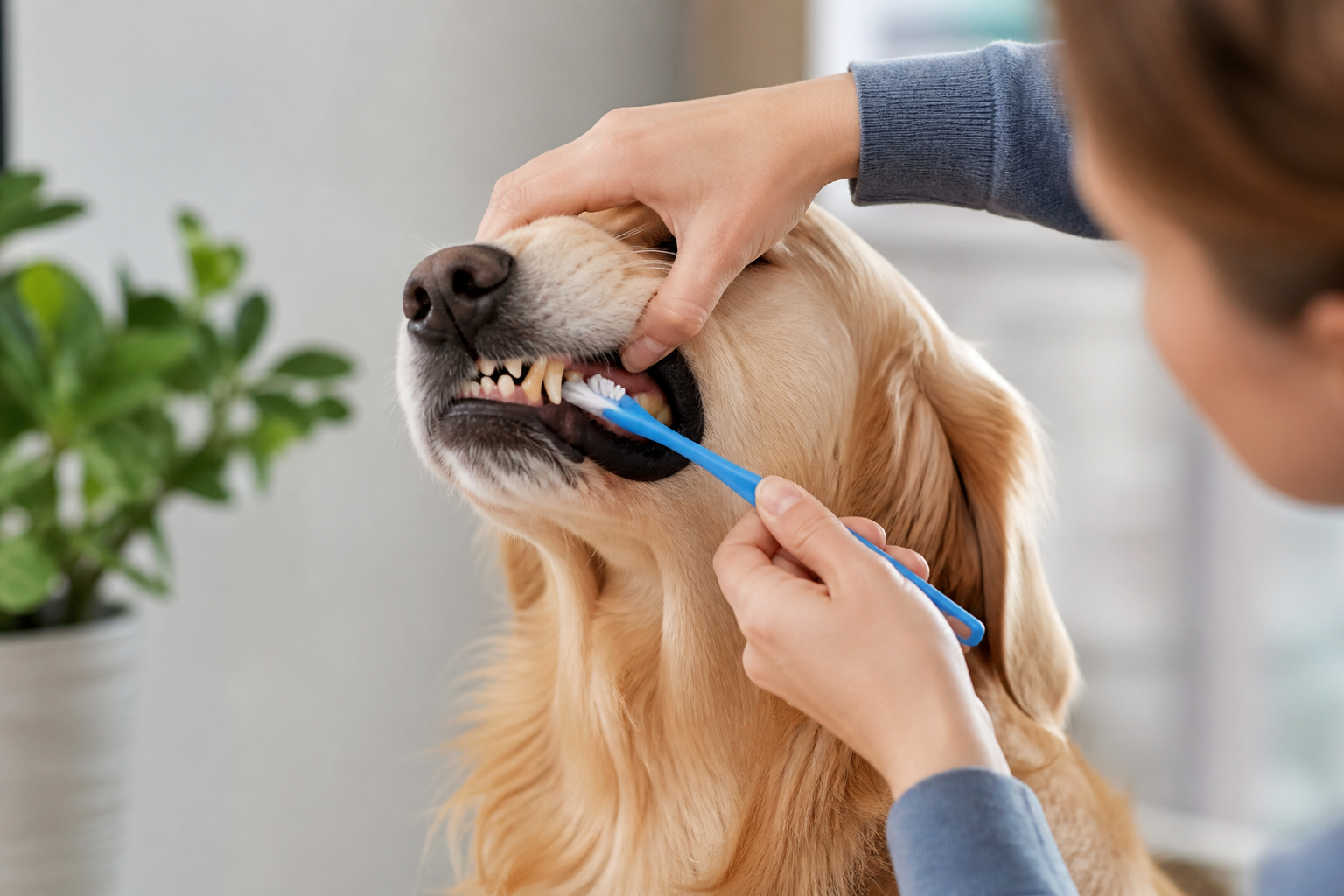
Daily brushing is the single most effective way to remove plaque. It provides the mechanical action needed to scrub the film off the enamel. You should never use human toothpaste for this task. Human versions often contain xylitol, which is toxic to dogs, or fluoride, which can cause stomach upset if swallowed.
Dog-specific toothpastes come in flavors like poultry, beef, or peanut butter to make the experience more pleasant. Many also contain enzymes. These enzymes help break down the protein structures that allow plaque to stick to the teeth. Even if you cannot reach every single tooth perfectly, getting the enzymatic paste into the mouth still provides some benefit.
How to Introduce Brushing to Your Dog
Most dogs will not let you scrub their teeth immediately. You have to build trust and make it a positive experience.
Step 1: Let them taste the paste. / Put a small amount of dog toothpaste on your finger and let your dog lick it off. Do this for a few days so they associate the flavor with a treat.
Step 2: Get them used to mouth handling. / Gently lift your dog's lips and rub your finger along their gums and teeth. Keep these sessions very short and follow up with praise.
Step 3: Introduce the brush. / Use a soft-bristled dog toothbrush or a finger brush. Put some paste on the bristles and let them lick it off the brush first.
Step 4: Start the scrubbing motion. / Aim for a 45-degree angle toward the gumline. Use small circular motions. Start with the front teeth and gradually move toward the back molars over several sessions.
Step 5: Reward the effort. / Always end the session with a high-value reward or a fun game. You want your dog to look forward to their dental routine.
Bottom line: Consistent daily brushing for even 30 seconds is more effective than a long, deep cleaning once a month.
For additional guidance, read our pet dental care tips.
Alternatives to Traditional Brushing
Some dogs simply will not tolerate a toothbrush. If you find yourself struggling with a brush, do not give up on oral hygiene entirely. There are other mechanical and chemical ways to reduce plaque. You can explore our dog dental care category for brushes, pastes, wipes, gels, and other oral-care products.
Dental Wipes
Dental wipes are textured pads soaked in an oral cleaning solution. They are much thinner than a toothbrush, which makes them less intimidating for many dogs. You simply wrap the wipe around your finger and rub it over the surface of the teeth. While they do not reach deep into the crevices like bristles do, they are excellent at removing the surface biofilm of plaque.
Enzymatic Gels
If your dog is truly head-shy, enzymatic gels can be a lifesaver. You apply a small amount of the gel to the inside of the cheeks. As the dog licks and moves their tongue, the gel spreads across the teeth. The enzymes work to soften plaque and kill bacteria without requiring you to scrub. This is a great maintenance step for senior dogs or those with sensitive mouths.
Water Additives
Water additives are essentially mouthwash for dogs. You add a specific amount to their fresh water bowl every day. These products usually contain ingredients that help kill oral bacteria and freshen breath. While they cannot replace the mechanical action of brushing, they are a fantastic "set it and forget it" tool for reducing the bacterial load in the mouth.
The Role of Dental Chews and Toys
Chewing is a natural behavior for dogs, and it serves a functional purpose. When a dog chews on a firm object, the friction helps scrape away plaque. However, not all chews are created equal. Some are too hard and can actually fracture your dog's teeth.
Selecting Safe Dental Chews
Look for products that carry the Veterinary Oral Health Council (VOHC) seal of approval. This seal means the product has been scientifically tested and proven to reduce plaque or tartar. We carry several trusted brands like Greenies and Oravet that are designed to be effective and digestible.
When choosing a chew, ensure it is the right size for your dog. A chew that is too small can be a choking hazard. A chew that is too large might be too difficult for them to manage. Always supervise your dog when they are working on a dental treat to ensure they do not try to swallow large chunks.
Rubber Toys with Nubs
Rubber toys with specifically designed ridges or nubs can also help. As the dog chews, the rubber nubs massage the gums and scrape the teeth. Brands like KONG offer durable rubber toys that can be stuffed with dog-safe toothpaste or a bit of peanut butter to encourage long chewing sessions.
Key Takeaway: Mechanical abrasion from chews and toys is a helpful supplement to brushing, but it should not be the only method you use for plaque control.
For more warning signs to watch for, read how to recognize bad teeth in dogs.
Dietary Support for Dental Health
What your dog eats can influence how quickly plaque builds up. While the old myth that dry kibble cleans teeth is not entirely true, there are specific dental diets formulated for this exact purpose.
Specialized Dental Kibble
Standard kibble usually shatters as soon as a dog's tooth hits it. This provides almost no cleaning benefit. Prescription dental diets, such as those from Royal Canin or Farmina Vet Life, use a different technology. These kibbles have a specific fiber matrix that does not crumble. Instead, the tooth sinks into the kibble, allowing the fibers to scrub the tooth as the dog bites down.
Kelp and Seaweed Supplements
Certain types of seaweed, like Ascophyllum nodosum, have been shown to help with oral health. When ingested, the compounds in the seaweed are absorbed into the bloodstream and then secreted into the saliva. This changes the chemistry of the saliva to help prevent plaque from sticking and can even help soften existing tartar over several weeks.
Our pharmacy provides access to prescription-strength dental foods through our partnership with Pet's Choice. These diets can be a huge help for dogs that are prone to rapid tartar buildup or those who have had recent professional cleanings and need to keep the teeth pristine.
When Professional Help is Necessary
No matter how well you brush, most dogs will eventually need a professional cleaning. This is especially true for small breeds, who often have crowded teeth that trap plaque more easily. A professional cleaning is different from what we do at home because it involves scaling under the gumline.
During a veterinary dental procedure, your dog is placed under general anesthesia. This allows the vet to take X-rays to see what is happening beneath the surface and to use ultrasonic scalers to remove every bit of tartar. They also polish the teeth, which smooths out the microscopic scratches left by the cleaning. Smooth teeth are much harder for plaque to cling to.
Vet Tip: Do not be lured by "anesthesia-free" dental cleanings. While they might make the teeth look white on the surface, they do not address the bacteria under the gumline where the real damage occurs. They can also be very stressful and painful for the dog.
Building a Sustainable Dental Routine
The best way to succeed is to keep it simple. You do not need to do every single thing on this list every day. A combination of a few methods is usually enough to make a massive difference.
- Daily: Brush the teeth or use a dental wipe.
- Daily: Add an oral solution to their water bowl.
- 3-4 times a week: Give a VOHC-approved dental chew.
- Yearly: Have your veterinarian perform a thorough oral exam.
By staying consistent, you can avoid the high costs and health risks associated with advanced periodontal disease. We are here to help you find the right tools, from brushes and pastes to high-quality chews that your dog will actually enjoy.
Conclusion
Keeping your dog's teeth clean is one of the most proactive things you can do as a pet owner. While it might seem like a chore at first, most dogs grow to enjoy the extra attention and the tasty flavors of their dental treats. Start slowly, be patient, and remember that every bit of plaque you remove today is a step toward a healthier future for your dog.
- Brush daily with enzymatic toothpaste.
- Use dental wipes for dogs who dislike brushes.
- Incorporate VOHC-approved chews for mechanical cleaning.
- Add water additives to reduce oral bacteria.
Whether you need a new toothbrush or a specialized dental diet through our pharmacy, we have the expert-curated selection to support your dog’s health. Sign up for our Autoship programme to help ensure you never run out of dental supplies and enjoy the perks of our MVP Rewards programme.
FAQ
Can I use baking soda to clean my dog's teeth?
While baking soda is not toxic, most dogs hate the taste, and it can be abrasive if used too often. It also lacks the beneficial enzymes found in commercial dog toothpastes that help break down plaque. It is much better to use a paste specifically formulated for pets to ensure they stay cooperative and healthy.
How often should I brush my dog's teeth?
Ideally, you should brush your dog's teeth every single day. Plaque begins to mineralize into tartar within 24 to 48 hours, so skipping even a few days can allow buildup to start. If every day is not possible, aim for at least three times a week to maintain a basic level of oral hygiene.
Are bones safe for cleaning a dog's teeth?
Raw bones can help scrape away plaque, but they come with risks like broken teeth or internal blockages if swallowed. Cooked bones should always be avoided as they splinter easily. If you choose to use bones, always supervise your dog closely and ensure the bone is an appropriate size for their breed.
Why does my dog's breath still smell bad after brushing?
Persistent bad breath can indicate that plaque and tartar have already moved under the gumline where a toothbrush cannot reach. It could also be a sign of a deeper infection, a rotten tooth, or an underlying health issue like kidney disease. If brushing does not improve the odor, it is time to visit your veterinarian for a professional evaluation.






