
 Save 15% on your 1st Autoship learn more

 Email us
 Live Chat
 FAQs
FAQs





Introduction
You lean in for a happy morning nuzzle only to be met with a puff of breath that smells like a damp basement. When you lift your dog's lip, you see a sticky, off-white film coating their back molars. This is the moment most pet owners realize that dental hygiene is not just a human chore. At BaxterBoo, we know that keeping those pearly whites clean is about more than just a fresh-smelling greeting. It is a vital part of protecting your dog from painful infections and long-term health issues. This guide will walk you through the most effective ways to remove plaque at home, the tools you actually need, and how to tell when it is time to call in the professionals. Consistent oral care is the best gift you can give your dog for a long and healthy life.
Quick Answer: You can clean plaque from your dog's teeth through daily brushing with enzymatic toothpaste and mechanical aids like dental wipes or chews. While plaque is soft and removable at home, hardened tartar requires a professional veterinary cleaning under anesthesia.
Understanding the Difference Between Plaque and Tartar
Before you grab a toothbrush, it helps to understand exactly what you are fighting. Plaque is a soft, sticky film of bacteria and food particles that constantly forms on the teeth. It starts accumulating just hours after a meal. At this stage, plaque is easy to remove with mechanical action. If you brush it away or your dog rubs it off while chewing, the cycle resets.
The problem starts when plaque is left alone. When plaque stays on the tooth for more than 24 to 72 hours, it reacts with the minerals in your dog's saliva. This chemical reaction causes the plaque to harden into tartar, also known as calculus. Tartar is porous and rough, which makes it the perfect anchor for even more bacteria to grow.
Unlike plaque, tartar is incredibly hard. You cannot brush tartar away with a standard toothbrush. It cements itself to the enamel and often creeps below the gum line. This leads to inflammation, receding gums, and eventually, tooth loss. Because tartar is so stubborn, your goal at home is to catch the plaque while it is still soft.
Key Takeaway: Plaque is a soft bacterial film that can be brushed away, but it mineralizes into hard tartar within three days. Once plaque turns into tartar, only a veterinarian can safely remove it.
The Best Tools for Home Dental Care
Choosing the right gear makes the job easier for both you and your dog. You do not need a massive kit, but the quality of your tools matters. We carry over 500 trusted brands at our Vernon Hills warehouse, and we have seen which products actually deliver results for real pets. Browse our dog dental care collection for toothbrushes, toothpaste, chews, and other oral-care supplies.
Dog-Specific Toothpaste
Never use human toothpaste on your dog. Most human pastes contain fluoride or xylitol, both of which are toxic to dogs if swallowed. Since dogs cannot spit, they will ingest whatever you put in their mouth. Look for enzymatic toothpastes from brands like Virbac or Nylabone. These contain enzymes that help break down organic matter and bacteria even after you stop brushing. One available option is Virbac C.E.T. Enzymatic Pet Toothpaste.
Toothbrushes and Finger Brushes
You have options depending on your dog's comfort level.
- Standard Pet Toothbrushes: These have long handles and angled heads to reach the back molars.
- Finger Brushes: These silicone sleeves fit over your index finger. They are great for puppies or dogs who are nervous about a plastic stick in their mouth.
- 360-Degree Brushes: These clean the top, front, and back of the tooth at the same time, which speeds up the process.
Dental Wipes
If your dog absolutely refuses a brush, dental wipes are a solid backup. They are textured pads pre-soaked in cleaning solutions. You simply wrap one around your finger and rub the surface of each tooth. While they do not reach into the crevices as well as bristles do, they are excellent for removing the daily layer of plaque. For more general guidance, read these pet dental care tips.
Natural Remedies for Softening Plaque
Many owners prefer to supplement their routine with natural ingredients. These can help soften existing buildup or create a less hospitable environment for bacteria.
Coconut Oil
Coconut oil is a popular choice because of its antimicrobial properties. It contains lauric acid, which can help kill harmful bacteria in the mouth. You can use a small amount of organic, unrefined coconut oil as a "paste" on your brush. Most dogs love the taste, which makes them much more cooperative during the session.
Seaweed and Kelp Supplements
Specific types of brown seaweed, like Ascophyllum nodosum, have been shown to reduce plaque and tartar. When your dog eats these supplements, the compounds are absorbed into the bloodstream and eventually released into the saliva. This changes the chemical makeup of the saliva so that plaque cannot easily stick to the teeth. Brands like ProDen PlaqueOff use this technology in easy-to-use powders, including products from our ProDen PlaqueOff selection.
Crunchy Vegetables
While not a replacement for brushing, giving your dog a raw carrot or apple slices can help. The mechanical action of chewing through fiber-rich vegetables acts as a mild abrasive. It helps scrub the surfaces of the teeth and stimulates saliva production, which naturally washes away debris.
Vet Tip: Always supervise your dog when introducing new treats or natural remedies. If your dog has a history of digestive sensitivity or a specific medical condition, check with your veterinarian before adding supplements like seaweed or coconut oil to their diet.
A Step-By-Step Guide to Brushing Your Dog's Teeth
The secret to success is not force. It is patience and positive reinforcement. If you turn dental care into a stressful event, your dog will hide every time they see the brush.
Step 1: Get them used to your touch.
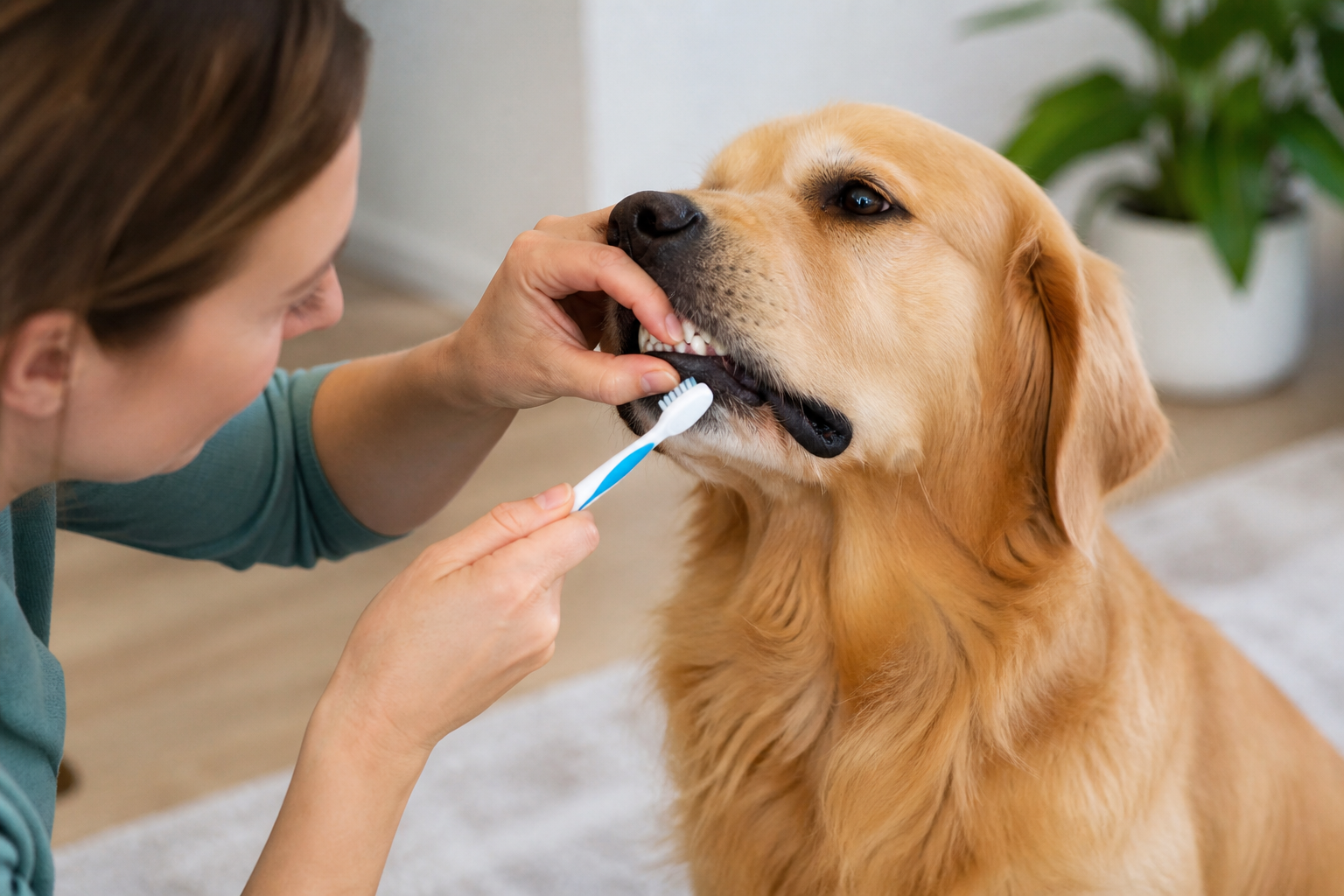
Spend a few days just lifting your dog's lips and touching their teeth with your finger. Reward them with praise or a tiny treat afterward.
Step 2: Introduce the flavor.
Put a small dab of dog-safe toothpaste on your finger and let them lick it off. Most pet pastes are flavored like poultry or beef to make them appealing.
Step 3: Try a finger brush or gauze.
Wrap a piece of clean gauze or a finger brush around your index finger. Add some paste and gently rub the front teeth in a circular motion.
Step 4: Transition to the toothbrush.
Once they are comfortable, move to a soft-bristled brush. Hold the brush at a 45-degree angle to the gum line. Focus on the outside of the teeth, as this is where the most plaque accumulates.
Step 5: Keep it short.
You do not need to clean the entire mouth at once. Start with 30 seconds and work your way up to two minutes. Always end the session with a reward so they associate the brush with a positive outcome.
Bottom line: Frequency is more important than duration. Brushing for 60 seconds every day is much more effective than a ten-minute deep clean once a month.
Beyond the Brush: Mechanical Cleaning Aids
Brushing is the gold standard, but it is not the only way to fight plaque. Many dogs benefit from "passive" cleaning tools that work while they play or eat.
Dental Chews and Sticks
Products like Greenies or specialized dental sticks are designed with specific textures and shapes. As your dog chews, the treat wraps around the teeth to scrape away plaque. Some also contain ingredients like sodium hexametaphosphate to prevent plaque from mineralizing into tartar. Virbac C.E.T. Enzymatic Oral Hygiene Chews are one option for days when brushing is not possible.
Water Additives
Dental water additives are a low-effort way to manage oral bacteria. You simply add a capful to your dog's water bowl. These solutions often contain enzymes or chlorhexidine to kill bacteria and freshen breath. They are especially helpful for senior dogs or pets that are highly resistant to handling. A product such as OxyFresh Pet Dental Water Additive can be added to a daily routine.
Toys with Nubs and Ridges
Rubber toys from brands like Kong or West Paw often feature ridges and bumps. When your dog gnaws on these, the rubber massages the gums and helps disturb the biofilm on the teeth. You can even smear a little enzymatic toothpaste into the grooves of the toy to make it a self-cleaning tool.
The Health Risks of Ignoring Plaque
Dental health is not just a cosmetic issue. It is a major factor in your dog's overall longevity. When plaque and tartar are left to thrive, they cause a cascade of health problems. For additional warning signs, see how to recognize bad teeth in dogs.
Periodontal Disease
This is the most common health condition in adult dogs. It starts with gingivitis, where the gums become red and swollen. If the infection spreads deeper, it destroys the bone and ligaments that hold the teeth in place. This is incredibly painful and is the primary cause of tooth loss in dogs.
Systemic Organ Damage
The mouth is a gateway to the rest of the body. When the gums are inflamed and infected, bacteria can enter the bloodstream. These bacteria can travel to the heart, kidneys, and liver. Studies have shown a direct link between severe dental disease and damage to these vital organs.
Chronic Pain
Dogs are experts at hiding pain. A dog with rotting teeth or infected gums might still eat their dinner, but they are likely living with a constant throb. You might notice them dropping food, chewing on one side of their mouth, or becoming more irritable.
Vet Tip: If you notice bleeding gums, loose teeth, or a sudden change in your dog's eating habits, stop home cleaning and schedule a veterinary exam immediately. Brushing over an active infection or a broken tooth can cause significant pain and may worsen the problem.
When to Seek Professional Veterinary Care
Home care is about prevention, not a cure for advanced disease. Even with perfect brushing, most dogs will eventually need a professional cleaning. This is similar to how humans visit the dentist twice a year despite brushing and flossing at home.
At BaxterBoo, we emphasize the importance of professional oversight. Our partnership with Pet's Choice through our pet pharmacy offers access to prescription dental diets and medications that can support your dog's recovery after a procedure. If your dog's teeth are covered in brown or grey tartar, it is time for a professional intervention.
A veterinary dental cleaning is a medical procedure. It is performed under general anesthesia so the vet can safely scale the teeth above and below the gum line. They will also take X-rays to check for hidden abscesses or bone loss that cannot be seen with the naked eye. After scaling, the teeth are polished to smooth out any micro-scratches, making it harder for plaque to stick in the future.
Managing Dental Health Costs
Dental procedures can be expensive, which is why prevention is so important for your budget. Investing in a five-dollar toothbrush and a ten-dollar tube of toothpaste now can save you hundreds or even thousands of dollars in extractions and surgeries later.
We offer several ways to make pet care more affordable. Our MVP Rewards program allows you to earn up to 5% back on every dental chew, toothbrush, and supplement you buy. If you find a dental diet or additive that works well for your dog, you can set it up on our Autoship programme. This ensures you never run out and gives you a discount on your orders.
If you are worried about unexpected dental emergencies, we also partner with FIGO Pet Insurance. Having a solid insurance plan can provide peace of mind if your dog ever needs a complex dental surgery or an emergency extraction.
| Product Type | Best For | Effort Level |
|---|---|---|
| Enzymatic Paste | Daily plaque removal | High |
| Dental Wipes | Quick surface cleaning | Medium |
| Water Additives | Breath freshening | Low |
| Dental Chews | Mechanical scraping | Low |
| Seaweed Powder | Long-term prevention | Low |
Tips for Senior Dogs and Puppies
The approach to dental care changes as your dog ages.
Puppies
Start as early as possible. Puppies have 28 deciduous teeth that eventually fall out to make room for 42 permanent teeth. Even though they lose their baby teeth, starting a brushing routine at 12 to 16 weeks old builds the habit. It ensures they are comfortable with mouth handling for the rest of their lives.
Senior Dogs
Older dogs are more likely to have existing tartar and gum recession. They may also have sensitive mouths due to age-related wear. Be extra gentle with seniors. Use a very soft brush or a finger brush. If they have missing teeth, focus on cleaning the remaining ones to prevent further loss. Senior dogs also benefit significantly from the professional cleanings offered by your vet, as their immune systems are less equipped to handle the constant bacteria from a dirty mouth.
Key Takeaway: It is never too early or too late to start a dental routine. Puppies need the habit, and seniors need the protection from systemic disease.
The Role of Our Pharmacy
Sometimes, basic over-the-counter tools are not enough. If your dog is struggling with chronic oral infections or severe gingivitis, your vet may prescribe specific medications or therapeutic diets. Our pharmacy carries FDA-approved medications and prescription pet foods designed for these exact needs through our partnership with Pet's Choice.
Whether it is an antibiotic to clear up an infection before a procedure or a specialized kibble that uses a specific fiber matrix to scrub teeth, we can help you manage your pet's prescription needs. Our goal is to be a one-stop resource for your dog's health, combining the convenience of online ordering with the expertise of a professional pharmacy.
Conclusion
Cleaning plaque from your dog's teeth is one of the most impactful things you can do as a pet owner. By establishing a daily routine of brushing and using mechanical aids like chews or wipes, you are protecting your dog from pain and serious systemic illness. Remember that plaque turns into tartar quickly, so consistency is your greatest weapon. While home care is essential, it works best when paired with regular veterinary checkups and professional cleanings. At BaxterBoo, we are here to support your journey with the best gear, expert advice, and a dedicated pharmacy for your pet's medical needs.
Bottom line: Start brushing today to save your dog from pain and save yourself from expensive vet bills tomorrow.
- Next Step: Explore our dog dental care collection to find the perfect toothbrush and paste for your dog, or sign up for Autoship to save on your favorite dental chews.
FAQ
Can I remove tartar from my dog's teeth at home?
No, you should not attempt to scrape hardened tartar at home. Tartar is strongly bonded to the enamel, and using metal scrapers can easily damage the tooth surface or cause painful injuries to the gums. Only a veterinarian using professional ultrasonic equipment can safely remove tartar.
How often should I brush my dog's teeth?
Ideally, you should brush your dog's teeth every single day. Plaque can begin to harden into tartar in as little as 24 hours. If daily brushing is not possible, aim for at least three times a week to significantly reduce the risk of dental disease.
My dog's breath is terrible even after brushing. What should I do?
Persistent bad breath, or halitosis, is often a sign of an underlying problem like an infection, a rotted tooth, or even an internal health issue. If brushing does not improve the smell, schedule a visit with your veterinarian. They can perform a full exam to find the source of the odor.
Are dental chews as effective as brushing?
Dental chews are a great supplement, but they are not a total replacement for brushing. Chews mostly clean the chewing surfaces of the teeth and may miss the gum line where plaque causes the most damage. For the best results, use dental chews on the days you are unable to brush.






