
 Save 15% on your 1st Autoship learn more

 Email us
 Live Chat
 FAQs
FAQs





Introduction
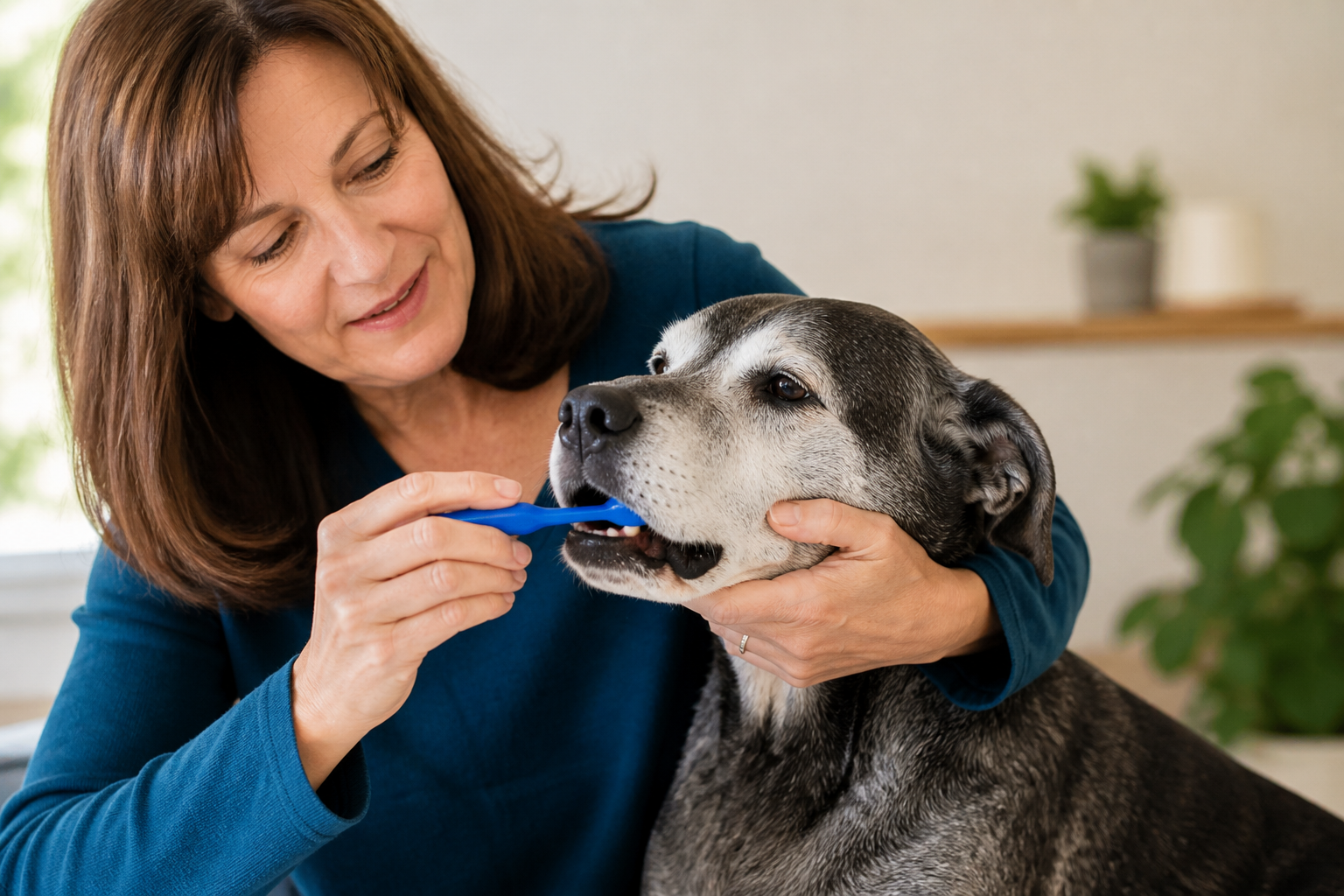
You lean in for a snuggle with your long-time companion, but your senior dog's breath is enough to make you pull away. It is more than just an unpleasant smell. For an older dog, bad breath often signals underlying dental issues that can impact their comfort and overall longevity. At BaxterBoo, we understand that caring for a senior pet requires a gentle, specialized approach, especially when it comes to oral hygiene. This guide will walk you through the safest ways to clean your senior dog's teeth at home while managing the unique challenges of aging. We will cover the best tools for the job, how to navigate tooth sensitivity, and when it is time to seek professional help from your veterinarian. Proper dental care is a cornerstone of senior wellness that helps your dog enjoy their golden years without unnecessary pain.
Why Dental Care is Critical for Senior Dogs
As dogs age, the protective enamel on their teeth can wear down. This makes them more susceptible to sensitivity and decay. Years of plaque buildup can harden into tartar, which eventually leads to periodontal disease. This is not just a mouth problem. Bacteria from infected gums can enter the bloodstream and travel to vital organs like the heart, liver, and kidneys. For a senior dog with a potentially weaker immune system, these systemic infections are much harder to fight off.
The pain associated with dental disease can also change your dog's behavior. You might notice they are less interested in their favorite hard treats or that they drop pieces of kibble while eating. Some senior dogs become irritable or withdrawn because they are in constant discomfort. By prioritizing dental hygiene, you are not just cleaning teeth. You are protecting their internal organs and ensuring they can still enjoy their daily meals and toys.
Quick Answer: Clean a senior dog's teeth using a soft-bristled brush or finger cot and dog-specific enzymatic toothpaste. Aim for daily sessions, but even three times a week can significantly reduce plaque and prevent painful gum infections.
For additional guidance on warning signs, read our article on how to recognize bad teeth in dogs.
Signs of Dental Issues in Older Dogs
Before you start a cleaning routine, you need to know what a healthy mouth looks like compared to one that needs medical attention. A healthy senior mouth should have relatively pink gums and teeth that are mostly white or off-white. While some wear and tear is normal over ten or twelve years, certain red flags require a vet's eyes before you attempt to brush.
Watch for these specific signs:
- Red, swollen, or bleeding gums.
- Heavy brown or yellow tartar deposits, especially near the gum line.
- Loose or missing teeth.
- Excessive drooling or pawing at the face.
- A sudden preference for wet food over dry kibble.
- Persistent bad breath that smells like rot or ammonia.
Vet Tip: If your senior dog has visible bleeding or loose teeth, stop and consult your veterinarian before brushing. Attempting to clean a severely painful or infected mouth at home can cause your dog to associate grooming with pain, making future care impossible.
A Step-by-Step Guide to Brushing Senior Teeth
If your dog's mouth is healthy enough for at-home care, the goal is to be as gentle as possible. Senior dogs may have arthritis in their neck or jaw, so you should never force their head into a specific position. Work in a well-lit area where your dog feels relaxed, such as on their favorite orthopedic bed.
Step 1: Choose the Right Tools
Do not use a standard human toothbrush, as the bristles are often too stiff for aging gums. A finger brush or a piece of soft gauze wrapped around your index finger is usually the best starting point for a senior. Use an enzymatic toothpaste formulated specifically for dogs. These pastes work even if you cannot reach every crevice because the enzymes break down plaque chemically.
For a convenient option, consider the Virbac C.E.T. Pet Oral Hygiene Kit, which includes a finger brush, toothbrush, and poultry-flavored enzymatic toothpaste.
Step 2: Introduce the Paste
Let your dog lick a small amount of the toothpaste off your finger. Most dog pastes come in flavors like poultry or beef to make the experience a treat. This helps create a positive association. If they enjoy the taste, they will be much more likely to let you lift their lips.
Step 3: Use the Gauze Technique
For dogs who are nervous about a brush, start with gauze. Dampen a small piece of medical gauze and wrap it around your finger. Gently rub the outside surfaces of the teeth in a circular motion. This is less invasive than a plastic brush and allows you to feel for any bumps or loose teeth.
Step 4: Graduate to a Soft Brush
Once your dog is comfortable with the gauze, move to a soft-bristled pet toothbrush. Hold the brush at a 45-degree angle to the gum line. Focus on the large canine teeth and the back molars, as these are the areas where tartar builds up most quickly. You do not need to worry as much about the inside surfaces of the teeth. A dog's tongue generally does a good job of keeping those areas clean.
Step 5: Keep Sessions Short
Senior dogs often have less patience for grooming than younger dogs. Limit your first few sessions to thirty seconds. Gradually increase the time as they become more comfortable. Always finish with a reward, like a dental chew or a favorite low-calorie treat.
Our dog dental care collection includes dental chews, water additives, and other options for supporting an at-home routine.
Key Takeaway: Patience is the most important tool when cleaning a senior dog's teeth. Using a finger brush and enzymatic paste allows for a gentler experience that respects their aging joints and sensitive gums.
Alternatives to Traditional Brushing
Sometimes a senior dog simply will not tolerate a toothbrush. This could be due to past negative experiences or cognitive decline that makes new routines stressful. If brushing is not an option, you can still manage their oral health using other methods.
- Dental Wipes: These are pre-moistened pads that you wipe across the teeth. They are faster than brushing and require less mouth opening.
- Water Additives: These are tasteless liquids you add to your dog's water bowl. They contain enzymes that help prevent plaque from hardening into tartar.
- Dental Gels: Some gels can be applied to the gums without brushing. The dog's saliva spreads the gel around the mouth to kill bacteria.
- Safe Chew Toys: Look for rubber toys with nubs or ridges. As the dog chews, the rubber scrapes against the teeth to mechanically remove debris. Avoid hard plastic bones or real animal bones, as these can easily fracture brittle senior teeth.
For more choices, browse our dog healthcare supplies, including oral care products and other wellness essentials.
The Role of Nutrition in Senior Dental Health
What your dog eats plays a significant role in how clean their teeth stay. For many years, the standard advice was that dry kibble cleans teeth better than wet food. While the crunch does provide some mechanical scraping, it is not a complete solution. Many senior dogs benefit from a specialized dental diet.
These diets are formulated with a specific kibble structure that does not shatter when the dog bites it. Instead, the tooth sinks into the kibble, allowing the fibers to scrub the tooth surface. We carry several brands that focus on senior-specific nutrition, which often includes higher levels of antioxidants to support gum health.
If your dog has already lost several teeth, they may need to transition to a high-quality wet food. In these cases, using a water additive or a dental gel becomes even more important because there is no mechanical cleaning happening during mealtime. Our pharmacy offers prescription dental diets through our partnership with Pet's Choice for dogs who require clinical-grade oral support.
For a broader look at mealtime options, read Should Senior Dogs Eat Wet or Dry Food?.
Professional Cleanings and the Pharmacy
Even with the best at-home care, most senior dogs will eventually need a professional dental cleaning. This is done under anesthesia to allow the veterinarian to clean under the gum line and take X-rays. Many owners are nervous about putting an older dog under anesthesia, but modern veterinary medicine has made this much safer.
Your vet will typically perform blood work first to ensure your dog's liver and kidneys can process the anesthetic. If your dog has an active infection or requires a tooth extraction, they may need antibiotics or pain medication. Our pet pharmacy carries a wide range of FDA-approved medications and prescription diets to help your dog recover from dental procedures.
Vet Tip: Regular blood work is essential for senior dogs before any procedure involving anesthesia. This helps your veterinarian tailor the anesthetic protocol to your dog's specific health needs, significantly reducing risks.
Creating a Comfortable Environment
Senior dogs are sensitive to changes in their environment and routine. To make dental care a success, consistency is key. Try to clean their teeth at the same time every day so they know what to expect. Ensure they are standing or lying on a non-slip surface so they do not feel unstable while you are working on their mouth.
If your dog has vision or hearing loss, use touch to signal that you are about to start. A gentle pet on the shoulder or a specific scent of the toothpaste can act as a cue. This prevents them from being startled when you reach for their face. The more relaxed the environment, the more successful your cleaning routine will be.
Bottom line: Senior dental care is a combination of gentle at-home brushing, appropriate nutrition, and regular veterinary check-ups to prevent systemic health issues.
Summary Checklist for Senior Dental Success
To keep your older dog's mouth in top shape, follow this simple routine:
- Check the mouth weekly for redness, swelling, or foul odors.
- Use a finger brush or gauze with dog-safe enzymatic toothpaste.
- Incorporate dental-friendly treats or water additives for extra support.
- Schedule a veterinary dental exam at least once a year.
- Provide a non-slip, comfortable area for all grooming sessions.
- Use the pharmacy for any prescription medications or specialized diets your vet recommends.
Cleaning your senior dog's teeth is an act of love that pays off in a happier, more comfortable life for your pet. By starting slowly and using the right products, you can make oral hygiene a stress-free part of your daily bond. We are here to support your journey with the best selection of senior-safe gear and medications.
For more specialized health needs, visit our Medical and Mobility section or explore the pharmacy for prescription dental solutions.
FAQ
Is it too late to start cleaning my 10-year-old dog's teeth?
It is never too late to begin a dental care routine. While brushing cannot remove existing tartar that has already hardened, it can prevent new plaque from forming and stop current issues from worsening. Starting a gentle routine now can still help protect your dog's heart and kidneys from bacteria.
Can I use human baking soda toothpaste on my senior dog?
No, you should never use human toothpaste or straight baking soda on a dog. Human toothpaste often contains xylitol, which is toxic to dogs, and the high sodium content in baking soda can be dangerous for senior dogs with heart or kidney conditions. Always use a paste specifically formulated for pets.
Why does my senior dog's breath smell so bad even after brushing?
Persistent bad breath in older dogs is often a sign of deep-seated infection or periodontal disease under the gum line. It can also indicate internal health issues like kidney disease. If brushing does not improve the smell, you should schedule a veterinary exam to rule out serious medical conditions.
For more information about common warning signs, review our guide to bad teeth in dogs.
Is anesthesia safe for a senior dog's dental cleaning?
Anesthesia is generally safe for senior dogs if they have undergone proper pre-anesthetic screening, such as blood work and a physical exam. Veterinarians use specialized protocols for older pets to monitor their heart rate and blood pressure closely. In many cases, the risk of untreated infection is higher than the risk of the procedure itself.






