
 Save 15% on your 1st Autoship learn more

 Email us
 Live Chat
 FAQs
FAQs





Introduction
You lean in for a happy morning lick from your dog and realize their breath has become noticeably sour. When you lift their lip, you see a hard, brownish-yellow crust cemented along the gum line. This is dental tartar, and while it might look like a simple cosmetic issue, it is actually mineralized plaque that can lead to serious health problems. At BaxterBoo, we understand that many owners prefer starting with gentle, natural solutions before moving to more invasive procedures. This article covers effective ways to soften and remove mild tartar at home while establishing a routine that keeps your dog’s mouth healthy. We will look at ingredients like coconut oil and seaweed, the role of raw bones, and when it is time to call your veterinarian. Our goal is to help you manage your dog's oral hygiene safely and effectively.
Quick Answer: You can clean mild tartar naturally by using enzymatic gels, seaweed supplements, and coconut oil combined with daily brushing. Raw bones and crunchy vegetables like carrots also provide mechanical scraping. However, thick or hardened tartar usually requires a professional cleaning by a veterinarian.
The Difference Between Plaque and Tartar
Understanding what you are fighting is the first step in successful dental care. Plaque is a soft, sticky film of bacteria that forms on the teeth within hours of eating. Because it is soft, you can easily remove it with a toothbrush or a simple wipe. If plaque stays on the teeth for more than 48 to 72 hours, it reacts with the minerals in your dog's saliva. This chemical reaction causes the plaque to harden into tartar, also known as dental calculus.
Once tartar has formed, it is much harder to remove than plaque. It has a rough, porous surface that attracts even more bacteria. This creates a cycle of buildup that eventually moves under the gum line. When bacteria reach the roots of the teeth, it can lead to gingivitis, tooth loss, and even systemic infections. Bacteria from a dirty mouth can enter the bloodstream and travel to the heart, liver, and kidneys.
| Feature | Plaque | Tartar (Calculus) |
|---|---|---|
| Consistency | Soft, sticky film | Hard, cement-like crust |
| Color | Clear or pale yellow | Dark yellow, brown, or gray |
| Removal Method | Brushing, wiping, or chewing | Professional scaling or enzymatic softening |
| Timeline | Forms within hours | Hardens within 2–3 days |
Key Takeaway: You can prevent tartar by removing plaque daily. Once plaque mineralizes into tartar, it requires specific enzymes or mechanical scraping to break it down.
Using Coconut Oil for Dental Health
Coconut oil is a popular natural remedy for many canine health issues, and dental care is no exception. It contains high levels of lauric acid, which has significant antibacterial and antifungal properties. When you apply coconut oil to your dog's teeth and gums, it helps kill the harmful bacteria that contribute to plaque formation.
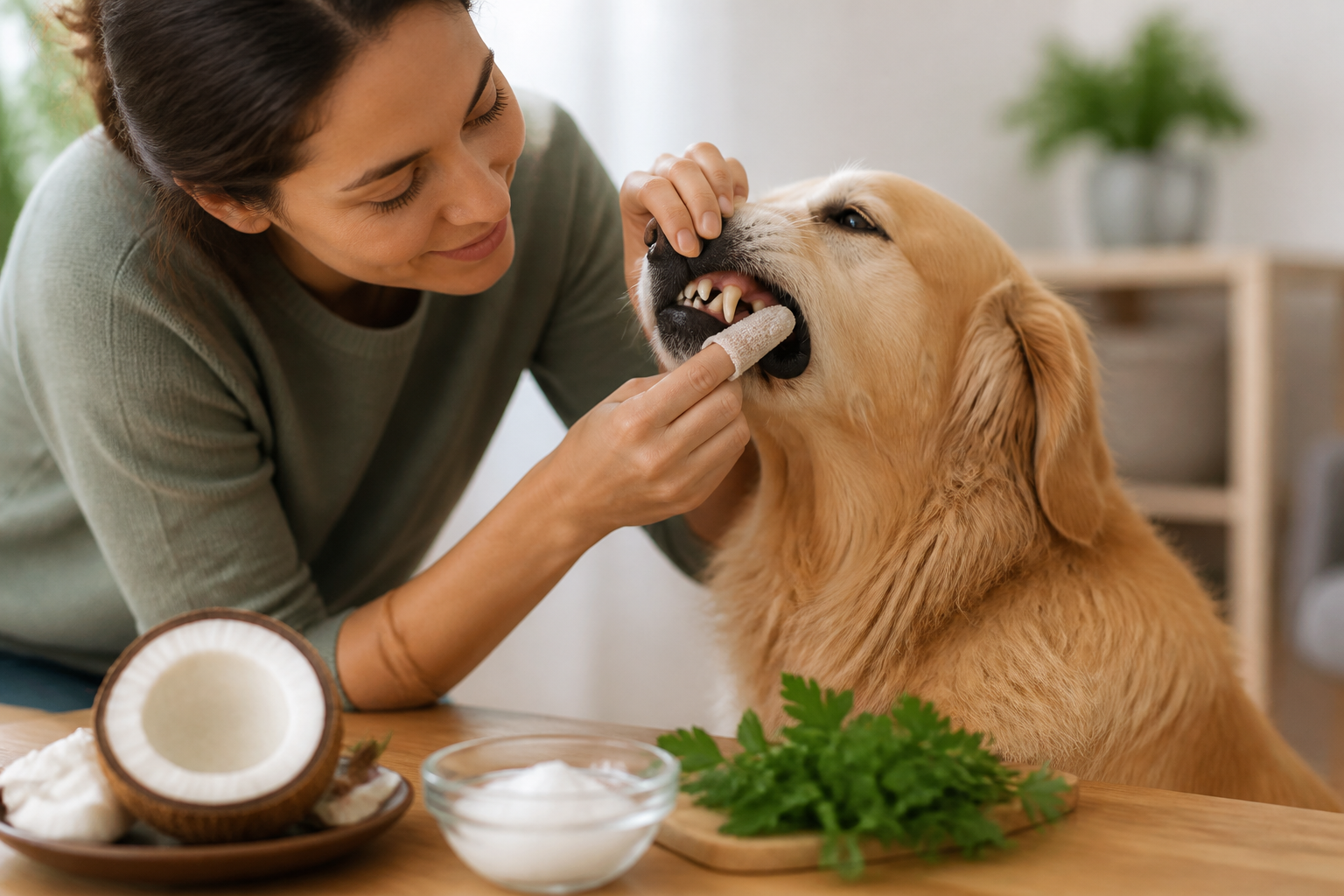
To use coconut oil for tartar, apply a small amount to a finger brush or a piece of clean gauze. Gently rub it onto the teeth, focusing on the back molars where tartar tends to be heaviest. Many dogs love the taste, which makes them more cooperative during the process. Some owners even let their dogs lick a spoonful of oil, though direct application to the teeth is more effective for cleaning.
Benefits of Coconut Oil
- Reduces bad breath by killing odor-causing bacteria.
- Acts as a natural lubricant to make brushing more comfortable.
- Helps soothe inflamed gums caused by mild gingivitis.
- Safe for dogs to swallow in moderate amounts.
Always use organic, unrefined, cold-pressed coconut oil. Start with a tiny amount to ensure it does not upset your dog's stomach. While it is a great tool for softening buildup, it works best when combined with a regular brushing routine.
The Power of Seaweed Supplements
One of the most effective natural ways to combat tartar is through the use of specific seaweed supplements. Ascophyllum nodosum is a type of brown kelp that contains natural enzymes. When a dog eats this seaweed, the compounds are absorbed into the bloodstream and eventually released back into the mouth through the saliva.
These enzymes work by breaking down the chemical bonds that hold tartar to the tooth surface. Over several weeks, the hardened calculus often becomes softer and more porous. This makes it much easier to brush away during your regular cleaning sessions. Many high-quality dental powders carried at BaxterBoo use this kelp as a primary ingredient. You can also browse our dog dental and breath care collection for oral-care products and supplements.
Vet Tip: Seaweed supplements are high in iodine. If your dog has a known thyroid condition or is on specific medications, consult your veterinarian before adding kelp to their diet.
Mechanical Cleaning with Raw Bones
In the wild, canines keep their teeth clean by gnawing on the bones of their prey. The act of shearing meat off a bone and the abrasive texture of the bone itself act like a natural toothbrush. For domestic dogs, raw meaty bones can be an excellent way to scrape away tartar mechanically.
It is vital to use only raw bones. Cooked bones become brittle and can splinter, causing life-threatening punctures in the digestive tract or mouth. Raw bones are softer and more flexible. Large, non-splintering bones like beef marrow bones or knuckle bones are often the best choice for heavy chewers.
Raw Bone Safety Checklist
- Always supervise: Never leave your dog alone with a bone.
- Size matters: The bone should be larger than your dog's mouth so they cannot swallow it whole.
- Discard appropriately: Once the bone is small enough to be a choking hazard, throw it away.
- Refrigerate: Raw bones can grow bacteria if left out at room temperature for too long.
- Check the teeth: If your dog is an aggressive chewer, they could potentially fracture a tooth on a very hard bone.
Bottom line: Raw bones provide the most effective mechanical scrubbing for tartar, but they must be used with strict supervision and safety precautions.
Dietary Adjustments and Crunchy Vegetables
What your dog eats every day plays a massive role in their oral health. Many people believe that dry kibble cleans teeth, but most dogs swallow kibble whole or it shatters quickly without providing real abrasive action. Furthermore, many commercial foods are high in carbohydrates and starches. These sugars stick to the teeth and provide a feast for plaque-causing bacteria.
Feeding a diet lower in starches and higher in whole proteins can reduce the film left on teeth. You can also supplement their meals with crunchy, tooth-friendly vegetables. Carrots, celery, and apple slices (without seeds) act as mild abrasives. As your dog chews these fibrous snacks, they help rub away loose plaque before it has a chance to harden into tartar.
For additional chew-based options, read our guide to the best dental chews for dogs.
Natural Water Additives and Oral Gels
For dogs that absolutely refuse to have their mouth touched, water additives and oral gels offer a less invasive approach. Natural water additives usually contain enzymes or extracts like green tea or pomegranate. These ingredients alter the pH of the saliva or prevent bacteria from sticking to the tooth enamel.
Oral gels are applied directly to the gum line. You do not always need to brush them in; the dog's tongue will naturally spread the gel over the teeth as they lick. Many of these gels use natural antimicrobials like grapefruit seed extract or peppermint oil to freshen breath and soften tartar over time. One option is Vet’s Best Enzymatic Dental Gel Dog Toothpaste.
Step 1: Choose a natural additive. Look for products that are free from artificial flavors or harsh chemicals.
Step 2: Follow the dosing instructions. Most additives require a specific amount per bowl of fresh water.
Step 3: Monitor your dog. Ensure they are still drinking their normal amount of water after you add the solution.
Step 4: Use consistently. These products rely on daily exposure to the teeth to be effective.
Training Your Dog to Accept Brushing
No natural remedy is quite as effective as mechanical brushing. Even if you use oils and seaweed, you still need to physically remove the softened debris. The key to success is a slow, positive introduction.
Start by letting your dog lick a pet-safe enzymatic toothpaste off your finger. Once they enjoy the taste, begin rubbing your finger along their gums. Gradually transition to a soft-bristled toothbrush or a silicone finger brush. Focus on the outside of the teeth, as this is where the most tartar accumulates. Always end the session with a high-value reward or praise to create a positive association. For another toothpaste option, consider Virbac C.E.T. Enzymatic Pet Toothpaste.
Brushing Tips for Success
- Frequency: Aim for daily brushing, but at least three times a week is necessary to prevent mineralization.
- Equipment: Use a brush designed for dogs. Human brushes are often too hard or the wrong shape.
- Patience: It may take weeks of daily practice before your dog allows a full cleaning.
- Angle: Hold the brush at a 45-degree angle toward the gum line to reach the areas where tartar hides.
Key Takeaway: Brushing is the most reliable way to maintain oral health. Combining it with natural softeners like coconut oil makes the job much easier.
When Natural Methods Are Not Enough
While natural remedies are excellent for maintenance and mild cases, they have limits. If your dog has thick, stone-like tartar that covers the entire tooth, home remedies likely will not be enough. Severe tartar often hides painful problems like abscesses, cracked teeth, or deep gum infections.
If you notice your dog is dropping food, bleeding from the mouth, or has a significant facial swelling, you must see a veterinarian. These are signs of advanced periodontal disease that require professional intervention. A vet can perform a full dental cleaning under anesthesia, which includes scaling under the gum line and taking X-rays to check the health of the roots.
For more guidance on warning signs, read how to recognize bad teeth in dogs.
Vet Tip: If your dog’s gums are bright red or bleed when touched, they may have gingivitis. Natural remedies can help, but a veterinary exam is necessary to ensure the infection hasn't spread to the jawbone.
Professional Cleaning and Pharmacy Support
Sometimes a professional cleaning is the only way to hit the reset button on your dog's oral health. After a professional cleaning, your dog starts with a clean slate, making your natural home care much more effective. Our partnership with Pet's Choice allows us to support your dog’s journey through our pet pharmacy.
The BaxterBoo pharmacy offers FDA-approved medications that your vet might prescribe following a dental procedure. This includes antibiotics for mouth infections or prescription dental diets designed to reduce tartar buildup through specific kibble shapes and mineral binders. Using these specialized tools alongside your natural home routine provides a comprehensive approach to your dog's wellness.
Establishing a Long-Term Dental Routine
Maintaining a clean mouth is a lifelong commitment. The most successful owners use a multi-pronged approach. This includes a healthy diet, daily mechanical cleaning, and natural supplements to keep the environment of the mouth hostile to bacteria.
Consistency is more important than intensity. Brushing for thirty seconds every day is far more beneficial than a ten-minute cleaning once a month. By making dental care a standard part of your dog's day, you can avoid the pain and expense of advanced dental disease.
- Morning: Add a seaweed supplement or water additive to their first bowl.
- Afternoon: Offer a crunchy vegetable or a safe raw bone for chewing.
- Evening: Spend two minutes brushing with coconut oil or enzymatic gel.
- Monthly: Do a "flip the lip" check to look for new tartar or red gums.
Bottom line: A combination of mechanical brushing, natural enzymes, and safe chewing is the most effective way to keep your dog's teeth sparkling and their breath fresh.
FAQ
Can I use human toothpaste to clean my dog's teeth?
No, you should never use human toothpaste for dogs. Many human brands contain xylitol, which is highly toxic to dogs even in small amounts. They also contain foaming agents like sodium lauryl sulfate that can cause stomach upset when swallowed. Always choose a pet-specific enzymatic toothpaste that is safe to ingest.
How long does it take for natural remedies to remove tartar?
Natural remedies generally work slowly by softening the tartar over time. You might see a noticeable difference in breath within a week, but softening hardened tartar typically takes four to eight weeks of consistent use. You will still need to use a brush or cloth to rub away the softened debris as the enzymes work.
Are raw bones safe for all dogs?
While raw bones are great for many dogs, they are not suitable for everyone. Dogs with existing broken teeth, very senior dogs with brittle teeth, or dogs that try to swallow large chunks of bone whole should avoid them. Always match the size and hardness of the bone to your dog's specific chewing style and breed.
Does coconut oil really help with dog breath?
Yes, coconut oil helps with bad breath by addressing the root cause: bacteria. The lauric acid in the oil kills the microbes that produce foul-smelling gases in the mouth. While it provides immediate improvement, the best results come from using it as a lubricant during brushing to remove the bacteria-laden plaque.






