
 Save 15% on your 1st Autoship learn more

 Email us
 Live Chat
 FAQs
FAQs





Introduction
You may notice a yellow or brown crust forming along your dog's gumline that does not go away with a simple wipe. This hard substance is tartar, and it often leads to bad breath and red, irritated gums. At BaxterBoo, we understand that maintaining a clean mouth is about more than just fresh breath. It is a vital part of your dog's long-term health. While plaque is easy to remove, tartar is a much tougher challenge that requires a specific approach. This guide covers how to identify buildup, the best home care methods for managing oral hygiene, and when you need to seek professional help. By focusing on consistent care, you can protect your dog from the discomfort of dental disease and keep their smile bright.
Understanding the Difference Between Plaque and Tartar
Plaque is a soft, sticky film of bacteria that begins to form on the teeth just a few hours after a meal. At this stage, it is easy to remove with regular brushing or dental wipes. If plaque stays on the teeth for more than 48 hours, it begins to mineralize. Minerals in your dog's saliva cause the plaque to harden into a cement-like substance called tartar or calculus.
Tartar provides a rough surface where even more plaque can grow. This creates a cycle of buildup that eventually moves beneath the gumline. Once tartar has hardened, it is very difficult to remove with a standard toothbrush. It creates a shield for bacteria that can cause inflammation and infection in the gums.
Quick Answer: You cannot easily remove fully hardened tartar at home with a toothbrush alone. It requires professional veterinary scaling, but you can use enzymatic toothpastes and seaweed supplements to soften it and prevent new buildup.
Why Tartar Is a Serious Health Risk
Tartar is not just a cosmetic issue. It is a primary cause of periodontal disease, which affects the majority of adult dogs. When bacteria thrive in tartar, they cause the body to react with inflammation. This leads to gingivitis, which you will see as a bright red or swollen line along the gums.
If the infection continues, it destroys the bone and tissue that hold the teeth in place. This can result in loose teeth and severe pain. Beyond the mouth, these bacteria can enter the bloodstream. They may travel to vital organs like the heart, liver, and kidneys, leading to serious systemic health issues over time.
Vet Tip: If you notice your dog dropping food, pawing at their mouth, or having extremely foul breath, schedule a visit with your veterinarian. These are often signs of painful dental disease that requires a professional diagnosis and treatment plan.
How to Clean Tartar on Dogs Teeth at Home
While you should not attempt to scrape tartar off with metal tools, you can use several methods to soften it and improve oral hygiene. These methods work best when used together as part of a daily routine. Explore our dog dental health category for oral care products designed for everyday routines.
Use Enzymatic Toothpaste
Standard human toothpaste is dangerous for dogs because it contains ingredients like xylitol or foaming agents that they should not swallow. Dog-specific enzymatic toothpastes use proteins to break down the chemical bonds in plaque and tartar. These enzymes continue to work even after you finish brushing.
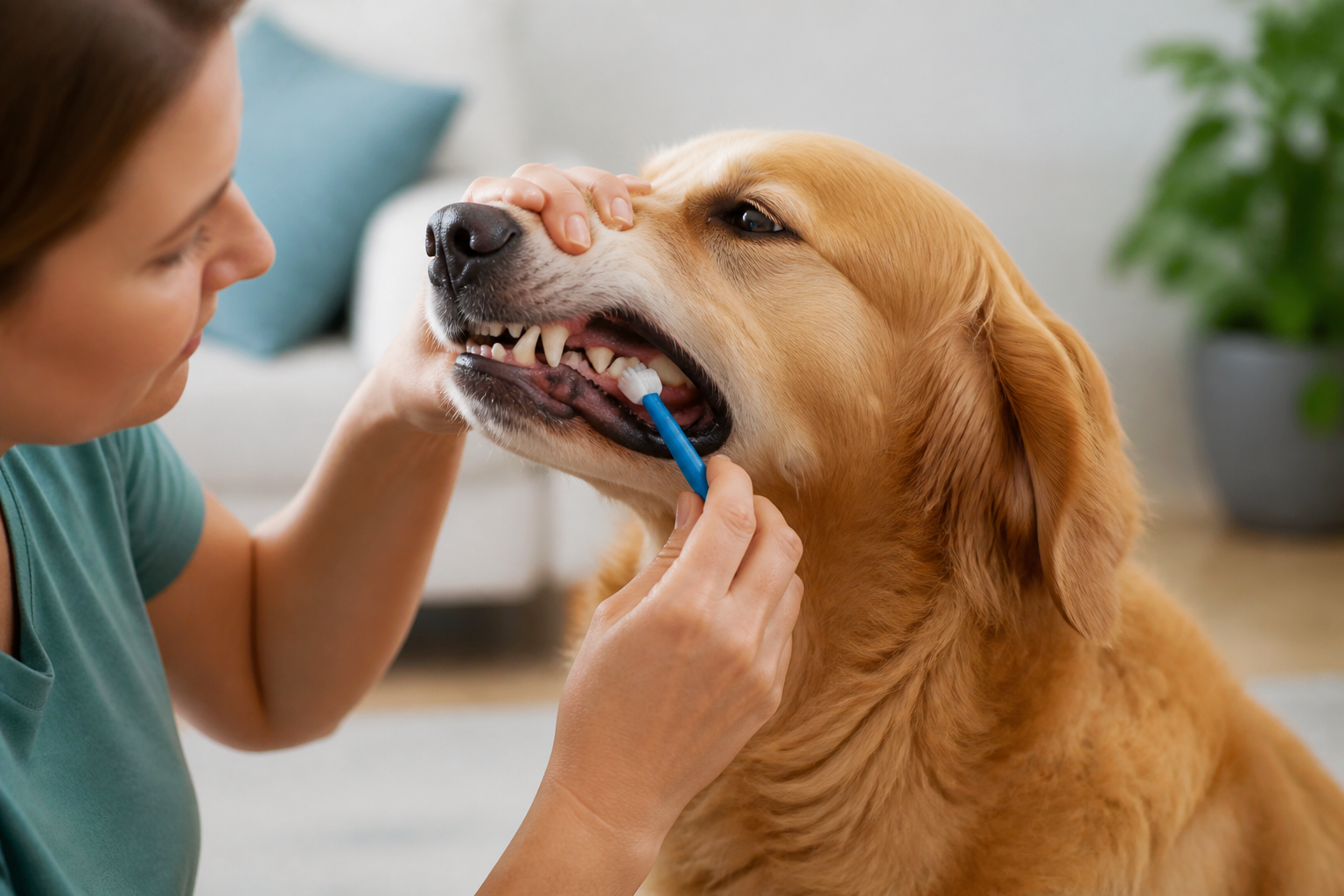
Step 1: Introduce the flavor / Let your dog lick a small amount of poultry or beef-flavored toothpaste off your finger to create a positive association.
Step 2: Use a finger brush or soft bristles / Gently rub the paste onto the outer surfaces of the teeth using circular motions.
Step 3: Focus on the gumline / Most tartar accumulates where the tooth meets the gum, so spend extra time in these areas.
Apply Coconut Oil
Coconut oil has natural antimicrobial properties due to its high lauric acid content. It can help reduce the bacteria count in the mouth and may help soften the edges of tartar buildup over time. Some owners use it as a base for brushing or simply let the dog lick a small amount daily. Ensure you use organic, unrefined coconut oil for the best results.
Seaweed Supplements
Specific types of seaweed, such as Ascophyllum nodosum, are widely used in the pet industry to fight tartar. When your dog eats a seaweed supplement, the active compounds are absorbed into the blood and released back into the mouth through the saliva. This changes the chemistry of the saliva to help dissolve the "glue" that holds tartar to the teeth. We carry several seaweed-based powders at BaxterBoo that can be easily sprinkled over your dog's food. You can browse our dental supplements for powder-based oral care options.
Key Takeaway: Home care is most effective at removing soft plaque and softening the outer layers of tartar, but it works best as a preventive measure rather than a total cure for heavy buildup.
The Role of Dental Chews and Toys
Chewing is a natural behavior that provides mechanical scraping. This action helps "scrub" the teeth as the dog gnaws on the item. Not all chews are created equal when it comes to cleaning tartar. See our dental chews for dogs to compare different chew-based options.
- Enzymatic Dental Chews: Brands like Greenies or Oravet are designed with textures that allow the tooth to sink into the chew, cleaning all the way to the gumline.
- Rubber Dental Toys: Toys with ridges or nubs help massage the gums and scrape away soft debris during play.
- Raw Bones: While some owners use raw bones for dental health, you must choose the right size to prevent choking or broken teeth. Never give your dog cooked bones, as they can splinter and cause internal damage.
When choosing a chew, look for the Veterinary Oral Health Council (VOHC) seal. This seal indicates that the product has been tested and proven to reduce plaque or tartar by a specific percentage.
Specialized Diets for Dental Management
For dogs prone to rapid tartar buildup, a change in diet can make a significant difference. Most standard kibble is small and shatters easily when a dog bites it, providing very little cleaning benefit. Specialized dental diets are different.
These kibbles are often larger and have a specific fiber structure. Instead of shattering, the kibble holds together, forcing the dog to chew. This provides a scrubbing effect on the surface of the tooth. Some of these diets also contain polyphosphates, which bind to the minerals in saliva to prevent them from hardening into tartar.
Our pharmacy carries a variety of prescription dental diets through our partnership with Pet's Choice. If your veterinarian recommends a specific medical diet like Royal Canin Dental or Farmina Vet Life, you can fulfill those needs directly through our pharmacy services. Prescription diets are often more effective than over-the-counter options for dogs with existing oral health concerns.
Bottom line: Mechanical cleaning through specific kibble textures and chews is a powerful tool for slowing down the formation of new tartar.
When to Seek Professional Veterinary Cleaning
There comes a point where home care is no longer enough. If your dog has thick, dark brown tartar or shows signs of gum recession, they need a professional dental cleaning. This procedure is performed under general anesthesia for several important reasons.
Anesthesia allows the veterinarian to scale the tartar away from the hidden areas beneath the gumline. This is where the most damaging bacteria live. It also allows for a full set of dental X-rays to check for abscesses or bone loss that are not visible to the naked eye. After scaling, the vet polishes the teeth to smooth out microscopic scratches, making it harder for new plaque to stick.
Attempting to scrape teeth at home with metal tools is dangerous. You can easily slip and cut the gums, or you may scratch the tooth enamel. These scratches actually cause tartar to build up faster in the future. Professional care is the only safe way to restore the teeth to a truly clean state.
Creating a Sustainable Dental Routine
Success with dental care comes from consistency. It is better to brush your dog's teeth for one minute every day than for ten minutes once a month. For additional guidance, read our pet dental care tips.
- Start Slow: If your dog is not used to oral care, start by just lifting their lips and praising them.
- Use Rewards: Follow every dental session with a high-value treat or a favorite game.
- Monitor Monthly: Once a month, do a "mouth check" to look for new redness or dark spots.
- Combine Methods: Use a mix of brushing, water additives, and dental chews to cover all bases.
If your dog absolutely refuses a toothbrush, do not give up. Use dental wipes or pads to wipe the outer surfaces of the teeth. While not as thorough as brushing, it still removes a significant amount of plaque before it can harden.
Key Takeaway: A multi-pronged approach involving brushing, specialized supplements, and professional checkups is the best defense against canine dental disease.
Maintaining Oral Health with BaxterBoo
Managing your dog's dental health is a lifelong commitment. We are here to help with a curated selection of toothpastes, brushes, dental chews, and toys. For more advanced needs, our pharmacy provides access to FDA-approved treatments and prescription diets to manage chronic oral conditions. You can also review our dental and breath care options for toothpaste, water additives, wipes, and other oral care products.
Consider signing up for our Autoship program to ensure you never run out of dental supplies. This program offers savings on your first order and grants you a free MVP Gold membership, making it easier to stay consistent with your dog's care. Keeping those pearly whites clean will help your dog live a longer, more comfortable life.
FAQ
Can I remove tartar from my dog's teeth without a vet?
You can soften tartar at home using enzymatic toothpastes and seaweed supplements, but fully hardened tartar usually requires professional scaling. Attempting to scrape it off yourself can damage the enamel and lead to more rapid buildup. Focus on home care for prevention and softening while relying on a vet for deep cleaning.
How often should I brush my dog's teeth to prevent tartar?
Veterinarians recommend brushing your dog's teeth at least two to three times per week, though daily brushing is the gold standard. Since plaque can begin to harden into tartar in as little as 24 to 48 hours, daily attention is the best way to keep the teeth clean. If your dog resists brushing, dental wipes and water additives can help on the off days.
Is bad breath in dogs always caused by tartar?
While tartar and the bacteria associated with it are the most common causes of bad breath, other factors can play a role. Persistent foul odor can also indicate oral infections, kidney issues, or digestive problems. If your dog's breath remains poor despite good dental hygiene, you should consult your veterinarian for a full health exam.
Are dental chews enough to keep a dog's teeth clean?
Dental chews are a great supplement to an oral care routine, but they should not be the only method you use. They primarily clean the chewing surfaces of the back teeth and may miss the canines and incisors. For the best results, combine dental chews with regular brushing and professional veterinary evaluations.






