
 Save 15% on your 1st Autoship learn more

 Email us
 Live Chat
 FAQs
FAQs





Introduction
You lean in for a happy morning lick from your dog, but the smell that greets you is less than fresh. You notice a thick layer of yellow or brown buildup along their gum line. Their gums might even look a little red or swollen. This is the moment many pet owners realize that a standard treat or a quick chew is not enough. To truly address the bacteria hiding in your pet's mouth, you need to understand how to deep clean dog teeth effectively.
At BaxterBoo, we know that dental health is one of the most overlooked aspects of pet care. While daily brushing is the gold standard, true deep cleaning involves a mix of professional veterinary care and a rigorous home routine. This guide will walk you through what a professional deep clean looks like, why it matters, and how you can maintain those pearly whites between vet visits. Our goal is to help you navigate the world of canine oral hygiene with confidence and practical steps.
The Difference Between Surface Cleaning and Deep Cleaning
Many owners assume that if they can scrape a bit of yellow off a tooth with a fingernail, they are doing a deep clean. This is a common misconception. Surface cleaning only addresses the plaque and tartar you can see. True deep cleaning focuses on the area that causes the most trouble: the space below the gum line.
When bacteria sit on the teeth, they form a sticky film called plaque. If it is not brushed away, it hardens into tartar within about 48 hours. This tartar provides a rough surface where even more bacteria can hide. Eventually, these bacteria migrate under the gums. This leads to inflammation, bone loss, and eventually tooth loss. A deep clean removes these hidden deposits that a regular toothbrush cannot reach.
Quick Answer: A true deep clean for dog teeth is a professional veterinary procedure performed under anesthesia. It involves scaling tartar from above and below the gum line and polishing the enamel to prevent future buildup.
Why Professional Veterinary Cleanings are Essential
A professional dental cleaning is the only way to achieve a genuine deep clean. During this visit, your veterinarian does more than just scrub the teeth. They perform a full oral health assessment while your dog is under general anesthesia. This is a critical point for safety and effectiveness. Without anesthesia, it is impossible to clean the inner surfaces of the teeth or reach deep into the periodontal pockets.
The process usually involves several key steps:
- Pre-anesthetic blood work to ensure your dog is healthy enough for the procedure.
- Ultrasonic scaling to vibrate away heavy tartar deposits.
- Hand scaling to fine-tune the cleaning near the sensitive gum line.
- Subgingival curettage to remove bacteria from under the gums.
- Polishing the teeth to smooth out microscopic scratches left by the scaling tools.
If your vet discovers advanced decay or a fractured tooth, they might need to perform an extraction. This is why having the procedure done by a professional is so important. They can address pain and infection that might otherwise go unnoticed.
Vet Tip: Always schedule a dental consultation before a cleaning. Your vet will check for signs of heart murmurs or other conditions that might impact anesthesia safety. If your dog needs specific medications or a prescription diet after their procedure, our pet pharmacy carries prescription options through our veterinary pharmacy service.
The Role of Anesthesia in Deep Cleaning
It is natural to feel nervous about putting your dog under anesthesia. However, anesthesia-free cleanings often provide a false sense of security. While an awake dog might allow some surface tartar to be scraped off, they will not sit still for the painful process of cleaning under the gums.
Anesthesia allows the vet to take dental X-rays. Since 60 percent of a dog's tooth is located under the gum line, X-rays are the only way to see if the roots are healthy. Without these images, a vet might miss a painful abscess or a rotting root. Modern anesthesia is very safe, and vets monitor heart rate, oxygen levels, and blood pressure throughout the entire process.
Key Takeaway: Anesthesia-free cleaning is a cosmetic fix that does not treat or prevent periodontal disease. Only a full veterinary cleaning addresses the bacteria under the gum line that causes real health problems.
How to Deep Clean Dog Teeth at Home: The Maintenance Routine
While you cannot perform a medical-grade deep clean at home, you can perform maintenance that prevents the need for frequent professional visits. Think of your at-home routine as "deep maintenance." The goal is to disrupt the plaque film every single day before it has a chance to harden into tartar.
Choosing the Right Supplies
You must never use human toothpaste for your dog. Human toothpaste contains foaming agents and fluoride that can be toxic when swallowed. Dogs cannot spit, so they will ingest everything you put in their mouth. Instead, use an enzymatic dog toothpaste. These are designed to be swallowed and often come in flavors like poultry or beef. The enzymes help break down the protein film that plaque sticks to.
For the brush, you have options:
- A traditional double-headed pet toothbrush that reaches both sides of the tooth.
- A finger brush made of silicone, which is great for dogs who are still learning to tolerate the process.
- A soft-bristled child's toothbrush if you have a small breed dog.
For pet-safe toothpaste, brushes, gels, and water additives, explore our dog dental and breath care collection.
The Step-by-Step Brushing Process
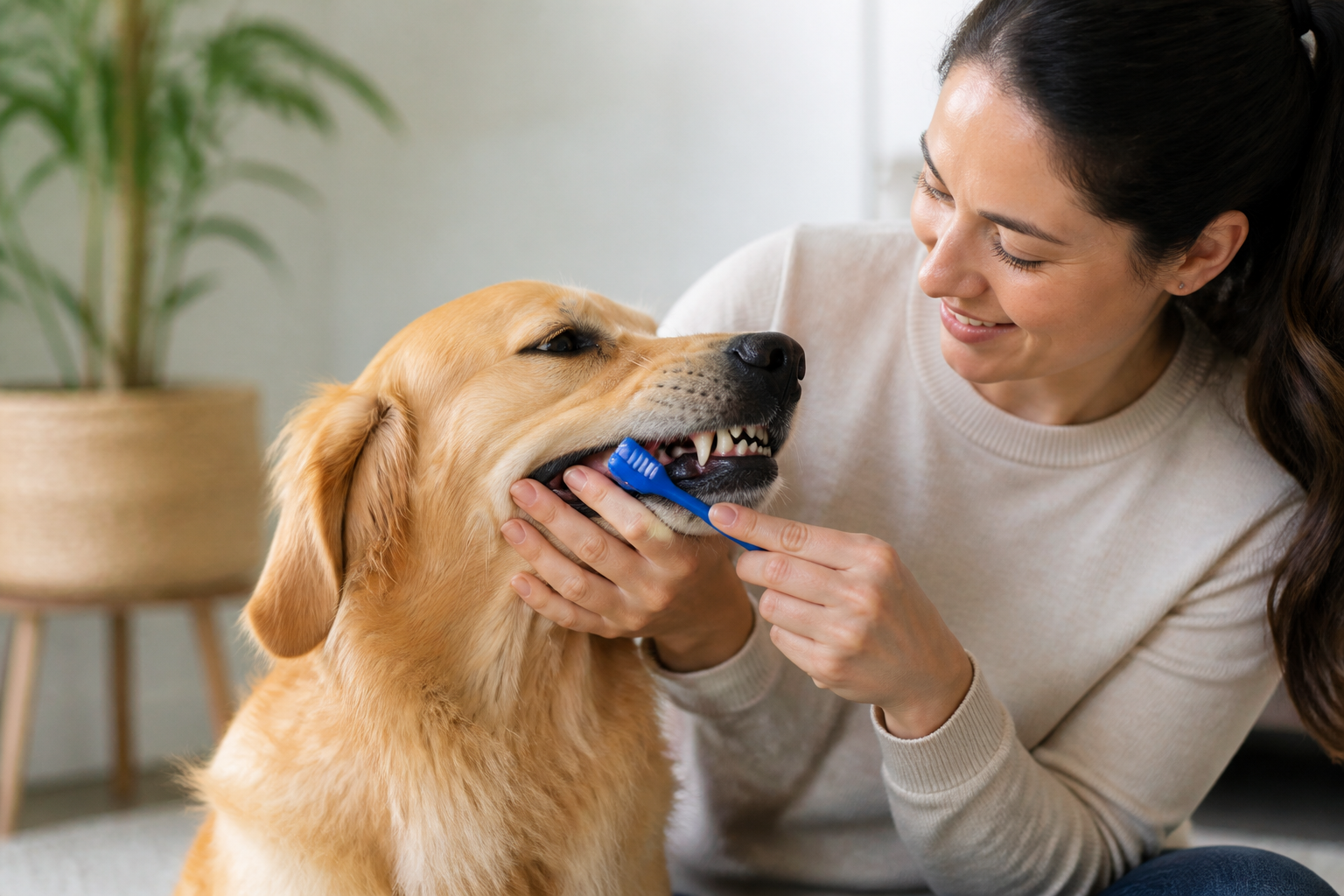
Introducing a brushing routine should be a slow, positive experience. If you rush it, your dog may become fearful.
Step 1: Get them used to the taste. / Put a small amount of enzymatic toothpaste on your finger and let your dog lick it off. Do this for a few days until they see the paste as a treat.
Step 2: Touch the teeth and gums. / While your dog licks the paste, gently rub your finger along their gums and teeth. This gets them used to the sensation of something moving inside their mouth.
Step 3: Introduce the brush. / Put toothpaste on the brush and let them lick it. Once they are comfortable, start with the large canine teeth in the front using a circular motion.
Step 4: Move to the back. / Gradually work your way toward the molars in the back of the mouth. This is where most tartar accumulates. Focus on the outside of the teeth, as the tongue usually helps keep the inside surface a bit cleaner.
Step 5: Reward and praise. / Always end the session with a high-value treat or a favorite game. You want your dog to associate the toothbrush with good things.
For more guidance on introducing brushing gradually, read these pet dental care tips.
Bottom line: Consistent daily brushing is the most effective way to prevent plaque from turning into permanent tartar between professional cleanings.
Support Your Cleaning with Dental Chews and Toys
Brushing is the gold standard, but we understand that some dogs are more difficult than others. You can supplement your routine with dental chews and toys that provide mechanical scrubbing. As your dog chews, the texture of the item scrapes against the surface of the tooth.
When shopping for dental chews at BaxterBoo, look for products that carry the Veterinary Oral Health Council (VOHC) seal of approval. This seal means the product has been tested and proven to reduce plaque or tartar by a certain percentage.
Toys can also help. Rough-textured rubber toys or rope toys can act like floss, getting into the gaps between teeth. However, be careful with extremely hard items. Things like sterilized bones, antlers, or heavy nylon chews can actually fracture a dog's teeth. If you cannot indent the item with your thumbnail, it might be too hard for your dog to chew safely.
You can also compare options in our selection of dental chews for dogs.
Vet Tip: If your dog has already been diagnosed with dental disease or has missing teeth, consult your vet before introducing hard chews. They may recommend softer dental treats or a specific prescription diet like those from Royal Canin or Farmina Vet Life, which you can find through our pharmacy.
Water Additives and Oral Rinses
For dogs that simply will not tolerate a brush, water additives and oral rinses offer an extra layer of protection. These products usually contain ingredients like chlorhexidine or enzymes that kill bacteria on contact. You simply add a measured amount to your dog's water bowl or squirt a small amount along their gum line.
While these are not a replacement for the mechanical action of brushing, they are excellent tools for reducing the overall bacterial load in the mouth. They are particularly helpful for senior dogs who may have more significant gum recession and are more prone to infections.
Recognizing the Signs of Dental Disease
You need to know when your at-home cleaning efforts are no longer enough. If your dog shows any of the following signs, it is time to stop the home deep clean and head to the veterinarian:
- Persistent bad breath (halitosis) that does not improve after brushing.
- Visible brown or grey crust on the teeth.
- Gums that bleed when you brush or when the dog chews.
- Pawing at the mouth or rubbing the face on the carpet.
- Dropping food or refusing to eat dry kibble.
- Swelling under the eye, which can indicate a tooth root abscess.
Dental pain is often silent. Dogs have a strong instinct to hide pain so they can keep eating. By the time a dog stops eating, the dental disease is usually very advanced and very painful. Regular inspections of your pet's mouth are the best way to catch these issues early.
For a closer look at warning signs, read how to recognize hidden dental problems in dogs.
Dental Care for Different Life Stages
The way you approach deep cleaning changes as your dog grows. Puppies have 28 deciduous teeth that fall out between four and six months of age. This is the perfect time to start a brushing routine. While you are not worried about long-term tartar on puppy teeth, you are training them to be comfortable with the process.
Adult dogs usually have 42 permanent teeth. This is the stage where maintenance is most important. Small breeds, such as Pugs, Yorkies, and Chihuahuas, often have crowded mouths. This crowding traps food and bacteria more easily. Owners of small breeds should be especially diligent, as these dogs often require more frequent professional cleanings.
Senior dogs require a gentle touch. They may already have some gum sensitivity or loose teeth. For these dogs, focus on soft brushes and enzymatic rinses. If your senior dog needs a professional cleaning, your vet will likely want to do extra blood work or an EKG to ensure their heart can handle the anesthesia.
Managing the Cost of Oral Health
Professional deep cleaning can be expensive, but it is much cheaper than treating the complications of neglected teeth. Periodontal disease does not stay in the mouth. The bacteria from the gums can enter the bloodstream and cause damage to the heart, kidneys, and liver.
To manage costs, we recommend:
- Enrolling in a rewards program like our MVP Rewards programme to earn back on dental supplies.
- Using Autoship for your favorite dental chews and toothpaste so you never run out and save on every order.
- Considering FIGO Pet Insurance through our partnership, which can help cover the costs of unexpected dental injuries or illnesses.
- Starting at-home care early to extend the time between professional visits.
For repeat-purchase items such as toothpaste and dental chews, our Autoship programme can help you maintain a regular supply.
Key Takeaway: Investing in daily preventive care saves money and prevents systemic health issues caused by chronic oral infections.
Creating a Long-Term Dental Plan
Deep cleaning is not a one-time event. It is a lifelong commitment to your dog's health. A good plan involves three pillars:
- Daily Disruption: Brushing every day to stop plaque from hardening.
- Mechanical Scrubbing: Providing safe dental toys and VOHC-approved chews.
- Professional Intervention: Scheduling a veterinary dental exam at least once a year.
By following this three-pronged approach, you ensure that your dog stays pain-free and has a healthy heart and organs well into their senior years.
Summary of Home Deep Cleaning Steps
If you are just starting out, use this checklist to build your routine over the next two weeks:
- Purchase a dog-specific enzymatic toothpaste and a soft brush.
- Spend three days just letting your dog lick the paste.
- Spend four days rubbing the paste on their gums with your finger.
- Introduce the brush for 30 seconds on the front teeth for three days.
- Expand to the back molars over the final four days.
- Schedule a vet checkup to see if a professional cleaning is currently needed.
Conclusion
Understanding how to deep clean dog teeth is a vital part of being a responsible pet owner. While we can provide the tools and supplies at BaxterBoo to keep their breath fresh and their surfaces clean, the most important step is recognizing the necessity of professional care. A combination of your daily dedication and your veterinarian's expertise will keep your dog's mouth healthy for a lifetime.
If you are ready to start a routine, explore our dog dental care collection for top-rated brushes and pastes. You can also talk to your vet about prescription options through our pet pharmacy to support your pet's recovery after a professional scaling. Keeping your dog’s smile bright is one of the best ways to ensure they stay happy and active by your side.
Bottom line: A professional deep clean under anesthesia is the only way to treat disease below the gum line, while daily brushing at home is your best defense against plaque.
FAQ
Can I deep clean my dog's teeth without anesthesia?
While you can remove some surface tartar at home or through anesthesia-free services, you cannot perform a true deep clean without anesthesia. A medical deep clean requires reaching deep under the gum line and taking X-rays, which is only safe and effective when the dog is fully asleep.
How often should my dog get a professional deep cleaning?
Most dogs benefit from a professional cleaning once a year, though smaller breeds may need them every six months due to tooth crowding. Your veterinarian will assess the level of tartar and gum inflammation during your annual exam to determine the best schedule for your specific pet.
Is human toothpaste safe for dogs if I only use a little bit?
No, human toothpaste is never safe for dogs because it contains ingredients like xylitol or fluoride that are toxic if swallowed. Since dogs cannot spit out the paste, they will ingest these chemicals, which can lead to stomach upset or even serious poisoning.
What should I do if my dog's gums bleed during brushing?
Minor bleeding can be a sign of early gingivitis, similar to when humans start a new flossing routine. However, if the bleeding is heavy or the gums look very red and swollen, you should stop brushing and consult your veterinarian, as this may indicate advanced periodontal disease that requires professional treatment.






