
 Save 15% on your 1st Autoship learn more

 Email us
 Live Chat
 FAQs
FAQs





Introduction
You lean in for a happy morning nuzzle and it hits you. That distinctive, swampy scent of "dog breath" is more than just a minor nuisance. When you look closer, you might see a yellow or brown film creeping up toward the gums. This buildup is often the first sign that your dog needs more than just a quick treat to freshen up. While many of us think of dental care as an occasional task, true deep cleaning is a consistent process that combines professional expertise with daily home habits.
At BaxterBoo, we see thousands of pet owners navigating the world of canine dental health. We know that a clean mouth is about much more than a fresh smell. It is about preventing pain and protecting your dog's long term wellness. This post covers the difference between surface cleaning and professional deep cleaning. We will also look at the tools you need to maintain those pearly whites at home. Our goal is to give you a clear roadmap for a healthier, happier dog.
The Reality of Professional Deep Cleaning
When people talk about a deep clean for dogs, they are usually referring to a professional veterinary dental procedure. This is the only way to truly clean below the gum line where the most dangerous bacteria hide. At home, we can only scrub what we see. A veterinarian can reach the areas that cause real health problems.
A professional cleaning starts with a thorough exam. Your vet will look for loose teeth, swelling, or signs of infection. Most deep cleanings require general anesthesia. This is a common point of worry for owners, but it is necessary for a few reasons. It keeps the dog still so the vet can use sharp tools safely. It also allows the vet to clean the inner surfaces of the teeth and perform x-rays. Without x-rays, it is impossible to see if the roots are rotting or if there is bone loss in the jaw.
Quick Answer: A true deep clean for a dog's teeth is a veterinary procedure performed under anesthesia. It involves scaling tartar from above and below the gum line, followed by polishing to smooth the tooth surface.
The Scaling and Polishing Process
During the procedure, the vet uses an ultrasonic scaler. This tool uses vibrations to break up hard tartar, which is also called calculus. This is much more powerful than any toothbrush you use at home. Once the tartar is gone, the teeth are polished. Polishing is a vital step because scaling creates microscopic scratches on the enamel. If those scratches are not smoothed out, they act like a magnet for new plaque.
| Feature | Home Cleaning | Professional Deep Cleaning |
|---|---|---|
| Tools Used | Toothbrush, wipes, chews | Ultrasonic scaler, dental probes |
| Reach | Above the gum line only | Above and below the gum line |
| Anesthesia | Not required | Required for safety and depth |
| X-Rays | No | Yes, to check root health |
| Goal | Maintenance and prevention | Treatment and deep sanitization |
Vet Tip: If your dog has heavy tartar or red, bleeding gums, schedule a veterinary exam before trying to scrub the teeth yourself. Brushing inflamed gums can be very painful and may cause your dog to become fearful of dental care.
Maintaining the Clean at Home
Once your vet has given your dog a clean slate, the responsibility shifts back to the home. Plaque begins to reform within hours of a cleaning. If it is not brushed away, it hardens into tartar within a few days. You cannot brush tartar away once it has hardened. This is why daily maintenance is so important.
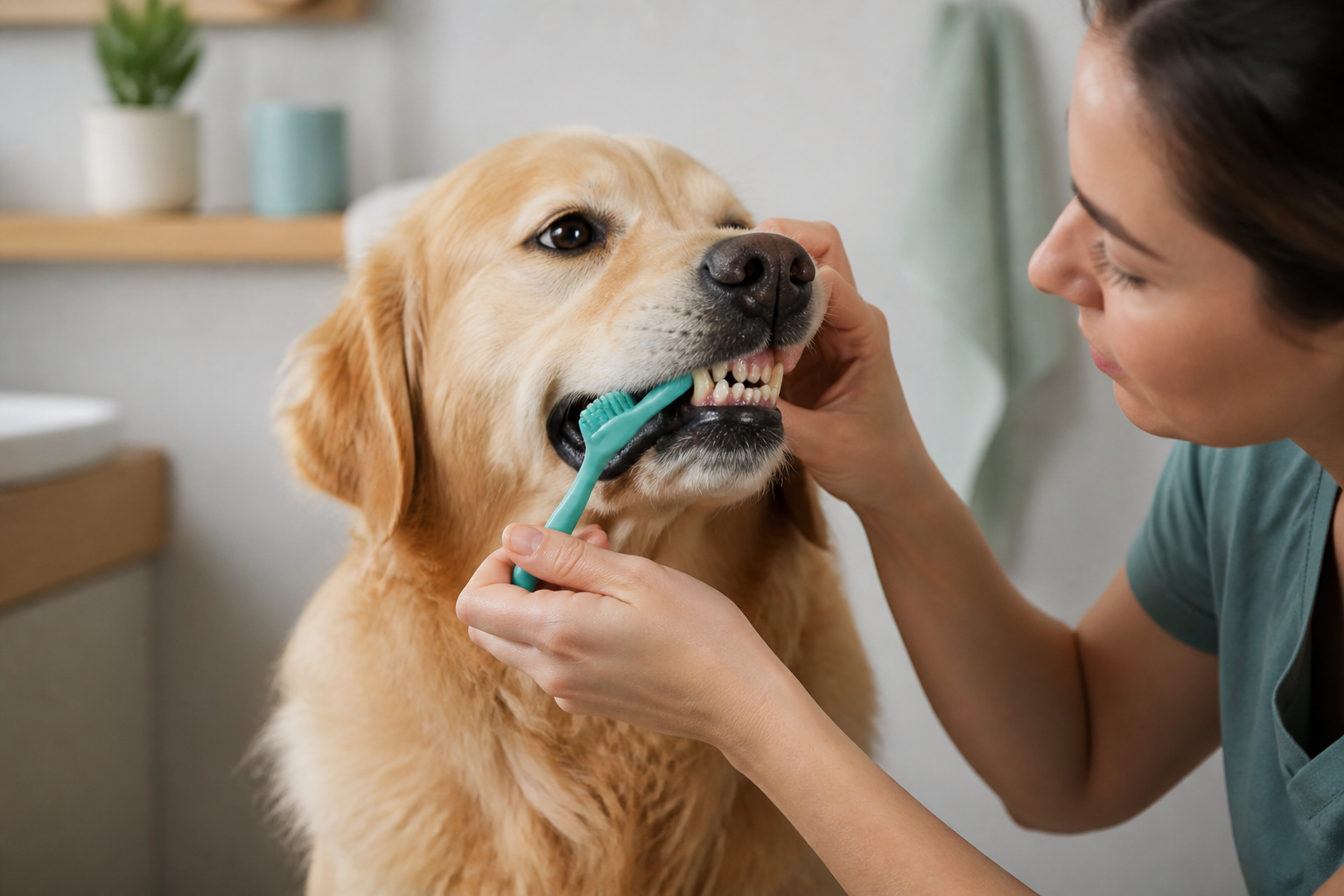
The most effective tool for home care is a soft bristled toothbrush designed for dogs. You can find these in various sizes in our dog dental care collection, to match your dog's mouth. Some owners prefer finger brushes, which are small rubber caps that fit over your fingertip. These are great for puppies or dogs that are still getting used to the sensation of brushing.
Choosing the Right Toothpaste
Never use human toothpaste on your dog. It contains ingredients like xylitol which is toxic to dogs. It also contains foaming agents that are meant to be spit out, not swallowed. Dog toothpaste is designed to be safe to swallow and usually comes in flavors like poultry, beef, or peanut butter.
Most high quality dog toothpastes are enzymatic. These enzymes work to break down the proteins that plaque sticks to. Even if you cannot reach every single nook and cranny with the brush, the enzymes continue to work on the tooth surface after you are done.
Step-by-Step Brushing Routine
Step 1: Introduce the paste. / Let your dog lick a small amount of toothpaste off your finger. Do this for a few days to create a positive association with the flavor.
Step 2: Touch the teeth. / Gently lift your dog's lip and rub your finger along their teeth and gums. Reward them with praise or a small dental treat afterward.
Step 3: Introduce the brush. / Put some paste on the brush and let them lick it. Gently brush the front "fang" teeth (canines) in a circular motion.
Step 4: Move to the back. / Gradually work your way toward the back molars. This is where most tartar accumulates. Focus on the outside of the teeth, as the tongue usually helps keep the inside surfaces cleaner.
Key Takeaway: Consistency is more important than perfection. Brushing for thirty seconds every day is much better than a five minute session once a month.
For additional guidance, see these pet dental care tips before beginning your routine.
The Role of the BaxterBoo Pharmacy
In some cases, a deep clean is not just about hygiene. It is about treating a medical condition. If your veterinarian diagnoses your dog with advanced periodontal disease, they may prescribe specific treatments. This could include specialized antibiotic gels or prescription dental diets.
Through our partnership with Pet's Choice, the BaxterBoo pet pharmacy provides access to FDA-approved medications and prescription diets. If your vet recommends a specific food like Royal Canin Dental or Farmina Vet Life, you can manage those needs through us. These foods are designed with a specific texture that acts like a squeegee on the teeth. They also contain minerals that bind to calcium in the saliva to prevent tartar from forming.
Our pharmacy makes it easier to stay on top of chronic dental health issues. This is especially helpful for small breeds like Chihuahuas or Yorkies. These breeds often have crowded teeth and are more prone to rapid decay. Having a reliable source for their specialized care helps you manage their health without extra stress.
Dental Chews and Toys
Not every dog will tolerate a toothbrush right away. While brushing is the gold standard, other tools can help bridge the gap. Dental chews are a popular way to reduce plaque. These work through mechanical action. As your dog chews, the texture of the treat scrapes against the tooth surface.
When choosing a chew, look for the VOHC (Veterinary Oral Health Council) seal of approval. This seal means the product has been scientifically tested and proven to reduce plaque or tartar. Brands like Greenies or certain Kong dental toys are excellent options. You can browse our selection of Greenies products for dental chew options.
How Toys Help
Chew toys are another layer of defense. Rubber toys with ridges or nubs can help massage the gums and scrape away soft debris. However, you must be careful about the hardness of the toys. A good rule of thumb is the "knee test." If you would not want to be hit in the knee with the toy, it is likely too hard for your dog's teeth. Avoid real bones, antlers, or hard plastic toys. These can cause painful tooth fractures that require expensive extractions.
- Look for natural rubber toys with textures.
- Avoid items that do not have any "give" when you press them with your thumb.
- Always supervise your dog with new chews to prevent choking.
Note: Dental chews are a supplement to brushing, not a replacement. They are high in calories, so be sure to adjust your dog's daily food intake to account for these treats.
For more ideas, explore this guide to dental chews for dogs.
Signs Your Dog Needs an Urgent Dental Visit
A deep clean at home is a preventative measure. It is not a cure for existing disease. You should be able to recognize the signs that your dog's mouth needs professional medical attention. Waiting too long can lead to systemic issues. Bacteria from the mouth can enter the bloodstream and damage the heart, liver, and kidneys.
If you notice any of the following, consult your veterinarian immediately:
- Bleeding Gums: You might see blood on a chew toy or in their water bowl. Healthy gums should be pink and firm, not red or puffy.
- Difficulty Eating: If your dog drops food or only chews on one side of their mouth, they may have a painful tooth.
- Excessive Drooling: Sudden drooling, especially if it has a foul odor, is a major red flag.
- Pawing at the Face: This is a common sign of mouth pain.
- Missing or Loose Teeth: In adult dogs, teeth should never be loose. This indicates advanced bone loss in the jaw.
Bottom line: Home care stops new problems from starting, but only a vet can fix damage that has already occurred.
For more warning signs, read how to recognize bad teeth in dogs.
Water Additives and Oral Rinses
For dogs that are particularly difficult to handle, water additives can provide a passive way to improve oral health. These are tasteless liquids you add to your dog's drinking bowl. They contain ingredients that help kill the bacteria responsible for plaque.
While these do not remove existing tartar, they can significantly slow down the rate of new buildup. They are a great "extra layer" for senior dogs who may have trouble with the physical stress of brushing. We carry several veterinarian recommended rinses that are safe for daily use. Browse our dental supplements for water additives and other oral care options.
The Importance of Diet in Dental Health
What your dog eats every day has a huge impact on their teeth. There is a common myth that all dry kibble cleans teeth. This is not always true. Most standard kibble is small and brittle. It shatters as soon as a dog's tooth hits it, providing very little cleaning action.
Specialized dental diets are different. The kibbles are larger and have a fibrous structure. They do not shatter. Instead, the tooth sinks into the kibble, and the fibers scrub the surface. If your dog is prone to dental issues, talk to your vet about switching to one of these formulas. You can often find these in the Medical & Mobility section of our site.
Wet Food vs. Dry Food
Wet food does tend to stick to the teeth more than dry food. If you feed a primarily wet diet, you must be even more diligent about brushing. You might also consider mixing in some dental-specific dry food to provide that mechanical cleaning action. Every dog is unique. A balanced approach that fits your dog's specific needs is always best.
Key Takeaway: Proper nutrition and the right kibble texture can reduce the frequency of professional deep cleanings.
Explore our dog food selection when discussing diet options with your veterinarian.
Starting a Routine at Any Age
It is never too late to start caring for your dog's teeth. While it is easiest to start with a puppy, senior dogs can also learn to tolerate brushing. The key is to go slowly and use plenty of positive reinforcement.
For older dogs, a professional cleaning is often the best way to "reset" their oral health. Many owners worry about anesthesia for seniors. However, modern veterinary medicine includes pre-anesthetic blood work to ensure your dog is healthy enough for the procedure. The risk of leaving a chronic infection in the mouth is often much higher than the risk of the procedure itself.
Once the vet has removed the years of buildup, you can start a fresh routine at home. You will likely notice an immediate improvement in your dog's energy levels. Dental pain is a quiet drain on a dog's spirit. When that pain is gone, many seniors act like puppies again.
Why Quality Tools Matter
Using the right supplies makes the job easier for you and more comfortable for your dog. A cheap, stiff brush can scratch the gums and make your dog hate the process. At BaxterBoo, we handpick dental products that we would use on our own pets. From ergonomic brushes to enzymatic pastes that dogs actually like, the right gear is a worthy investment.
We also offer programs to make this ongoing care more affordable. Our Autoship program is perfect for dental treats and toothpaste. You can set it to deliver every month so you never run out and get a discount on every order. Plus, our MVP Rewards program helps you earn points on every dental purchase.
Vet Tip: Check your dog's mouth once a week as part of a "wellness check." This helps you catch small changes before they become expensive dental emergencies.
Summary of Deep Cleaning Steps
Maintaining a clean mouth requires a multi-layered approach. No single product can do it all. To keep your dog's teeth truly deep cleaned, follow this framework:
- Annual Veterinary Exams: Professional scaling and polishing to reach below the gum line.
- Daily Brushing: The only way to remove plaque before it turns into tartar.
- Enzymatic Toothpaste: Uses chemical action to supplement the physical scrubbing.
- VOHC Approved Chews: Provides mechanical cleaning and mental stimulation.
- Regular Monitoring: Watching for red gums, bad breath, or changes in eating habits.
By following these steps, you are doing more than just saving money on vet bills. You are ensuring your dog can eat comfortably and live a longer, healthier life. A fresh smelling mouth is just a wonderful bonus.
Conclusion
Deep cleaning your dog's teeth is a partnership between you and your veterinarian. While the vet handles the heavy lifting of scaling and x-rays, your daily efforts at home are what keep the disease from returning. It might take a bit of patience to get your dog used to a toothbrush, but the payoff is a lifetime of healthy smiles and fresh breath.
We are here to support you with the best tools and guidance in the industry. Whether you need a starter kit for a new puppy or a specialized diet for a senior, you can find it all at BaxterBoo. For dogs with specific health needs, don't forget that our pharmacy is a great resource for prescription support. Take the first step today by checking your dog's teeth and starting a simple brushing routine.
Bottom line: Consistent home care combined with professional veterinary cleanings is the only way to ensure your dog's mouth stays healthy for life.
FAQ
How can I deep clean my dog's teeth without anesthesia?
You can maintain the surface cleanliness of your dog's teeth using daily brushing, dental wipes, and VOHC-approved chews. However, it is important to know that these methods cannot reach below the gum line or remove hardened tartar. For a true deep clean that addresses potential infections under the gums, a professional veterinary procedure is the only safe and effective option.
How often should I brush my dog's teeth?
For the best results, you should brush your dog's teeth every single day. Plaque begins to turn into hard tartar in as little as 24 to 48 hours, so skipping even a few days can allow buildup to start. If daily brushing is not possible, aim for at least three times a week to provide a significant benefit to their oral health.
What is the best way to remove tartar from my dog's teeth at home?
You cannot safely remove hardened tartar at home. Tartar is firmly bonded to the tooth enamel, and attempting to scrape it off with metal tools can cause deep scratches on the tooth or lead to painful gum injuries. If your dog has visible brown or yellow tartar, the only safe way to remove it is through a professional scaling and polishing performed by a veterinarian.
Are dental treats enough to keep my dog's teeth clean?
While high quality dental treats help reduce plaque through mechanical scrubbing, they are not a replacement for brushing. Think of dental treats like chewing sugarless gum for humans; it helps a little, but it doesn't replace a toothbrush. For the best oral hygiene, use dental treats as a supplement to a daily brushing routine and regular veterinary checkups.






