
 Save 15% on your 1st Autoship learn more

 Email us
 Live Chat
 FAQs
FAQs





Introduction
You lean in for a pup kiss and catch a whiff of something that is definitely not roses. That "dog breath" is often the first sign that plaque is building up on your best friend's teeth. At BaxterBoo, we know that staying on top of dental hygiene can feel like a chore. It is one of the most overlooked parts of pet care, yet it is vital for their long term health. This guide covers everything from daily brushing tips to the best dental chews and professional options. We want to help you build a routine that keeps your dog’s smile bright and their body healthy. Developing a consistent habit now can prevent painful problems and expensive vet visits later.
Quick Answer: The most effective way to clean a dog's teeth is daily brushing with pet-safe enzymatic toothpaste. You can also support oral health with VOHC-approved dental chews, water additives, and professional veterinary cleanings.
The Importance of Dental Hygiene for Dogs
Many owners think bad breath is just a natural part of being a dog. In reality, persistent foul odors usually mean bacteria are thriving in the mouth. When your dog eats, a sticky film called plaque forms on their teeth. If you do not remove this plaque, it mixes with minerals in the saliva. It then hardens into tartar, which is much harder to remove.
Tartar provides a rough surface where even more bacteria can grow. This cycle leads to gingivitis, which is inflammation of the gums. You might notice a thin red line along the gum line or see a little blood when they chew a toy. If left alone, this progresses to periodontal disease. This condition can destroy the bone and tissues that hold the teeth in place.
Key Takeaway: Oral health affects the whole body. Bacteria from the mouth can enter the bloodstream and damage the heart, liver, and kidneys.
Why You Should Brush Your Dog's Teeth
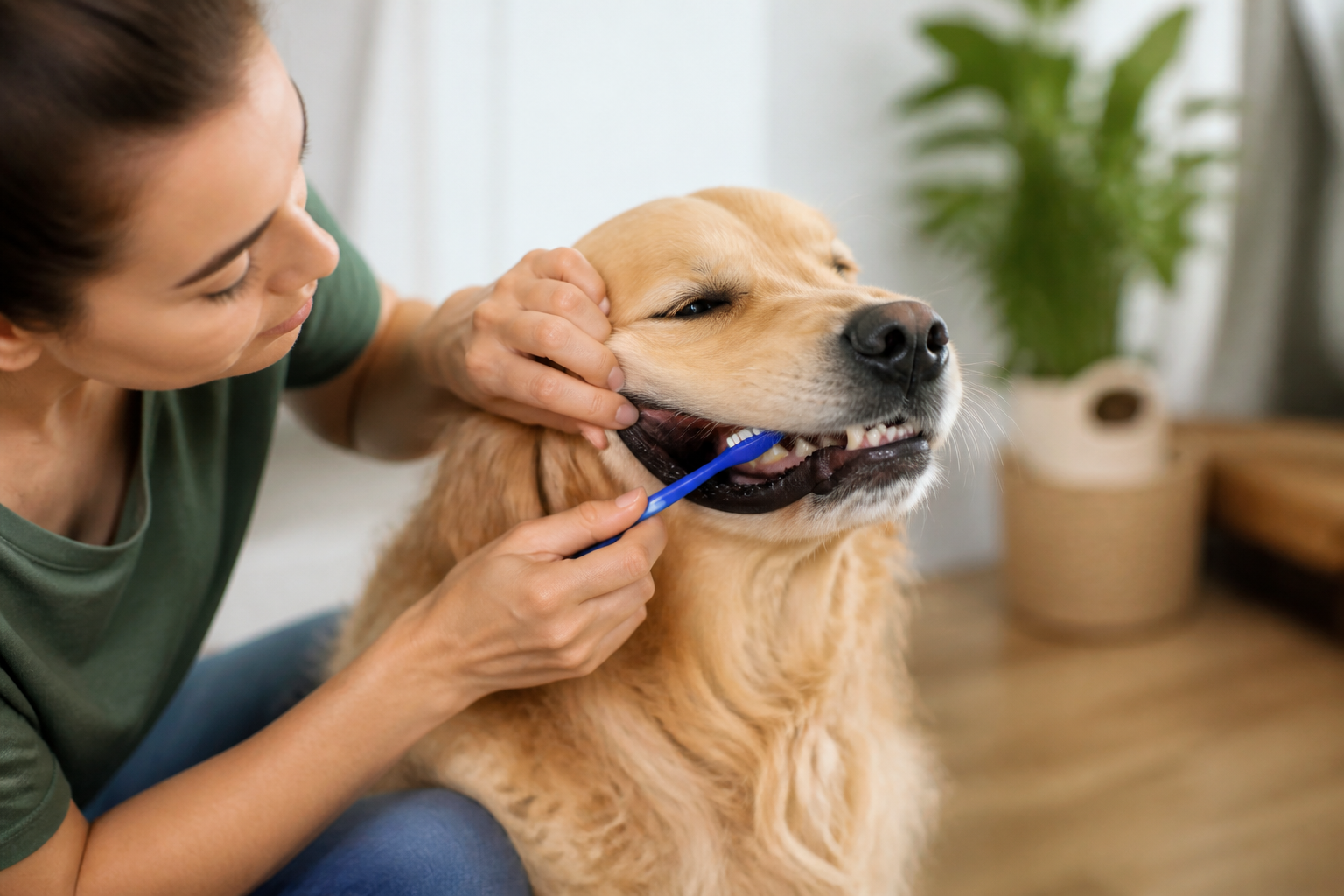
Brushing is the gold standard for oral care. No other method removes plaque as effectively as the mechanical action of a toothbrush. While it might seem daunting, most dogs can learn to accept or even enjoy the process. The key is to use products designed specifically for them.
Never use human toothpaste on your dog. Many human brands contain xylitol, which is a sweetener that is highly toxic to dogs. They also contain foaming agents that can upset a dog’s stomach when swallowed. Dog-specific toothpastes come in flavors like poultry, beef, or peanut butter. They also contain enzymes that help break down organic matter on the teeth. Consider a pet-safe option such as Virbac C.E.T. Enzymatic Pet Toothpaste.
Choosing the Right Brushing Tools
The right tools make the job much easier. You have a few choices depending on the size of your dog and their comfort level.
- Finger Brushes: These are small rubber caps with bristles that fit over your pointer finger. They give you a lot of control and are great for puppies or small dogs.
- Long-Handled Brushes: These look like human toothbrushes but often have angled heads. They help you reach the back molars in larger dogs without putting your hand too deep in their mouth.
- Dual-Headed Brushes: These have bristles on both sides to clean the top and bottom of the tooth at the same time.
Step-by-Step Guide to Brushing
If you have never brushed your dog's teeth, do not try to do the whole mouth at once. Start slowly to build trust. For additional guidance, read our pet dental care tips.
Step 1: Introduce the taste. / Put a small amount of dog toothpaste on your finger and let them lick it off. Do this for a few days until they get excited when they see the tube.
Step 2: Get them used to mouth handling. / Gently lift their lip and rub your finger along their gums. Keep these sessions short and follow up with praise.
Step 3: Introduce the brush. / Put toothpaste on the brush and let them lick it. Slowly start to brush just the front teeth in a circular motion.
Step 4: Reach the back teeth. / Once they are comfortable, move to the large molars in the back. This is where most tartar builds up.
Step 5: Focus on the outside. / Most plaque accumulates on the cheek side of the teeth. You do not need to worry as much about the inside surfaces.
Vet Tip: If your dog is highly resistant to brushing, do not force it. You can cause more stress and risk a bite. Talk to your veterinarian about alternative products or professional cleaning options.
Using Dental Chews Effectively
Dental chews are a popular way to supplement brushing. They work through mechanical scraping. As your dog chews, the texture of the treat rubs against the tooth surface to wipe away plaque. Some chews also contain ingredients that help freshen breath or reduce tartar formation. Explore our dog dental and breath care collection for brushing and chew options.
When shopping for chews at BaxterBoo, look for the VOHC Seal of Acceptance. The Veterinary Oral Health Council only gives this seal to products that have proven they effectively reduce plaque or tartar. We carry trusted brands like Greenies that are designed specifically for this purpose.
Choosing the Right Size Chew
Size matters when it comes to safety and effectiveness. If a chew is too small, your dog might swallow it whole. This creates a choking hazard and provides zero cleaning benefit. If it is too large, it might be too hard for them to chew comfortably. Always follow the weight guidelines on the packaging. A specific option is Greenies Original Dental Dog Chews.
The Role of Dental Toys
Toys can be an excellent way to get a dog’s teeth clean during playtime. Look for toys with nubby textures or ridges. Brands like Kong offer rubber toys specifically designed to massage gums and scrape teeth.
Rope toys can also act like dental floss. As the dog bites down, the cotton fibers rub between the teeth. However, you must supervise your dog with rope toys. If they shred and swallow the strings, it can cause a serious intestinal blockage. Always replace toys once they start to break apart.
Water Additives and Dental Powders
Some dogs simply will not tolerate brushing or have dietary restrictions that limit treats. In these cases, water additives and powders can help. You add these products to your dog's daily water bowl or sprinkle them over their food. OxyFresh Pet Dental Water Additive is one brushless option.
These products usually work in one of two ways. Some contain enzymes that kill bacteria in the mouth. Others use ingredients that prevent plaque from mineralizing into hard tartar. While they are not as effective as brushing, they are a great "hands-off" addition to a dental routine.
Key Takeaway: Water additives are a helpful supplement but should not be the only method of dental care you use.
How Diet Affects Dental Health
There is a common myth that dry kibble keeps teeth clean simply because it is crunchy. While some hard kibble can provide a small amount of scraping, most of it crumbles too quickly to do much good. Some dogs even swallow kibble whole.
However, there are specific prescription dental diets that are designed differently. These kibbles are usually much larger and have a fibrous texture that does not shatter. The tooth sinks into the kibble, which wipes the surface clean. Our pharmacy carries prescription diets from brands like Royal Canin and Hill’s through our partnership with Pet's Choice. These diets often require a prescription from your vet because they are formulated to manage specific health needs.
Signs of Dental Trouble
Even with the best home care, problems can still arise. You should check your dog's mouth once a week for any changes. If you notice any of the following, schedule a vet visit. For more details, read how to recognize signs of bad teeth in dogs.
- Extreme bad breath that does not go away.
- Yellow or brown deposits on the teeth.
- Gums that look red, swollen, or bleed easily.
- Loss of appetite or dropping food while eating.
- Pawing at the mouth or face.
- Loose or missing teeth.
- Excessive drooling.
Sometimes, a dog might have a cracked tooth from chewing on something too hard like a rock or a thick bone. This can be very painful and lead to an infection called an abscess. If you see a bump on your dog's face just below the eye, it could be a sign of a root infection.
Professional Veterinary Cleanings
Home care is about prevention, but it cannot remove hard tartar once it has formed. Just like you go to the dentist for a professional cleaning, your dog needs one too. A professional cleaning at the vet is much more thorough than anything you can do at home.
During a professional cleaning, the vet will scale the teeth to remove tartar above and below the gum line. They will also polish the teeth to smooth out any tiny scratches. Most vets will also take dental X-rays. Since a large portion of the tooth is hidden under the gums, X-rays are the only way to see if the roots are healthy.
The Role of Anesthesia
Most professional cleanings require general anesthesia. This is the safest way to ensure the vet can clean every surface of every tooth. It also allows the vet to use sharp tools without the risk of the dog moving and getting hurt. While many owners worry about anesthesia, modern veterinary practices use advanced monitoring to keep your pet safe.
Vet Tip: Before any procedure involving anesthesia, your vet will likely perform blood work. This ensures your dog's organs are healthy enough to process the medication.
Building a Dental Care Schedule
Consistency is the most important factor in keeping a dog's teeth clean. A single brushing once a month will not do much. Try to create a schedule that fits your lifestyle.
- Daily: Brush your dog's teeth. If you cannot do it every day, aim for at least three times a week.
- Daily: Provide a VOHC-approved dental chew or use a water additive.
- Weekly: Perform a quick "mouth check" to look for redness or broken teeth.
- Yearly: Have your veterinarian perform a dental exam during your dog's annual wellness visit.
Practical Tips for Success
Getting started is often the hardest part. Here are a few ways to make the transition easier for you and your dog.
- Pick a time when your dog is relaxed, such as after a long walk.
- Use high-value rewards after every dental session.
- Keep the sessions very short in the beginning.
- Do not get discouraged if they are wiggly at first.
- Swap out standard treats for dental-friendly options.
If you are looking for ways to save on dental supplies, consider our Autoship program. You can get regular deliveries of your favorite dental chews and toothpastes. This ensures you never run out and helps you stay consistent with their care. Plus, you get an MVP Gold membership for extra savings.
When to Seek Professional Help
If you see heavy brown tartar buildup, home brushing is no longer enough. Brushing over tartar can actually be painful for the dog because the gums are likely sensitive. At this point, you need a professional cleaning to get back to a "clean slate." Once the vet removes the hard deposits, you can resume home care to keep the teeth that way.
Our pharmacy through Pet's Choice is a great resource if your vet prescribes specific medications for oral infections. We also offer supplements that can support overall oral health. Always follow your vet's guidance on the best treatment plan for your dog's specific needs.
Bottom line: A combination of daily home care and regular veterinary checkups is the best way to prevent dental disease.
Conclusion
Keeping your dog's teeth clean is about more than just fresh breath. It is a fundamental part of their overall health and longevity. By combining daily brushing with the right chews and professional care, you can prevent painful infections and serious systemic health issues. Start slow, stay consistent, and use products that your dog enjoys. We at BaxterBoo are here to help you find the right tools for your dog’s specific needs. Whether you need a finger brush for a new puppy or prescription food for a senior dog, we have the expert-curated selection to support you.
- Brush daily with enzymatic, pet-safe toothpaste.
- Use VOHC-approved dental chews to supplement brushing.
- Schedule annual veterinary dental exams.
- Watch for signs of pain or infection like bleeding gums.
Check out our full collection of dental care products to find the perfect match for your pup’s routine.
FAQ
Can I use baking soda to clean my dog's teeth?
No, it is not recommended to use baking soda for your dog. It has a high alkaline content that can upset the acid balance in their digestive tract if swallowed. It also has a very salty taste that most dogs dislike, making them more likely to resist brushing in the future. Stick to pet-safe enzymatic toothpastes that are designed to be swallowed safely.
How often should I brush my dog's teeth?
Ideally, you should brush your dog's teeth every single day. Plaque can begin to turn into hard tartar in as little as 24 to 48 hours. If daily brushing is not possible, aim for at least three times a week to provide a significant benefit. Consistency is more important than the length of each brushing session.
Are dental chews enough to replace brushing?
While dental chews are helpful, they are not a complete replacement for brushing. Chews usually only clean the surfaces the dog uses to grind the treat, often missing the canine teeth and the gum line. Think of dental chews as a helpful supplement to a routine that includes regular brushing and veterinary exams.
Why does my dog have bad breath even after I brush?
If your dog's breath remains foul after brushing, there may be an underlying issue. It could be a sign of advanced periodontal disease, a tooth infection, or even an internal health problem like kidney disease. Persistent bad breath is a signal that you should schedule a checkup with your veterinarian to rule out serious conditions.






