Save 15% on your 1st Autoship learn more

 Email us
 Live Chat
 FAQs
FAQs





Introduction
You are relaxing on the sofa with your cat when you notice small white specks scattered across their coat. These flakes often show up clearly on dark fur or on your favorite black chair. At BaxterBoo, we know that seeing these flakes can be a bit concerning for any pet owner. This guide explores the common reasons behind dry skin and provides practical steps to restore your cat's glossy fur. We will cover everything from simple grooming habits to nutritional changes that make a real difference. Understanding the root cause is the first step toward a flake free future for your feline friend. Feline skin health is often a reflection of internal wellness and environmental comfort.
Quick Answer: To get rid of cat dandruff, increase regular brushing to distribute natural oils and provide a diet rich in Omega-3 fatty acids. If flakes persist or your cat seems itchy, consult your veterinarian to rule out parasites or underlying health conditions.
Understanding the Difference Between Dandruff and Dander
Many pet owners use the terms dander and dandruff interchangeably. However, they are two very different things. Every cat has dander. It consists of microscopic skin cells that shed naturally as part of the normal skin renewal process. You cannot see dander with the naked eye. It is the primary carrier of the Fel d 1 protein, which is the common cause of cat allergies in humans.
Dandruff is different because it involves visible flakes of dead skin. These flakes are large enough to see against the fur. While dander is a sign of a healthy skin cycle, dandruff usually indicates that something is out of balance. It could be as simple as dry air or as complex as a metabolic issue. All cats produce dander, but not all cats should have visible dandruff.
You should also learn to distinguish dandruff from flea dirt. Flea dirt looks like small specks of black pepper. If you place those black specks on a wet white paper towel and they turn red, you are looking at flea excrement rather than skin flakes. Dandruff remains white or translucent regardless of moisture. For additional parasite-prevention options, explore the cat flea and tick collection.
Key Takeaway: Dander is a microscopic and normal part of feline biology. Visible flakes are dandruff and signal a need for changes in grooming, diet, or medical care.
Why Your Cat Has Dandruff
Feline skin is a sensitive organ. It reacts to the world around it and the nutrition inside the body. Several factors can cause the skin to become dry, irritated, or overly oily. Each of these states can lead to the shedding of visible flakes.
Poor Grooming Habits and Obesity
Cats are usually meticulous about their hygiene. They spend a large portion of their waking hours licking and smoothing their fur. This process does more than just keep them clean. It distributes natural sebum oils across the skin and coat. These oils act as a protective barrier and keep the skin hydrated.
If a cat stops grooming, those oils build up in some spots and leave other areas dry. This often happens if a cat is overweight. Obesity limits their range of motion. An overweight cat might not be able to reach the base of their tail or their lower back. You will often see a concentrated patch of dandruff in these hard to reach areas.
Environmental Factors and Low Humidity
The air in your home plays a significant role in skin health. During the winter months, indoor heating systems strip moisture from the air. This dry environment can cause a cat's skin to lose its natural hydration. This leads to seasonal dandruff that often clears up when the weather turns humid again.
Nutritional Deficiencies
The skin is the largest organ of the body. It requires a lot of protein and specific fats to remain healthy. If a cat's diet is low in essential fatty acids, the skin barrier weakens. This results in moisture loss and flaking. Lower quality foods may lack the bioavailable nutrients needed to support a thick and glossy coat. You can compare options in our cat skin and coat care selection.
Vet Tip: If your cat has suddenly stopped grooming, it may be due to dental pain or arthritis rather than laziness. A veterinary exam can help identify if your cat needs pain management or dental care to return to their normal grooming routine.
The Role of Parasites and Infections
In some cases, those white flakes are not just dry skin. They can be a sign of unwanted guests. Parasites are a frequent cause of skin irritation that leads to heavy shedding of skin cells.
Walking Dandruff (Cheyletiella Mites)
There is a specific type of mite called Cheyletiella. These mites are large enough to be seen with the naked eye. They look like white flakes and move around on the skin. This is why the condition is commonly called walking dandruff. These mites are highly contagious and can move between cats, dogs, and even humans. They cause intense itching and scaling.
Fleas and Ticks
Flea bites can cause an allergic reaction known as flea allergy dermatitis. This leads to extreme inflammation and scratching. The more a cat scratches, the more they damage their skin. This results in trauma and the release of skin flakes. Even indoor cats can get fleas if a human brings them in on their shoes or clothing.
Our pharmacy carries a wide range of FDA approved flea and tick preventives through our partnership with Pet's Choice. Keeping your cat on a year round preventive is one of the best ways to ensure their skin remains healthy. Many of these products require a prescription from your veterinarian to ensure the dosage is correct for your cat's weight and health status.
Fungal and Bacterial Infections
Ringworm is a common fungal infection in cats. Despite the name, it is not a worm. It causes circular patches of hair loss and heavy scaling. Bacterial infections can also occur if a cat has a small scratch that becomes infected. These issues require specific medications to resolve.
Bottom line: Visible movement among skin flakes or circular patches of hair loss requires an immediate trip to the veterinarian for a skin scraping and diagnosis.
Improving Your Cat’s Grooming Routine
If your veterinarian has ruled out medical issues, you can take steps at home to reduce flakes. A better grooming routine is often the most effective way to manage mild dandruff. Browse our cat grooming supplies for brushes, combs, shampoos, and waterless grooming products.
The Power of Regular Brushing
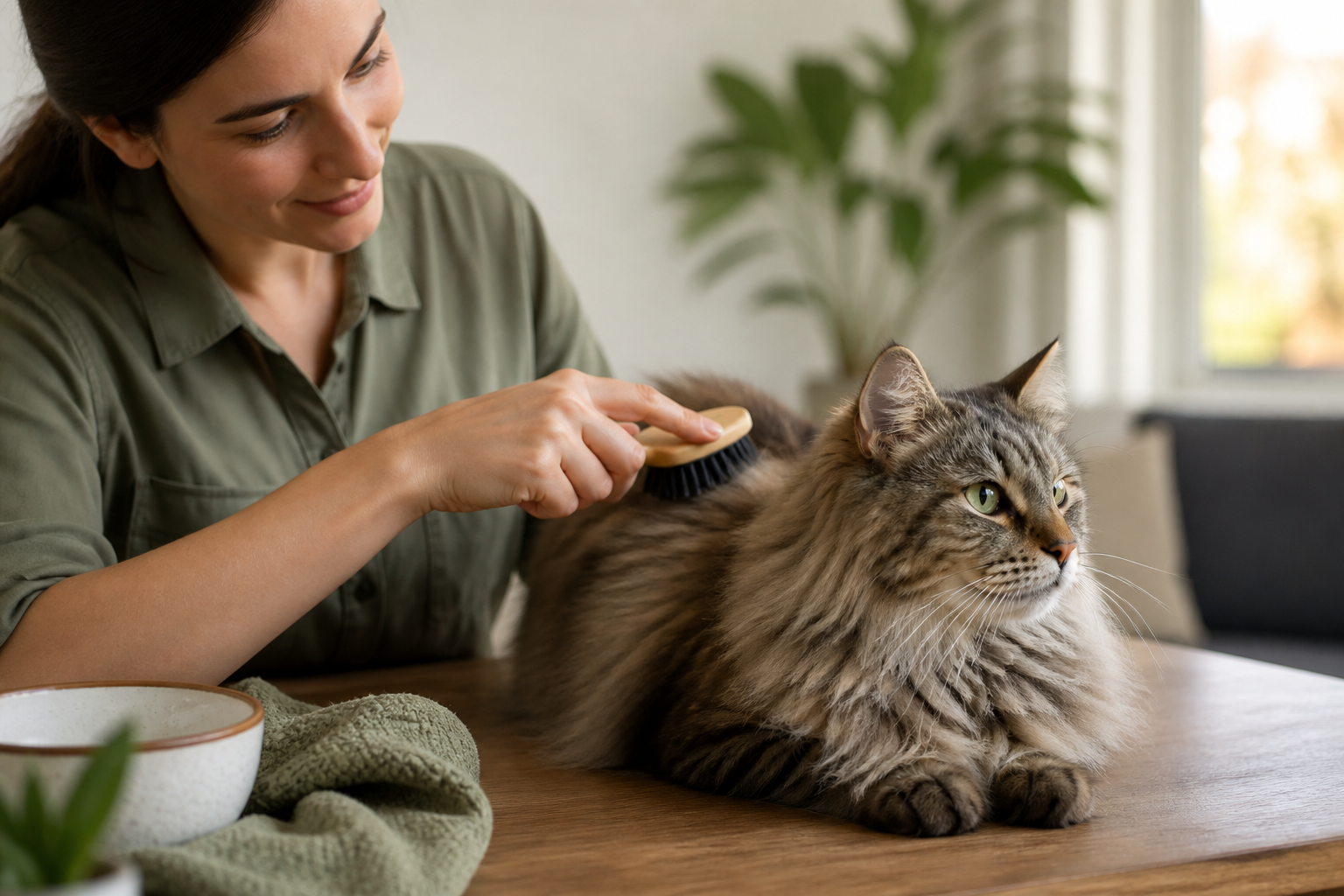
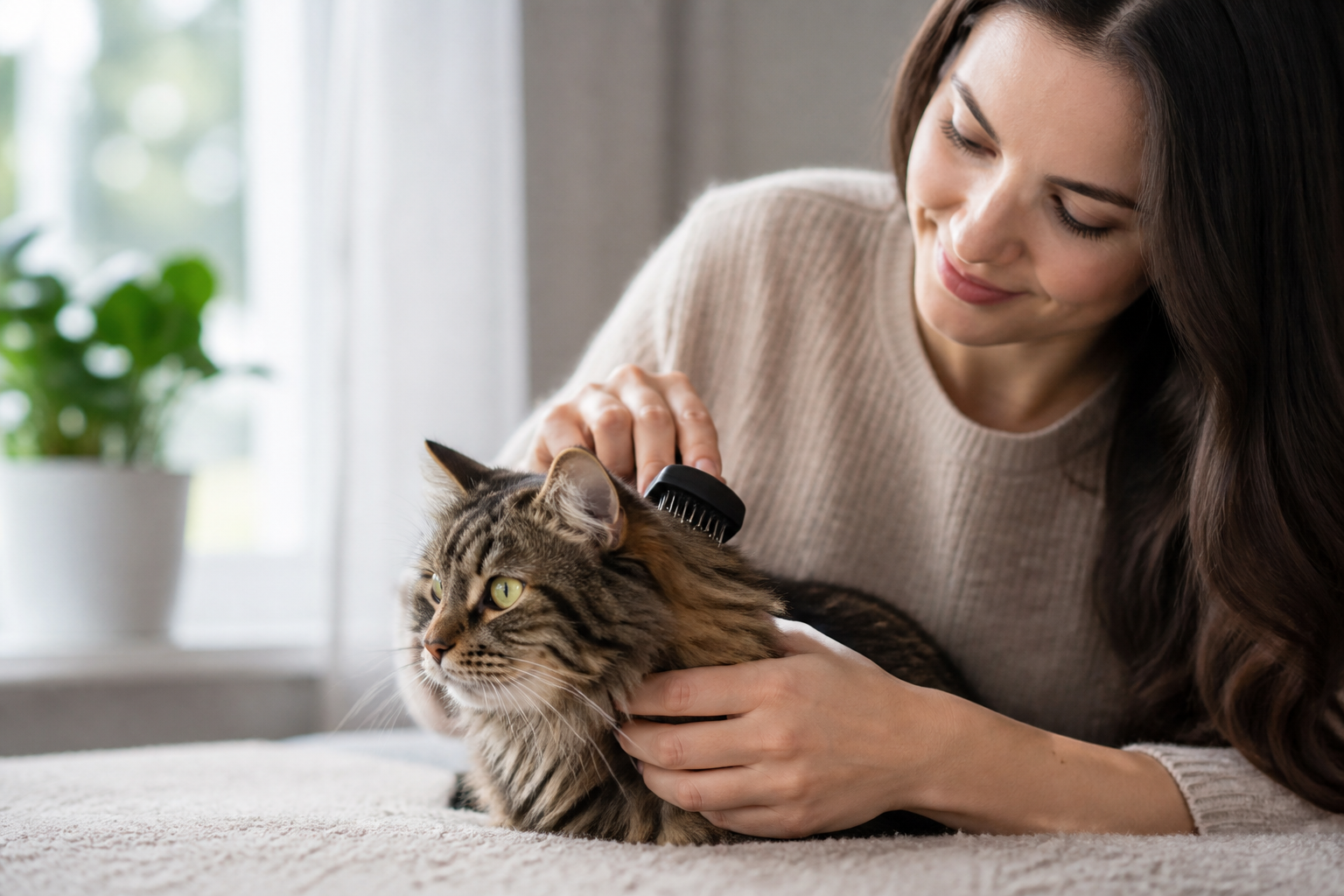
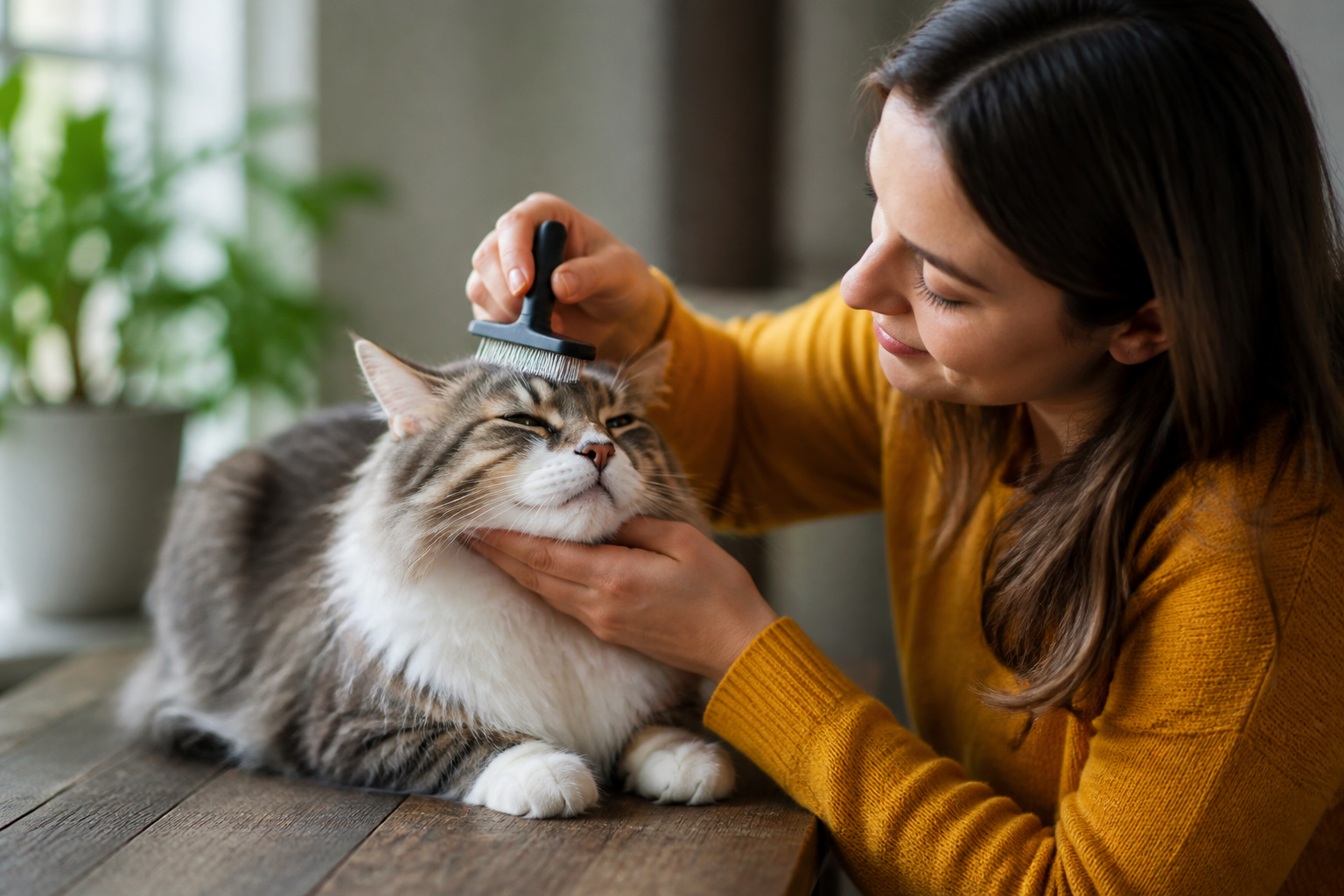
Brushing is the most direct way to get rid of cat dandruff. It manually removes the dead skin cells before they can fall off onto your furniture. It also stimulates the blood flow to the skin surface. This brings fresh nutrients to the hair follicles.
For short haired cats, a rubber grooming tool like the Kong ZoomGroom is excellent. It massages the skin while pulling away loose fur. For long haired cats, a slicker brush or a stainless steel comb is necessary to reach the undercoat. Aim for at least five minutes of brushing three times a week. If your cat is obese, pay special attention to the base of the tail and the middle of the back.
To Bathe or Not to Bathe
Most cats do not need regular baths. In fact, bathing a cat too often can strip away the natural oils they need. This can actually make dandruff worse. However, if your cat has a greasy coat or a fungal infection, a medicated bath might be necessary.
Step 1: Choose a shampoo specifically formulated for cats. Never use human dandruff shampoo. It has a pH level that is too harsh for feline skin and may contain toxic ingredients.
Step 2: Use lukewarm water. Hot water can further irritate dry skin.
Step 3: Rinse the coat thoroughly. Any soap residue left on the skin will cause itching and more flaking once it dries.
Using Waterless Shampoos
If your cat hates water, consider a waterless foam shampoo. These products allow you to clean the coat and moisturize the skin without the stress of a tub. Simply massage the foam into the fur and towel it off. This is a great way to handle localized dandruff on the back.
For more gentle grooming guidance, read how whiskers fit into a cat’s grooming routine.
Key Takeaway: Consistent brushing is more effective than occasional bathing for managing most cases of cat dandruff.
Nutritional Support for Healthy Skin
What goes into your cat's bowl shows up on their fur. High quality nutrition is the foundation of a flake free coat. If you are feeding a budget kibble, you might notice a duller coat and more flakes. Shop our cat food selection to explore dry, wet, freeze-dried, and veterinary diet options.
The Importance of Omega Fatty Acids
Omega-3 and Omega-6 fatty acids are vital for skin health. They help build the lipid barrier that keeps moisture inside the skin cells. Most premium cat foods, such as those from Stella and Chewy's or Acana, include these fats naturally.
If your cat's current food is not doing the trick, you can add a supplement. Fish oil or salmon oil from brands like Zesty Paws or Honest Paws can be drizzled directly onto their food. These supplements reduce inflammation and help the skin stay supple.
Hydration and Wet Food
Cats have a low thirst drive. In the wild, they get most of their water from their prey. A cat eating only dry kibble may live in a state of mild, chronic dehydration. This leads to dry skin.
Introducing wet food to the diet is an easy way to increase water intake. Brands like Tiki Cat or Fussie Cat offer high moisture options that cats love. You can also add a little warm water to their kibble to create a gravy. Proper hydration keeps the skin plump and less likely to flake. For more moisture-rich choices, browse our wet cat food category.
Prescription Diets
In some cases, a cat may have a food allergy that manifests as skin flakes and itching. Your vet might suggest a hydrolyzed protein diet or a limited ingredient diet. Our pharmacy through Pet's Choice stocks prescription diets like Farmina Vet Life and Royal Canin Veterinary Diet. These foods are specifically designed to manage skin sensitivities and weight issues under the guidance of a professional.
Vet Tip: Always introduce new foods or supplements slowly over a period of 7 to 10 days. A sudden change in diet can cause digestive upset which adds more stress to your cat's system.
Managing Your Home Environment
The air inside your home can be a secret contributor to your cat's dandruff. This is especially true if you live in a climate with cold winters.
Use a Humidifier
If you notice that your own skin feels tight or itchy during the winter, your cat is likely feeling the same way. Placing a humidifier in the room where your cat spends the most time can help. Maintaining a humidity level between 40 and 50 percent can significantly reduce dry skin flakes.
Reduce Stress
Cats are sensitive creatures. Stress can lead to a condition called psychogenic over-grooming or it can cause a cat to stop grooming entirely. Changes in the household, such as a new pet or a move, can trigger skin issues. Providing enrichment toys from Kong or creating a quiet space with a Jackson Galaxy calming product can help your cat feel more secure. A relaxed cat is more likely to maintain their own coat properly.
Bottom line: A humid environment and a stress free home support the natural healing processes of your cat's skin.
When to See a Veterinarian
While many cases of dandruff are minor, some require professional help. You should not try to manage persistent dandruff at home if you see other symptoms.
Consult your vet if you notice:
- Red or inflamed skin under the flakes.
- Patches of total hair loss.
- Excessive scratching or biting at the skin.
- A change in appetite or litter box habits.
- Lethargy or a lack of interest in play.
Dandruff can sometimes be a secondary symptom of systemic diseases like diabetes or hyperthyroidism. These conditions affect the metabolism and can change the quality of the skin and fur. A simple blood test at the vet can rule these out.
If your vet determines that your cat has a chronic condition, our cat healthcare collection is here to help. We provide FDA approved medications for thyroid issues, allergies, and more through our Pet's Choice partnership. This allows you to get all your cat's needs in one place while earning MVP Rewards on your purchases.
Helping Senior Cats with Mobility Issues
As cats age, they often develop arthritis. This makes it painful to twist and reach certain parts of their body. If you have a senior cat, they may rely on you for grooming more than they did in their younger years.
Help your senior cat by:
- Brushing them daily with a soft brush.
- Using a damp, warm washcloth to gently wipe their back.
- Providing easy access to food and water so they stay hydrated.
- Discussing joint supplements like Cosequin with your vet.
Healthy joints allow your cat to groom themselves more effectively. If the dandruff is concentrated on the lower back of an older cat, mobility is almost always the culprit. Supporting their joints will often lead to a cleaner, flake free coat. You can also read more about arthritis care for cats.
Key Takeaway: Senior cats need extra grooming assistance to compensate for the stiffness and reduced flexibility that comes with age.
Summary of Treatment Steps
Managing cat dandruff is a multi step process. It rarely goes away overnight. Consistency is the key to seeing results.
- Rule out parasites. Ensure your cat is on a quality preventive like Frontline or NexGard.
- Increase brushing. Use the right tools for your cat's specific coat type.
- Boost hydration. Incorporate wet food and ensure fresh water is always available.
- Add Omega-3s. Use a high quality fish oil supplement to nourish the skin barrier.
- Check the weight. If your cat is overweight, work with your vet on a weight loss plan to restore grooming access.
- Monitor the air. Use a humidifier during dry seasons.
Conclusion
Cat dandruff is a common issue that most pet owners will face at some point. Whether it is caused by the dry winter air or a need for better nutrition, most cases are manageable with a few simple changes. By focusing on regular brushing and high quality food, you can help your cat feel more comfortable and look their best. We at BaxterBoo are committed to providing the products and expertise you need for every stage of your pet's life. If the flakes persist, remember that our pharmacy and the Pet's Choice partnership offer the medical support your cat might need. A shiny, flake free coat is a great indicator of a happy and healthy cat.
Key Takeaway: Success in treating cat dandruff comes from a combination of external grooming, internal nutrition, and environmental management.
For the best results in managing your cat's skin and coat health, consider setting up our Autoship programme for their favorite skin support foods and supplements. You will save on your orders and ensure you never run out of the essentials your cat needs to stay flake free.
FAQ
Is it normal for cats to have some dandruff?
A very small amount of flaking can be normal as cats shed skin cells. However, if the flakes are easily visible or accompanied by itching and redness, it is a sign that the skin needs attention. Persistent dandruff usually suggests an issue with grooming, diet, or the environment.
Can I use human dandruff shampoo on my cat?
No, you should never use human dandruff products on a pet. These shampoos are formulated for the pH level of human skin and can be very irritating to a cat. Some human medications, like zinc pyrithione, can be toxic if your cat licks their fur after a bath.
Does wet food help with cat dandruff?
Yes, wet food is a great way to improve skin health. Many cats live in a state of mild dehydration when eating only dry food. The extra moisture in wet food hydrates the skin from the inside out, making it less likely to become dry and flaky.
What is walking dandruff?
Walking dandruff is a skin condition caused by the Cheyletiella mite. These mites are large enough to look like moving white flakes on your cat's fur. This condition is itchy and contagious, so it requires a visit to the veterinarian for specific parasite treatment.