
 Save 15% on your 1st Autoship learn more

 Email us
 Live Chat
 FAQs
FAQs





Introduction
You lean in for a happy morning nuzzle only to be met with a scent that makes you recoil. That "dog breath" we often joke about is rarely just a quirk of canine life. It is usually the first sign of oral bacteria building up on the teeth and gums. At BaxterBoo, we have helped pet parents navigate dental care since 2006. We know that many dogs view a toothbrush with the same suspicion they reserve for the vacuum cleaner. This guide covers practical ways to manage plaque and tartar at home using brushes, treats, and additives. We also explain when it is time to move beyond home care to professional solutions. Proper dental hygiene is a vital part of helping your dog live a long and comfortable life.
Why Dental Hygiene Matters for Dogs
Pet dental health is about much more than just fresh breath. When food particles and bacteria sit on the teeth, they form a sticky film called plaque. If you do not remove this film, it hardens into tartar within about 48 hours. Tartar is porous and provides a perfect home for even more bacteria to grow. This cycle eventually leads to periodontal disease.
This condition does not just stay in the mouth. Bacteria from infected gums can enter the bloodstream. From there, it can travel to major organs. Veterinarians often see a direct link between poor oral health and issues with the heart, liver, and kidneys.
For additional guidance on warning signs, read our article about recognizing bad teeth in dogs.
Quick Answer: Helping clean your dog's teeth involves a mix of daily brushing, dental chews, and water additives. For the best results, use VOHC-approved products and schedule regular veterinary exams to catch issues early.
The Gold Standard: Brushing Your Dog's Teeth
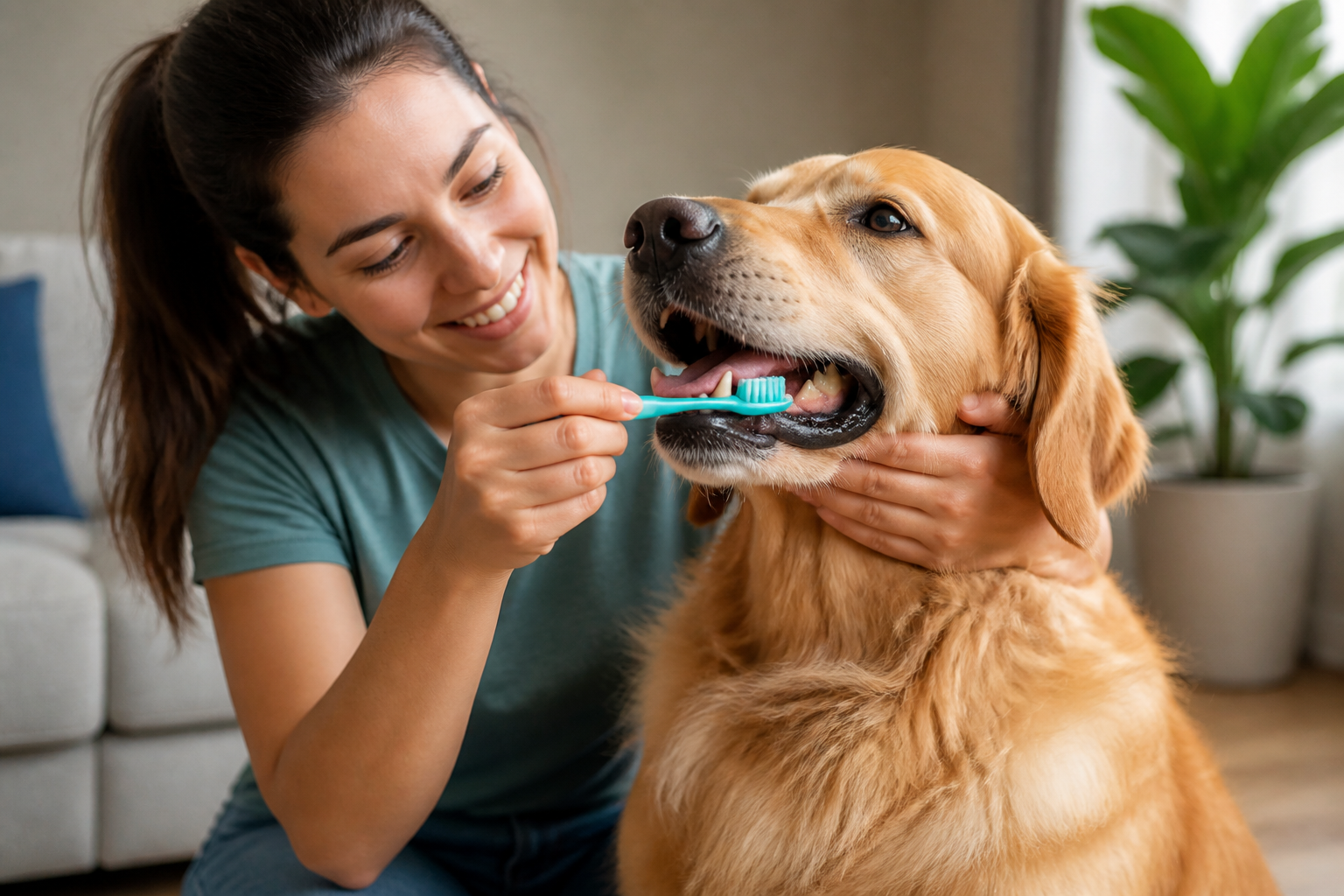
Brushing is the most effective way to remove plaque before it turns into tartar. You do not need to spend twenty minutes on this task. Even sixty seconds of focused brushing can make a massive difference.
The most important rule is to never use human toothpaste. Our toothpaste contains fluoride and xylitol. Xylitol is a sweetener that is highly toxic to dogs. Canine toothpaste is enzymatic, meaning it helps break down organic matter even after you stop brushing. It also comes in flavors dogs actually like, such as poultry or beef.
Choosing the Right Tools
Small dogs often do better with a finger brush. These are small rubber caps with soft bristles that fit over your pointer finger. They give you more control in a tiny mouth. Larger dogs usually require a long-handled toothbrush to reach the back molars where tartar likes to hide. You can find brushes, toothpaste, and other options in our dog dental and breath care collection.
A Step-by-Step Brushing Routine
Step 1: Let them taste the paste. / Put a small amount of enzymatic toothpaste on your finger and let your dog lick it off.
Step 2: Get them used to the touch. / Gently lift your dog's lip and rub your finger along their gums to build comfort.
Step 3: Introduce the brush. / Apply a small amount of paste to the bristles and let them sniff it before starting.
Step 4: Focus on the outside surfaces. / Angle the brush at 45 degrees and use small circular motions on the outer side of the teeth.
Step 5: Reward the progress. / Give your dog plenty of praise or a small dental treat after you finish to keep the experience positive.
Vet Tip: If your dog is extremely resistant to brushing, do not force it. Stress can lead to a negative association or even a bite risk. Start with dental wipes or additives and slowly reintroduce the brush over several weeks.
Using Dental Chews and Treats
Not every dog will sit still for a brushing session. This is where dental chews become a valuable tool. These products work through mechanical action. As your dog chews, the texture of the treat scrapes against the surface of the tooth.
We carry many trusted brands like Greenies and Kong that are designed for this exact purpose. Some chews also contain ingredients that help freshen breath and reduce the rate at which plaque mineralizes into tartar. Explore our selection of Greenies products for dental chew options.
For more ideas, browse our guide to dental chews for dogs.
When shopping, look for the VOHC Seal of Acceptance. The Veterinary Oral Health Council only gives this seal to products that meet strict data requirements for reducing plaque or tartar.
How to Choose the Best Chew
- Size matters: Ensure the chew is appropriate for your dog's weight. A chew that is too small can be a choking hazard.
- Calorie count: Dental treats contribute to daily caloric intake. If your dog gets one every day, you may need to slightly reduce their meal portions.
- Hardness: You should be able to indent a chew with your thumbnail. If a chew is as hard as a rock, it could cause a tooth fracture.
Key Takeaway: Dental chews are a helpful supplement to brushing, but they should not be the only method used. They are most effective at cleaning the large chewing teeth in the back of the mouth.
Water Additives and Dental Powders
For the busiest pet owners or the most stubborn dogs, water additives are a silent hero. These are liquid solutions you pour directly into your dog's water bowl. They are usually tasteless and odorless, so most dogs do not even notice they are there.
These additives work by altering the chemistry in the mouth to inhibit bacterial growth. They are especially helpful for dogs that suffer from chronic "smelly breath" despite having relatively clean-looking teeth.
Dental powders work similarly but are sprinkled over your dog's food. Brands like VetriScience offer powders that contain probiotics. These help balance the oral microbiome by encouraging good bacteria to crowd out the bad.
You can compare these options in our dog dental and breath care collection.
Bottom line: Additives and powders are excellent "passive" cleaning methods that require almost zero effort from the owner.
The Role of Diet and Nutrition
What your dog eats every day impacts their oral environment. There is a common belief that all dry kibble cleans teeth because it is crunchy. However, many kibbles crumble instantly upon contact. This means they provide very little mechanical cleaning.
Specific dental diets are designed differently. The kibbles are often larger and have a fibrous texture that does not break apart immediately. This forces the dog to chew more, which helps scrub the teeth.
Prescription Dental Diets
If your dog is prone to rapid tartar buildup, your veterinarian might suggest a prescription diet. These formulas, such as those from Royal Canin or Hill's, are specifically engineered to manage oral health. Our pharmacy at BaxterBoo carries these prescription pet foods through our partnership with Pet's Choice. Because these are medical diets, you will need a valid prescription from your vet to order them.
You can explore our pharmacy for dogs when your veterinarian recommends prescription products.
A Note on Raw Bones
Some owners use raw, meaty bones to help keep teeth clean. While the gnawing action is excellent for scraping teeth, bones come with risks. Cooked bones should never be given as they can splinter. Raw bones can still cause tooth fractures or digestive blockages if your dog is an aggressive chewer. Always supervise your dog with any bone or hard chew.
Recognizing Signs of Dental Disease
As a pet owner, you are the first line of defense. You should check your dog's mouth at least once a month. It is easier to treat early gingivitis than it is to deal with a full-blown infection or a rotted tooth.
For a closer look at symptoms, review our guide to warning signs of dental disease in dogs.
Watch for these warning signs:
- Red or swollen gums along the tooth line
- Yellow or brown crust (tartar) near the gums
- Persistent bad breath that does not go away after brushing
- Difficulty eating or dropping food from the mouth
- Pawing at the face or rubbing the mouth on the carpet
- Loose or missing teeth
If you notice bleeding gums or your dog seems to be in pain, schedule a veterinary visit immediately. Dental pain can be intense, and dogs are experts at hiding their discomfort until it becomes severe.
Professional Cleanings and the Pharmacy
Even with the best at-home care, most dogs will eventually need a professional cleaning. This is similar to why humans go to the dental hygienist twice a year. We cannot reach the areas under the gum line with a toothbrush.
Why Anesthesia is Usually Necessary
Veterinarians generally recommend cleanings under general anesthesia. This allows them to perform a full exam, take X-rays, and clean deep into the gingival pockets without causing the dog pain or stress. Anesthesia-free cleanings may make the teeth look white, but they do not address the disease lurking under the gums.
Post-Cleaning Care and Medications
After a professional cleaning, your vet might prescribe medications. This is especially common if they had to extract a tooth or treat an infection. Our pharmacy provides access to FDA-approved medications through Pet's Choice. This includes:
- Antibiotics to clear up oral infections
- Pain relief medications for recovery after extractions
- Prescription oral rinses to promote healing
Having these items delivered to your door makes it easier to focus on your dog's recovery. You can also set up these items on our Autoship programme to ensure you never run out of the maintenance products your vet recommends.
Key Takeaway: Home care is about prevention, while professional care is about treatment. You need both to maintain a healthy mouth.
Creating a Sustainable Routine
Consistency is more important than perfection. If you can only brush your dog's teeth twice a week, that is still significantly better than never doing it at all.
To make the habit stick, tie it to something you already do. Maybe you brush your dog's teeth right after you brush your own at night. Or perhaps they get their dental chew every morning after their walk.
Tips for Success
- Keep your supplies in a visible spot so you do not forget.
- Use a variety of methods. Use an additive in the water and a chew in the afternoon.
- Start slow with puppies. Get them used to mouth handling before they even have their adult teeth.
- Be patient with senior dogs. They may have existing sensitivity, so move gently.
At BaxterBoo, we believe that small, daily actions lead to big health wins. Whether you are picking out a new Kong toy for chewing or setting up a prescription diet through our pharmacy, you are investing in your dog's future comfort.
For broader routine-building guidance, read our pet dental care tips.
Summary of At-Home Cleaning Methods
| Method | Effort Level | Primary Benefit |
|---|---|---|
| Brushing | High | Removes plaque from the gum line |
| Dental Chews | Low | Mechanical scrubbing of molars |
| Water Additives | Very Low | Inhibits bacterial growth and freshens breath |
| Dental Wipes | Medium | Good for dogs who hate brushes |
| Specialized Diet | Low | Daily maintenance through eating |
Conclusion
Helping clean your dog's teeth is one of the most impactful things you can do for their overall wellness. By combining regular brushing with effective chews and professional veterinary checkups, you can prevent the pain and complications of periodontal disease. We are here to support your journey with a wide selection of dental care products and a full-service pharmacy for your prescription needs. Start a routine today to keep those tails wagging and those breath-heavy snuggles much more pleasant. Explore our dog dental and breath care collection to find the right tools for your dog's specific needs.
FAQ
Can I use a human toothbrush on my dog?
You can use a soft-bristled human toothbrush, especially for larger dogs, but you must avoid human toothpaste. A child-sized toothbrush often works well for medium breeds because the head is smaller and easier to maneuver. However, many pet-specific brushes are angled specifically to reach the back of a dog's mouth more comfortably.
How often should I really brush my dog's teeth?
Ideally, you should brush your dog's teeth every single day to prevent plaque from hardening into tartar. If daily brushing is not possible, aiming for at least three times a week can still provide significant health benefits. Consistency is the most important factor in keeping the bacterial load under control.
Are dental chews enough to keep teeth clean without brushing?
While dental chews are helpful, they are generally not enough to replace brushing entirely. Most chews focus on the chewing surfaces of the back teeth and may not reach the gum line where periodontal disease starts. Think of chews as a helpful supplement to a routine that includes brushing or professional cleanings.
Why does my dog have bad breath even after I brush?
If your dog's breath remains foul after brushing, it could indicate an underlying health issue or advanced dental disease. Chronic bad breath is often caused by bacteria trapped under the gum line or an infected tooth that requires professional attention. In some cases, it can also be related to digestive issues or kidney health, so a vet visit is recommended.






