Save 15% on your 1st Autoship learn more

 Email us
 Live Chat
 FAQs
FAQs





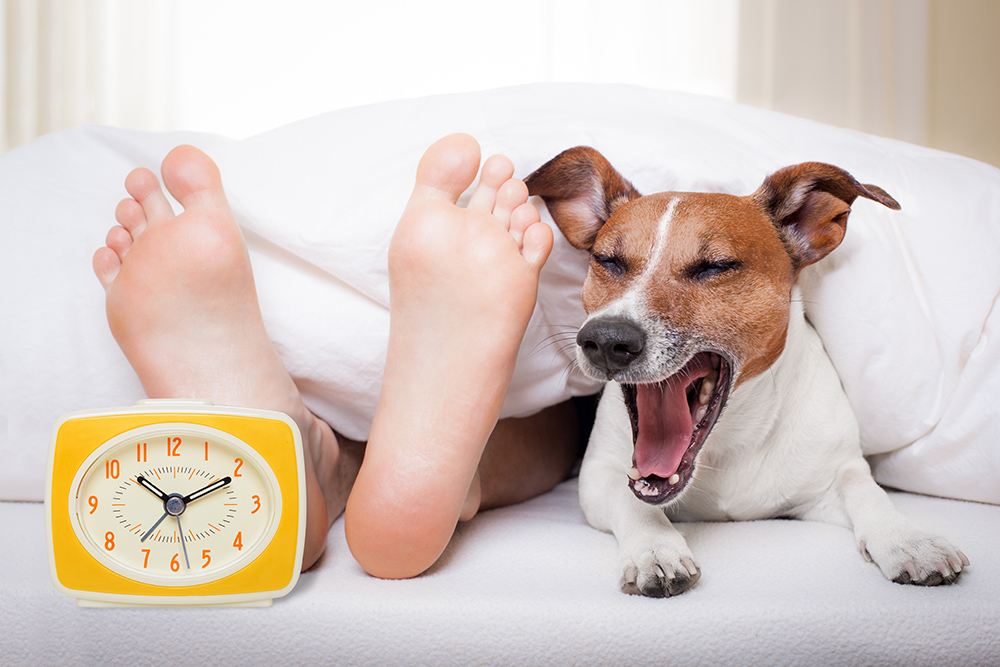
When humans set the clocks forward and backward for daylight savings, it can disrupt dogs' and cats' circadian rhythms. Setting the clocks back in the fall can be particularly confusing; the sun tells them it's time for breakfast, but the clock says they have to wait another hour. If the time change causes your dog or cat distress, there are things you can do to make the change easier.
Maintain Your Pet's Regular Schedule
Time changes for daylight savings are a completely arbitrary practice by humans. Your pet keeps time by the sun. Therefore, if it is possible, you could keep feeding and walking your pet at the same time of day regardless of what the clock says, sparing him the stress of the time change altogether.
This may not be convenient for you, but some devices could help make it easier. For example, you could set up an automatic feeder that dispenses your pet's food at the same time that she is accustomed to receiving it, allowing you to enjoy that elusive extra hour of sleep.
Change Your Pet's Schedule Gradually
You may not be able to maintain your pet's existing schedule. For example, you may walk your dog when you come home from work every day, and your boss probably won't allow you to go home an hour early to maintain his regular schedule.
It may not seem fair to your dog to make her wait an extra hour for her walk either, but with some planning ahead of time, you can make gradual changes to her schedule so that she becomes accustomed to taking her walk later in the day.
Daylight Savings Time ends early in November, so starting in October, you could start waiting for 15 minutes to take your dog for a walk. After a week, you could start getting out the leash half an hour after you get home from work. The next week, wait 45 minutes. This way, you gradually teach your dog to expect his walks an hour later without causing him undue distress.
Be as Flexible as Possible
If you have a work schedule you have to keep, you may have to help the dog adjust to your schedule. However, if your dog or cat is fast asleep in her pet bed at her normal mealtime and you don't have to wake her up immediately, let her sleep for now and wait to feed her until she wakes up. Animals don't deprive themselves of what they need the way people do, so if your pet is sleeping, it means that rest is her most pressing need at the moment. Whenever possible, let sleeping dogs (and cats) lie.
Be Prepared for Some Weird Behavior Patterns
Dogs are diurnal, which means that, like humans, they tend to be most active during the day and sleep at night. However, cats are crepuscular, meaning they are most active around dawn and dusk and spend most of the day sleeping. When you set the clocks back, you may find that your kitty's active time in the evening comes later in the day. He may be running around the house in a frenzy around the time that you are ready to sleep.
Rather than attempt to interfere with your cat's instincts, indulge them by giving her a toy that engages her hunting instincts as the sun goes down. Ideally, this should be a toy that she can play with on her own so that you can get ready for bed and adjust to your new schedule. Hopefully, your kitty will tire herself out quickly and retire soon to her favorite sleeping place, whether in a pet bed or cuddled up next to you.
Consider Calming Aids To Ease Your Pet's Anxiety
Dogs and cats are creatures of routine, and even gradual changes may cause them stress. If your pet is exhibiting signs of anxiety, you may be able to calm him with synthetic pet pheromones. These products mimic hormones given off by a mother dog or cat, and they send happy messages directly to your pet's brain.
Pet products that contain essential oils may also help calm your pet. However, not all essential oils are safe for dogs or cats, so make sure you use a product specifically formulated for pets.
Ask Your Vet About Your Pet's Medications
If your pet takes medications, receiving them an hour earlier or later may not make much difference. However, some medicines can, so be sure to ask your vet if you should change your pet's medication schedule and, if so, how to go about it.
Maintain a Positive Attitude
Pets take emotional cues from the human beings around them. If you regard the time change as something upsetting, your dog or cat is more likely to experience stress over it. However, treating the change as something positive may help your pet relax and meet the changes calmly.
Ask For Help if You Need It
Maintaining your pet's schedule while meeting work and social obligations may make you feel pulled in two different directions. While you can't be in two places at once, you can ask others to help with your dog or cat. Maybe you have a family member or neighbor who can take your dog for a walk before you get home for lunch. If not, you could hire a dog walker or a pet sitter to help out when you can't be there.
In most cases, your pet's internal clock will reset within a few days of the time change.