Save 15% on your 1st Autoship learn more

 Email us
 Live Chat
 FAQs
FAQs





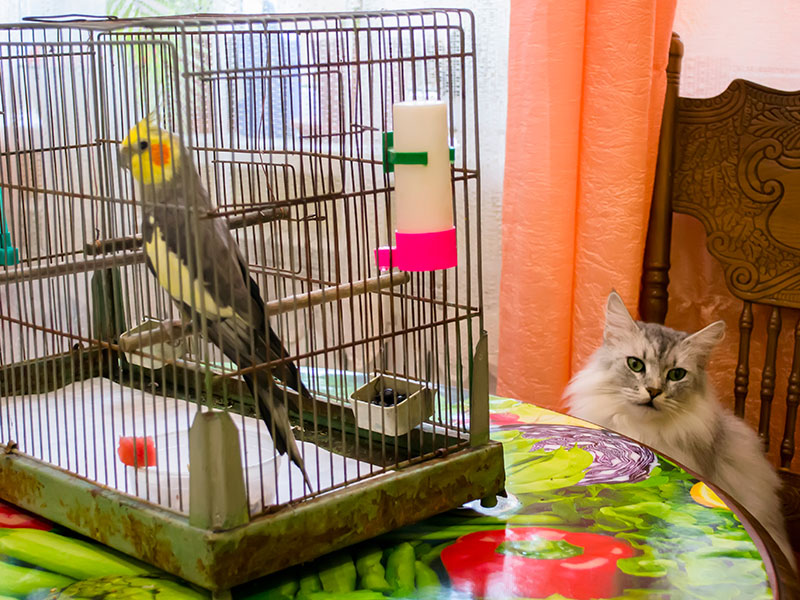
From tiny parakeets to large parrots, birds are some of the funniest, smartest, and most interesting creatures in the world. It's easy to see why millions of people keep them as pets. If you are considering bringing home a feathered friend, it's important to consider your current environment. If you have a cat at home, this is especially important, as you'll need to decide on an introduction process beforehand to ensure the safety of both animals.
Buy a Tall, Sturdy Cage for Your Bird
Before you bring a bird into your home, have the right type of cage for him. Cats are climbers and jumpers, so choose a cage that is tall and sturdy. A heavy cage that stays against a wall or in a corner is ideal.
Choose a cage that is much larger than your bird. This not only provides him adequate living space but also makes it easier for him to back away from any paws that manage to make their way into the cage.
When deciding on a cage for your bird, examine the locks to ensure they won't be easy for your cat to open. The best idea is to find a cage with a "backup" lock, so you need to push at least one button as well as turn a knob to get the cage open. This will be harder for your cat to get into.
Shut the Cat in a Separate Room
When bringing your bird home, don't allow your cat into the room where his cage is. In fact, if possible, it's best to keep your bird in a room that your cat never enters. Of course, that isn't possible for many pet owners, so starting slow is key.
Shut your cat in a bedroom or bathroom with plenty of food, his water bowl, and some of his favorite cat toys. Leave him in there while your bird becomes acclimated to his cage and surroundings.
Remember, birds can be quite fragile. If you don't shut the cat out of his space, the combination of a new place and feeling as if he's being stalked could cause him a dangerous amount of stress.
Introduce the Bird and Cat From a Distance
The first time you let your cat and bird see each other, do so from a distance. Hold your cat and stand by the door or the furthest point you can from the bird. If your cat doesn't like to be held, you can also try using something like the Come With Me Kitty Harness & Bungee Leash to allow your cat to stand by the door and meet the bird. Just be sure the harness is on correctly so your cat can't slip out of it.
Allow them to look at each other, talk to both of them, and judge your cat's reaction. If he seems unaffected or only has a passing curiosity, you can try getting a little closer during the next meeting. However, if your cat seems aggressive about meeting a bird, it's a good idea to maintain separation.
Allow the Two To Get Closer
Over the course of a few days, you can allow a cat that hasn't shown aggression to get closer to your bird. During the second visit, try going to the middle of the room. On the third, take him up to the cage.
Eventually, if your bird seems comfortable and your cat isn't being aggressive, you can introduce them by allowing your bird to perch on your finger or sit on your chest. This way, you can see everything your cat is doing and remove the bird from the situation if the cat takes too much interest. Remember, your bird may try to jump, so it is important that you're in a position where you can move quickly if needed.
Implement Some Discipline
Cats and birds alike need discipline. Even non-aggressive cats can become too curious or playful and accidentally hurt your bird. On the other hand, many birds are also aggressive and curious, so they may try to peck at your cat's whiskers, ears, or paws.
If your cat becomes too playful, you have a couple of options. When you see your cat reach for your bird, firmly tell him no and push him away. Never let any dog or cat lick your bird, as it could cause an infection. Some cats don't listen well to verbal commands, so it is a good idea to keep a spray bottle of water on hand as well.
Birds are very expressive and easily pick up on facial expressions. If yours becomes too aggressive with your cat, use a soft but firm tone of voice to matter-of-factly tell him what he did wrong. Saying "no biting" while frowning is often efficient. If the aggression continues, repeat the discipline and put him back in his cage for a few minutes. Your discipline method should always be consistent with birds and cats alike.
Never Leave Your Bird and Cat Alone Unsupervised
Even if your bird and cat get along beautifully, never leave them unsupervised, especially if your bird isn't caged. Accidents can happen at any time. Your cat may accidentally play too roughly and hurt your bird, or your bird might become too aggressive and leave your cat feeling as if he needs to defend himself. The type of bird you have matters, too. Large birds can easily hurt smaller cats. When you need to leave the room, keep your bird in his cage and your cat out of the room.
Birds and cats can live in harmony in the same household — in fact, millions of them do. By keeping these tips in mind, paying attention to your animals' personalities, and taking some extra precautions, you can help to ensure your bird and cat live in harmony, too.