
 Save 15% on your 1st Autoship learn more

 Email us
 Live Chat
 FAQs
FAQs





Introduction
You lean in for a happy morning nuzzle from your dog only to be met with a puff of breath that smells like old gym socks. While many people think "dog breath" is just part of being a pet owner, it is actually one of the first signs that oral hygiene needs attention. Taking care of your pet's mouth is about much more than just freshening their breath. It is a vital part of their overall wellness that affects their heart, kidneys, and comfort levels. At BaxterBoo, we have helped thousands of owners build routines that keep tails wagging and smiles bright. This guide covers the most effective at-home methods and professional steps you can take to manage your dog's dental health. By combining brushing, the right chews, and expert veterinary guidance, you can ensure your dog stays healthy for years to come.
The Importance of Dental Hygiene
Oral health is a window into your dog's internal health. When food particles and bacteria sit on the teeth, they form a sticky film called plaque. If this plaque is not removed, it hardens into tartar within about 36 to 48 hours. Tartar is much harder to remove at home and often requires professional tools.
The real danger lies beneath the gum line. Bacteria can enter the bloodstream through inflamed gums. Once in the blood, these bacteria can travel to major organs like the heart, liver, and kidneys. This can lead to serious long-term health complications that are far more difficult to manage than a simple brushing routine.
Quick Answer: The best way to keep a dog's teeth clean is a daily routine that includes brushing with pet-safe toothpaste, offering VOHC-approved dental chews, and scheduling regular veterinary exams. This multi-layered approach prevents plaque from hardening into stubborn tartar.
Brushing Your Dog's Teeth at Home
Brushing is the most effective way to remove plaque before it becomes tartar. While it might seem daunting at first, most dogs can learn to accept and even enjoy the process if you start slowly.
Choosing the Right Tools
Never use human toothpaste for your dog. Our toothpaste often contains xylitol, which is a sweetener that is highly toxic to dogs. It also contains foaming agents that are meant to be spit out, whereas dogs will swallow whatever you put in their mouth. Pet-safe toothpastes come in flavors like poultry, beef, and peanut butter to make the experience a treat rather than a chore. For additional options, explore our dental and breath care products.
For the brush itself, you have several options:
- Standard dog toothbrushes with long handles to reach the back molars.
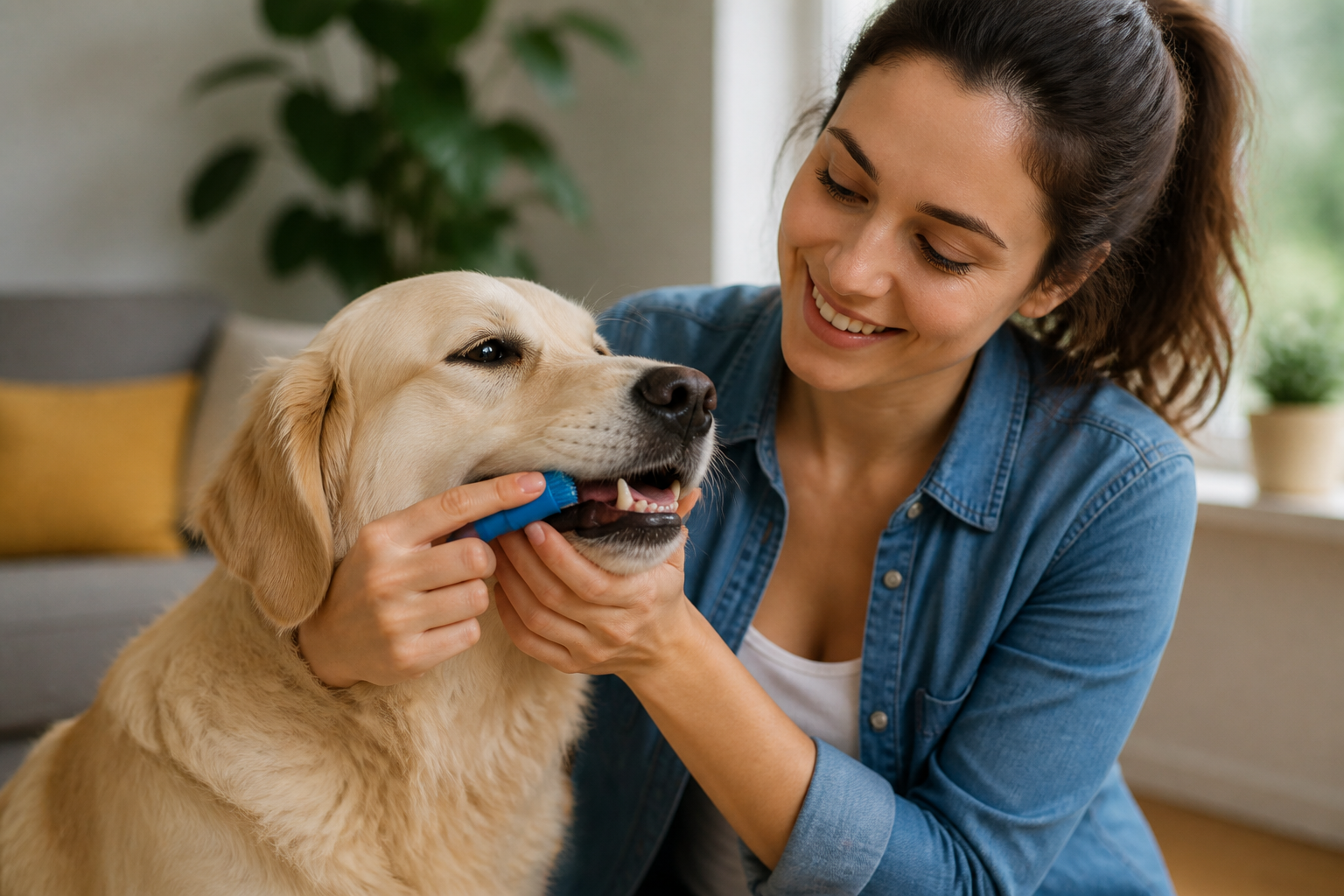
- Finger brushes that slip over your pointer finger for better control.
- Small, soft-bristled human toothbrushes for tiny toy breeds.
A Step-by-Step Guide to Brushing
Step 1: Introduce the taste. Let your dog lick a small amount of pet toothpaste off your finger so they associate the flavor with a reward.
Step 2: Get them used to mouth handling. Gently lift your dog's lips and touch their teeth and gums with your finger. Do this for a few days until they are comfortable.
Step 3: Introduce the brush. Put toothpaste on the brush and let them lick it. Gradually start brushing the front teeth in a circular motion.
Step 4: Focus on the outside. You do not usually need to brush the inside of the teeth near the tongue. Most plaque accumulates on the outside surface near the cheeks.
Vet Tip: If your dog resists brushing, do not force it. Start with just one or two teeth per day and offer plenty of praise. A positive association is more important than a perfect cleaning in the beginning.
Using Dental Chews and Treats
Not every dog will sit still for a toothbrush. This is where dental chews become a valuable tool. These treats are designed with specific textures that help scrape away plaque as the dog chews.
What to Look For
When shopping for chews, look for the Veterinary Oral Health Council (VOHC) seal of approval. This seal indicates that the product has been tested and proven to reduce plaque or tartar by at least 20 percent. Brands like Greenies are popular choices because they have a flexible texture that allows the tooth to sink into the treat, cleaning right down to the gum line. You can browse our selection of Greenies products.
How They Work
The mechanical action of chewing is the primary benefit. As the dog gnaws on the treat, the ridges and grooves act like a squeegee on the surface of the tooth. Many chews also contain ingredients that help break down biofilm in the mouth.
Key Takeaway: Dental chews are a supplement to brushing, not a total replacement. Use them to reach the back molars where manual brushing can be difficult.
For more product ideas, see our guide to the best dental chews for dogs.
The Role of Dental Toys
Toys are a great way to combine playtime with oral hygiene. Many dogs have a natural urge to chew, and providing the right toys can help keep their teeth clean without them even realizing it. Browse our dog toys for textured options designed for play and chewing.
Texture Matters
At BaxterBoo, we recommend toys with varied surfaces. Look for rubber toys with nubs, ridges, or "dental ropes" that can floss between teeth. Brands like Kong offer durable rubber options that can be stuffed with healthy treats to keep your dog chewing longer. The longer they chew, the more saliva they produce. Saliva contains natural enzymes that help kill bacteria in the mouth.
Safety First
Always supervise your dog with chew toys. If a toy starts to break or if your dog manages to tear off small pieces, remove it immediately. Hard bones or antlers can sometimes be too tough for certain dogs and may cause tooth fractures. If your dog is an aggressive chewer, choose softer rubber toys that have some "give" to protect their enamel.
For broader guidance, read these pet dental care tips.
Water Additives and Dental Wipes
For dogs that are particularly sensitive about their mouths being touched, water additives and dental wipes offer a less invasive alternative.
Water Additives
These are flavorless solutions that you add to your dog's daily water bowl. They work by using enzymes to break down plaque-causing bacteria. This is an excellent "passive" way to support oral health. It is especially helpful for households with multiple dogs where individual brushing might be a challenge.
Dental Wipes
If your dog will not tolerate a brush but lets you touch their mouth, wipes are a great middle ground. You simply wrap the pre-moistened wipe around your finger and rub the surface of the teeth. While they do not get into the deep grooves as well as a brush, they are much better than doing nothing at all.
Specialized Dental Diets
What your dog eats every day has a significant impact on their oral hygiene. While the old myth that "kibble cleans teeth" is not entirely true for standard food, there are specific prescription diets designed for this purpose.
Prescription vs. Standard Food
Standard kibble often crumbles as soon as a dog's tooth hits it, providing very little cleaning action. However, specialized dental diets have a much larger kibble size and a fibrous structure that does not shatter. Instead, the tooth must penetrate the kibble, which scrubs the surface as they eat.
Our pharmacy provides access to these specialized prescription diets through our partnership with Pet's Choice. Brands like Royal Canin and Hill's offer formulations that are specifically balanced to support oral health while providing complete nutrition.
Vet Tip: Before switching to a prescription dental diet, consult your veterinarian. These foods are formulated for specific needs and your vet can help determine if a prescription is the right path for your dog's unique health profile.
Identifying Signs of Dental Disease
Even with the best at-home care, problems can still arise. It is important to check your dog's mouth once a week for any changes.
Red Flags to Watch For:
- Extremely bad breath that does not go away.
- Red, swollen, or bleeding gums.
- Yellow or brown crusty buildup near the gum line.
- Loose or missing teeth.
- Difficulty eating or dropping food.
- Pawing at the mouth or face.
If you notice these signs, it is time for a professional exam. Chronic dental pain can cause behavioral changes like irritability or lethargy. Many owners are surprised to find their "grumpy" senior dog acts like a puppy again once a painful tooth is addressed.
For more warning signs, read how to recognize hidden dental problems in dogs.
Professional Veterinary Cleanings
At-home care is like brushing and flossing your own teeth, but you still need to see a dentist for a professional cleaning. The same applies to your dog. A professional cleaning allows the vet to remove tartar that is too hard for a toothbrush to handle.
The Importance of Anesthesia
Many people are nervous about their dog being put under anesthesia for a cleaning. However, it is the only way to perform a thorough and safe procedure. Without anesthesia, a vet cannot clean under the gum line or take X-rays to see the roots of the teeth. It also ensures the dog remains still and feels no pain or stress during the process.
Most veterinarians recommend a professional cleaning once a year, though some small breeds may need them more frequently. Small dogs often have crowded teeth, which makes it easier for food and bacteria to get trapped.
Summary of a Successful Dental Routine
Keeping your dog's teeth clean does not have to be an all-or-nothing endeavor. Even small changes can make a big difference over time.
- Daily: Brush the teeth using pet-safe toothpaste.
- Daily: Provide fresh water with an additive if needed.
- Several times a week: Offer a VOHC-approved dental chew or treat.
- Ongoing: Provide textured toys like those from Kong for enrichment and cleaning.
- Yearly: Schedule a professional dental exam and cleaning with your vet.
Bottom line: A multi-pronged approach combining mechanical cleaning, chemical plaque control, and professional care is the most effective way to prevent dental disease.
How BaxterBoo Supports Your Journey
We believe that every pet deserves a healthy smile. Our selection is carefully curated to include only the products we trust for our own pets. From the latest in dental toy technology to the specific treats recommended by experts, we make it easy to find everything you need in one place.
If your vet has recommended a specific prescription diet or medication for your dog's dental health, our pharmacy is here to help. Through our partnership with Pet's Choice, we offer FDA-approved medications and therapeutic foods that can be delivered right to your door. You can also take advantage of our Autoship programme to ensure you never run out of your dog's favorite dental chews. This program provides a discount on your first order and grants you a free MVP Gold membership for even more savings.
Taking care of your dog's teeth is an investment in their happiness. With a little patience and the right tools, you can keep their breath fresh and their body healthy for years of adventures together.
FAQ
How often should I realistically brush my dog's teeth?
Ideally, you should aim to brush your dog's teeth every single day. Plaque can turn into hard tartar in as little as 36 hours, so daily brushing prevents that buildup from becoming permanent. If daily is not possible, aim for at least three times a week to maintain a basic level of oral hygiene.
Can I use a human toothbrush on my dog?
Yes, you can use a human toothbrush as long as the bristles are soft. For large dogs, an adult-sized soft brush works well, while for small dogs, a child's toothbrush or a specialized finger brush is usually a better fit. However, you must never use human toothpaste because it contains ingredients like xylitol that are toxic to dogs.
Do dental chews actually work as well as brushing?
Dental chews are very effective at reducing plaque and tartar through mechanical scraping, but they are not a total replacement for brushing. Chews are best at cleaning the chewing surfaces of the back teeth, while brushing allows you to target the gum line and front teeth more precisely. Using both together provides the best protection for your dog.
At what age should I start cleaning my dog's teeth?
You should start a dental care routine as early as possible, ideally when they are a puppy around 8 to 12 weeks old. Starting early helps them get used to the sensation of having their mouth handled, which makes the process much easier when they are older. Even though puppies eventually lose their baby teeth, the habit you build now will protect their permanent adult teeth for life.






