
 Save 15% on your 1st Autoship learn more

 Email us
 Live Chat
 FAQs
FAQs





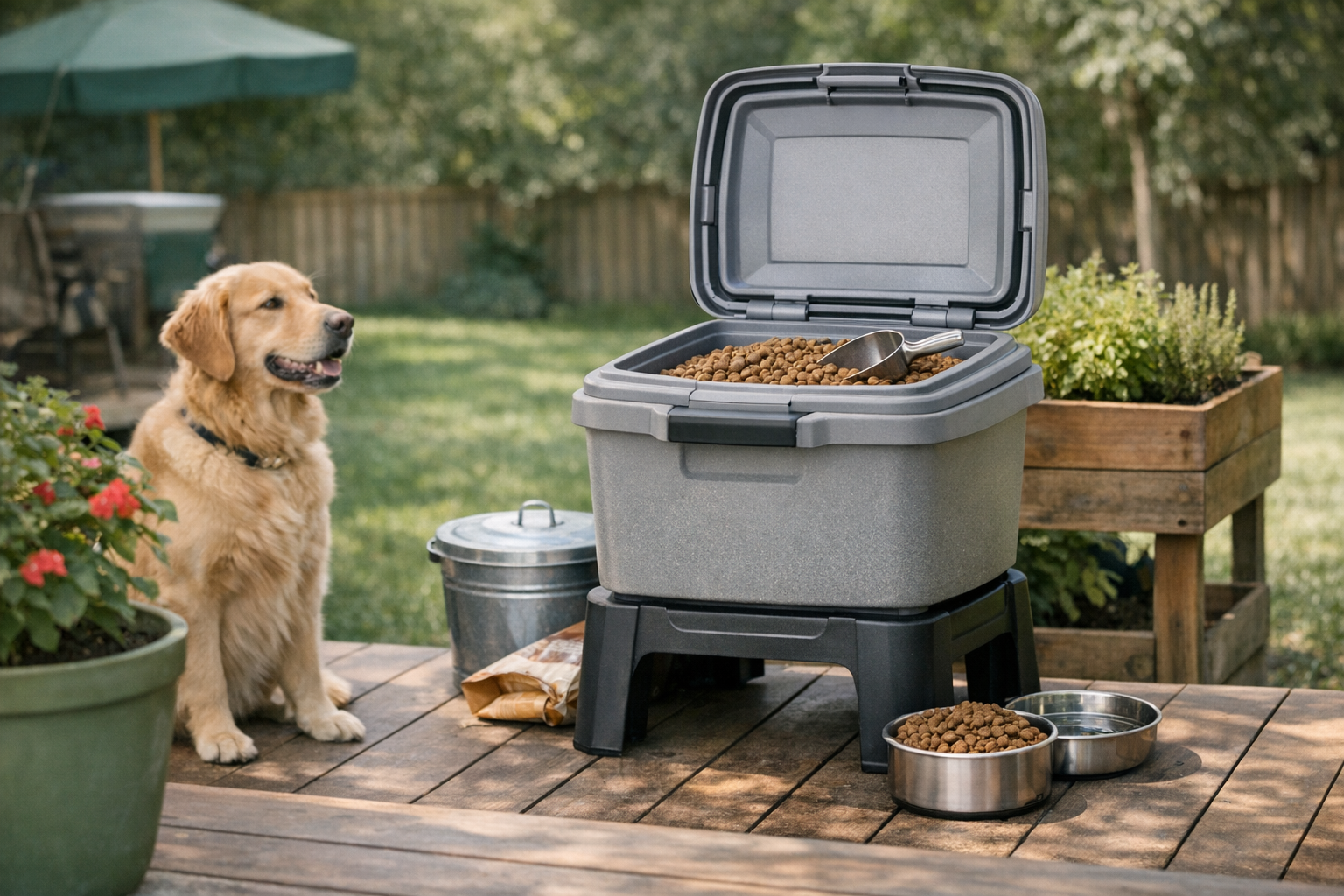
Introduction
Storing dog food on a porch, in a garage, or inside a shed is a common solution for many households. It keeps bulky bags out of the kitchen and away from foot traffic. However, exposing kibble to the elements creates a unique set of challenges. Rain, morning dew, and high humidity can quickly turn a fresh bag of food into a soggy, molded mess that puts your pet at risk.
At BaxterBoo, we understand that managing bulk supplies requires a balance of convenience and safety. We have helped pet owners navigate storage solutions since 2006. This guide covers how to shield your dog’s meals from moisture and pests while maintaining nutritional value. You will learn about the best container types, strategic placement, and why keeping the original bag is a vital safety step. Our goal is to ensure every bowl you serve is as fresh as the day you opened the bag.
Quick Answer: The most effective way to keep dog food dry outside is to store the original bag inside an airtight, gasket-sealed plastic or galvanized steel container. Elevate the container off the ground and keep it in a temperature-controlled area away from direct sunlight.
The Problem with Outdoor Moisture
Kibble is designed to be dry and shelf-stable. Most dry dog foods have a very low moisture content. This makes them act like a sponge when they are around humidity. When dog food absorbs water from the air, it creates the perfect environment for mold and bacteria to grow.
Even if you do not see fuzzy growth on the surface, moisture can cause invisible problems. The fats and oils sprayed onto the kibble for flavor and nutrition can go rancid when exposed to oxygen and water. This changes the taste and can lead to digestive upset for your dog.
Humidity levels fluctuate wildly throughout the day. In many parts of the country, the air is damp in the morning and dry by the afternoon. This cycle of wetting and drying can cause the kibble to crumble and lose its texture. If your dog is a picky eater, they may refuse food that has lost its crunch or smells slightly off.
Selecting the Right Storage Container
A standard plastic bin is rarely enough to keep moisture out. You need a container specifically designed with an airtight seal. Many high-quality options use a threaded lid or a rubber gasket to create a barrier against the air.
Airtight Plastic Bins
High-density polyethylene bins are popular because they are lightweight and durable. Look for models like the Vittles Vault. These often feature a spinning lid that locks out air. These bins are excellent for stopping moisture but can sometimes be chewed through by determined rodents.
Galvanized Steel Containers
Metal bins are the gold standard for pest prevention. They are also excellent at keeping the food cool if they are kept in the shade. However, metal does not always provide a perfect airtight seal on its own. If you use a metal bin, we recommend placing the entire bag of food inside rather than pouring the kibble directly against the metal.
Gasket-Sealed Tubs
Some heavy-duty storage tubs come with a foam or rubber gasket inside the rim of the lid. When the lid is latched down, the gasket compresses to create a water-resistant seal. This is a great secondary option if you are storing food in a garage that occasionally gets damp during rainstorms.
Key Takeaway: Always prioritize containers with a physical gasket or a screw-down lid. These provide the most consistent protection against fluctuating humidity levels and heavy rain.
Why the Original Bag Matters
It is tempting to pour a new bag of food directly into a storage bin. However, most experts and manufacturers recommend keeping the food in its original packaging. Premium brands design their bags with specific liners that act as a fat barrier.
This liner keeps the oils in the food from soaking into the plastic of your storage bin. Over time, those oils can build up on the walls of a plastic container and go rancid. If you pour new food on top of old residue, you risk contaminating the fresh batch.
Keeping the bag also ensures you have access to the lot number and expiration date. In the rare event of a product recall, you will need this information to know if your bag is affected. You can simply roll the top of the bag down, clip it shut, and place the whole bag inside your airtight container.
Strategic Placement for Outdoor Storage
Where you put the container is just as important as the container itself. Even the best bin can fail if it is sitting in a puddle or baking in the sun.
Elevate the Bin
Never store dog food directly on a dirt floor or concrete slab. Concrete can wick moisture upward, creating a damp microclimate under the bin. Use a pallet, a shelving unit, or even a few bricks to keep the container at least a few inches off the ground. This also makes it harder for insects like ants or weevils to find their way inside.
Avoid Direct Sunlight
Temperature swings are the enemy of food freshness. If a bin sits in the sun, the air inside heats up. When the sun goes down, the air cools rapidly. This can cause condensation to form on the inside of the lid. That dripping water will eventually lead to mold. Keep your storage in a shaded corner of the garage or under a covered patio.
Temperature Control
Most food manufacturers recommend keeping kibble in temperatures below 80 degrees Fahrenheit. If your garage or shed regularly gets hotter than 100 degrees, the nutrients in the food will begin to break down. During the hottest months of the year, it may be worth moving the food into a pantry or a cooler mudroom.
Vet Tip: If you notice your dog has a sudden decrease in appetite or develops loose stools, check the food for a sour smell or signs of mold. Digestive issues can often be traced back to improperly stored food. Always consult your veterinarian if your dog shows signs of illness like vomiting or lethargy.
Managing Outdoor Feeding Areas
Keeping the bulk supply dry is one part of the job. You also have to worry about the food that is currently in the bowl. If your dog eats outside, their bowl is exposed to the same moisture and pests as the storage bag.
Step 1: Use heavy bowls. / Stainless steel or ceramic bowls are harder for wind to move and easier to clean. They do not have the porous surface of plastic, which can trap bacteria.
Step 2: Set a schedule. / Avoid "free-feeding" outdoors. Instead of leaving a bowl out all day, put the food down at a specific time. Give your dog about 20 minutes to eat, then pick the bowl up.
Step 3: Clean the bowl daily. / Wash outdoor bowls with hot, soapy water after every meal. This prevents the buildup of saliva and old food particles that attract flies and ants.
Step 4: Check for pests. / Before you put fresh food down, look for signs of insects. Ants can swarm a bowl in minutes, and many dogs will refuse to eat once insects have touched the kibble.
Bottom line: Picking up the bowl between meals is the simplest way to prevent moisture contamination and unwanted guests like raccoons.
Dealing with Pests and Varmints
Outdoor storage is a magnet for local wildlife. Raccoons, opossums, and rodents have an incredible sense of smell. They can easily smell the fats and proteins in dog food from a distance.
Rodents can chew through heavy plastic if they are motivated enough. If you have a significant rodent problem in your area, a galvanized steel bin is your best defense. Make sure the lid fits tightly enough that it cannot be pried off by a raccoon's dexterous paws. Some owners use a bungee cord to secure lids for extra protection.
Insects are a smaller but equally frustrating problem. Ants can find the tiniest gap in a lid. Using a container with a true rubber gasket is usually enough to keep them out. If you still find ants, you can create a "moat" by placing the food container inside a larger, shallow tray filled with an inch of water.
Signs of Spoiled Dog Food
Even with the best storage practices, it is important to inspect the food regularly. Dogs are often more sensitive to spoiled food than humans are. If they hesitate to eat, they might be picking up on something you cannot see.
- Odd Smells: If the food smells sour, musty, or like old paint, the fats have likely gone rancid.
- Visible Mold: Any white, green, or black fuzz is a sign to throw the entire bag away. Do not try to scoop out the "bad" parts.
- Texture Changes: If the kibble feels sticky or damp to the touch, it has absorbed too much moisture.
- Insects: If you see weevils or moths inside the bag, the food is contaminated.
Key Takeaway: When in doubt, throw it out. Feeding spoiled food can lead to serious health issues like aflatoxin poisoning, which is caused by molds that grow on grains.
Healthy Habits and Routine Maintenance
Good storage is a habit, not a one-time setup. To keep your dog's food safe, you should establish a routine for checking and cleaning your storage area.
- Wash the Bin: Every time you finish a bag of food, wash the inside of your storage bin. Use hot water and a mild detergent. Make sure the bin is completely dry before you put a new bag inside.
- Check the Seal: Inspect the rubber gaskets on your lids once a season. If they are cracked or brittle, they will no longer keep air and moisture out.
- Rotate Your Stock: If you buy multiple bags at once, always use the oldest bag first. Check the "Best by" dates regularly.
- Monitor Humidity: In very humid climates, consider using a large silica gel desiccant pack. Make sure it is secured to the underside of the lid where the dog cannot reach or eat it.
Our warehouse at BaxterBoo carries over 500 trusted brands, and we take storage seriously. We recommend using our Autoship programme to get fresh food delivered right when you need it. This prevents you from having to store large amounts of food for too long, reducing the risk of spoilage.
BaxterBoo Pharmacy and Prescription Diets
Sometimes, even the best storage can't prevent health issues. If your dog experiences chronic allergies or digestive sensitivities, they might require a specialized diet. We offer a full pet pharmacy for prescription needs.
Our pharmacy provides prescription pet foods and medications. If your veterinarian prescribes a specific diet for a condition like kidney disease or severe food allergies, we can fulfill those orders. These specialty foods are often more expensive, making proper storage even more critical. Keeping these bags dry and sealed ensures your dog gets the full benefit of their therapeutic nutrition.
If your dog does get sick from contaminated food or water, our pharmacy also carries the medications your vet might prescribe to get them back on their feet. From flea and tick protection to allergy management, we provide the tools you need for ongoing health care.
Keeping Food Dry While Traveling
If you take your dog camping or on road trips, keeping food dry becomes even harder. You are often dealing with rain, dew, and limited space.
For short trips, pre-portioning meals into individual zip-top bags can be helpful. However, as we noted earlier, these bags do not provide a great barrier against oxygen. For longer trips, a dedicated travel container is better. Heavy-duty food crates are designed to be tossed in the back of a truck and can withstand the elements. They are essentially smaller, more portable versions of the airtight bins you use at home.
Always keep travel food in a cool part of the car. Avoid leaving it in a hot trunk for extended periods. If you are camping, store the food in a locked vehicle at night to prevent bears or raccoons from finding it.
Summary Checklist for Dry Food Storage
Following these steps will help you maximize the shelf life of your dog's kibble.
- Choose a container with a gasket or screw-down lid.
- Keep the kibble inside the original bag.
- Elevate the bin off the floor on a shelf or pallet.
- Store the bin in a cool, shaded area like a garage corner.
- Wash the storage bin between every bag.
- Pick up outdoor food bowls immediately after meals.
- Check for signs of mold or rancidity before every feeding.
We are proud to offer a wide selection of gear to make these tasks easier. From airtight bins to stainless steel bowls, our curated collection is picked by people who love pets as much as you do.
Conclusion
Keeping dog food dry outside is entirely possible with the right equipment and a little bit of planning. By focusing on airtight seals and protecting the food from temperature swings, you can maintain the nutritional quality your dog needs. Remember that moisture is the primary cause of mold and spoilage, so staying vigilant during humid months is key.
If you are looking for new storage solutions or high-quality food, we are here to help. You can earn up to 5% back on these purchases through the MVP Rewards programme. For those managing long-term health conditions, our pharmacy and pet insurance option offer reliable ways to support your pet’s care. Keeping your pet healthy starts with a fresh, dry bowl of food every single day.
FAQ
Can I store dog food in a plastic bin without the bag? It is not recommended because the fats in the food can soak into the plastic and go rancid over time. Keeping the food in its original bag provides an extra protective layer and keeps your bin cleaner. It also ensures you have the lot number and expiration date in case of a recall.
How long does dry dog food stay fresh once the bag is opened? Most veterinarians and manufacturers recommend using a bag of dry food within six weeks of opening. Even in an airtight container, the food begins to oxidize once it is exposed to air. If you cannot finish a large bag in that time, consider buying smaller bags or using our Autoship service for more frequent deliveries.
Is it okay to store dog food in the garage during winter? Storing food in a cold garage is generally safer than storing it in a hot one, as cold temperatures slow down the degradation of fats. However, you must still use an airtight container to protect against the high humidity and dampness that winter weather often brings. Always keep the container elevated to prevent moisture from the floor from affecting the food.
What should I do if I find mold in my dog's food? If you find any mold, you must throw away the entire bag immediately. Mold spores can spread throughout the bag even if you cannot see them. Feeding molded food can cause serious illness, so it is never worth the risk of trying to save the "clean" portions of the bag.






