
 Save 15% on your 1st Autoship learn more

 Email us
 Live Chat
 FAQs
FAQs





Introduction
You are standing on the bathroom floor with a toothbrush in one hand and a squirmy dog in the other. Every time you try to reach those back molars, your dog clenches their jaw shut or turns their head away. It feels like a wrestling match rather than a grooming session. At BaxterBoo, we hear this story from pet parents every day. Getting a dog to sit still is hard enough, but asking them to keep their mouth open is a whole different challenge. This guide covers practical training techniques, helpful tools, and gentle handling methods to make dental care easier for both of you. Our goal is to help you move away from force and toward a cooperative routine that keeps your dog’s smile healthy.
Quick Answer: You generally do not need to force a dog's mouth wide open to clean the outside of their teeth. Most plaque builds up on the exterior surfaces, which you can reach by gently lifting the lips while the jaw is closed or slightly relaxed.
The Secret to Accessing the Mouth
Many owners assume they need to prop a dog’s mouth open like a human at the dentist. In reality, forcing the jaw open often triggers a struggle. Dogs have a natural reflex to resist pressure on their muzzle. If you try to pry the mouth open, your dog will likely fight back. This creates a negative association with the toothbrush.
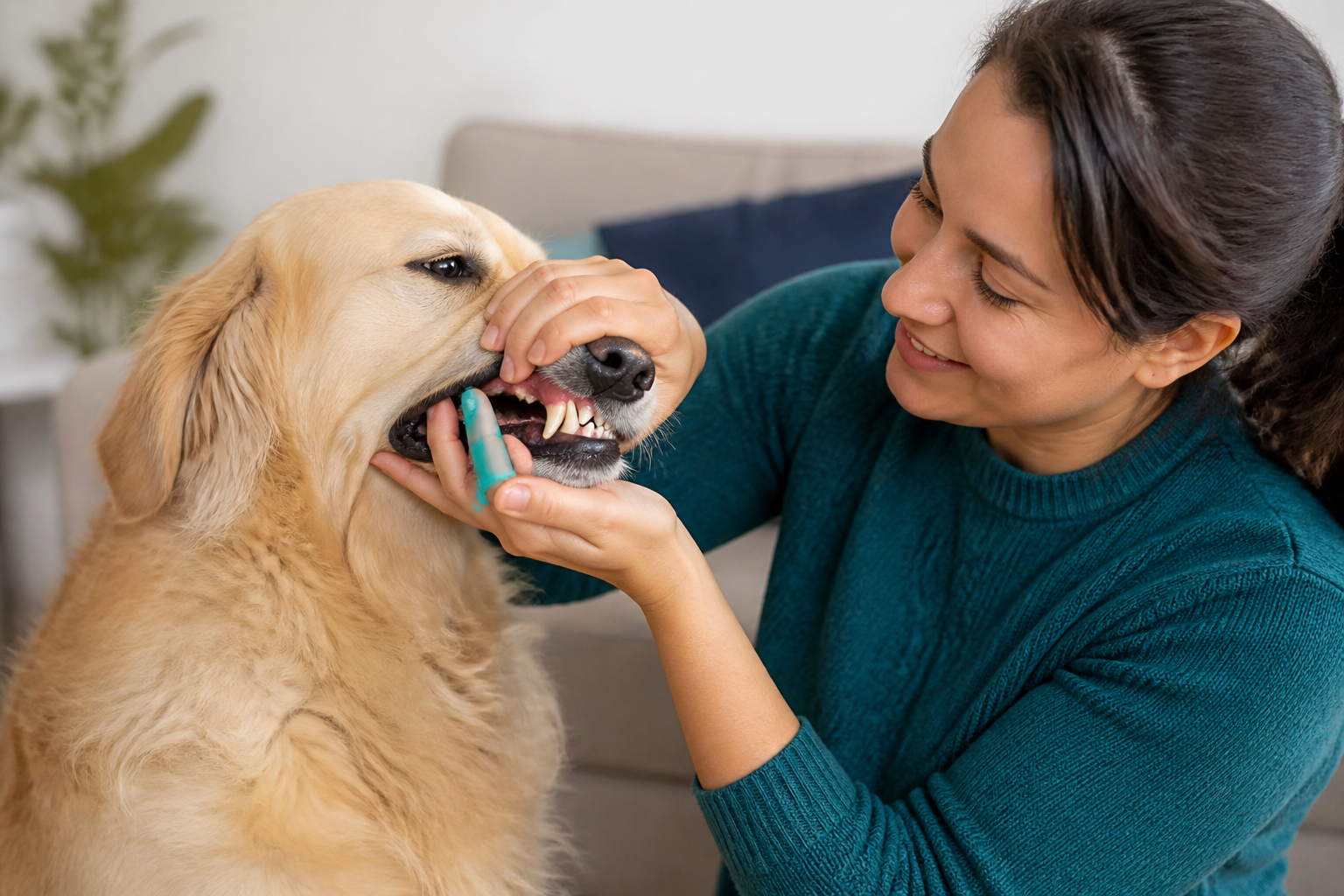
Instead of focusing on a wide-open gape, focus on the "lip lift." For most dogs, the majority of tartar accumulates on the outside of the upper and lower teeth. You can reach these areas by gently sliding your finger or a brush under the cheek flaps. This allows you to work while the dog keeps their jaw in a comfortable, neutral position. For more general guidance, review these pet dental care tips.
Using the Chin Rest Technique
The most effective way to keep a dog’s mouth steady is the chin rest. This is a basic cooperative care behavior where your dog learns to place their chin in your palm and hold it there. It gives you control over the head without using any restrictive force.
Step 1: Present your hand. / Hold your palm flat and slightly below your dog's chin level.
Step 2: Lure the behavior. / Use a small treat in your other hand to guide their nose over your flat palm.
Step 3: Mark and reward. / As soon as their chin touches your palm, say "yes" and give the treat.
Step 4: Build duration. / Slowly wait an extra second each time before giving the reward.
Once your dog is comfortable resting their head in your hand, they are much less likely to pull away when you touch their teeth. This stability makes it easier to work around the lips and gums.
Key Takeaway: Cooperative care training like the chin rest reduces stress for the pet and prevents the owner from having to use physical restraint.
Understanding Dog Dental Anatomy
Dogs have 42 teeth as adults. The most important ones to reach are the large carnassial teeth in the back. These are the heavy hitters used for chewing and they are where the most significant tartar usually builds up.
You do not need the mouth open to clean the outside of these back teeth. If you gently pull the corner of the mouth back toward the ear, you can see the molars even with the jaw shut. However, if you need to clean the inside surfaces, you will need a slight gap. Using a "start button" behavior, where the dog chooses to participate, is always safer than forcing a gap. You can also explore our dog dental care collection for tools designed for at-home routines.
Safety and Avoiding Bites
Safety is the priority when working inside a dog's mouth. Even the sweetest dog might nip if they feel startled or if a tooth is painful. Never put your fingers directly between the biting surfaces of the back molars.
If your dog is snapping at the brush, they are telling you they are overwhelmed. Stop the session immediately. If you notice red, swollen gums or teeth that look loose, do not attempt to brush them. This can cause intense pain. Instead, it is time to seek professional help.
Vet Tip: If your dog shows signs of oral pain like dropping food or pawing at the face, consult your veterinarian. Our pharmacy offers prescription dental diets through our partnership with Pet's Choice that may be recommended after a professional cleaning.
Helpful Tools for Different Mouth Shapes
Not every dog can use the same type of brush. A large Golden Retriever has plenty of space for a long-handled toothbrush. A flat-faced breed like a French Bulldog has very little room to maneuver.
- Finger Brushes: These are great for beginners. They allow you to feel exactly where you are in the mouth.
- Angled Brushes: These help you reach the back molars without having to pull the cheeks back as far.
- Dual-Headed Brushes: These can clean the front and back of the tooth at the same time, though they require the mouth to be slightly open.
- Silicone Brushes: These are gentler on sensitive gums than nylon bristles.
At BaxterBoo, we carry a wide range of dental tools from brands like Kong and Greenies to help make this process smoother. Using the right tool for your dog's specific mouth shape can reduce the amount of time you spend struggling to keep them still. A starter option is the Virbac C.E.T. Pet Oral Hygiene Kit.
The Power of Enzymatic Toothpaste
You should never use human toothpaste for dogs. It contains ingredients like xylitol that are toxic to pets. It also contains foaming agents that are meant to be spit out, which dogs cannot do.
Pet-safe enzymatic toothpaste does the heavy lifting for you. These pastes contain enzymes that help break down plaque chemically. This means that even if you can only get the paste onto the teeth for a few seconds, it is still working. Most dog toothpastes come in flavors like poultry or beef, which encourages the dog to lick and keep their mouth slightly open anyway. The Virbac C.E.T. enzymatic pet toothpaste is one pet-safe option.
Step-by-Step Desensitization
You cannot expect a dog to accept a full brushing session on the first day. It takes time to build trust around their mouth.
Step 1: Taste test. / Let your dog lick some toothpaste off your finger for a few days.
Step 2: Gum massage. / While they lick, gently rub your finger along their gums.
Step 3: Introduce the tool. / Let them sniff the brush and lick paste off the bristles.
Step 4: The first brush. / Aim for just one or two teeth, then stop and give a big reward.
By breaking the process down, your dog learns that mouth handling leads to treats. Eventually, they will stop trying to close their mouth or pull away because they want the reward that comes at the end. These gradual steps also align with guidance on introducing pets to tooth brushing.
Handling Difficult or Small Mouths
Small dogs often have crowded teeth, which makes them prone to dental disease. However, their mouths are tiny and hard to access. For these dogs, do not use a standard toothbrush. A piece of gauze wrapped around your pinky finger is often the best "brush" for a toy breed.
For dogs that absolutely refuse to have their mouth touched, you may need to rely on alternatives while you work on training. We carry water additives and dental wipes that can help reduce bacteria without the need for a full brushing session. These are excellent "gap-fillers" while your dog is still learning to stay calm during the lip lift.
When to Use Dental Props
There are specific props designed to keep a dog's mouth open, but these should be used with caution. Some owners use a soft rubber toy or a specific dental block to hold the jaw apart. If you use a prop, ensure it is made of a non-slip, pet-safe material.
Place the prop behind the large canine teeth but before the molars. Never use a hard object that could crack a tooth. Most owners find that using a high-value lickable treat, like peanut butter on a spoon, is a much better "natural" prop. As the dog licks the spoon, their mouth stays open and their head stays still.
The Role of Diet and Chews
Keeping the mouth open for cleaning is easier when there is less work to do. Providing the right chew toys can mechanically scrape plaque away throughout the day.
Brands like Kong produce rubber toys with ridges specifically designed to clean teeth. These toys encourage the dog to chew with their back molars, which is where most owners struggle to reach. Additionally, our Autoship program is a great way to stay stocked up on dental treats like Greenies, ensuring you never run out of the tools that keep your dog's mouth healthy between brushings.
Bottom line: Brushing is the gold standard, but combining it with dental chews and the right diet provides the best protection against periodontal disease.
Professional Cleanings and the Pharmacy
Even with the best at-home care, most dogs will eventually need a professional cleaning. A veterinarian can clean under the gumline, which is something you cannot do at home. During these visits, your vet might identify issues that require medication or a specialized diet.
Our pet pharmacy provides access to FDA-approved medications and prescription pet foods through our partnership with Pet's Choice. If your vet prescribes a dental-specific diet or a medication for a mouth infection, you can easily fulfill those needs through us. This hybrid model allows you to get both your regular gear and your medical supplies in one place.
Managing Senior Dogs
Senior dogs often have more sensitivity in their mouths. They may have undiagnosed arthritis in their jaw or existing gum recession that makes brushing painful. If you are starting a routine with an older dog, be extremely gentle.
Use warm water to soften the bristles of the brush. Keep the sessions very short. If the dog seems to struggle more than usual, it may be a sign of discomfort rather than just stubbornness. Always have your vet check a senior dog's mouth before starting a new, vigorous brushing routine.
Making Dental Care a Habit
Consistency is more important than perfection. Brushing for 30 seconds every day is better than a 5-minute struggle once a month. Try to link dental care to something your dog already loves. Brush their teeth right before their evening walk or right after a play session.
When it becomes a predictable part of their day, the "fight" to keep their mouth open usually disappears. They know what to expect and they know there is a reward at the end. Our MVP Rewards program can even help you earn points on your dental supplies, making it easier to keep up with the routine long-term.
Identifying Problems Early
While you are working on keeping the mouth open, take the opportunity to look for red flags. Early detection can save your dog from pain and save you from expensive surgery.
- Bleeding Gums: A little pink on the brush is common at first, but heavy bleeding is a concern.
- Discoloration: Yellow or brown buildup that doesn't brush away is tartar.
- Lumps or Bumps: Any unusual growths on the gums or tongue need a vet's attention.
- Bad Breath: "Dog breath" shouldn't be foul. Strong odors often indicate infection.
If you see these signs, it is time to stop the home cleaning and call the vet. They can provide a professional assessment and determine if your dog needs a prescription treatment from our pharmacy. For additional warning signs, read about recognizing dental problems in dogs.
Summary of Techniques
To keep your dog’s mouth steady and accessible, remember these core points:
- Don't force the jaw; lift the lips instead.
- Use the chin rest to keep the head still.
- Try a lickable treat as a distraction to keep the mouth slightly open.
- Choose a brush size that fits the mouth comfortably.
- Always follow up with positive reinforcement to build trust.
Key Takeaway: Success in dog dental care comes from patience and the right tools, rather than physical strength or restraint.
Conclusion
Keeping a dog's mouth open for cleaning doesn't have to be a battle. By focusing on cooperative care techniques like the chin rest and using the lip lift to reach the outside of the teeth, you can maintain your dog's health without the stress. We recommend starting slow, using high-quality pet-safe toothpaste, and rewarding every small bit of progress. If you ever feel overwhelmed or notice signs of dental pain, your veterinarian is your best resource for guidance.
For all your dental care needs, from enzymatic toothpaste to VOHC-approved chews, visit our dental food and treats collection. You can even set up an Autoship for your favorite dental treats to ensure your dog's routine never misses a beat.
FAQ
How can I get my dog to open his mouth for brushing?
The best way is to use a high-value lickable treat, like a bit of peanut butter on a spoon, to encourage them to keep their mouth slightly open. Most cleaning can actually be done with the mouth closed by gently lifting the lips to reach the outer surfaces of the teeth. Forcing the mouth open often causes dogs to struggle, so focus on rewarding them for staying still instead.
Can I use a mouth gag or prop to keep my dog's mouth open?
While professional dental props exist, they are generally not recommended for home use by untrained owners. It is much safer to use a soft rubber toy or a "start button" training technique where the dog chooses to participate. If you must use a prop, ensure it is made of a soft, non-slip material and never leave your dog unattended with it.
What if my dog bites the toothbrush when I try to clean their teeth?
If your dog bites the brush, they might be trying to play, or they might be feeling stressed. Switch to a finger brush to have more control and use plenty of positive reinforcement to show them that the brush is not a toy or a threat. If the biting is aggressive, stop immediately and consult a professional trainer or your veterinarian to rule out oral pain.
Do I really need to clean the inside surfaces of the teeth?
While the inside surfaces do get some plaque, the vast majority of dental disease in dogs occurs on the outside surfaces near the cheeks. Most veterinarians suggest focusing on the outside of the teeth first, especially if your dog is difficult to handle. If you can't reach the inside, dental chews and water additives can help manage those areas while you focus your brushing on the exteriors.






