
 Save 15% on your 1st Autoship learn more

 Email us
 Live Chat
 FAQs
FAQs





Introduction
You lean in for a happy morning nuzzle from your dog. Instead of a sweet greeting, you are met with a wave of breath that makes you recoil. Many pet owners assume that "dog breath" is just a normal part of owning a pup. In reality, persistent bad breath is often the first sign of dental disease. We see this often at BaxterBoo, where pet parents come to us looking for ways to brighten those smiles. Keeping your dog’s mouth healthy is about much more than fresh breath. It is a vital part of their overall wellness that affects their heart, kidneys, and comfort. This post covers the best tools and routines to maintain your dog's oral hygiene at home.
Quick Answer: The most effective way to keep your dog’s teeth clean is a combination of daily brushing with pet-safe toothpaste and using VOHC-approved dental chews. Regular professional cleanings by a veterinarian are also necessary to remove tartar that builds up under the gumline.
The Importance of Oral Hygiene for Dogs
Dental care is often the most overlooked part of pet ownership. By the age of three, most dogs show some signs of periodontal disease. This happens when plaque, a sticky film of bacteria, hardens into tartar. Unlike plaque, you cannot simply brush tartar away. It requires professional tools and expertise to remove.
If left alone, bacteria from the mouth can enter the bloodstream. This can lead to serious issues with internal organs like the heart and kidneys. It also causes chronic pain that dogs are very good at hiding. You might not realize your dog is hurting until a tooth becomes loose or an abscess forms. A proactive routine helps prevent these painful and expensive complications.
Brushing Your Dog’s Teeth at Home
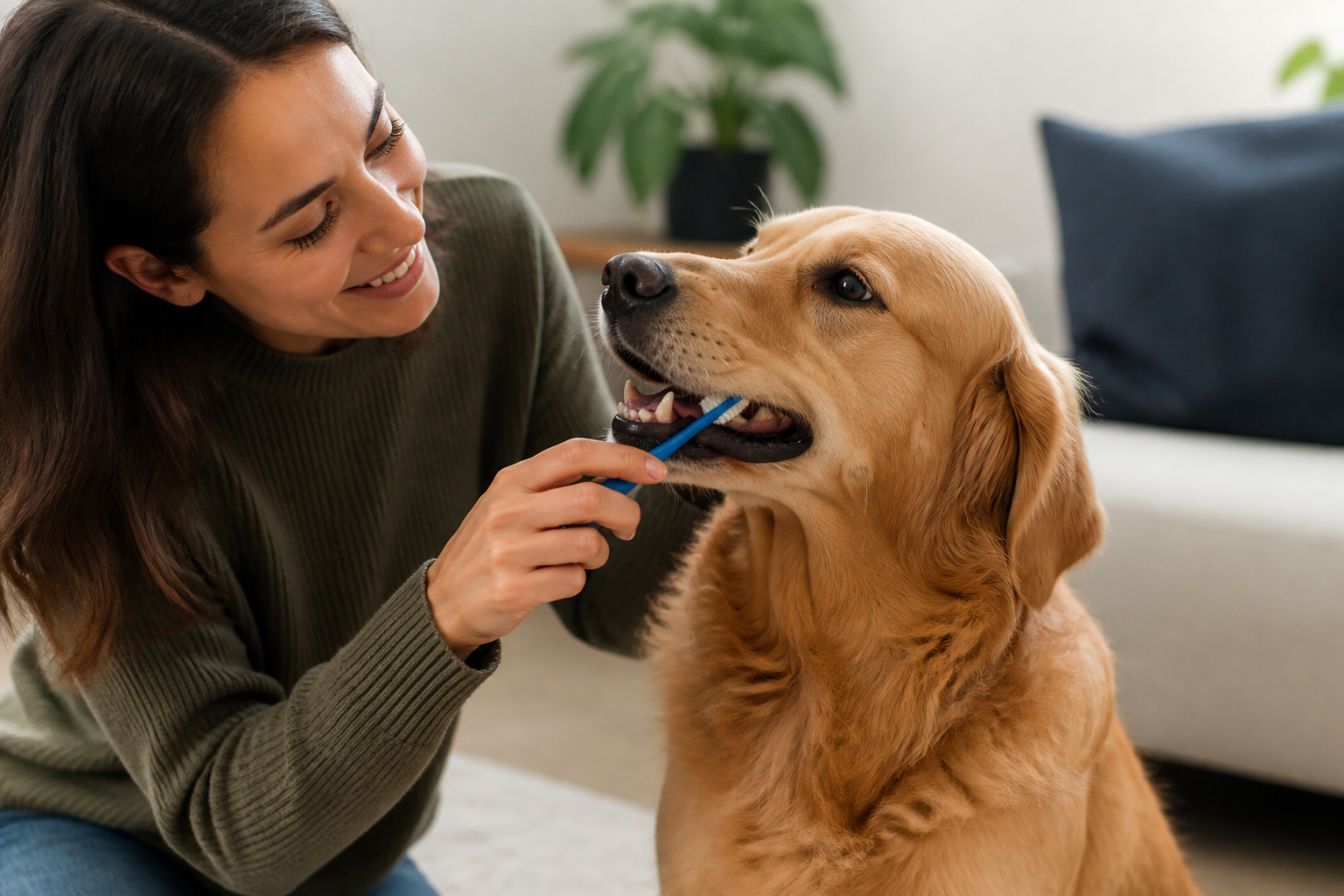
Brushing is the gold standard for dog dental care. It is the most effective way to remove plaque before it mineralizes into tartar. While it might feel strange at first, most dogs can learn to enjoy the process if you start slowly.
Choosing the Right Supplies
Never use human toothpaste for your dog. Our toothpaste often contains xylitol, an artificial sweetener that is highly toxic to dogs. It also contains foaming agents that are meant to be spit out, not swallowed. Dog-specific toothpaste comes in flavors like poultry, beef, and peanut butter. These tasty options make the experience a treat rather than a chore.
You also need the right brush. For large dogs, a long-handled pet toothbrush allows you to reach the back molars. For small dogs or puppies, a finger brush often works better. These silicone caps fit over your fingertip and give you more control in a small mouth. If you are in a pinch, a soft-bristled baby toothbrush can also work.
For more guidance on introducing brushing, read these pet dental care tips.
How to Start a Brushing Routine
Do not expect to brush every tooth on the first day. Start by letting your dog lick the toothpaste off your finger. Once they like the taste, gently rub your finger along their gums. Gradually introduce the brush, focusing on the outside surfaces of the teeth. This is where most plaque accumulates.
Step 1: Choose a quiet time when your dog is relaxed.
Step 2: Let them taste the flavored toothpaste.
Step 3: Lift the lip and gently brush the front teeth in a circular motion.
Step 4: Gradually work your way toward the back molars over several sessions.
Step 5: Always end with praise or a small reward.
Vet Tip: If your dog is prone to dental issues, aim for daily brushing. If that is not possible, three times a week is the minimum needed to make a real difference. Always consult your veterinarian if you notice bleeding gums or loose teeth during brushing.
Using Dental Chews and Treats
Not every dog will sit still for a toothbrush. This is where dental chews become a valuable tool. These treats are designed to scrub the teeth mechanically as your dog gnaws on them.
You can explore our dog dental care selection for toothpaste, wipes, water additives, and dental chews.
What to Look for in a Chew
When shopping for treats, look for the Veterinary Oral Health Council (VOHC) Seal of Acceptance. This seal means the product has been tested and proven to reduce plaque or tartar by at least 20 percent. Some chews contain enzymes that help break down bacteria. Others have a specific texture that acts like a squeegee for the tooth surface.
For more ideas between brushing sessions, see our guide to dental chews for dogs.
Safety First with Chews
Always supervise your dog when they are enjoying a dental chew. You want to make sure they are actually chewing the treat rather than gulping it down in large chunks. If a dog swallows a large piece of a hard chew, it can cause a dangerous blockage. Choose a size that is appropriate for your dog's weight. A chew that is too small can be a choking hazard for a large breed.
- Select the correct size for your dog's weight.
- Monitor your dog until the chew is completely finished.
- Check for the VOHC seal on the packaging.
- Avoid extremely hard items like cooked bones or stones that can fracture teeth.
Key Takeaway: Dental chews are a great supplement to brushing, but they are not a total replacement. They work best on the chewing surfaces and the back teeth where dogs do the most grinding.
Browse our dog dental treats for options designed around chewing and oral care.
Water Additives and Oral Sprays
If your dog is particularly resistant to mouth handling, water additives are a low-stress option. These are tasteless and odorless liquids that you add to your dog's daily water bowl. They contain enzymes and ingredients that help kill plaque-building bacteria.
Oral sprays work in a similar way. You spray them directly onto the teeth and gums. They are often used to freshen breath instantly while providing a layer of protection against bacteria. These tools are excellent for maintenance, but they cannot remove existing tartar buildup.
Our dental and breath care products include water additives and other options for maintaining your dog’s oral routine.
The Role of Diet in Dental Health
What your dog eats every day has a significant impact on their teeth. There is a common belief that all dry kibble cleans teeth simply because it is crunchy. However, most kibble is small and crumbles easily. This means it provides very little scrubbing action.
Specialized Dental Diets
Some dogs benefit from a specific dental diet. These formulas use larger kibble pieces with a fibrous texture. Instead of crumbling, the tooth sinks into the kibble, which scrapes the surface as the dog bites down. Some of these diets also contain minerals that bind to calcium in the saliva. This prevents it from hardening into tartar.
Our pharmacy carries a variety of prescription dental diets through our partnership with Pet's Choice. These foods are often recommended for dogs that have had multiple extractions or have a high genetic risk for gum disease. Because these are medical diets, you will need a prescription from your vet to order them.
Bottom line: While diet alone won't solve every dental problem, a specialized kibble can provide daily mechanical cleaning for dogs prone to heavy plaque.
Identifying Signs of Dental Disease
As a pet owner, you are the first line of defense. You should check your dog’s mouth at least once a week. Flip the lips and look at the back teeth. Look for any changes in the gums or the color of the teeth themselves.
For additional guidance on symptoms, read about warning signs of bad teeth in dogs.
Common Red Flags
Bad breath is the most obvious sign, but it is not the only one. Healthy gums should be a vibrant pink. If the gums look red, swollen, or bleed when touched, your dog likely has gingivitis. You might also see yellow or brown crust along the gumline. This is tartar, and it cannot be brushed away at home.
Behavioral Changes
Dogs are stoic. They will often continue to eat even if they have a painful mouth. Watch for subtle signs of discomfort. Your dog might drop food while eating or chew only on one side. They may lose interest in their favorite hard toys. In some cases, a dog might become grumpy or shy away when you try to pet their face.
- Persistent bad breath (halitosis).
- Red, swollen, or bleeding gums.
- Visible brown or yellow tartar.
- Excessive drooling or pawing at the mouth.
- Loss of appetite or difficulty chewing.
You can also browse our dental and breath care collection when looking for routine oral-care products.
Professional Veterinary Cleanings
Even with perfect home care, most dogs will eventually need a professional cleaning. We clean our own teeth twice a day and visit a dentist twice a year. Dogs deserve the same level of care. A professional cleaning is the only way to address the bacteria living under the gumline.
Why Anesthesia is Necessary
A real dental cleaning for a dog must be done under general anesthesia. It is impossible to safely and effectively scale under the gums while a dog is awake. Anesthesia allows the vet to perform a full examination, take X-rays, and clean every surface of the tooth without causing the dog stress or pain.
X-rays are especially important. Most dental disease happens where you cannot see it. An X-ray can reveal bone loss, infected roots, or hidden abscesses. If a tooth is dead or severely infected, the vet may need to remove it to prevent the infection from spreading.
Vet Tip: Schedule a dental check-up at least once a year. Small breeds and certain dogs like Greyhounds often need professional cleanings more frequently because their teeth are crowded or they have thin enamel.
Creating a Manageable Dental Routine
At BaxterBoo, we believe the best routine is the one you can actually stick to. You do not have to do everything at once. Start with one habit and build from there. For example, you might start with a dental chew every other day. Once that is part of your routine, try brushing once a week.
Consistency is more important than perfection. If you miss a day of brushing, do not worry. Just pick it up again the next day. Combining different methods often yields the best results. A dog that gets a dental diet, a daily chew, and twice-weekly brushing will have much healthier teeth than a dog that only gets an occasional treat.
Key Takeaway: A multi-modal approach—combining brushing, chews, and professional care—is the most reliable way to ensure your dog lives a long life free from dental pain.
Common Mistakes to Avoid
One of the biggest mistakes is waiting until you see a problem to start care. Dental prevention is much cheaper and easier than treating advanced disease. Another common error is using hard items like cow hooves or heavy bones. While these might seem like good cleaners, they are often harder than the tooth enamel. This can lead to painful slab fractures that require emergency extractions.
Avoid "anesthesia-free" cleanings offered by some groomers. These services only scrape the tartar off the visible part of the tooth. While the teeth might look whiter, the dangerous bacteria under the gumline are left behind. This gives owners a false sense of security while the disease continues to progress beneath the surface.
Senior Dogs and Dental Care
As dogs age, their dental needs become even more critical. Senior dogs are more likely to have compromised immune systems. This makes them more susceptible to the systemic infections caused by oral bacteria. Many owners worry about putting a senior dog under anesthesia for a cleaning. However, modern anesthesia is very safe for seniors when preceded by proper blood work.
Managing your senior dog's dental health can significantly improve their quality of life. Removing painful, infected teeth often gives a senior dog a "second puppyhood" because they are finally free from chronic discomfort. Talk to your vet about a customized plan for your older pet.
Conclusion
Keeping your dog's teeth clean is a lifelong commitment. By starting a routine of brushing, using high-quality dental chews, and scheduling regular vet visits, you can prevent most major oral health issues. We are proud to support your pet's wellness journey at BaxterBoo by providing the tools and expert-selected products you need for a healthy smile. Whether you are looking for VOHC-approved treats or need to fill a prescription for a dental diet through our pharmacy, we are here to help. Taking these steps today means more years of happy, healthy, and fresh-smelling nuzzles from your best friend.
- Start brushing early and use dog-safe flavored toothpaste.
- Use VOHC-certified dental chews for mechanical cleaning.
- Monitor your dog's mouth for redness, tartar, or bad breath.
- Schedule annual professional exams and cleanings with your vet.
Bottom line: Consistent home care combined with professional veterinary cleanings is the only way to truly protect your dog from the dangers of periodontal disease.
FAQ
How often should I actually brush my dog's teeth?
Ideally, you should brush your dog's teeth every day to prevent plaque from hardening into tartar. If daily brushing is not realistic for your schedule, aim for at least three times a week. Any amount of brushing is better than none, but consistency is what prevents long-term dental disease.
Can I use human toothpaste if I only use a tiny bit?
No, you should never use human toothpaste on a dog. Human toothpaste contains ingredients like xylitol, which is toxic, and detergents that can upset a dog's stomach when swallowed. Dog-specific toothpaste is designed to be safely swallowed and comes in flavors that make the experience much easier for both of you.
Do dental chews really work as well as brushing?
Dental chews are a helpful tool, but they are not as effective as brushing. Chews mostly clean the chewing surfaces of the back teeth through mechanical friction. Brushing allows you to reach the gumline and the front teeth where chews often miss, making it the most thorough way to remove plaque.
Why does my dog need anesthesia for a dental cleaning?
Anesthesia is necessary because it allows the veterinarian to clean deep under the gumline where the most harmful bacteria live. It also ensures the dog remains still so the vet can take accurate X-rays and perform a full oral exam without the dog feeling any pain or stress. Anesthesia-free cleanings are purely cosmetic and do not treat the underlying disease.






