
 Save 15% on your 1st Autoship learn more

 Email us
 Live Chat
 FAQs





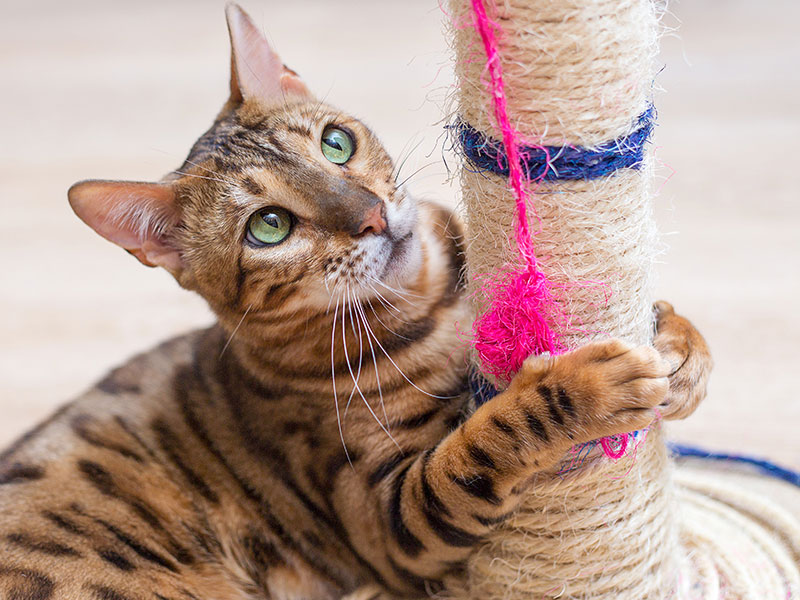
Cat scratchers offer benefits to both you and your pet. Felines have a natural scratching instinct, and the behavior helps them shed their old claws and mark their territory. Having at least one scratcher available helps you to channel this instinctual behavior in an appropriate manner. Cats without access to scratchers often turn to unsuitable substitutes, such as walls and furniture. Over time, they can cause significant destruction if not provided with a better outlet for their scratching habits.
Cat scratchers are not intended to last forever. Sooner or later, you may need to invest in a new one. But how do you know when it's time to replace a cat scratcher?
How Long Do Cat Scratchers Last?
There are many different factors that determine the life span of a cat scratcher. One of the most significant is the material it is made from. Cardboard appeals to some cats as a scratching material because it mimics the texture of tree bark. However, it is a rather flimsy material that your pet may destroy rather quickly. Scratchers made of sturdier material , such as wood, tend to last longer.
The number of cats in your household may also determine how long a scratching post will last. The more cats you have, the more abuse the scratcher is likely to take. It might help to get a larger, more elaborate scratching post that allows several kitties to play at the same time. This won't necessarily prevent you from having to replace the scratcher eventually, but it may buy you some time.
Having only one cat doesn't necessarily mean that you won't have to replace the scratcher as often. It depends on your cat's activity level, and this can vary based on multiple factors, such as temperament, breed, and age. The higher your kitty's activity level, the more use she is likely to get out of her scratcher. Therefore, its life span depends on factors such as:
-
Where the kitty scratches
-
How often the kitty uses the scratcher
-
How intensely the kitty scratches
If your cat has a low activity level and doesn't scratch very often or very intensely, the scratcher may last longer.
As a general rule, scratchers made of sturdy materials need to be replaced every couple of years, while flimsier scratchers may only last up to six months.
How Do You Know When the Scratcher Needs Replacement?
Your cat's behavior can be an indicator of whether the scratcher needs to be replaced. As long as he is still using it and seems to be getting enjoyment out of it, he can continue using it as long as it is safe to do so, e.g., there are no broken pieces that present a choking hazard or a sharp edge. If your cat has lost interest in a scratcher that he previously enjoyed, it may be time to consider a replacement. It may be an indication that he has become bored with it or it is no longer satisfying his instinctual scratching needs.
Sometimes you can tell just by looking at a scratcher if it needs to be replaced. If the felt, carpet, or rope covering the scratcher has been ripped to shreds, it might be time for a replacement. However, if the underlying structure of the scratcher is sound, some people prefer to extend the life of the scratcher by simply replacing the outer material. The safety of your cat should be your primary concern, however, and if the scratcher has deteriorated to the point that it poses hazards, it should be replaced.
Your cat's age may also determine whether you need to replace a scratcher. Older kitties can develop arthritis, making jumping up on tiered scratching posts more painful than fun. You may want to choose a replacement scratcher that includes ladders or ramps that provide easier access to the higher levels for an aging kitty.
How Do You Interest Your Cat in a New Scratcher?
Cats are known for their curiosity, so they may investigate the new scratcher right away. You can encourage their interest with treats so that interacting with the post becomes a positive experience.
On the other hand, cats are also creatures of habit, so they may not show interest in a new scratcher right away. It may help if you choose a scratcher that is similar to the old one in materials, configuration, and size. If you put it in the same place as the old one, it may help your kitty understand what the new scratcher is for. On the other hand, if your cat has developed a habit of scratching where she isn't supposed to, it may also help to place the scratcher in that area.
Part of the reason that cats scratch is to mark their territory. They have scent glands in their paws, and the act of scratching causes them to secrete a distinctively scented fluid. Your cat's old scratcher was likely loaded with his scent, and the smell of the new one may be off-putting. Sprinkling catnip on the scratcher improves its smell and may make it more appealing.
In addition to rewarding your cat with treats when she shows interest in the scratcher, you can also leave a few treats on top of it for her to find. The smell of the treats is likely to draw her to it, and if she associates it with food, it might encourage her to keep coming back.
Depending on the old scratcher's condition and materials, it may be possible to repurpose it rather than throwing it away. For example, wooden components may be useful for projects around the house, such as new shelves.







- Site & Contents BaxterBoo.com. BaxterBoo is located in the United States.
- Privacy & Security
- Terms of Use
- Accessibility Statement
