
 Save 15% on your 1st Autoship learn more

 Email us
 Live Chat
 FAQs





Introduction
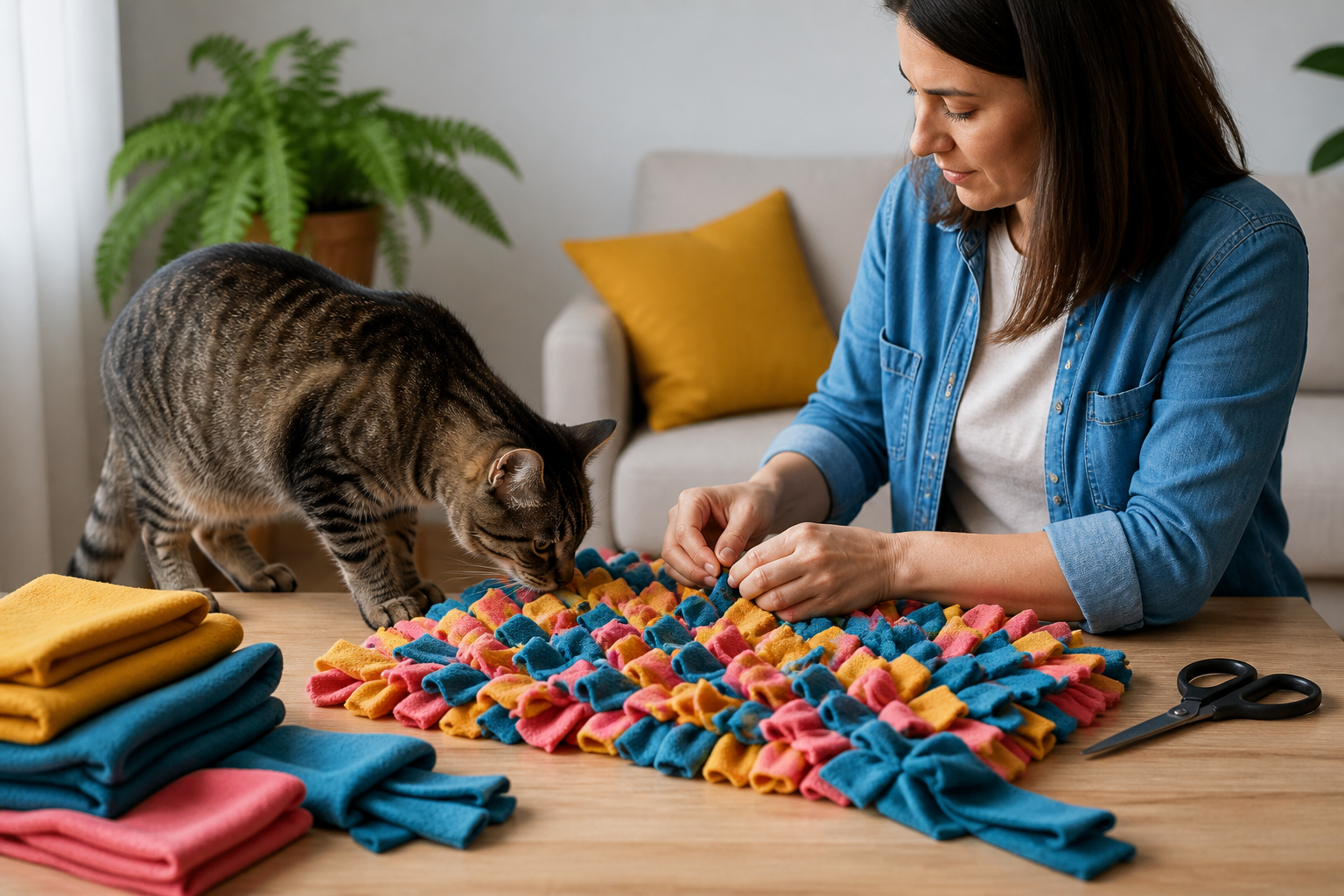
Your cat is currently staring at the kitchen cabinet where you keep the treats. Maybe they are batting at your ankles while you try to work or perhaps they have decided that your favorite armchair is their new scratching post. These are common signs that your feline friend is bored and looking for a way to use their natural hunting instincts. At BaxterBoo, we know that an engaged cat is a happy cat. One of the easiest and most effective ways to provide this engagement is through a snuffle mat. This simple tool encourages foraging behavior by hiding treats inside layers of soft fabric. This post covers exactly how to build your own mat from scratch and how to use it to improve your cat's daily routine. Creating a custom enrichment toy is a practical way to support your pet's mental and physical well-being.
Quick Answer: A cat snuffle mat is a DIY foraging toy made by tying fleece strips to a rubber mat base. You hide dry food or treats inside the fabric strips to force your cat to use their nose to find their meal.
Why Cats Benefit from Foraging Toys
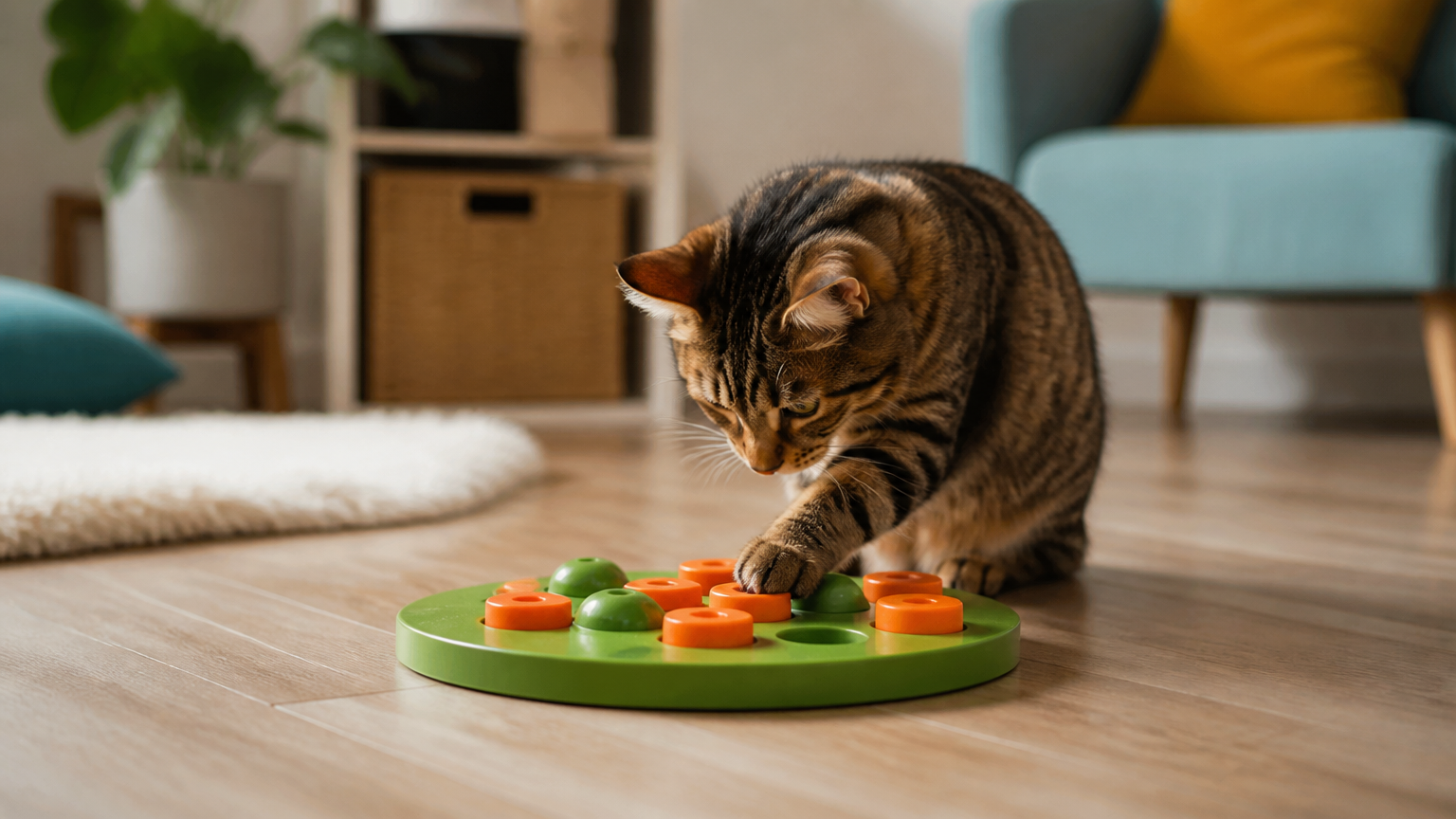
In the wild, cats spend a significant portion of their day hunting for small meals. They are built to stalk, pounce, and search. When we bring them indoors, we often remove that challenge by placing a bowl of food on the floor twice a day. This can lead to boredom and even anxiety. A snuffle mat brings back the "search" part of the hunting cycle. It slows down their eating process and keeps their brain sharp. For more ideas, explore these indoor enrichment activities.
Foraging toys are not just about entertainment. They serve as a vital tool for cats that eat too fast. If your cat tends to scarf down their kibble and then immediately get sick, a snuffle mat can be a lifesaver. It forces them to pick up one piece of kibble at a time. This natural pacing is much better for their digestion. It also provides a sense of accomplishment. When a cat successfully "hunts" for their food in the mat, it releases feel-good hormones that can help calm a nervous or high-energy pet.
Key Takeaway: Snuffle mats satisfy a cat's biological urge to forage, which can reduce behavioral issues caused by boredom and improve digestive health by slowing down mealtime.
Cat Toys for Enrichment


Essential Supplies for Your DIY Project
You do not need many tools to create a high-quality snuffle mat. Most of these items are inexpensive and can be found at local craft or hardware stores. We recommend choosing materials that are durable and easy to clean.
- A Rubber Sink Mat: This serves as the base. Look for a mat with holes that are large enough to thread fabric through but small enough to keep the mat sturdy. A standard kitchen sink mat usually works best.
- Fleece Fabric: Fleece is the best material because it does not fray when cut. You will need about one to one and a half yards of fabric. You can use different colors to make the mat visually appealing.
- Fabric Scissors: Sharp scissors are essential for cutting through multiple layers of fleece.
- A Ruler or Measuring Tape: This helps you keep your strips consistent in size.
When selecting your fleece, think about the texture. Some cats prefer softer, plushier fleece, while others might like a thinner material that is easier to move around. Avoid using fabrics like cotton or wool that might unravel. Loose threads can be a choking hazard or cause intestinal blockages if swallowed.
Step-by-Step: How to Assemble the Mat
Making the mat takes a bit of time but the process is very straightforward. You can easily do this while watching a movie or listening to a podcast.
Step 1: Prep the Fleece
Start by cutting your fleece into strips. For a standard cat-sized mat, strips that are one inch wide and seven to eight inches long are ideal. You will need a lot of them. A typical small sink mat might require between 150 and 200 strips to make it look full. Do not worry about making them perfectly straight. The variation in the fabric actually makes it more challenging and fun for the cat.
Step 2: Begin the Vertical Rows
Take your rubber mat and your first strip of fleece. Push one end of the strip through a hole in the mat. Take the other end and push it through the hole immediately next to it. Flip the mat over and tie the two ends together in a single knot. You do not need a double knot as the fleece is bulky enough to stay in place. Continue this process all the way down the first row of holes.
Step 3: Complete the Vertical Sections
Repeat the process for every row on the mat. Once you finish all the vertical rows, you will see the mat starting to fill up. However, it will still have some gaps. These gaps are where the treats will fall through to the floor if you do not fill them in.
Step 4: Tie the Horizontal Rows
To make the mat dense, you now need to tie strips horizontally across the vertical ones. Take a strip and thread it through the first hole of row one and the first hole of row two. Tie it just like before. This creates a "cross-stitch" pattern that makes the fleece stand up straight. This density is what hides the treats effectively.
Step 5: The Final Inspection
Once you have finished both the vertical and horizontal rows, flip the mat over. Check for any empty holes or sections that look thin. Add extra strips wherever they are needed. Give the mat a good shake to make sure all the knots are secure. Fluff up the strips with your hands so they stand in different directions.
Bottom line: Creating a dense mat with horizontal and vertical ties ensures that treats stay hidden and the mat remains durable during vigorous foraging.
Choosing the Best Treats for Foraging
The success of your snuffle mat depends heavily on what you put inside it. If the reward isn't interesting enough, your cat might lose interest. Since we carry over 500 trusted brands at BaxterBoo, we have a few recommendations for what works best in a DIY mat. Start with our cat treats collection when choosing suitable options.
Freeze-dried treats are usually the top choice. Brands like Stella and Chewy’s or Vital Essentials offer freeze-dried raw bites that are incredibly smelly to a cat. Since cats rely on their sense of smell to forage, these strong-scented treats make the game much more exciting. You can also use small pieces of high-quality kibble from brands like Tiki Cat or Farmina.
If your cat is on a weight management plan, you can use their regular dry food instead of high-calorie treats. This turns mealtime into a game and ensures they are working for their nutrition. Browse our cat food selection for dry-food options. If your cat is particularly picky, try a variety of textures. Mixing crunchy kibble with soft, smelly treats provides a multi-sensory experience that keeps them engaged for longer.
Vet Tip: If your cat has a sensitive stomach or specific allergies, consult your veterinarian before introducing new treats to their snuffle mat. Our pharmacy offers prescription diets that can be used as healthy alternatives for foraging if your cat is on a restricted diet.
Adapting the Mat for Different Cat Personalities
Not every cat will approach a snuffle mat the same way. Understanding your cat's personality will help you introduce the toy effectively.
The Bold Hunter
Some cats will dive right in. They will use their paws to move the fleece and their nose to root around. For these cats, you can bury the treats very deep. You can even tie a few strips a little tighter to create "pockets" that are harder to open. This keeps the challenge high for a cat that solves puzzles quickly.
The Shy or Hesitant Cat
If your cat is a bit nervous about new objects, they might be wary of the mat. For these pets, start by placing treats on top of the fleece where they are clearly visible. Do not hide them at all. Let the cat realize that the mat is a source of good things. Gradually, over several days, begin to tuck the treats slightly under the top layer of fabric.
The Senior Cat
Older cats might have stiff joints or declining vision. For them, a snuffle mat is a great way to provide exercise without requiring a lot of jumping or running. Make sure the mat is placed on a non-slip surface so they feel stable while they lean over it. Use very smelly treats to compensate for any loss in their sense of smell.
Training Your Cat to Use the Mat
You might think that a cat would instinctively know how to use a snuffle mat, but some need a little guidance. For additional ideas, see these clever brain games for cats.
- Introduce the mat while it is empty. Let your cat sniff the fleece and get used to the new object in their environment.
- Place high-value treats on the surface. Use three or four treats and place them right on top of the strips.
- Hide treats partially. Once they eat the surface treats, tuck the next round halfway into the fabric.
- Full foraging. Finally, bury the treats at the very bottom of the mat.
- Use a verbal cue. Words like "find it" or "search" can help your cat understand that it is time to play.
If your cat starts to bite or pull on the fleece strips, gently redirect them. The goal is for them to use their nose and paws, not their teeth. If they become too frustrated and start trying to destroy the mat, take it away and try again later with easier-to-find treats.
Safety Tips and Keeping It Clean
Safety is the most important factor when introducing any new toy. While fleece is generally safe, no toy is completely indestructible.
Key Takeaway: Always supervise your cat during snuffle mat play to ensure they do not chew or swallow the fabric strips, which can lead to serious health issues.
One of the benefits of using a rubber sink mat and fleece is that the finished product is usually machine washable. We recommend placing the snuffle mat inside a pillowcase and tying it shut before putting it in the washing machine. Use a gentle cycle with cold water and a pet-safe, unscented detergent. Avoid using fabric softeners as the strong scent can be overwhelming for a cat's sensitive nose. Air dry the mat completely before giving it back to your cat.
Check the mat regularly for loose knots or thinning fabric. If your cat manages to pull a strip off, remove the strip immediately. If the rubber base becomes cracked or brittle, it is time to make a new one. Using the mat for 10 to 15 minutes at a time is usually sufficient for mental stimulation. When the session is over, pick up the mat and store it out of reach. This keeps the toy "fresh" and exciting for the next time.
When Enrichment Meets Health
Enrichment toys like snuffle mats are a big part of a proactive health plan. By reducing stress and preventing obesity through slower eating, you are helping your cat live a longer life. However, sometimes behavioral or digestive issues require more than just a DIY toy.
If your cat continues to show signs of extreme anxiety, such as over-grooming or hiding, it is important to talk to your vet. They may suggest calming supplements or even prescription medications. Our cat pharmacy carries FDA-approved medications and calming aids through our partnership with Pet's Choice. We provide access to these specialized products for cats with chronic health needs, ensuring you have everything required for their care in one place.
Similarly, if the snuffle mat does not stop your cat's digestive issues, they may need a specialized prescription diet. Our pharmacy carries these diets for a variety of conditions, including kidney health, urinary support, and weight management. Using a snuffle mat with a prescription diet can be a great way to manage a chronic condition while still providing the mental stimulation your cat craves.
Conclusion
A DIY cat snuffle mat is a simple project that offers massive rewards for your pet's quality of life. It turns a basic necessity like eating into an engaging game that mirrors their natural instincts. By following the steps to build a dense, high-quality mat, you provide your cat with hours of entertainment and better digestive health. Remember to use high-quality treats from brands you trust and always supervise play sessions for safety. At BaxterBoo, we are here to support your journey as a pet owner with the best gear, food, and pharmacy services.
- Gather your supplies: rubber mat, fleece, and scissors.
- Cut and tie strips in both directions for maximum density.
- Start with easy-to-find treats and increase the difficulty slowly.
- Wash the mat regularly to keep it hygienic.
To find the perfect treats or food to use with your new snuffle mat, explore our cat supplies. If you are looking for even more value, consider joining the MVP Rewards program to earn points on every purchase.
FAQ
Can I use a snuffle mat for wet food? No, snuffle mats are designed specifically for dry kibble or dehydrated treats. Wet food will soak into the fleece strips and become impossible to clean, which can lead to bacterial growth. If your cat only eats wet food, consider a silicone lick mat instead.
How often should I let my cat use the snuffle mat? Most cats benefit from using the mat once or twice a day during their normal meal times. It is best to use it in short bursts of 10 to 15 minutes to prevent them from becoming overstimulated or bored. Always pick the mat up after the treats are gone to keep it a special activity.
What should I do if my cat starts eating the fleece? If your cat tries to chew or swallow the fabric, take the mat away immediately. This behavior can lead to dangerous intestinal blockages. You may need to supervise them more closely or try a different type of enrichment toy made from a harder material that they cannot chew.
Is a snuffle mat good for kittens? Yes, snuffle mats are excellent for kittens as they help develop their cognitive skills and keep them busy. Since kittens have a lot of energy, a snuffle mat can be a great way to tire them out before bedtime. Just make sure the strips are tied very securely since kittens can be quite vigorous with their play.


- Site & Contents BaxterBoo.com. BaxterBoo is located in the United States.
- Privacy & Security
- Terms of Use
- Accessibility Statement
