Save 15% on your 1st Autoship learn more

 Email us
 Live Chat
 FAQs
FAQs





Introduction
Your cat likely spends most of the day lounging in a sunny spot. However, when the sun goes down, that pent-up energy often turns into shredded curtains or midnight sprints across your bed. Cats are natural hunters that need a job to do. When they do not have a way to use their instincts, they get bored and stressed. A DIY snuffle mat for cats is a simple solution to keep them mentally sharp. At BaxterBoo, we believe that enrichment should be easy and accessible for every pet owner. This guide will walk you through creating a custom foraging mat using basic supplies. You will learn how to turn mealtime into a rewarding game that satisfies your cat's natural urge to hunt and explore.
What Is a Snuffle Mat?
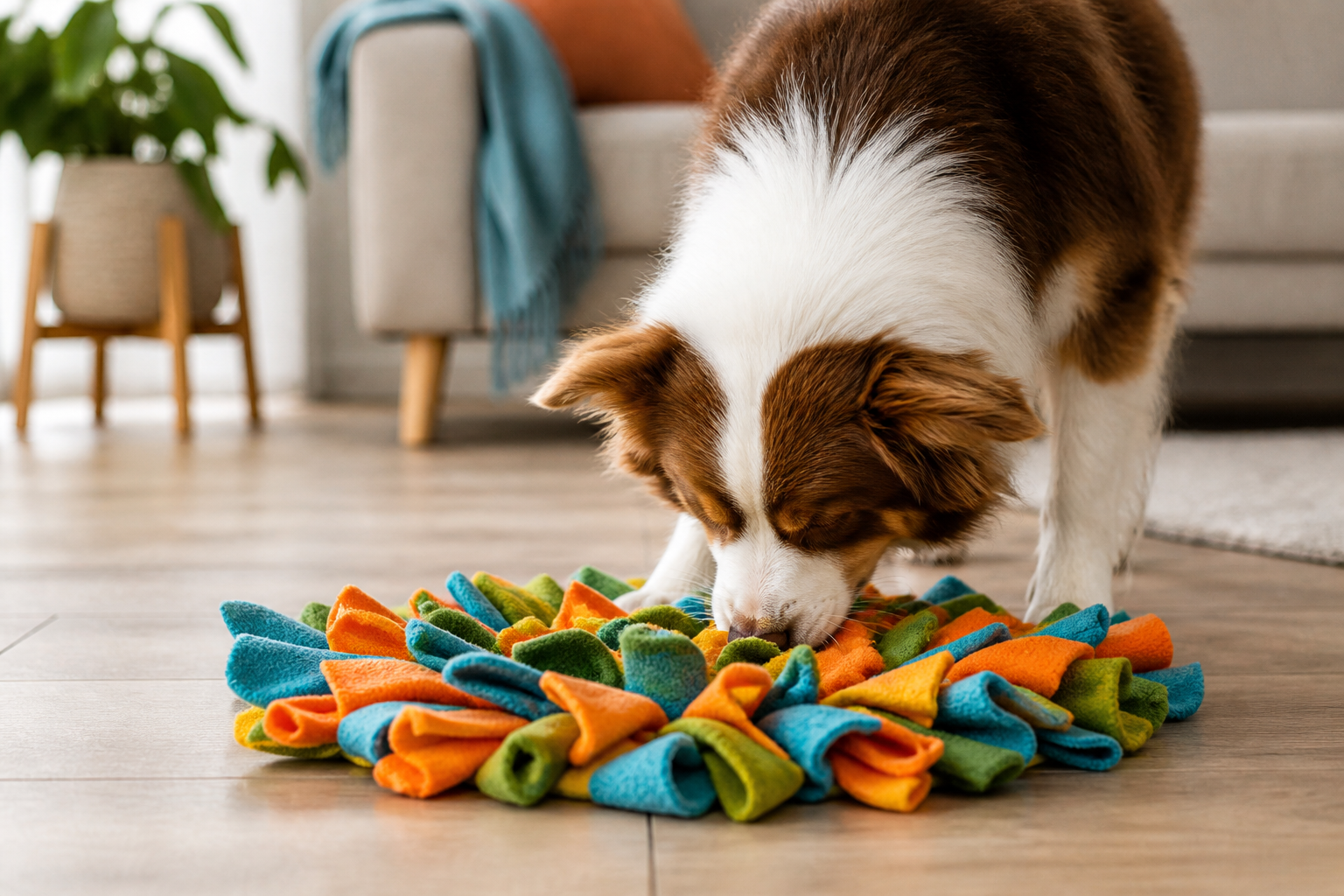
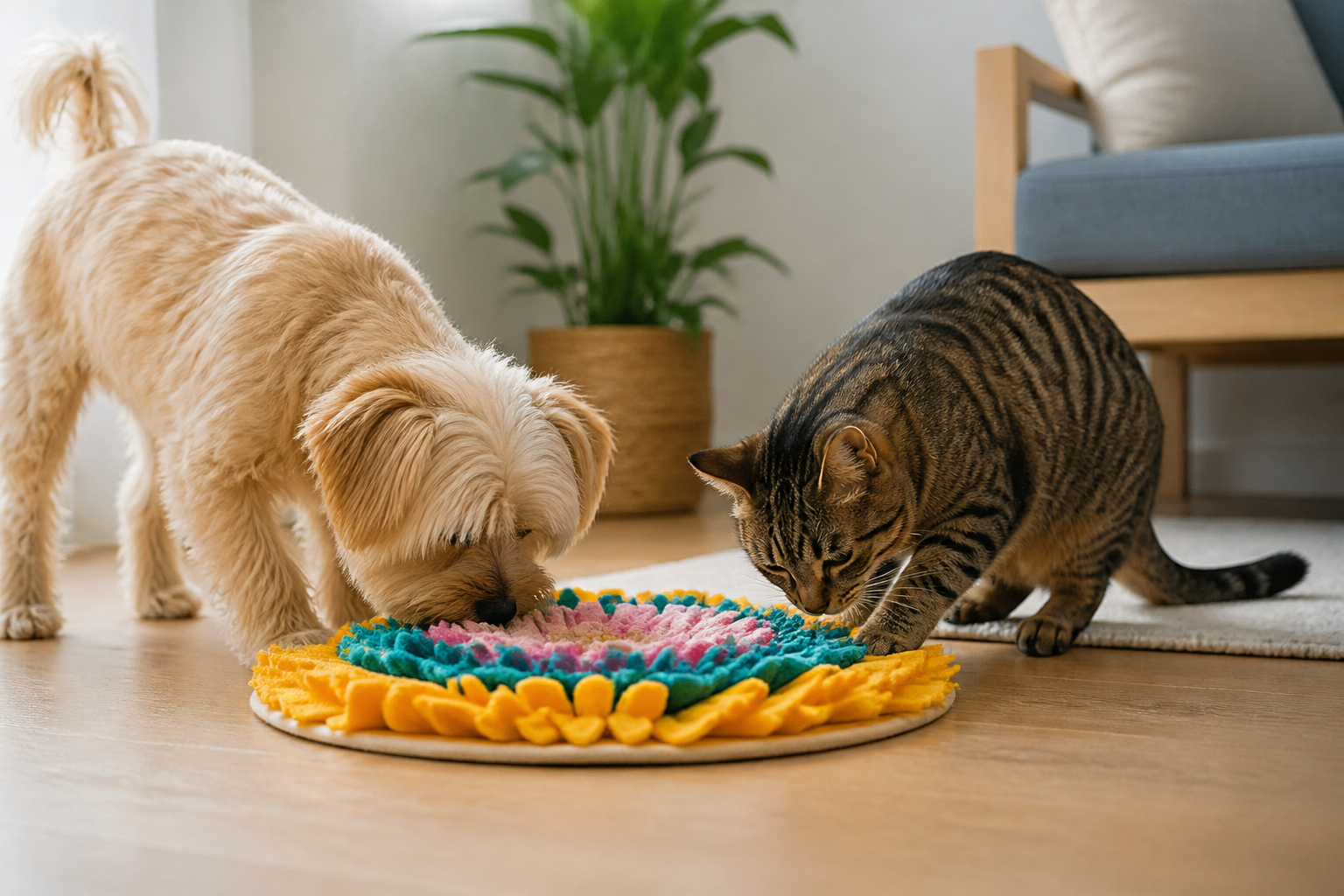
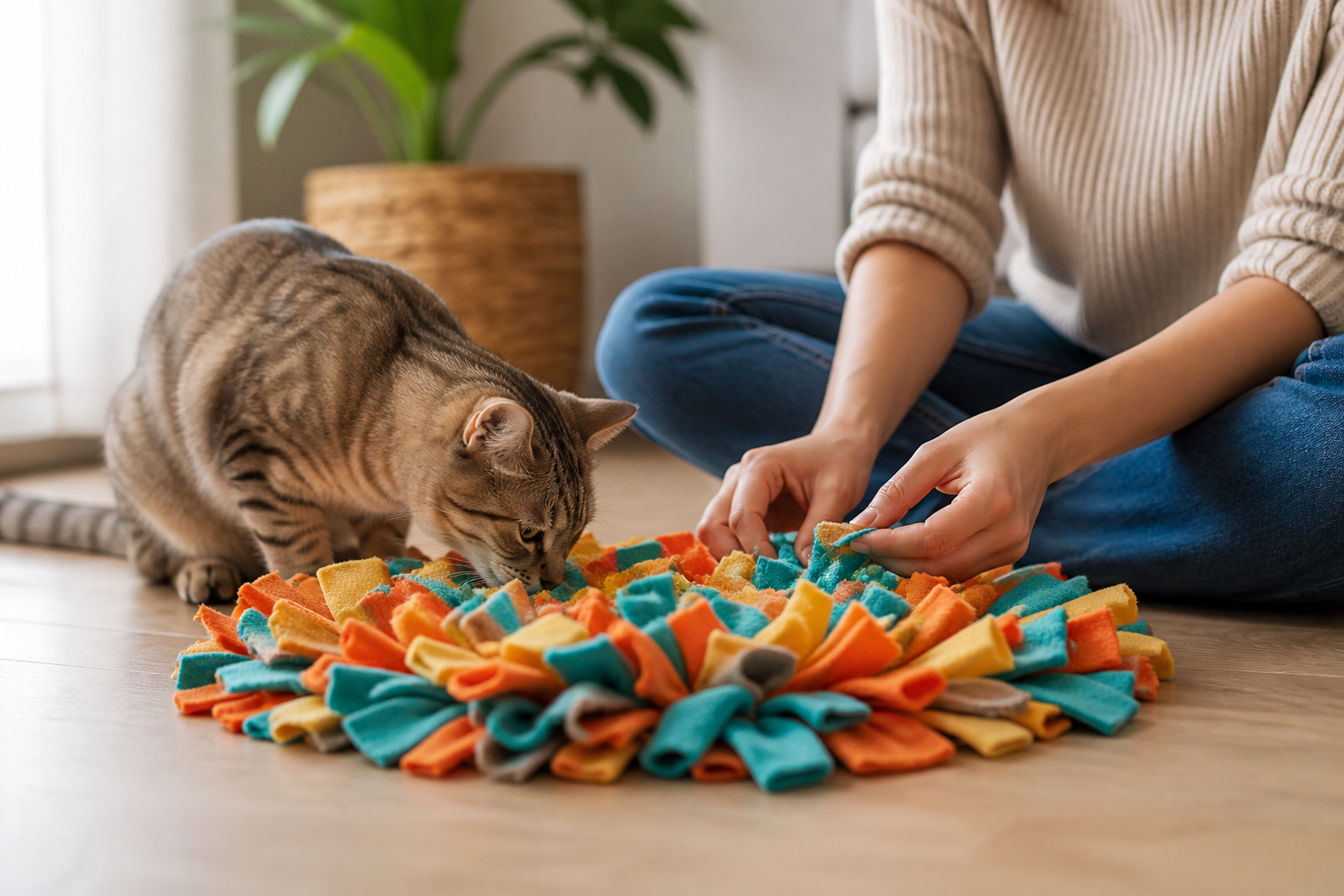
A snuffle mat is a sensory puzzle toy made of fabric strips tied to a sturdy base. The long pieces of fabric mimic tall grass or undergrowth. You hide dry food or treats deep inside these fabric layers. Your cat must then use their nose and paws to find the hidden rewards.
For most cats, food is usually served in a plain bowl. This is convenient for us but boring for them. In the wild, a cat would spend hours searching for its next meal. The snuffle mat brings that experience into your living room. It engages their sense of smell, which is much stronger than our own. It also rewards their persistence, making them feel more confident and relaxed. For more ideas, explore these indoor enrichment activities for pets.
Quick Answer: A snuffle mat is a fabric enrichment tool that hides treats within fleece strips to simulate foraging. It helps reduce boredom, slows down fast eaters, and provides mental stimulation for indoor cats.
The Benefits of Foraging for Feline Health
Many indoor cats struggle with weight management or digestive issues. If your cat gulps down their food and then immediately vomits, they are likely eating too fast. This is often called "scarf and barf." A snuffle mat forces them to slow down. They have to find each piece of kibble individually. This slower pace helps their stomach keep up with their appetite.
Mental health is just as important as physical health. Boredom can lead to anxiety or destructive behaviors. Foraging provides a healthy outlet for that nervous energy. It can be especially helpful for cats that live in smaller apartments without much vertical space. You can also find more ideas in this guide to cat brain games.
Vet Tip: If your cat continues to vomit despite slower eating, consult your veterinarian to rule out underlying medical conditions. Our pharmacy at BaxterBoo offers prescription diets and medications through our partnership with Pet's Choice for cats with chronic digestive or anxiety issues.
Materials You Will Need
You do not need specialized tools to make a great snuffle mat. Most of these items can be found at a local hardware store or in your own craft closet.
- A rubber sink mat: Look for one with a grid or hole pattern. These are usually found in the kitchen section of a department store.
- Fleece fabric: You will need about one to one and a half yards. Fleece is the best choice because it does not fray when cut and is soft on a cat's nose.
- Fabric scissors: A sharp pair will make the cutting process much faster.
- Measuring tape or a ruler: This helps keep your strips consistent.
We carry various high-quality treats that work perfectly with these mats. Look for brands like Vital Essentials or Stella and Chewy’s for freeze-dried options that have a strong scent.
Step-by-Step Guide to Making a DIY Snuffle Mat for Cats
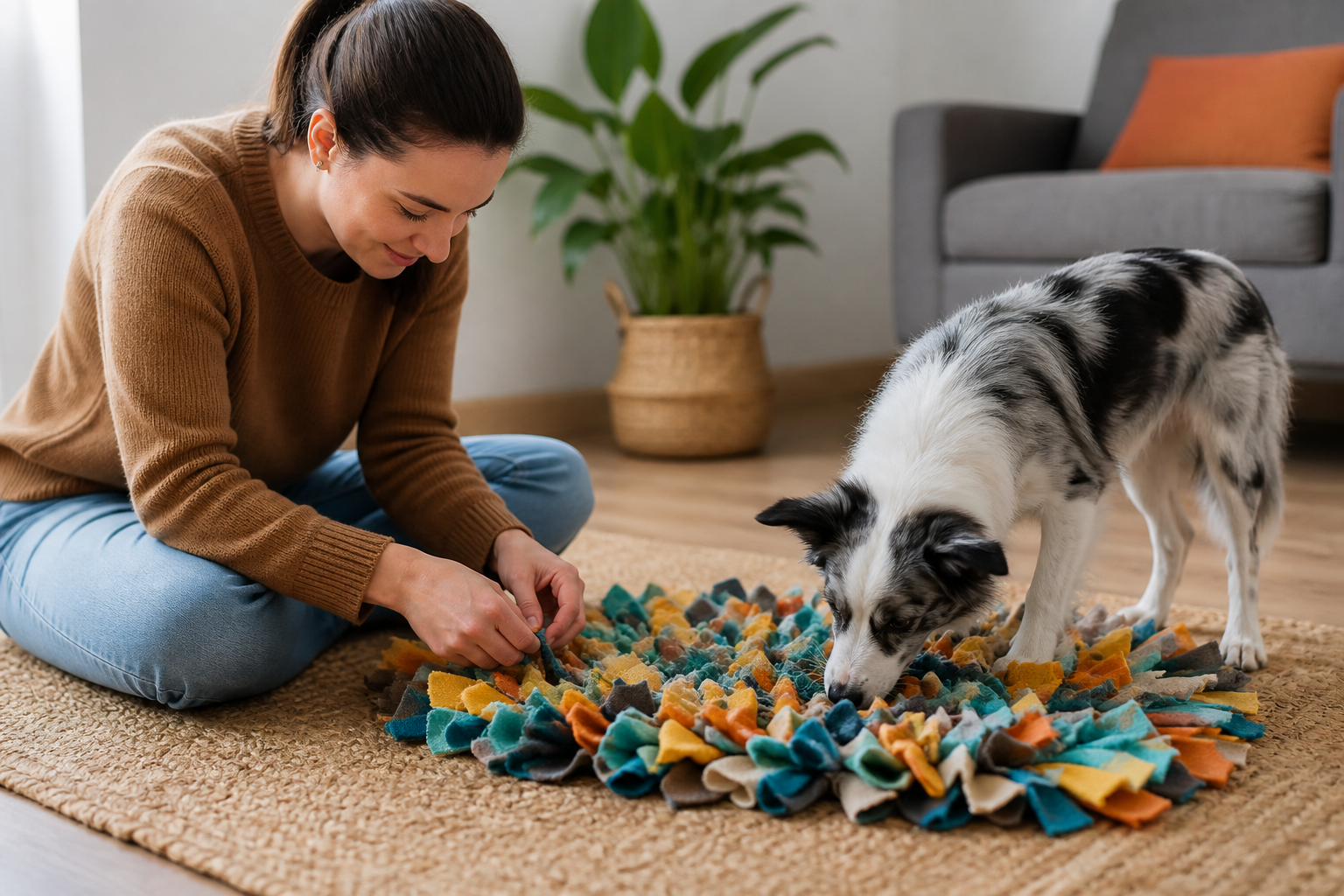
Making the mat is simple but takes a bit of time. It is a great project to do while watching a movie. Follow these steps to ensure the mat is dense enough to hide treats effectively.
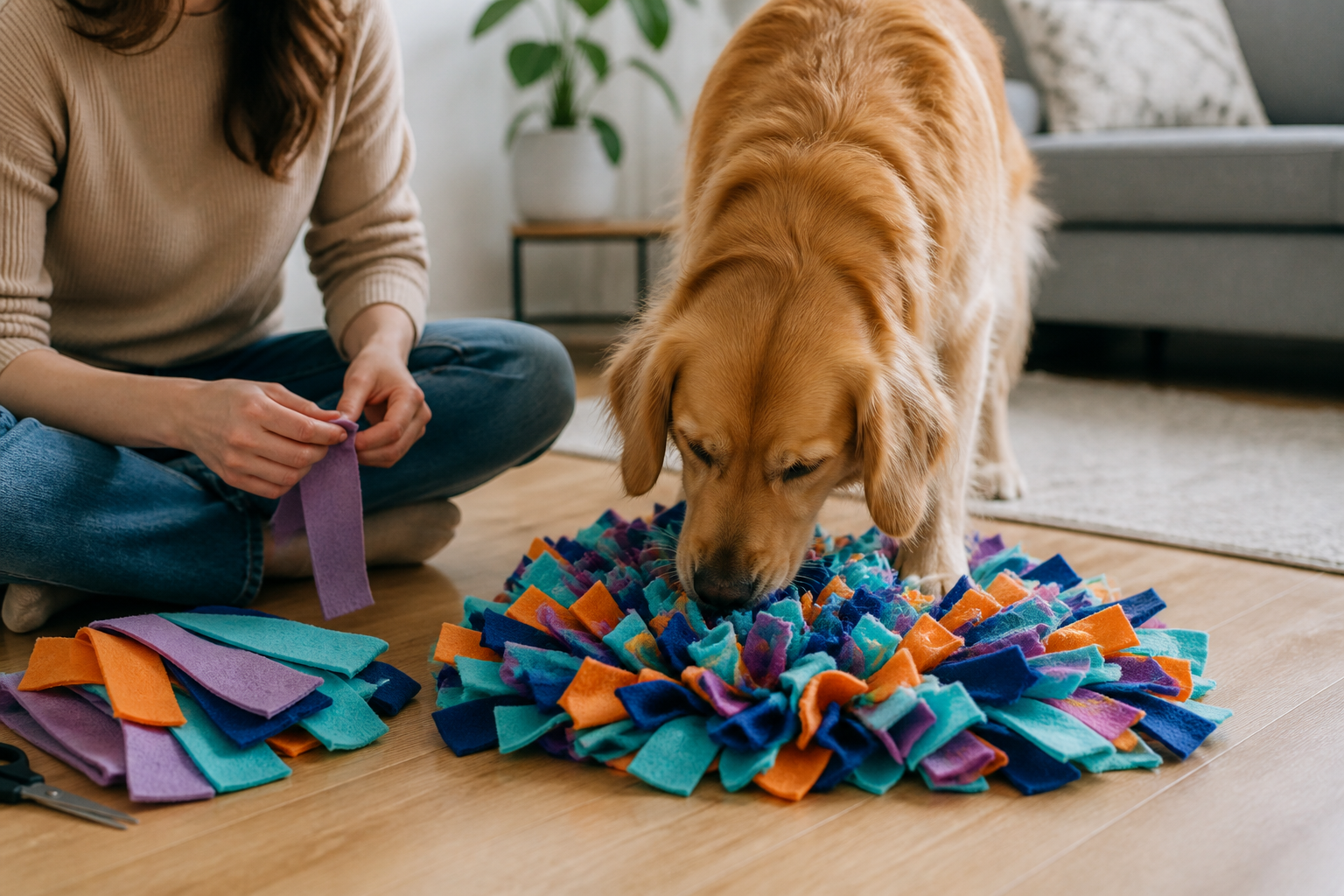
Step 1: Cut the fleece into strips. / Cut your fabric into strips that are roughly one inch wide and seven to eight inches long. Do not worry about being perfectly straight.
Step 2: Start tying the first row. / Take a strip of fleece and poke one end through a hole in the mat. Poke the other end through the hole next to it. Tie a single knot on the top side of the mat.
Step 3: Fill the horizontal and vertical gaps. / Continue tying strips across every row. Once the horizontal rows are done, go back and tie strips vertically between the holes. This creates a thick "forest" of fleece.
Step 4: Check for bare spots. / Flip the mat over and look for any large gaps in the rubber grid. Add more strips until the base is completely covered and the fleece stands up on its own.
Key Takeaway: Density is the most important factor. If the strips are too thin or too far apart, the treats will just fall to the bottom and be too easy to find.
Choosing the Best Fabric for Your Cat
While we recommend fleece, you might wonder about using other materials. Fleece is the gold standard for a few reasons. First, it is machine washable. Cats can be messy, and the mat will eventually need a deep clean. Second, fleece is durable. If your cat likes to knead or "make biscuits" on soft surfaces, fleece will hold up to their claws.
Avoid using felt or cotton. Felt is often too stiff and can be abrasive on a cat's sensitive nose. Cotton or old t-shirts will fray at the edges. Small threads can be dangerous if a cat accidentally swallows them. Stick to anti-pill fleece for the safest and longest-lasting results.
How to Introduce the Mat to Your Cat
Do not expect your cat to understand the mat immediately. Some cats might be wary of a new object in their space. Start slowly to build their confidence.
- Level 1: Place a few highly smelly treats right on top of the fleece. Let your cat see you put them there.
- Level 2: Once they are comfortable eating from the mat, tuck the treats slightly under the first layer of fleece.
- Level 3: Hide the treats deep at the bottom of the mat. You can even ruffle the fleece to make it harder to see where the treats went.
If your cat gets frustrated and tries to flip the mat over, go back to Level 1. The goal is to make it a fun game, not a source of stress.
Bottom line: Start with treats on the surface and gradually hide them deeper as your cat learns how to forage.
Best Treats and Food for Your New Mat
The type of food you use matters. Wet food should never be used in a snuffle mat because it is impossible to clean out of the fabric. Stick to dry kibble or hard treats. We carry several brands that are ideal for this activity, including our cat treats collection.
- Freeze-dried morsels: Brands like PureVita or Tiki Cat offer freeze-dried treats that are very aromatic.
- High-protein kibble: If you use the mat for mealtime, choose a premium brand like Farmina or Orijen.
- Dental treats: Using the mat with dental treats can encourage more chewing, which is great for oral health.
Using the mat for regular meals is a fantastic way to manage weight. It turns a thirty-second meal into a ten-minute activity. This helps your cat feel full sooner. For dry food options, browse our cat food collection.
Cleaning and Maintenance
Your DIY snuffle mat will collect cat hair, dust, and crumbs over time. It is important to keep it clean to prevent bacteria from growing. Because you used a rubber base and fleece strips, the mat is quite durable.
- Shake the mat out outside to remove loose crumbs and hair.
- Place the mat in a mesh laundry bag to protect the rubber base.
- Wash on a cold, gentle cycle with a pet-safe, unscented detergent.
- Air dry the mat completely. Do not put it in the dryer, as the high heat can melt the rubber sink mat.
Regular cleaning ensures that the mat remains a healthy and inviting place for your cat to play. We recommend washing it once every two weeks if used daily.
Safety and Supervised Play
While snuffle mats are generally safe, you should always supervise your cat during use. This is especially true if you have a cat that likes to chew on fabric.
If you notice your cat trying to rip the fleece strips off or chewing on the rubber base, take the mat away. Swallowing fabric or rubber can cause serious intestinal blockages. These situations often require emergency veterinary care.
When the "hunting" session is over, pick the mat up and put it away. This keeps the mat special and prevents your cat from getting bored with it. It also ensures they do not use it as a chew toy or a bed when you are not watching. You can also consider other interactive cat toys for supervised play.
Key Takeaway: Always supervise your cat during snuffle sessions and store the mat out of reach when it is not in use.
Customizing Your Mat for Different Needs
Every cat is different, and you can adjust your DIY design to suit their personality. For a kitten, you might use shorter strips that are easier to navigate. Kittens have smaller noses and less patience, so a "shorter" forest is a good starting point.
For a senior cat with mobility issues, use a larger mat so they do not have to stand in one spot too long. If they have joint stiffness, the gentle movement of searching through the mat can be a light form of physical therapy. You might also look into joint supplements like Cosequin or Zesty Paws to support their mobility alongside enrichment.
Conclusion
A DIY snuffle mat for cats is more than just a toy. It is a tool for better health, less stress, and a stronger bond between you and your pet. By taking an hour to tie some fleece strips, you are providing your cat with a vital outlet for their natural instincts. We love seeing pet owners take an active role in their animals' wellness. Whether you are helping a fast eater slow down or giving a bored indoor cat a new challenge, this project is well worth the effort. To keep your cat happy and healthy, consider joining our MVP Rewards program to earn points on all your treat and toy supplies.
FAQ
How do I clean a DIY snuffle mat for cats?
You can wash the mat in a washing machine on a cold, gentle cycle. It is best to place it inside a pillowcase or a mesh laundry bag first. Always air dry the mat because the heat from a dryer can damage or melt the rubber base.
What are the best treats for a snuffle mat?
Small, dry, and smelly treats work best. Freeze-dried liver or chicken morsels are excellent because they have a strong scent that encourages foraging. Avoid using anything wet, greasy, or crumbly that might get stuck in the fabric fibers.
Can I use a snuffle mat for my cat's daily meals?
Yes, using a snuffle mat for dry kibble is a great way to slow down cats that eat too fast. It turns mealtime into a mental workout and can help with weight management. Just ensure the mat is cleaned regularly if it is used for every meal.
How long does it take to make a DIY snuffle mat?
Most people can finish a standard-sized mat in about one to two hours. The most time-consuming part is cutting the fabric into strips. Once the strips are ready, the tying process goes fairly quickly while you listen to music or watch a show.