Save 15% on your 1st Autoship learn more

 Email us
 Live Chat
 FAQs
FAQs





Introduction
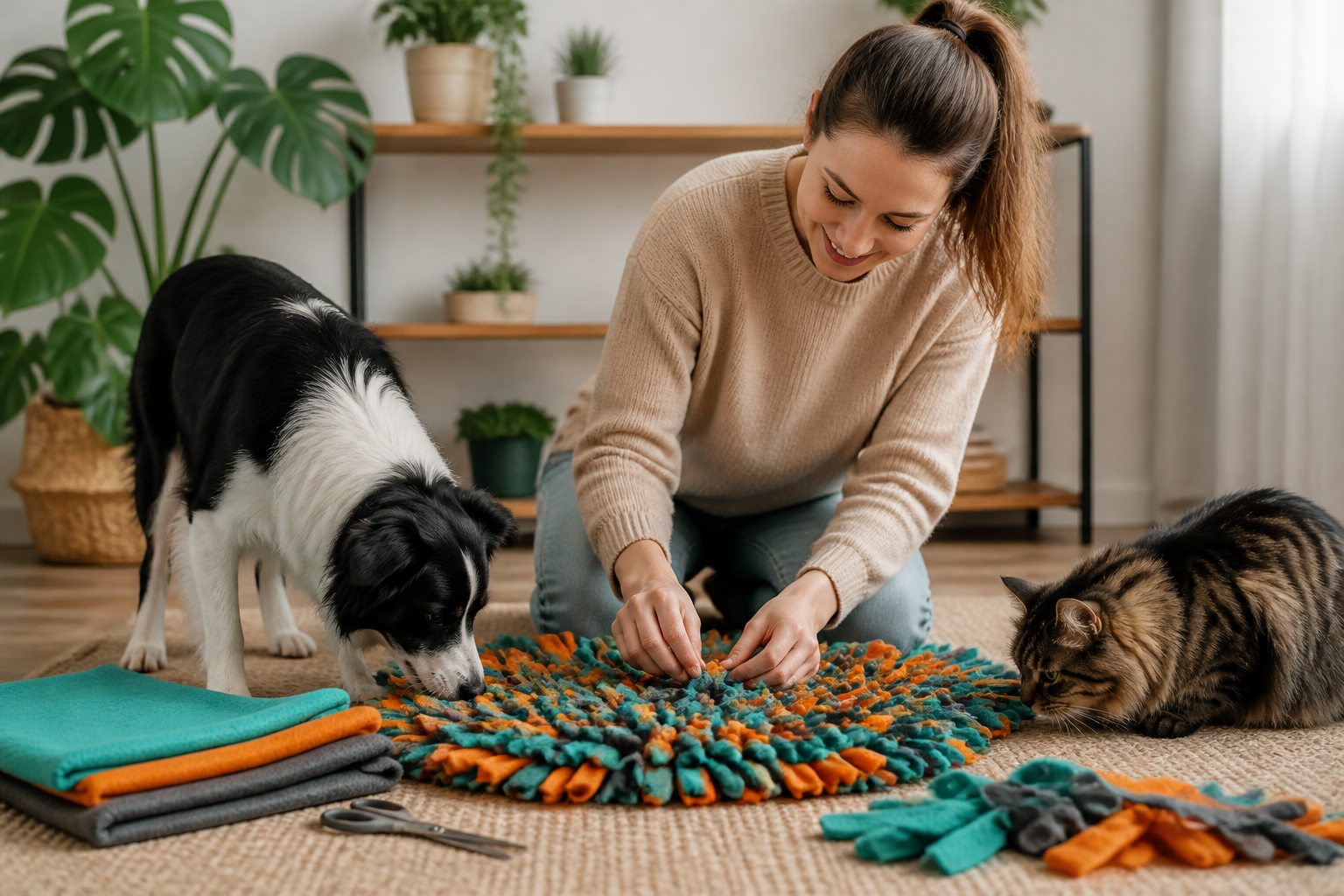
You just set the food bowl down and your dog has already finished the meal. That lightning-fast eating often leads to an upset stomach or weight gain. At BaxterBoo, we see this often with high-energy pups and food-motivated cats who need a way to slow down. Creating a DIY snuffle mat is a simple way to turn mealtime into a game while providing essential mental enrichment. This post covers exactly how to build a durable, washable snuffle mat using two different methods to suit your crafting skills. We want to help you provide a healthy outlet for your pet’s natural foraging instincts. A well-made snuffle mat keeps your pet engaged, tires them out mentally, and supports better digestion.
The Science of Sniffing and Enrichment
Dogs experience the world through their noses. A huge part of their brain is dedicated to processing scents. When we ask dogs to live in our homes, they often lose the chance to use these natural skills. This can lead to boredom or destructive behaviors like chewing furniture.
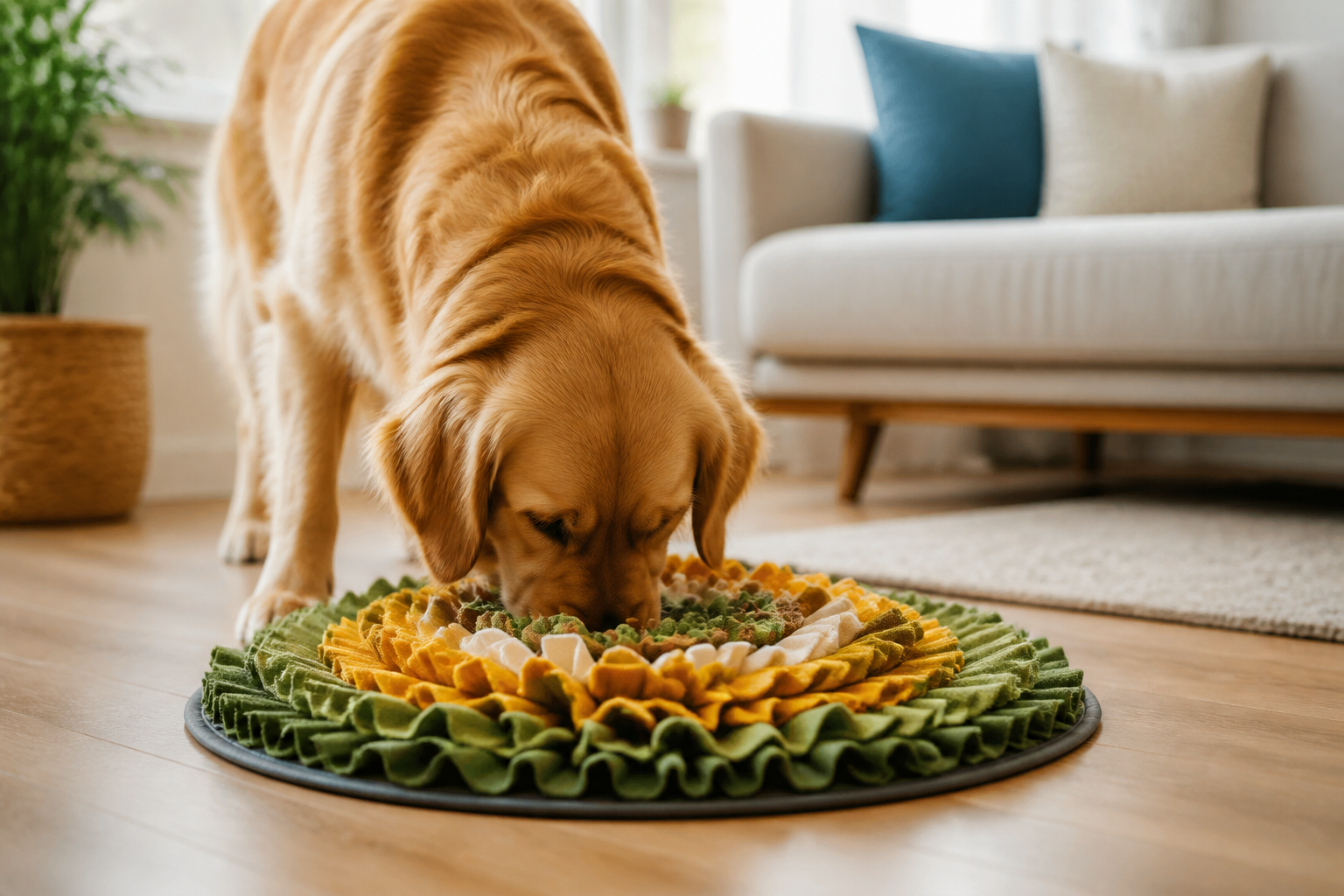
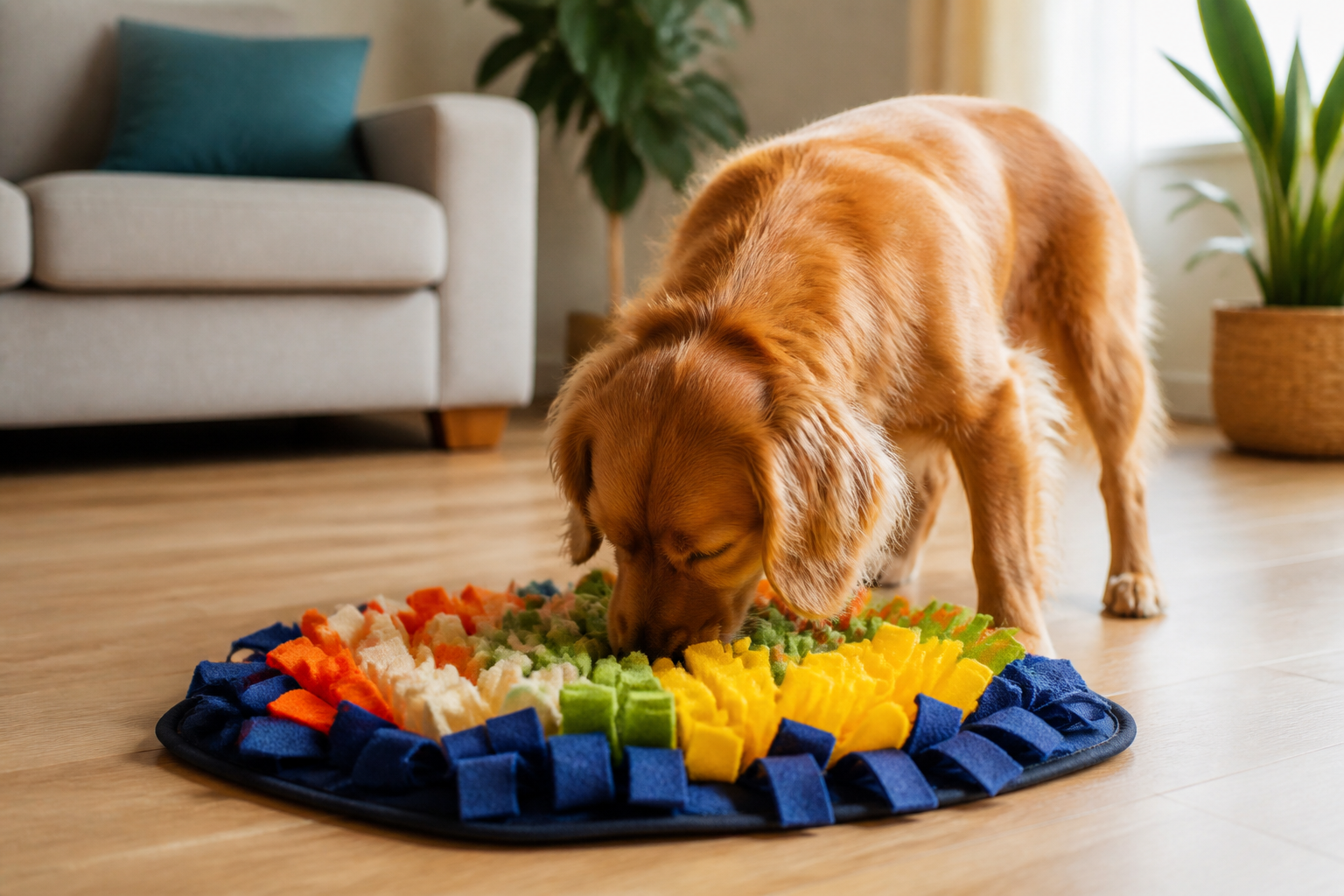
A snuffle mat mimics the experience of hunting for food in long grass. By hiding kibble or treats inside fabric strips, you force your pet to use their nose to find every morsel. This is often called nose work. Just fifteen minutes of intense sniffing can be as tiring for a dog as a long walk. It is an excellent tool for rainy days or for senior dogs with limited mobility. For more ways to keep pets engaged indoors, explore these indoor enrichment ideas.
Quick Answer: A snuffle mat is an enrichment toy made of fabric strips tied to a base. It hides dry food or treats to encourage pets to use their sense of smell for foraging. This slows down fast eaters and provides mental stimulation.
Why a Washable Mat is Essential
Many DIY tutorials suggest using cardboard bases. While cardboard is cheap, it is not durable. It cannot be cleaned when it gets covered in dog drool or food dust. Bacteria can grow quickly on organic materials that stay damp.
A washable mat is much more hygienic. Whether you use a rubber base or a fabric base, you need to be able to remove allergens and saliva. Using fleece is the best choice for these projects. Fleece does not fray when cut. It is also soft on your pet’s nose and stands up well to repeated cycles in the laundry.
Gathering Your Supplies
You do not need many items to get started. Most of these can be found at a local craft store or even repurposed from items you have at home.
For the no-sew version, you will need:
- A rubber or plastic sink mat with plenty of holes.
- One to two yards of anti-pill fleece fabric.
- Sharp fabric scissors or a rotary cutter.
- A ruler or measuring tape.
For the sewn version, you will need:
- Two large pieces of heavy fleece for the base.
- One to two yards of fleece for the strips.
- A sewing machine and heavy-duty thread.
- Scissors.
Key Takeaway: Choose anti-pill fleece for your mat. This material is durable, does not fray, and remains soft after many washes, making it the safest option for a pet's sensitive nose.
Method 1: The No-Sew Rubber Base Snuffle Mat
This is the most popular version because it requires no special skills. It is sturdy and has a good weight. This weight prevents most dogs from simply flipping the mat over to get the food.
Step 1: Prepare the Base
Start with a rubber sink mat. These are usually found in the kitchen aisle. Look for a mat with holes that are at least half an inch wide. If the holes are too small, you will struggle to pull the fabric through. If you have a very large dog, you can use zip ties to join two mats together for a bigger surface area.
Step 2: Cut the Fleece Strips
Lay your fleece flat. Cut the fabric into strips that are approximately one inch wide and seven inches long. You will need a lot of these. For a standard 12 by 12 inch sink mat, you might need between 150 and 200 strips.
You do not need to be perfect with your measurements. Your dog will not mind if one strip is a little wider than the others. Using multiple colors can make the mat look more vibrant, but a single color works just as well.
Step 3: Tie the Strips
Take one strip of fleece and push one end through a hole in the mat. Push the other end through the hole right next to it. Both ends should now be on the top side of the mat. Tie a single overhand knot. You do not need a double knot. The friction of the fleece will keep it secure.
Step 4: Fill the Pattern
Work in rows across the mat. Once you finish one row of horizontal ties, go back and do a row of vertical ties. This creates a dense, grassy look. A dense mat is better because it hides the food more effectively. If you can see the rubber base when you look down, you need more strips.
Vet Tip: If your dog is a known chewer, supervise them closely during the first few uses. Ensure they are not pulling off and swallowing the fleece strips. If the mat becomes damaged, remove it immediately to prevent an intestinal blockage.
Method 2: The Fully Machine-Washable Sewn Mat
Some people find that rubber mats can get a bit stiff in the washing machine. If you want a mat that is 100 percent fabric, the sewn method is the way to go. This version is also easier to fold up for travel.
Step 1: Create the Base
Cut two large rectangles of fleece for your base. A good size is 18 inches by 24 inches. Sew these two pieces together around the edges to create a thick, stable foundation. Leave a small gap to turn it right side out, then sew that gap shut.
Step 2: Prepare the Long Strips
Instead of small individual strips, you will cut long rows of fleece. Cut strips that are four inches wide and as long as your mat base.
Step 3: Attach the Rows
Lay a long strip across the base. Sew a straight line right down the center of the strip, attaching it to the base. Space these rows about one inch apart until the entire base is covered.
Step 4: Create the Fringe
Once all the rows are sewn down, take your scissors and cut into the sides of the strips every inch. Stop just before you hit the center seam. This creates a shaggy, fringed effect that is perfect for hiding kibble.
Bottom line: The sewn method creates a lighter, more flexible mat that is easier to toss into a standard washing machine load.
How to Introduce the Snuffle Mat
Do not just drop a fully loaded mat on the floor and walk away. Some pets need to learn how the game works. If they get frustrated, they might try to chew the mat or pick it up and shake it.
Step 1: Start easy. Place a few high-value treats right on top of the fleece. Let your pet see you put them there.
Step 2: Once they eat those, tuck a few more just slightly under the top layer.
Step 3: Encourage them with praise when they use their nose to find the hidden bits.
Step 4: Gradually hide the food deeper into the strips as your pet becomes a pro.
If your dog tries to grab the mat with their teeth, gently say "no" and pick the mat up. Wait a minute and try again. This teaches them that the mat is a tool for sniffing, not a tug toy. You can also find more ideas in this guide to dog brain games and scent-based activities.
Cleaning and Maintenance
Since you used fleece and a rubber base or fabric base, cleaning is straightforward. You should wash the mat whenever it starts to smell or looks dusty.
- Take the mat outside and give it a good shake to remove any leftover crumbs.
- For the no-sew rubber mat, place it in a pillowcase or a mesh laundry bag. This protects your washing machine from the rubber hitting the drum.
- Wash on a cold, gentle cycle with a pet-safe, fragrance-free detergent.
- Avoid fabric softeners. These can leave a strong scent that is overwhelming for a dog’s sensitive nose.
- Air dry the mat. High heat in the dryer can damage the rubber base or cause the fleece to pill and lose its softness.
- Check for loose strips before every use.
- Wash the mat at least once every two weeks if used daily.
- Ensure the mat is completely dry before storing it to prevent mildew.
Health Benefits of Slow Feeding
A snuffle mat is more than just a toy. It is a functional tool for health management. Many dogs suffer from digestive issues because they eat too fast. This behavior, often called "scarfing," leads to swallowed air, gas, and occasionally a dangerous condition called bloat.
By using a snuffle mat, you can extend a meal that usually takes 30 seconds into a ten-minute activity. This slower pace allows the stomach to send signals to the brain that it is full. This is especially helpful for dogs on a weight management plan. For additional mealtime ideas, read about ways to slow down fast eating.
Our pharmacy at BaxterBoo offers a variety of prescription diets for weight management and digestive health through our partnership with Pet's Choice. If your veterinarian has recommended a specific kibble to help your dog lose weight or manage allergies, using that food in a snuffle mat can make the diet more enjoyable for your pet. Slowing down their intake is a practical way to support their overall wellness journey.
Key Takeaway: Using a snuffle mat to feed daily meals can significantly reduce the risk of digestive upset and help with weight management by preventing overeating.
Choosing the Right Treats and Kibble
To keep the mat clean and effective, you should use the right kind of food. Avoid anything wet, sticky, or greasy. These will leave residue on the fleece that is hard to wash out and may attract pests.
Small, crunchy kibble is the best option. It falls deep into the strips and requires effort to find. If you want to use treats, look for small, freeze-dried options. We carry a wide range of healthy, dry treats from brands like Stella and Chewy's or Vital Essentials that are perfect for snuffle mats. Browse our dog treats collection for options suited to enrichment activities.
If you are using the mat for a cat, try using small pieces of dry cat food or crunchy dental treats. Cats are natural hunters, and they often enjoy the challenge of "pawing" the food out from between the fleece strips. You can also explore our cat treats collection for small rewards.
Troubleshooting Common Issues
Sometimes a pet might not take to the mat immediately. If your cat ignores it, try using a little bit of dried catnip rubbed into the fleece. This can pique their interest in the new object.
If your dog is too aggressive with the mat, you may need to go back to the basics. Hold the mat in your lap while they sniff. This gives you more control and prevents them from grabbing and running with it.
If the mat slides around on your hardwood floors, look for a sink mat with suction cups on the bottom. This keeps the mat in one place while your pet works. Most rubber bases have naturally non-skid properties, which is why we recommend them for the no-sew method.
Safety First
Always supervise your pet while they are using their snuffle mat. While fleece is a safe fabric, no toy is completely indestructible. Puppies who are teething may be especially tempted to chew the strips.
Once your pet has finished finding all the food, pick the mat up and put it away. This keeps the mat special and prevents it from becoming a chew toy. If you notice any parts of the rubber base cracking or fleece strips becoming thin, it is time to make a replacement. For other enrichment options, browse our dog toys collection.
Vet Tip: If your pet accidentally ingests a large amount of fabric, watch for signs of lethargy, vomiting, or changes in bowel movements. Consult your veterinarian immediately if you suspect they have swallowed part of the mat.
Advanced Enrichment Ideas
Once your pet is an expert at the basic snuffle mat, you can increase the difficulty. You can tie the fleece strips closer together to make the "grass" even denser. You can also hide the mat under a thin towel so they have to move the towel before they can even start sniffing.
Another option is to create different textures. You can mix different types of fleece or even add some cotton fabric strips. However, remember that cotton frays, so it will not be as durable or as washable as a purely fleece mat. Stick to fleece for the best long-term results.
At BaxterBoo, we love seeing pets thrive through mental challenges. Whether you are using the mat to help a rescue dog build confidence or to keep a kitten busy while you work, it is a low-cost, high-reward project. For another enrichment approach, see these clever brain games for cats.
Summary of the DIY Process
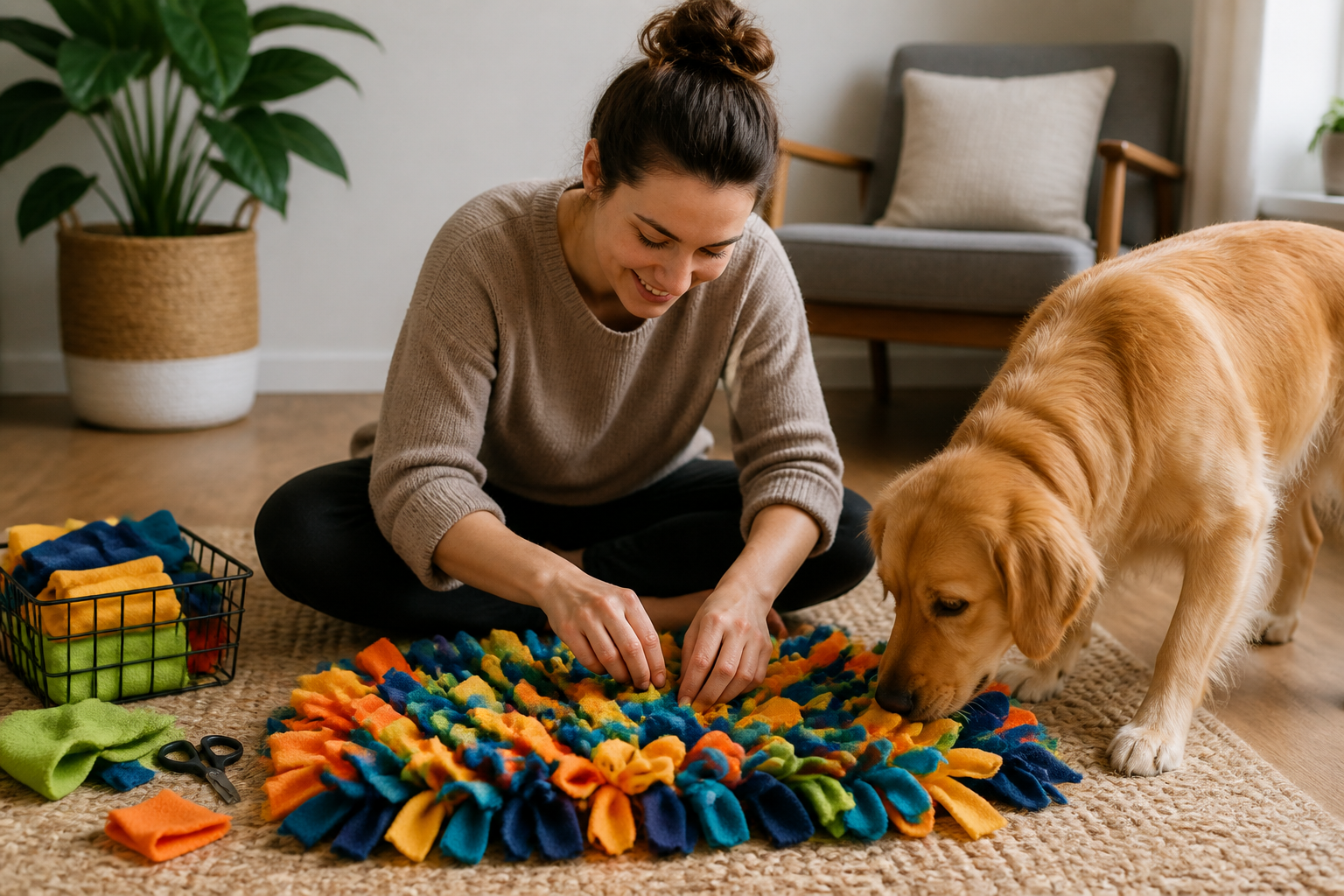
Building a snuffle mat is a rewarding weekend project. It requires minimal tools and provides years of use. Remember to choose the method that fits your lifestyle. The no-sew version is heavy and sturdy, while the sewn version is lightweight and very easy to wash.
- Cut strips to 1" by 7" for the best results.
- Use a rubber sink mat for a sturdy, no-sew base.
- Tie horizontal and vertical rows for maximum density.
- Supervise all play sessions.
- Wash regularly to keep the mat hygienic.
We are proud to support your pet care journey with expert advice and the best supplies. If you need to stock up on the kibble or treats to fill your new mat, consider signing up for our Autoship programme. You will save on your orders and ensure you never run out of your pet's favorite rewards.
Bottom line: A DIY snuffle mat is one of the most effective and affordable ways to improve your pet's daily life and digestive health.
FAQ
How do I stop my dog from just flipping the snuffle mat over?
If your dog flips the mat, they are likely looking for a shortcut. Try using a heavier rubber base or a mat with suction cups. You can also place the mat inside a heavy baking tray or hold the edges with your hands during the first few sessions to encourage them to use their nose instead of their paws.
Is fleece the only fabric I can use for a snuffle mat?
Fleece is highly recommended because it does not fray when cut, meaning your pet won't be swallowing loose threads. It is also durable and stands up well to the agitation of a washing machine. Other fabrics like cotton or denim will fray and become a tangled, unsafe mess very quickly.
Can I use a snuffle mat for a cat?
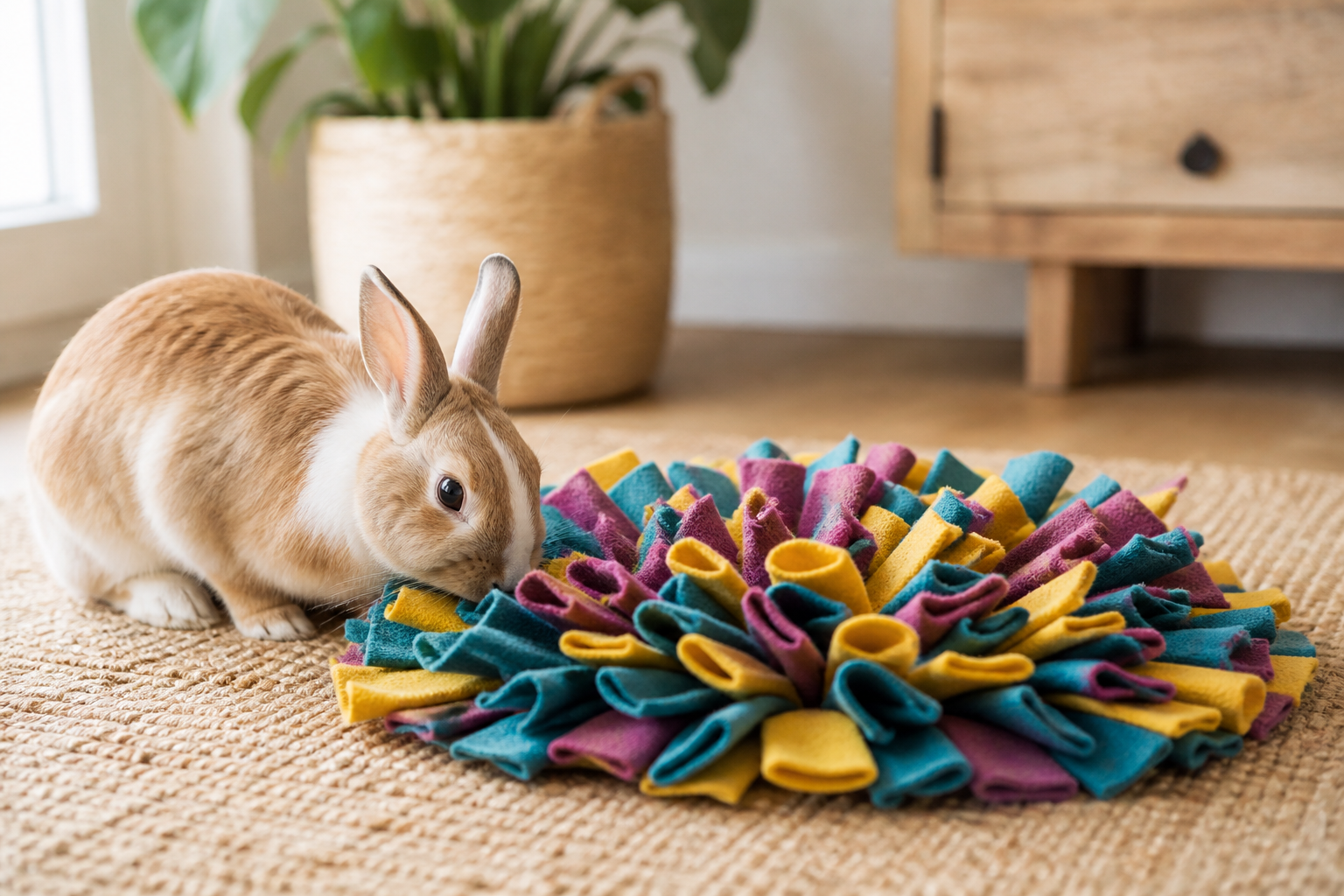
Yes, cats are excellent candidates for snuffle mats. They have a strong hunting instinct and enjoy foraging for their food. Use smaller pieces of dry kibble or cat-specific treats. It is a great way to provide indoor cats with the mental stimulation they often lack.
How many strips of fleece do I actually need?
For a standard sink mat (roughly 12" x 12"), you will need approximately 150 to 200 strips to make it dense enough. If you can see the base through the fabric, the treats will fall right through and the mat won't be challenging enough. It is always better to cut extra strips than to have a thin mat.