Save 15% on your 1st Autoship learn more

 Email us
 Live Chat
 FAQs
FAQs





Introduction
We have all seen that look of pure boredom. Your dog is pacing the hallway or staring at the door while you are stuck inside during a storm. Maybe your dog is the type to inhale their dinner in three seconds flat. These common moments are exactly why enrichment tools like the snuffle mat are so popular. At BaxterBoo, we believe that mental exercise is just as important as a long walk in the park. A snuffle mat is a simple homemade toy that encourages your dog to use their nose to forage for food. This article covers the benefits of scent work and a full guide on how to build one. You will also learn how to introduce it safely to your dog. Building a custom mat is an easy way to provide meaningful mental stimulation.
Understanding the Power of Scent Work
Dogs live through their noses. While humans rely heavily on sight, a dog's primary way of gathering information is through olfaction. Their sense of smell is thousands of times more sensitive than ours. When a dog sniffs, they are not just identifying a scent. They are processing a complex story of who was there and what happened. This is why a short walk with plenty of sniffing can sometimes be more exhausting for a dog than a fast run.
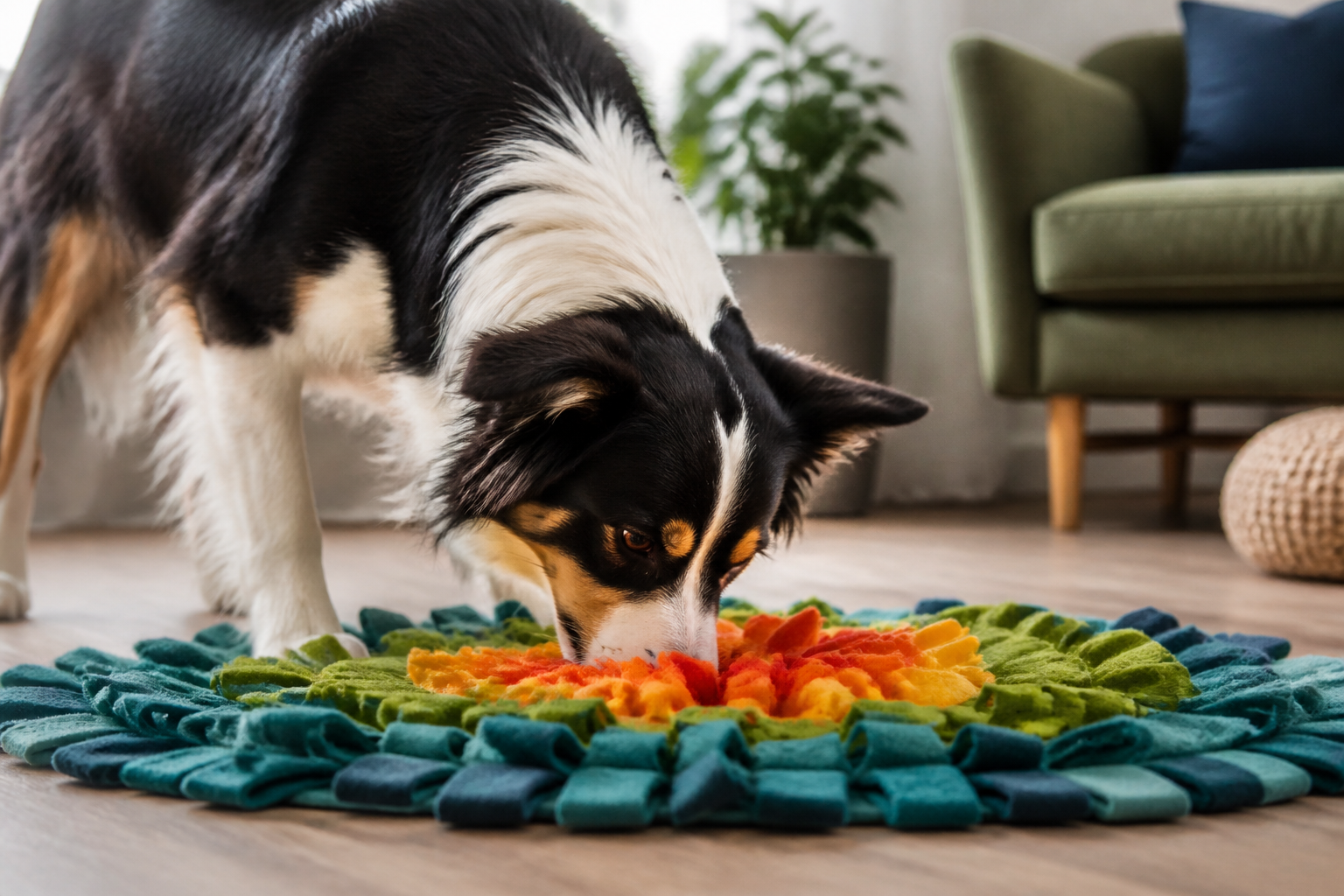
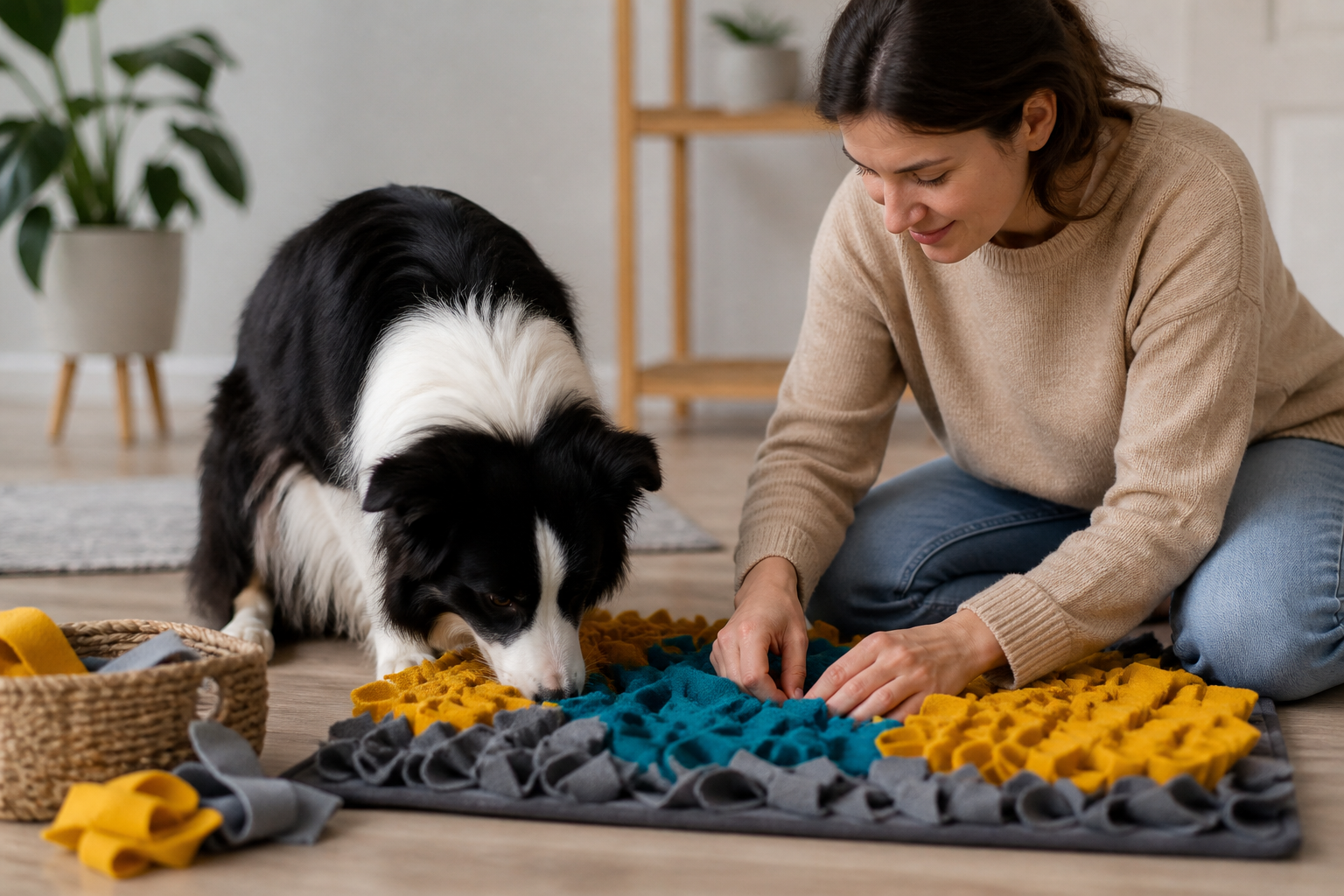
A snuffle mat taps into this natural instinct. It consists of many fabric strips tied to a sturdy base. You hide dry food or treats within these strips. Your dog must then use their nose to find every last bit. This activity provides several key benefits for dogs of all ages.
First, it offers incredible mental stimulation. Engaging the brain in a search task reduces boredom. It can also help lower stress levels. For dogs with anxiety or high energy, focusing on a single task provides a sense of purpose. Second, it is a perfect solution for fast eaters. If your dog gulps down kibble, using a mat for meals forces them to slow down. This can help prevent digestive upset or more serious issues like bloat.
Key Takeaway: Sniffing is a natural self-soothing behavior for dogs that lowers their heart rate and provides mental satisfaction.
Choosing the Right Materials for Your Mat
Before you start cutting fabric, you need the right supplies. The goal is to create something durable, safe, and easy to clean. You do not need expensive tools to get the job done. Most of these items are available at local hardware or craft stores.
The Base
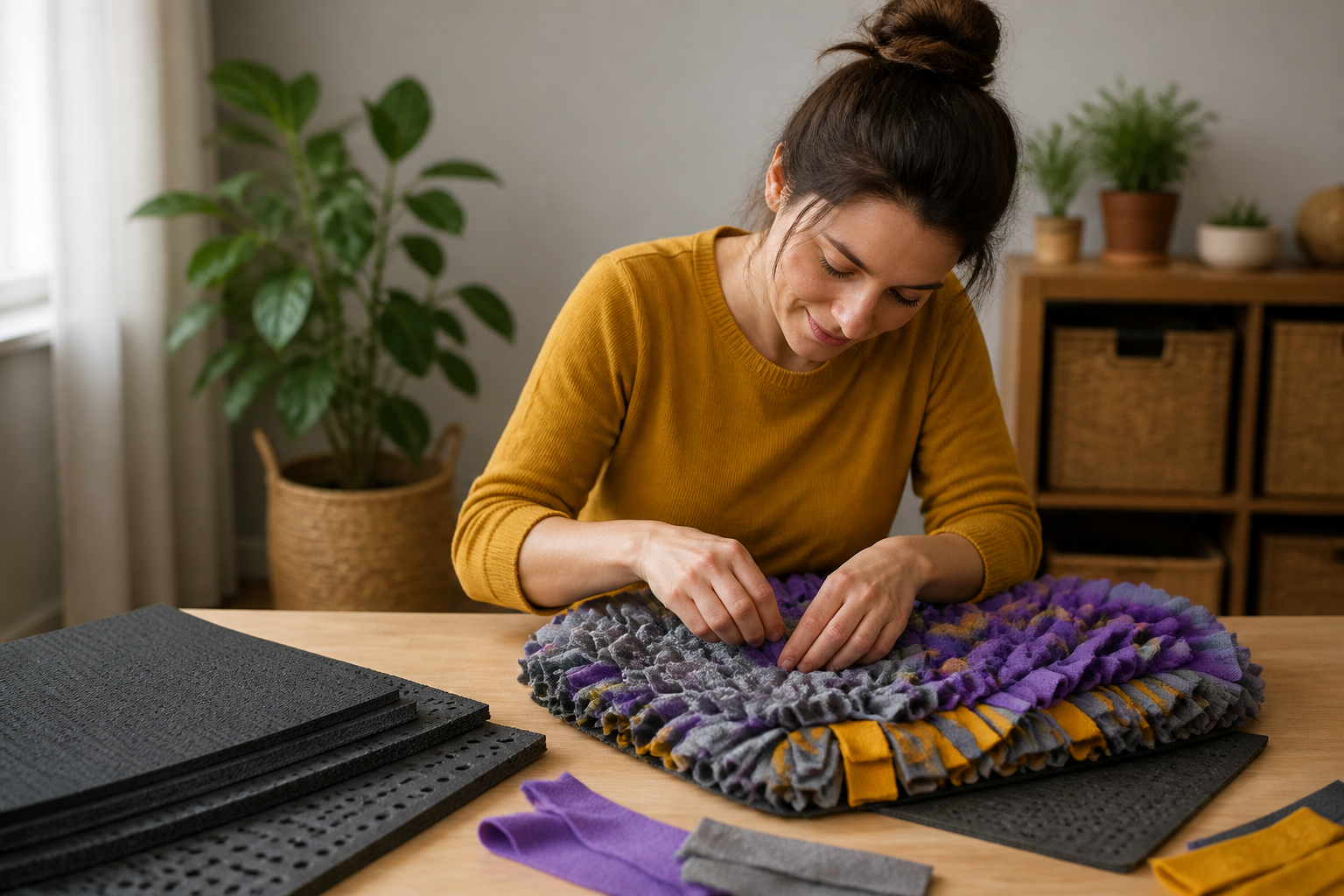
The base is the skeleton of your snuffle mat. You need something with holes so you can tie the fabric strips. A heavy-duty rubber sink mat is the most popular choice. These are usually found in the kitchen section of a department store. They are sturdy enough to stay flat on the floor while your dog roots around. Look for a mat that is roughly 12 inches by 15 inches for a medium dog. If you have a larger breed, you can use zip ties to connect two mats together.
The Fabric
Fleece is the gold standard for snuffle mats. It is soft on a dog's nose and does not fray when you cut it. This is a major advantage because you will be cutting hundreds of strips. Fleece is also slightly stretchy, making it easier to tie tight knots. We recommend using 1.5 to 2 yards of fleece. You can use a single color or mix several colors to make a bright pattern. Your dog will not care about the colors, but it makes the project more fun for you.
Tools for Cutting
You will need a good pair of fabric scissors. If you want to speed up the process, a rotary cutter and a self-healing mat are excellent. These tools allow you to cut through multiple layers of fleece at once. A ruler or measuring tape is also helpful to keep your strips consistent in size.
Note: Avoid using fabrics like cotton or wool for this project. Cotton frays easily and could lead to your dog swallowing loose threads. Wool can be too abrasive on a sensitive snout.
How to Make Snuffle Mat for Dogs: Step-by-Step
Creating the mat takes about one to two hours. It is the perfect activity to do while watching a movie. Follow these steps to ensure your mat is full and secure.
Step 1: Prep Your Fleece
Lay your fleece out flat on a large table or the floor. If you have a large piece of fabric, fold it to make cutting more efficient. You want to cut the fabric into strips that are approximately 1 inch wide and 7 inches long. Do not worry about being perfectly precise. Variations in length and width actually create more interesting hiding spots for the treats.
Step 2: Cut the Strips
Start cutting your strips. For a standard 12 by 15 inch sink mat, you will need between 200 and 300 strips. It sounds like a lot, but the work goes quickly once you get into a rhythm. Sort your strips into piles if you are using multiple colors. This helps you stay organized as you begin the tying process.
Step 3: Tying the First Rows
Take your rubber mat and place it on your lap or a table. Take one strip of fleece. Feed one end through the first hole in the corner and the other end through the hole next to it. Pull both ends up so they are on the same side of the mat. Tie them in a single overhand knot. You do not need to double-knot fleece because it stays in place well once tightened.
Continue this process across the first row. You should have a strip tied between every pair of holes. Once the first row is done, move to the second row and repeat.
Step 4: Tying the Columns
After you have filled the horizontal rows, you need to add vertical strips. This is the secret to a thick, lush mat. Take a strip and tie it between the first hole of row one and the first hole of row two. This strip will sit at a right angle to your first set of ties.
Continue this vertical pattern across the entire mat. By the time you are finished, every hole in the mat will have four ends of fleece sticking out of it. This creates a dense forest of fabric that hides treats perfectly.
Step 5: The Finishing Touches
Flip the mat over and check the bottom. Ensure there are no large gaps or loose knots. If you see a spot that looks thin, add a few extra strips. Finally, turn it over and use your hands to fluff up the fleece. It should look like a deep-pile rug.
Vet Tip: If you are making this mat because your dog is overweight and needs to slow down their eating, consult your veterinarian about a weight management plan. Our pharmacy offers prescription diets and health support.
Introducing the Snuffle Mat to Your Dog
Once the mat is finished, the real fun begins. However, you should not just drop it on the floor and walk away. Some dogs might be confused at first. Others might try to pick up the mat and shake it to get the treats out.
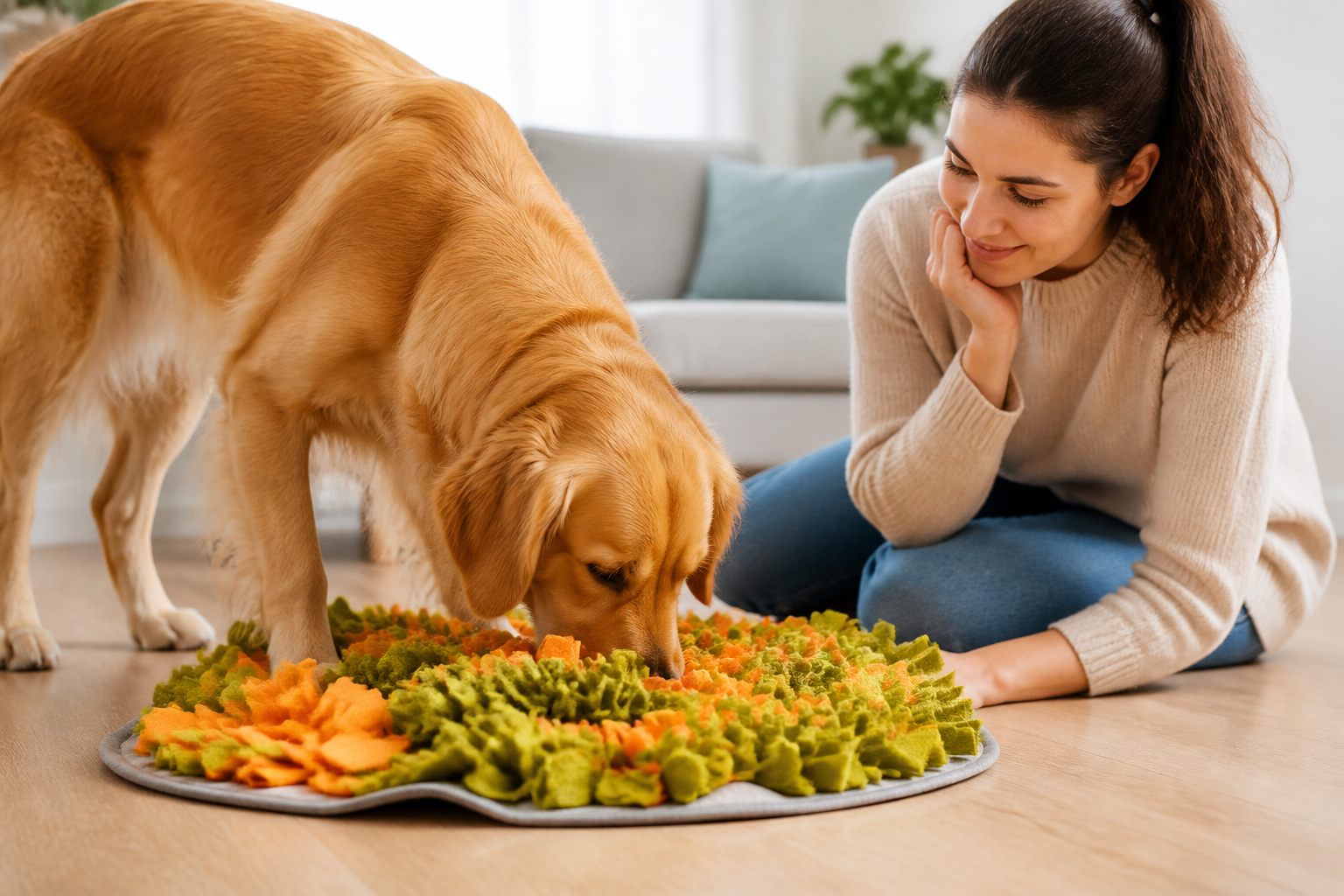
Start with easy wins. Sprinkle a few high-value treats right on top of the fleece. Let your dog see you do this. Use a command like "find it" or "search." This helps them associate the mat with a rewarding game.
As they get the hang of it, start pushing the treats deeper into the fabric. You can even tuck them under the knots. If your dog tries to chew on the mat itself, gently interrupt them and redirect their nose to a hidden treat. Most dogs quickly realize that sniffing is more rewarding than chewing.
Using the Mat for Mealtime
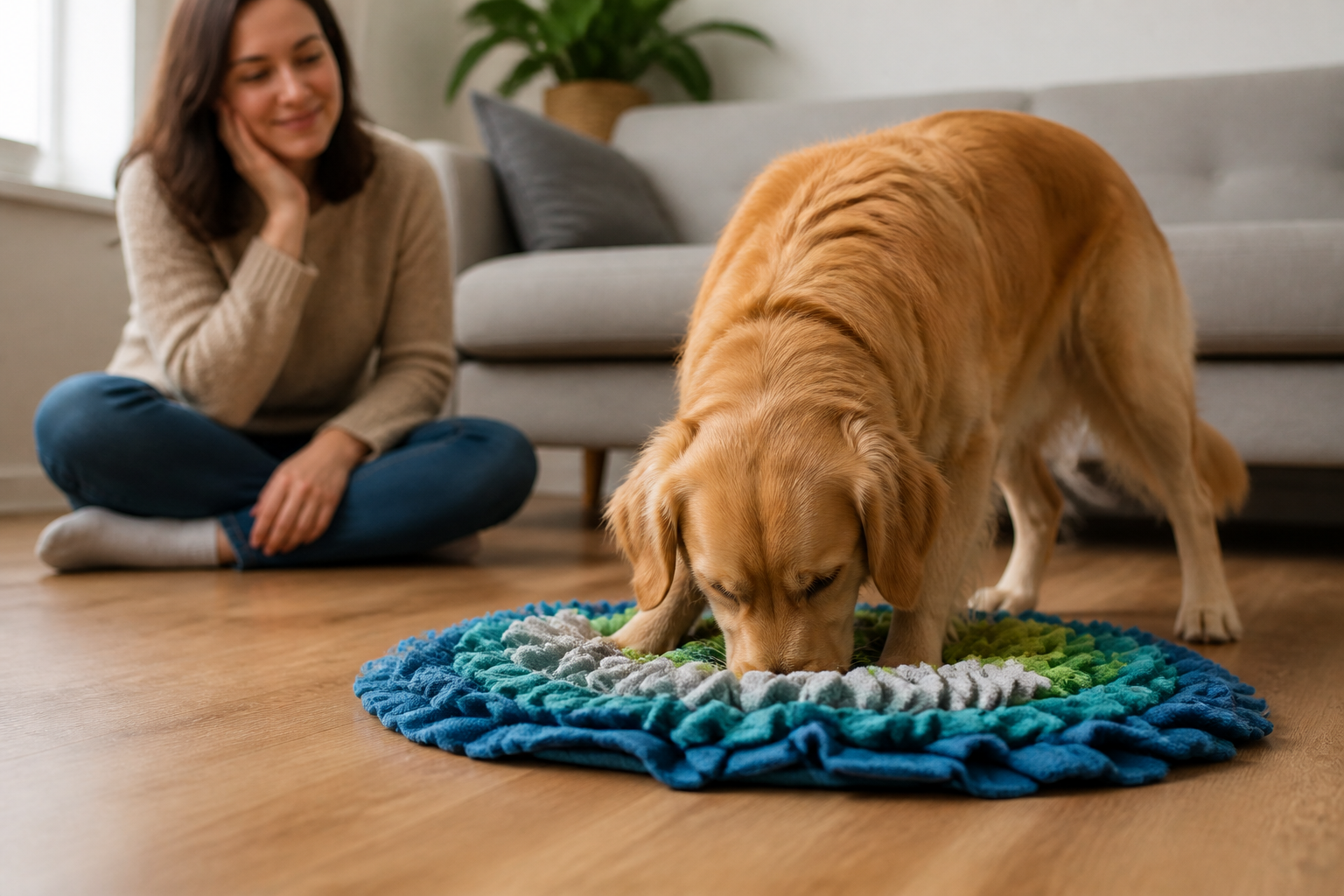
If your dog is a fast eater, try feeding their entire portion of dry kibble on the mat. This turns a thirty-second meal into a ten-minute enrichment session. It is a simple way to build mental exercise into their daily routine without extra effort on your part.
Bottom line: Patience is key when introducing new toys: keep the first few sessions short and successful to build your dog's confidence.
Maintenance and Cleaning Tips
Because this toy involves food and saliva, it will get dirty. One of the reasons we recommend fleece and a rubber mat is that they are relatively easy to clean.
For a quick refresh, take the mat outside and give it a vigorous shake. This will remove crumbs and loose hair. For a deeper clean, most snuffle mats can be washed. We recommend hand washing in a sink with warm water and a pet-safe, unscented detergent. Rinse it thoroughly to ensure no soap residue is left in the fabric.
If you choose to use a washing machine, place the mat inside a large pillowcase or a laundry bag. Use a gentle cycle with cold water. Avoid the dryer, as the heat can damage the rubber base. Instead, let the mat air dry completely before using it again. Hanging it over a chair or a drying rack works best.
Safety Precautions for Enrichment Toys
While snuffle mats are generally safe, they are not indestructible. Supervision is the most important rule. You should always watch your dog while they are using the mat. This is especially true for "power chewers" who might try to eat the fleece strips.
If you notice any strips coming loose, tie them back down or remove them. If the rubber base starts to crack or break, it is time to build a new one. Swallowing pieces of rubber or fabric can lead to serious health issues.
It is also a good idea to put the mat away once the treats are gone. This keeps the mat "special." If the mat is always available on the floor, your dog may lose interest or start using it as a chew toy. Stowing it in a cupboard between sessions maintains the excitement and value of the activity.
Beyond the Mat: Other Scent Games
If your dog loves their new mat, you might want to explore other ways to use their nose. Scent work is a broad category of training that can be very rewarding. You can hide treats around the living room and encourage your dog to find them. You can even use empty cardboard boxes to create a "scent path" in the backyard.
At BaxterBoo, we see how much joy these simple games bring to pets and their owners. Whether you are using a DIY mat or exploring our collection of interactive dog toys, the goal is the same. You want a happy, tired, and mentally satisfied dog.
Using the right treats also makes a difference. Small, smelly treats work best for the mat. We recommend freeze-dried liver or small pieces of high-quality jerky. These provide a strong scent that keeps your dog motivated. You can set up an Autoship order for your favorite training treats so you never run out during your scent work sessions.
Key Takeaway: Enrichment should be a varied experience: rotate between the snuffle mat, puzzle toys, and outdoor scent games to keep your dog's mind sharp.
Customizing Your DIY Snuffle Mat
One of the best things about making your own mat is the ability to customize it. You can tailor the design to your dog's specific needs or your own home decor.
Size Variations
If you have a tiny dog, like a Chihuahua or a Yorkie, a full-sized sink mat might be overwhelming. You can easily cut a rubber mat in half to create two small snuffle mats. This is also a great way to make travel-sized mats for road trips or hotel stays. For giant breeds, as mentioned before, connecting multiple mats with zip ties is the way to go. Just make sure the zip ties are tucked under the fleece so they do not scratch your dog's nose.
Fabric Density
Some dogs are "super sniffers" and find the treats too quickly. If your dog is a pro, you can increase the difficulty by making the mat denser. Use wider strips of fleece or tie more strips in each hole. You can also use longer strips, which creates a deeper "forest" for the treats to hide in.
Themed Mats
While the dog does not care about the theme, many owners love making seasonal mats. You can make a red and green mat for the holidays or a bright yellow and orange mat for the summer. It makes for a great gift for other dog owners in your life.
Vet Tip: For senior dogs or those with limited mobility, a snuffle mat is an excellent way to provide exercise without putting strain on their joints. If your dog has mobility issues, check our dog healthcare collection for additional support tools.
Common Mistakes to Avoid
Even a simple project can have a few pitfalls. Knowing what to avoid will save you time and frustration.
One common mistake is using too few strips. If the mat is sparse, the treats will just sit on the bottom where the dog can see them. The goal is to make the fabric stand up like grass. If your strips are flopping over and exposing the base, you need more fleece.
Another mistake is using treats that are too large. Big biscuits will not fall into the fabric. They will just sit on top, which defeats the purpose of the search. Use tiny, pea-sized treats for the best results.
Finally, do not leave the mat out if your dog is a known fabric eater. Some dogs have a condition called pica, where they eat non-food items. If your dog has a history of eating socks or blankets, supervise them very closely or stick to hard plastic puzzle toys instead.
Bottom line: A successful snuffle mat should be dense enough to hide treats completely, forcing the dog to rely on their nose rather than their eyes.
Why DIY is Often Better
There are many snuffle mats available for purchase, but the DIY route has clear advantages. Most store-bought mats use thin fabric that can wear out quickly. When you make your own, you can choose high-quality, thick fleece that stands up to a dog's rooting and digging.
Cost is another factor. You can often make a high-quality mat for less than the price of a budget version online. Plus, you have the satisfaction of knowing you built something for your pet with your own hands. It is a rewarding project that pays off every time you see your dog happily sniffing away.
We love seeing the creative ways our community cares for their pets. If you decide to build a mat, we would love to hear about it. Our mission at BaxterBoo has always been to provide the tools and knowledge you need to be the best pet parent possible. From our warehouse in Illinois to your living room, we are here to support your pet's health and happiness.
Summary of the DIY Process
To keep things simple, here is a quick overview of the construction process.
- Gather a rubber sink mat, 2 yards of fleece, and sharp scissors.
- Cut the fleece into roughly 250 strips (1 inch by 7 inches).
- Tie strips horizontally across every pair of holes.
- Tie strips vertically between every row.
- Shake and fluff the mat to ensure density.
- Start with easy treats on top to teach the game.
- Always supervise your pet during use.
Key Takeaway: A DIY snuffle mat is a cost-effective, durable, and highly effective way to provide mental enrichment and slow down fast eaters.
Conclusion
Building a snuffle mat is one of the easiest ways to improve your dog's daily life. It provides a healthy outlet for their natural instincts and helps manage common issues like boredom and fast eating. By following our guide, you can create a custom tool that lasts for years. Remember to keep the sessions fun and supervised to ensure the best experience for your pet. If you need supplies to get started, such as high-value dog treats or a new collar for your next outdoor scent walk, we invite you to browse our full collection at BaxterBoo. Joining the MVP Rewards programme is a great way to save on all your pet essentials while you explore new ways to keep your dog engaged.
FAQ
How long does it take for a dog to finish a snuffle mat?
Most dogs take between five and fifteen minutes to find all the treats in a well-stuffed mat. The time depends on the density of the fabric and how small the treats are. It is a much slower process than eating from a standard bowl, which usually takes less than a minute.
Can I use a snuffle mat for my cat?
Yes, cats can also enjoy snuffle mats. While dogs are the primary users, many cats have a strong foraging instinct and will enjoy hunting for dry kibble or catnip treats. You may want to make a slightly smaller version with shorter fabric strips to accommodate a cat's smaller paws and nose.
How often should I wash my snuffle mat?
You should wash the mat whenever it starts to look grimy or develops a strong odor. For most owners, this is about once every two weeks if used daily for meals. Regular shaking to remove crumbs will help keep it cleaner between deep washes.
What are the best treats to use in a snuffle mat?
The best treats are dry, non-greasy, and have a strong scent. Freeze-dried treats, small pieces of jerky, or even your dog's regular dry kibble work perfectly. Avoid using wet food or oily treats, as these will create a mess in the fleece and make the mat much harder to clean.