
 Save 15% on your 1st Autoship learn more

 Email us
 Live Chat
 FAQs
FAQs





Introduction
You just brought your dog home from the vet after a dental procedure and received instructions to feed only soft food for two weeks. Perhaps you have a senior dog who still loves their favorite kibble but simply cannot crunch those hard nuggets anymore. Sudden changes in diet often lead to digestive upset or loose stools. This makes switching to a brand-new canned food a risky move during recovery. At BaxterBoo, we understand that you want to keep your dog comfortable while ensuring they get the nutrition they need. Transforming their existing dry food into a soft, wet consistency is a practical solution that saves money and prevents stomach issues. This guide covers the best methods for rehydrating kibble to support your dog’s health and hydration.
Quick Answer: To turn dry dog food into wet food, mix equal parts kibble and warm water in a bowl. Let the mixture sit for at least 30 minutes until the liquid is absorbed, then mash it with a fork or blend it for a smooth consistency.
Why You Might Need to Soften Your Dog's Kibble
There are several reasons why a pet owner might need to change the texture of a dog's meal. While dry kibble is convenient and shelf-stable, it is not always the best option for every life stage or health situation. Understanding the benefits of adding moisture can help you decide if this transition is right for your pet.
Dental Health and Oral Comfort
Dental issues are one of the most common reasons for softening food. Senior dogs often suffer from gum disease, loose teeth, or missing teeth. If you notice your dog dropping pieces of kibble or pawing at their mouth while eating, the hard texture might be causing pain. Softening the food allows them to eat without discomfort. This is also essential after surgeries where the mouth needs time to heal without the abrasion of hard biscuits.
Increasing Hydration
Some dogs are notorious for not drinking enough water. This can be a concern for dogs with a history of urinary tract issues or kidney disease. Dry food typically only contains about 10 percent moisture. By turning that dry food into a wet meal, you significantly increase their daily water intake. This supports kidney function and helps flush the system.
Appealing to Picky Eaters
Warm water or broth releases the natural aromas in the kibble. Since dogs rely heavily on their sense of smell to determine if food is appetizing, a warm, wet meal is often much more enticing than a bowl of dry nuggets. This is particularly helpful for older dogs whose sense of smell may be fading.
Key Takeaway: Softening kibble provides a painless way for dogs with dental issues to eat while naturally boosting their hydration levels through their meals.
The Standard Warm Water Soaking Method
The simplest way to make wet dog food is to use warm water. This method requires no special equipment other than a bowl and a bit of patience. It is the most cost-effective way to manage a diet change without buying expensive canned cases. Explore our dog food category when choosing a kibble to soften.
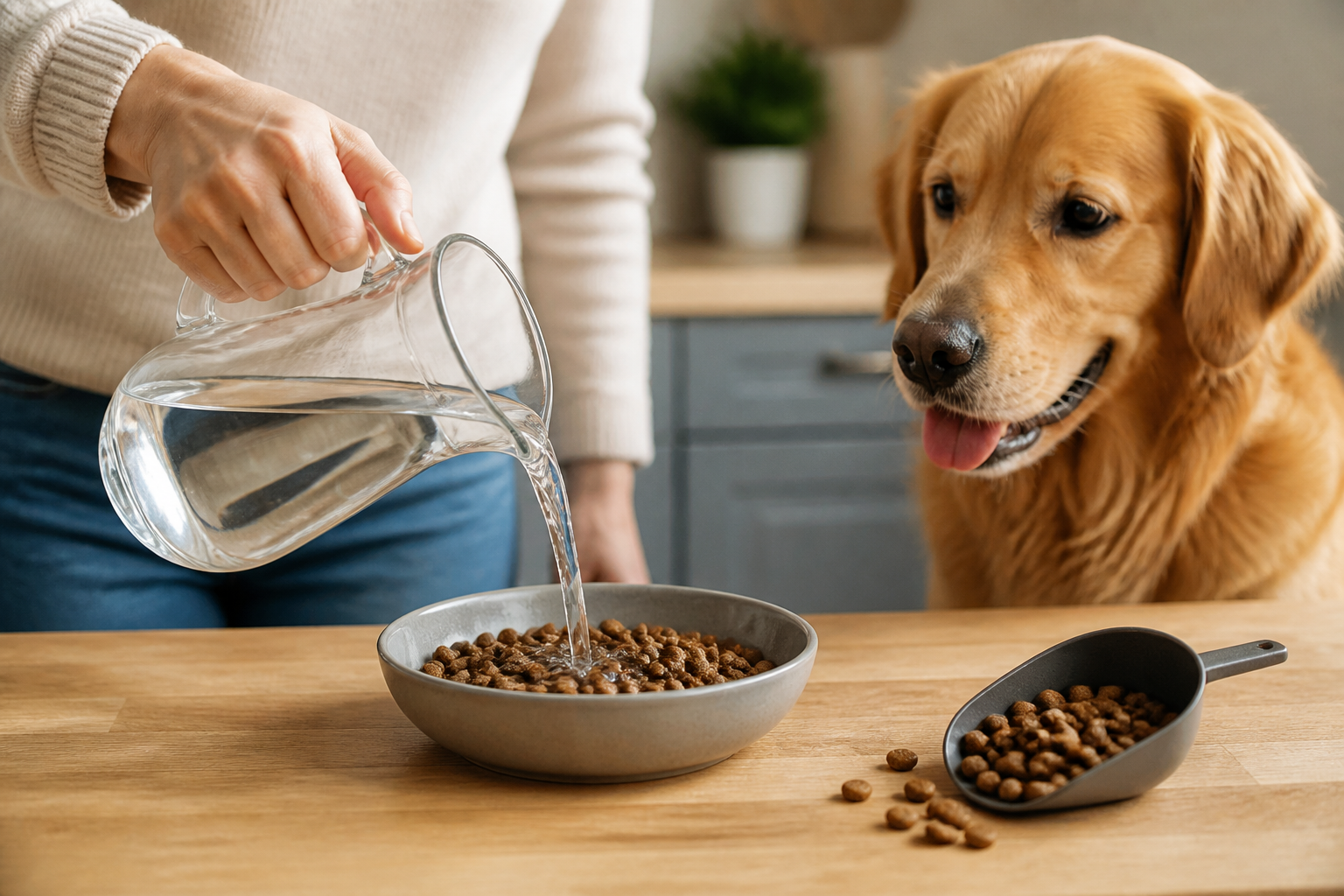
Step 1: Measure the portion. / Use your dog's standard amount of dry food and place it in a bowl with high sides to allow for expansion.
Step 2: Add warm water. / Pour an equal amount of warm water over the kibble. The water should be warm to the touch but not boiling, as extreme heat can degrade some vitamins.
Step 3: Let it soak. / Allow the bowl to sit for 30 to 60 minutes. You will see the kibble double in size as it absorbs the liquid.
Step 4: Mash and serve. / Use a fork or a potato masher to break down any remaining hard centers. This creates a consistency similar to ground canned food.
Using Temperature to Your Advantage
If you are in a rush, using warmer water can speed up the absorption process. However, if you have the time, you can prepare the meal hours in advance using room temperature water. Many owners find it easiest to prep the next meal immediately after the current one is finished. If you plan to let the food sit for more than two hours, you must keep it in the refrigerator to prevent bacterial growth.
Vet Tip: If your dog is refusing food or seems to have persistent mouth pain, consult your veterinarian for a dental exam. Our dog pharmacy offers a variety of prescription medications and oral care products through our partnership with Pet's Choice to help manage chronic dental conditions.
Enhancing Flavor with Broths and Toppers
While water is the most basic liquid for rehydration, you can use other liquids to add nutritional value and flavor. This is a great strategy for dogs who are recovering from illness and need a little extra encouragement to eat.
Choosing the Right Broth
You can use chicken, beef, or vegetable broth to soak kibble. However, you must ensure the broth is safe for canine consumption. Many store-bought broths for humans contain onions, garlic, and high levels of sodium. These ingredients are toxic or harmful to dogs. Always look for pet-specific bone broths or make your own at home without seasonings.
Adding Goat Milk or Green Tripe
For dogs that need extra calories or probiotics, adding warm goat milk is an excellent choice. Goat milk is easier for many dogs to digest than cow milk and adds a creamy texture to the rehydrated kibble. You can also mix in a small amount of canned green tripe or a high-quality topper to increase the protein content and make the meal smell even more irresistible.
Bottom line: Adding safe, low-sodium broths or goat milk can make rehydrated kibble more nutritious and appealing to dogs with poor appetites.
Using a Blender for a Smooth Pâté Texture
Some dogs require an even softer texture than what a fork can provide. This is often the case for very young puppies transitioning to solid food or dogs with severe esophageal issues like megaesophagus.
The Blending Process
If your dog needs a completely smooth meal, you can use a kitchen blender or food processor. Place the soaked kibble and any excess liquid into the blender. Pulse until the mixture reaches a smooth, pudding-like consistency. This makes it very easy for the dog to lap up the food without any chewing required.
Transitioning Puppies
When weaning puppies, a "kibble mush" is the standard first step. Using a blender ensures there are no large chunks that could pose a choking hazard. As the puppies grow and their teeth come in, you can gradually reduce the amount of water and the blending time until they are eating dry kibble.
Key Takeaway: A blender is the best tool for creating a uniform, smooth texture for puppies or dogs with significant swallowing difficulties.
The Cost Benefits of Making Your Own Wet Food
Feeding a large dog a strictly canned food diet can be incredibly expensive. A large breed might require four or five cans of high-quality wet food per day to meet their caloric needs. This also creates a significant amount of recycling waste.
By using your dog's dry kibble as the base, you are getting the bulk pricing of dry food while providing the benefits of wet food. Most high-quality dry brands carried by us, such as NutriSource, Acana, or Orijen, are nutritionally dense. When you add water, you are simply changing the delivery method, not the nutritional profile. This allows you to stay within your budget while still providing a premium dining experience for your pet. Browse our selection of dog food brands to compare available options.
Our MVP Rewards program is a great way to save even more on these bulk dry food purchases. You can earn points on every bag of kibble which can then be used for future treats or supplies.
Safety and Storage Guidelines
Once you add liquid to dry dog food, its shelf life changes instantly. Dry kibble is designed to stay out in a bowl for hours without spoiling. Wet food, whether from a can or made at home, is a breeding ground for bacteria if left at room temperature.
The 30-Minute Rule
As a general rule, do not leave rehydrated dog food out for more than 30 to 60 minutes. If your dog has not finished their meal in that timeframe, you should pick up the bowl. Bacteria like Salmonella or Listeria can grow quickly in the moist, protein-rich environment of soaked kibble.
Refrigeration Tips
You can prepare rehydrated food in batches to save time. If you make enough for the entire day, store the extra portions in an airtight container in the refrigerator. Cold, soaked kibble can become quite thick. You may need to add a splash of warm water and stir it before serving to bring it back to a palatable temperature and consistency.
Cleaning Bowls
It is vital to wash your dog's bowl with hot, soapy water after every wet meal. Dry kibble leaves behind very little residue, but wet food leaves a film of fats and proteins that can quickly go rancid. Stainless steel or ceramic bowls are preferred over plastic, as they do not develop small scratches where bacteria can hide.
Managing Dietary Transitions and Sensitivities
If you are softening food because your dog has a sensitive stomach, consistency is key. While the ingredients in the food are not changing, the texture and the speed at which the dog consumes the food might.
Slow and Steady
If your dog is used to a very specific routine, introduce the wet version of their food slowly. Start by just adding a few tablespoons of water to their dry kibble. Over several days, increase the liquid until you reach the desired consistency. This prevents the dog from being overwhelmed by the change in mouthfeel.
Monitoring Digestive Health
Watch your dog's stool during any transition. While adding water usually helps with digestion, some dogs might experience a temporary change in bowel movements. If you see persistent diarrhea or vomiting, stop the process and consult your veterinarian.
For dogs with known food allergies or chronic digestive issues, our pharmacy partnership with Pet's Choice provides access to prescription diets from brands like Farmina Vet Life and Royal Canin. These diets are formulated for specific health conditions and can also be softened using the water-soaking method if needed.
When to Consult Your Veterinarian
Making wet food out of dry is a great home remedy for many situations, but it is not a substitute for professional medical care. You should always talk to a vet if the reason for the change is a sudden health shift.
Signs of Dental Pain
If your dog suddenly stops eating dry food, they might have a fractured tooth or an abscess. These conditions are extremely painful and require medical intervention. Softening the food may help them eat in the short term, but it will not fix the underlying infection.
Unexplained Weight Loss
If your dog is eating their rehydrated food but still losing weight, there may be an underlying metabolic issue. A vet can run blood work to check for thyroid issues, diabetes, or other conditions.
Prescription Diets and Medications
If your dog is on a specific prescription diet for a condition like urinary stones or heart disease, always check with your vet before adding toppers or broths. Even a small amount of sodium from a chicken broth can interfere with a carefully balanced therapeutic diet. BaxterBoo makes it easy to manage these health needs through our pet pharmacy, where you can have your vet-prescribed foods and medications delivered directly to your door.
Vet Tip: Always consult your veterinarian before making significant changes to a therapeutic or prescription diet. They can help you calculate the correct moisture-to-kibble ratio to ensure your dog is still getting the proper calorie density.
Rehydratable Alternatives to Kibble
If you find that your dog thrives on a wet diet but you still want the convenience of dry storage, there are other options available at BaxterBoo. Some brands specialize in foods that are designed specifically to be rehydrated. See our freeze-dried pet food selection for additional options.
Dehydrated and Freeze-Dried Foods
Brands like The Honest Kitchen or Stella and Chewy's offer dehydrated or freeze-dried recipes. Unlike kibble, which is cooked and extruded, these foods are gently dried to preserve nutrients. They are meant to be mixed with water before serving. This results in a texture that is very similar to a home-cooked meal.
Air-Dried Options
Air-dried foods from brands like Ziwi Peak or Real Meat Co have a jerky-like texture. These are more moist than traditional kibble but can still be softened further by soaking them in warm water or broth. These options are often very high in protein and are excellent for picky eaters who need a boost in palatability.
Summary of the Softening Process
Turning dry food into a wet meal is a versatile skill for any pet owner. Whether you are dealing with a post-op recovery, a senior dog, or a budget crunch, the process remains the same.
- Always use warm, not boiling, water to preserve nutrients.
- Allow enough time for the kibble to fully absorb the liquid to avoid hard centers.
- Use a fork for a ground texture or a blender for a smooth pâté.
- Store any leftovers in the fridge and never leave soaked food out for more than an hour.
- Incorporate safe broths or toppers to increase interest for picky eaters.
Bottom line: Making wet food from dry kibble is an effective way to improve hydration and mealtime comfort without the cost or digestive risks of a sudden diet change.
Conclusion
Helping your dog enjoy their meals shouldn't be a stressful or expensive process. By learning how to transform their favorite dry kibble into a soft, hydrating wet food, you are providing them with comfort and care tailored to their specific needs. Whether it is a temporary measure after a dental visit or a long-term solution for a senior pup, this method keeps their tummy happy and their body hydrated. At BaxterBoo, we have been helping pet owners since 2006 with high-quality food, expert advice, and a specialized pharmacy for all your pet's health needs.
Consider setting up our Autoship programme for your dog's favorite dry food to ensure you never run out, especially when you are preparing multiple soaked meals a day. You will save on your orders and get a free MVP Gold membership to help you earn rewards faster.
FAQ
Can I use a microwave to warm the soaked dog food?
You can use a microwave to take the chill off refrigerated soaked food, but you must be very careful. Microwave heating can create hot spots that could burn your dog's mouth. Always stir the food thoroughly and test the temperature with your finger before serving. Heating for only 10 to 15 seconds is usually enough to release the aromas without making it too hot.
How much water should I add to the dry food?
A good starting point is a one-to-one ratio of water to kibble. For example, if you feed one cup of dry food, add one cup of warm water. Some brands of kibble are more dense than others and may require more liquid to become fully soft. You can adjust the amount of water based on whether your dog prefers a thick mash or a soupier consistency.
Will soaking kibble help with my dog's digestion?
For many dogs, yes. Pre-soaking the kibble starts the breakdown of the starches and makes it easier for the stomach to process the food quickly. It also prevents the kibble from expanding in the stomach after it is eaten, which can help dogs that are prone to gas or bloating. However, if your dog has a very sensitive stomach, always introduce changes slowly to see how they react.
Can I soak cat food the same way?
While you can technically soak cat kibble, cats are often much pickier about texture than dogs. Many cats find the "mushy" texture of rehydrated kibble unappealing and may refuse to eat it. If your cat needs a soft diet, it is usually more successful to use a high-quality canned food like Tiki Cat or Fussie Cat. If you do try soaking cat kibble, use a blender to make it as smooth as possible, as cats often dislike chunks in their wet food.






