
 Save 15% on your 1st Autoship learn more

 Email us
 Live Chat
 FAQs
FAQs





Introduction
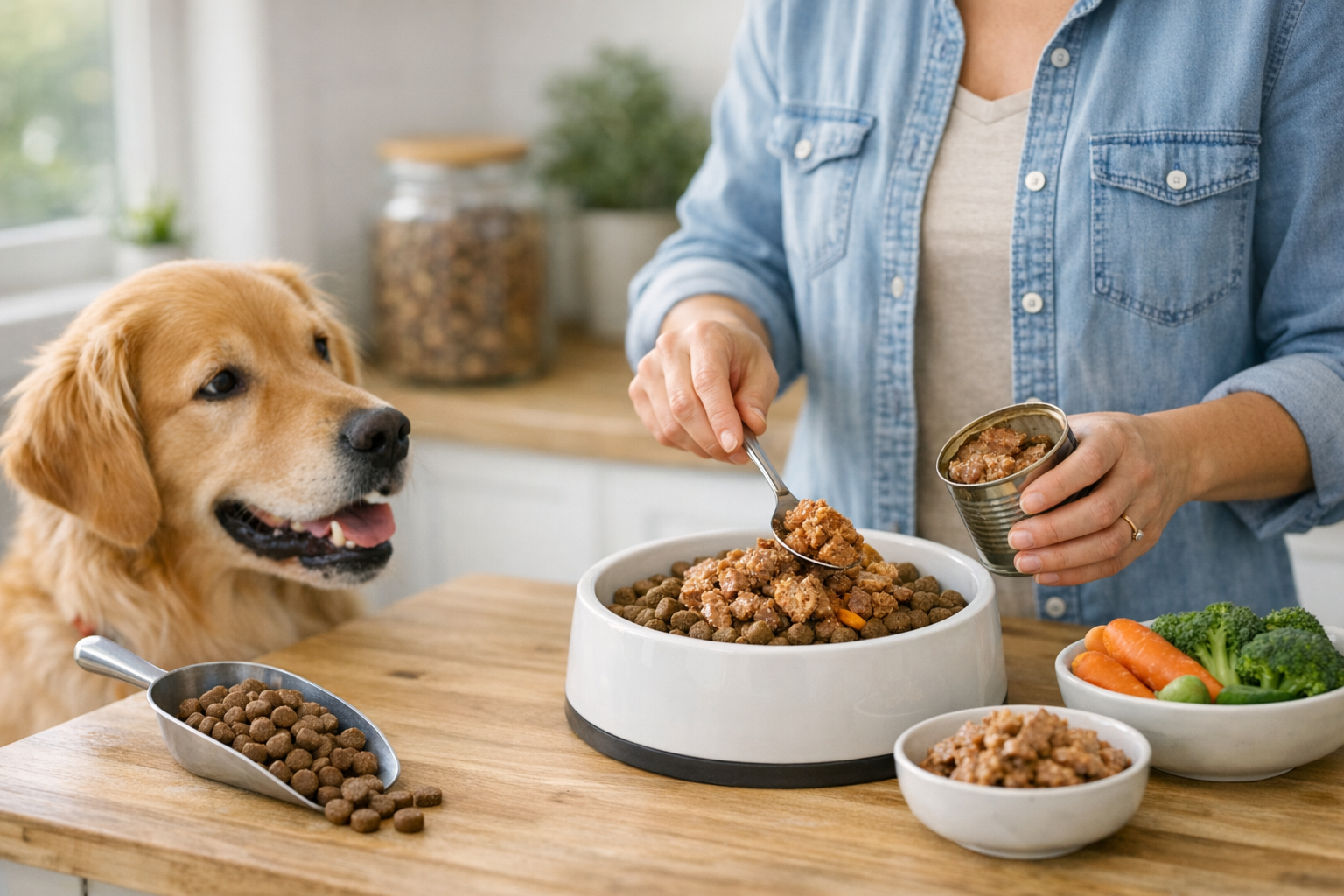
You stand in your kitchen while your dog looks at a bowl of plain kibble and then walks away. Many of us have dealt with a picky eater who suddenly decides their favorite dry food is no longer interesting. You might also be looking for ways to increase your dog's water intake or simply want to stretch your budget while still providing a high-quality meal. Mixing wet and dry dog food is an excellent solution that provides the crunch of kibble with the aroma and moisture of canned food. At BaxterBoo, we see many pet parents moving toward this mixed feeding model to keep their dogs engaged at mealtime. This guide covers the benefits of mixing textures, how to calculate the right portions, and the best ways to transition your dog to a new routine. A successful transition ensures your dog gets balanced nutrition without unwanted weight gain.
Quick Answer: To mix wet and dry food safely, calculate the total daily calories your dog needs and divide that between the two types. A common ratio is 75 percent dry kibble and 25 percent wet food to maintain dental benefits and keep costs manageable.
The Benefits of a Mixed Diet
Feeding a combination of wet and dry food is often called mixed feeding. It offers several distinct advantages over feeding just one type of food. For many dogs, the variety alone is enough to prevent boredom and keep their appetite consistent.
One of the biggest reasons owners choose to mix is palatability. Wet food typically has a much stronger aroma and a richer flavor profile than dry kibble. When you mix a few spoonfuls of a high-quality wet food like those from our selection of Stella & Chewy's products or our selection of The Honest Kitchen products into dry kibble, the gravy coats each piece of dry food. This makes the entire bowl more enticing for dogs that are reluctant to eat.
Hydration is another massive benefit. Most dry kibble contains only about 10 to 12 percent moisture. In contrast, wet dog food can be up to 80 percent water. Increasing your dog's water intake through their food is a great way to support kidney function and urinary tract health. This is particularly useful for dogs that do not drink enough water from their bowls throughout the day.
Key Takeaway: Mixing wet and dry food improves mealtime interest for picky eaters and significantly boosts daily hydration levels.
Better Texture and Dental Health
Dry kibble is often praised for its ability to help scrape plaque from teeth as a dog chews. While kibble alone is not a replacement for regular brushing or professional cleanings, the mechanical action does offer some dental support. By mixing in wet food, you maintain that crunch while making the overall texture softer and easier to manage. This is especially helpful for senior dogs that might have minor dental sensitivity but can still chew kibble.
Cost-Effective Nutrition
Feeding a dog exclusively on premium wet food can become expensive, especially for large breeds. Mixing allows you to provide the high-quality ingredients and taste of wet food without the high price tag of a 100 percent canned diet. You can buy larger bags of dry food from our Acana selection or our Farmina selection and supplement them with smaller amounts of wet food to keep your monthly spending in check.
Understanding the Math of Mixing
The most common mistake pet parents make is simply adding a scoop of wet food on top of a full serving of dry food. This leads to overfeeding and weight gain. Every calorie counts. You must adjust the amount of dry food you provide to account for the calories in the wet food.
Start by looking at the feeding guidelines on both packages. Most brands provide a calorie count per cup for dry food and per can or tray for wet food. If your dog usually eats two cups of dry food per day and you want to replace half of that with wet food, you cannot just swap one cup for one can. You must look at the caloric density.
For example, if one cup of your dry food has 400 calories and one can of wet food has 400 calories, a 50/50 split would be one cup of dry and half a can of wet. However, many wet foods are less calorie-dense than kibble because of their high water content. You might find that you need more wet food by volume to match the calories of a smaller amount of dry kibble.
Vet Tip: Always consult your veterinarian before making significant changes to your dog's caloric intake. They can help you calculate the exact number of calories your dog needs based on their activity level, age, and current weight.
The Complete and Balanced Rule
When mixing foods, both products should ideally be labeled as complete and balanced by AAFCO standards. This ensures that even if you change the ratios, your dog is still getting the proper balance of vitamins, minerals, and proteins. If you use a "topper" or a "mixer" that is not labeled as a complete meal, it should never make up more than 10 percent of your dog's daily calories. Using too much of a supplemental-only product can dilute the nutrients in their main diet.
- Check for the AAFCO statement on both packages.
- Compare the protein sources to ensure they complement each other.
- Use a standard measuring cup for the dry kibble.
- Use a kitchen scale for the wet food if you want the most accuracy.
Bottom line: Proper mixing requires balancing calories rather than volume to prevent obesity.
How to Transition Your Dog to Mixed Feeding
Dogs have sensitive digestive systems. A sudden change in texture or rich ingredients can lead to an upset stomach, gas, or diarrhea. The key is a slow, gradual introduction over the course of about a week.
Step 1: Start small. / For the first two days, replace only about 10 percent of your dog's normal dry food with a small amount of wet food. Mix it thoroughly so they cannot just pick out the wet pieces.
Step 2: Monitor the reaction. / Watch your dog's stool consistency and energy levels. If everything looks normal, you can move to a 25 percent wet and 75 percent dry mix on days three and four.
Step 3: Reach your target ratio. / By day five or six, you can move to a 50/50 split or whatever your final goal ratio is. If at any point your dog develops a soft stool, go back to the previous day's ratio for a few more days.
Step 4: Maintain consistency. / Once you find a mix that works, try to stick with it. While variety is good, frequent large shifts in the ratio can cause digestive distress for some dogs.
Life Stage Considerations for Mixed Feeding
A puppy's nutritional needs are vastly different from those of a senior dog. When you mix food, you must ensure both the wet and dry components are appropriate for your dog's specific life stage.
Puppies and Growth
Puppies need higher levels of protein and fat to support their rapid growth and development. If you are mixing food for a puppy, both the dry kibble and the wet food should be formulated specifically for puppies. Mixing an adult wet food with a puppy dry food can result in a meal that lacks the necessary calcium and phosphorus ratios for bone growth. Brands like our Stella & Chewy's selection and our Farmina selection offer life-stage-specific options that work well together.
Senior Dogs and Aging
Senior dogs often face two common issues: decreased appetite and stiff joints. Mixing wet food can help on both fronts. The strong smell of canned food encourages older dogs to eat. Additionally, many wet foods for seniors include added supplements like glucosamine or chondroitin. If your senior dog has lost some teeth or has gum sensitivity, adding more wet food to the mix makes the meal much more comfortable for them to consume.
Weight Management
If your dog needs to lose a few pounds, mixed feeding can actually be a useful tool. Because wet food is high in water, it has fewer calories per volume than dry food. This means your dog can eat a larger-looking portion of food while consuming fewer calories. This helps them feel full and satisfied. We carry specialized weight management formulas from brands like Farmina Vet Life that are designed for this exact purpose.
Managing Health Conditions and Prescription Diets
If your dog is managing a chronic health condition like kidney disease, food allergies, or urinary crystals, they may be on a therapeutic diet. In these cases, you must be extremely careful with mixing. Mixing a standard over-the-counter wet food with a prescription dry food can negate the benefits of the specialized diet.
For instance, if your dog is eating a specific diet to prevent bladder stones, that food is formulated to maintain a certain pH level in the urine. Adding a different brand of wet food can change that pH and lead to the return of stones. Our dog healthcare category offers a helpful starting point for pet parents who want to explore health-focused options. If your vet has prescribed a specific diet, always check if there is a matching wet version of that exact prescription formula.
Vet Tip: If your dog is on a therapeutic or prescription diet, only mix the dry version with the canned version of the same prescription formula. This ensures the medical integrity of the diet remains intact.
Allergy Management
Dogs with skin or food sensitivities often do best on limited-ingredient diets. If you are mixing food for an allergic dog, ensure the protein source is the same in both. If you feed a lamb-based dry food from The Honest Kitchen, pair it with a lamb-based wet food. Introducing a second protein through the wet food makes it harder to identify the culprit if your dog has a flare-up.
Food Safety and Storage
One of the major differences between dry and wet food is how they handle being left out. Dry kibble can sit in a bowl for a few hours without much issue. Wet food, however, is highly perishable once the can is opened.
Once you mix wet food into the kibble, the clock starts ticking. You should not leave the mixed meal out for more than 30 minutes. If your dog does not finish it, you should discard the leftovers. Bacteria can grow quickly in the moist environment of the wet food, especially in warmer weather.
Storing Opened Cans
If you are only using a small amount of wet food each day, you will need to store the rest of the can properly. Use a tight-fitting plastic lid or silicone cover to keep the food from drying out and to prevent odors from spreading in your refrigerator. Most canned dog food stays fresh for about three to five days after opening. If you find you cannot finish a can within that timeframe, consider buying smaller cans or pouches to ensure the food is always fresh.
Serving Temperature
Some dogs are sensitive to the temperature of their food. If you are pulling a can of food straight from the fridge, it might be too cold for your dog's liking. You can mix it with the dry kibble and let it sit for a few minutes to reach room temperature. Alternatively, you can add a small splash of warm water to the mix. This not only warms the food but also creates even more gravy to coat the dry pieces. Avoid using a microwave to heat the food in the can, as this can create dangerous hot spots.
Choosing the Right Combination
With over 500 brands available at BaxterBoo, the options for mixing can feel overwhelming. A good starting point is to match the quality level of both foods. If you are feeding a premium, grain-free kibble like Ziwipeak, you should pair it with a similarly high-quality wet food.
Texture Matches
Consider how the textures will work together.
- Pate: This smooth, dense wet food can be mashed and thoroughly mixed into kibble. It is great for ensuring the dog cannot separate the two.
- Stews and Gravies: These have chunks of meat in a liquid base. They are excellent for pouring over kibble like a sauce.
- Shredded: These mimic real pieces of torn meat and provide a more rustic texture that many dogs enjoy.
If your dog is a "picker" who tries to eat only the wet bits, a pate that is well-incorporated into the kibble is usually the best choice. If your dog loves variety, a stew with visible peas, carrots, and meat chunks can make the meal feel like a home-cooked feast.
Enhancing the Meal with Supplements and Toppers
Sometimes you don't need a full can of wet food to get the benefits of mixed feeding. There are many specialized toppers and mixers designed specifically for this purpose. Brands like Stella & Chewy's or The Honest Kitchen offer meal boosters that can be sprinkled or squeezed onto dry kibble.
These are often functional, meaning they target specific health needs like joint support, skin and coat health, or digestion. However, remember the 10 percent rule. These should be a small addition to a balanced meal. If your dog requires ongoing health management, our dog healthcare category provides a useful next step for exploring related care essentials.
Key Takeaway: Use functional toppers for specific health goals, but ensure they do not exceed 10 percent of the total daily caloric intake.
Summary of Best Practices
Mixing wet and dry dog food is a practical way to enhance your dog's nutrition and enjoyment. By following a few simple rules, you can ensure they stay healthy and fit.
- Always balance the calories, not just the volume.
- Transition slowly over 7 to 10 days to avoid stomach upset.
- Match the life stage of both the wet and dry food to the dog.
- Keep the 30-minute rule for food safety.
- Consult your vet before mixing prescription or therapeutic diets.
Whether you want to help a senior dog eat better or simply give your puppy a little extra hydration, mixed feeding is a versatile approach. We invite you to explore our dog food category and our pharmacy options to find the perfect combination for your dog. Signing up for our Autoship programme is a great way to ensure you never run out of your dog's favorite mix, and it can help keep recurring meals convenient.
FAQ
Can I mix two different brands of dog food?
Yes, you can mix different brands of wet and dry food as long as both are high-quality and appropriate for your dog's life stage. However, if your dog has a very sensitive stomach, sticking to the same brand for both can sometimes be easier on their digestion. Always ensure both products carry the AAFCO complete and balanced statement.
How long can mixed wet and dry food stay in the bowl?
You should remove any uneaten mixed food after 30 minutes. Wet food contains moisture that allows bacteria to grow much faster than dry kibble alone. Discarding leftovers helps prevent foodborne illness and keeps your dog's feeding area sanitary.
Is mixing wet and dry food better for a dog's teeth?
A mix of wet and dry food provides the benefits of both. The dry kibble provides a mechanical scraping action that can help reduce plaque, while the wet food provides hydration and palatability. While not a substitute for dental cleanings, the crunch of kibble is generally better for oral health than a soft-food-only diet.
Can puppies eat a mix of wet and dry food?
Puppies can certainly eat a mix of wet and dry food once they are fully weaned onto solid food. It is vital to ensure that both the wet and dry portions are specifically formulated for puppies to support their growth. Avoid using adult maintenance food in the mix, as it will not have the correct nutrient ratios for a developing puppy.






