
 Save 15% on your 1st Autoship learn more

 Email us
 Live Chat
 FAQs
FAQs





Introduction
You are sitting on the couch when your dog leans in for a greeting. Instead of a sweet moment, you get a whiff of something that smells like a swamp. Most of us at BaxterBoo have been there. We know that while "dog breath" is a common joke, it often points to plaque buildup that needs attention. Keeping a dog's mouth clean is about more than just fresh breath. It is a vital part of their overall health and longevity. We want to help you find realistic, natural ways to manage dental hygiene at home. This post covers the best mechanical and dietary methods to keep teeth white and gums pink. Natural dental care is an ongoing routine that combines the right tools, treats, and professional guidance.
The Role of Mechanical Cleaning
The most effective way to clean teeth naturally is through mechanical action. This simply means something physical rubbing against the tooth to scrape away soft plaque before it hardens into tartar. In the wild, canines do this by chewing on the hide and bones of prey. At home, we can replicate this with specific vegetables and toys.
Raw carrots are one of the best natural tools for this job. They are hard enough to require significant chewing but soft enough not to fracture a tooth. As your dog crunches down, the fibers of the carrot act like a very mild toothbrush. Slices of apple can also help, provided you remove all seeds and the core. The skin of the apple provides a bit of friction that helps clear away food debris.
Rubber toys with ridges or nubs are another excellent mechanical option. Brands like Kong design toys specifically to massage gums and scrape teeth during play. If you put a little bit of dog-safe peanut butter or coconut oil inside the ridges, your dog will spend more time working their teeth against the surface.
Quick Answer: Natural dental care relies on mechanical scraping and healthy dietary choices. Raw vegetables like carrots, textured rubber toys, and specific raw bones help remove plaque before it mineralizes into tartar.
Understanding Natural Brushing
While "natural" often brings to mind food and chews, the act of brushing is still the gold standard. You can make this process more natural by using simple ingredients instead of commercial pastes with long chemical lists. For additional guidance, see these pet dental care tips.
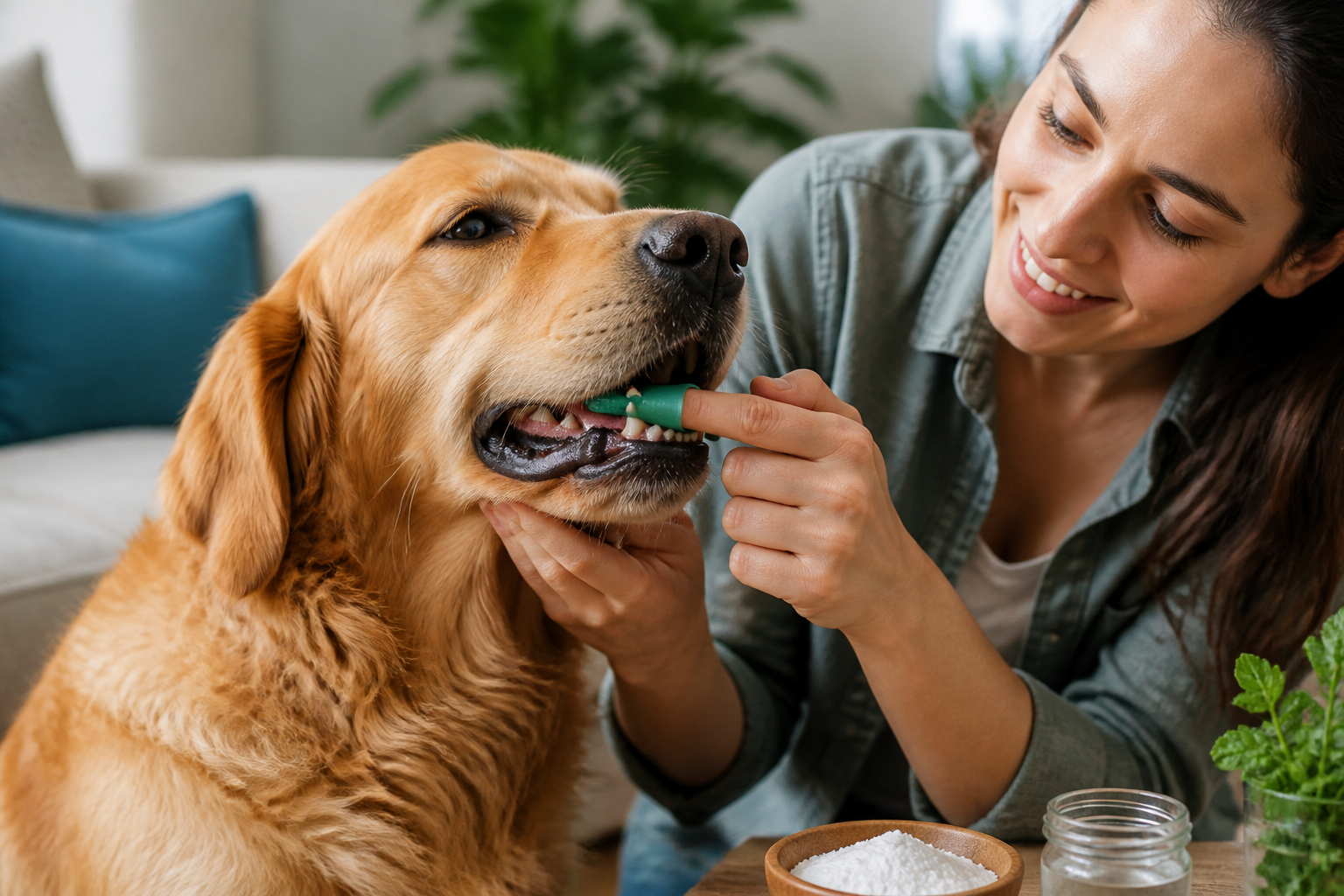
Coconut oil is a favorite among many pet owners. It has natural antimicrobial properties that can help reduce the bacteria responsible for plaque. Many dogs love the taste, which makes them much more cooperative during the process. You do not always need a plastic toothbrush to get results. A piece of clean gauze wrapped around your finger or a soft silicone finger brush can be less intimidating for a dog.
Step 1: Get your dog comfortable. / Let them lick a small amount of coconut oil off your finger to create a positive association.
Step 2: Start with the canines. / Gently lift the lip and rub the oil onto the large teeth in the front and sides.
Step 3: Move to the back molars. / This is where most plaque hides, so try to reach the very back of the upper jaw.
Vet Tip: If you notice bleeding gums, loose teeth, or a sudden refusal to eat hard food, stop your home cleaning routine and call your veterinarian. These are signs of advanced dental disease that require professional medical intervention rather than home care.
Raw Bones and Dental Health
Feeding raw bones is a traditional way to maintain canine dental health. It is also a topic that requires careful attention to safety. When a dog gnaws on a raw bone, the bone surface scrapes against the teeth all the way down to the gum line. This is incredibly effective at removing plaque.
However, you must never feed cooked bones of any kind. Cooking changes the molecular structure of the bone, making it brittle and prone to splintering. These splinters can cause life-threatening punctures in the digestive tract. Raw bones are softer and more flexible.
Small dogs often do well with raw chicken wings or necks. These are soft enough for them to crunch through completely. Larger dogs benefit from lamb shanks or raw beef marrow bones. Always supervise your dog when they have a bone. If they are an aggressive "power chewer" who tries to swallow large chunks, bones might not be the right choice for them.
- Always use raw bones, never cooked or smoked.
- Match the bone size to your dog's jaw size.
- Supervise every chewing session to prevent choking.
- Limit bone sessions to 15 or 20 minutes to prevent digestive upset.
The Importance of Water Additives and Supplements
Sometimes the best way to clean teeth is through what your dog drinks. Natural water additives are designed to break down the biofilm that leads to plaque. Many of these products use enzymes or natural extracts like green tea to freshen breath and kill bacteria. Our OxyFresh Pet Dental Water Additive is one brushless option designed to be added to your pet’s water bowl.
You simply add a capful to their water bowl each time you refill it. This is a great "hands-off" method for dogs that are very sensitive about having their mouths touched. There are also dental powders made from specific types of brown seaweed. When ingested, the compounds in the seaweed actually work through the saliva to soften existing tartar over time.
Key Takeaway: Consistency is more important than intensity. Adding a simple water additive or a daily dental powder to your routine is often more effective than an occasional, stressful brushing session.
When to Seek Professional Medical Care
Natural methods are fantastic for prevention, but they cannot cure established periodontal disease. Once plaque has mineralized into hard, brown tartar, a carrot or a toothbrush will not remove it. At this stage, bacteria can enter the bloodstream through the gums and affect the heart and kidneys. You can explore our dog dental care category for products that support an at-home routine.
Our pharmacy at BaxterBoo offers access to FDA-approved medications and prescription dental diets through our pharmacy services. If your veterinarian determines that your dog has significant dental disease, they might prescribe a therapeutic diet. These foods are formulated with a specific fiber matrix that does not crumble when bitten. Instead, the tooth sinks into the kibble, which scrubs the surface of the tooth.
Prescription diets and medications for oral infections are essential tools for senior dogs or breeds prone to dental issues, like Chihuahuas and Greyhounds. We can help you manage these needs conveniently through our pharmacy services, ensuring your dog gets exactly what the vet ordered.
Bottom line: Natural home care is for maintenance, but professional veterinary cleanings and prescription diets are necessary for treating existing dental disease.
Safe Treats for Natural Cleaning
Not all dental treats are created equal. When looking for a natural option, check for the VOHC (Veterinary Oral Health Council) seal. This seal means the product has been tested and proven to reduce plaque or tartar by a certain percentage.
Avoid treats that are too hard. A good rule of thumb is the "fingernail test." If you cannot make a small dent in the treat with your thumbnail, it is likely too hard and could crack a tooth. Dehydrated chews like bull tails or lamb ears are great natural alternatives. They have a fibrous texture that creates friction as the dog chews. For more ideas, browse our dental dog treats and care products.
We carry a wide variety of these natural chews. They provide a safe outlet for the chewing instinct while keeping the mouth busy and the teeth cleaner. Using these as a reward after a "brushing" session with coconut oil is a great way to reinforce the habit.
Establishing a Sustainable Routine
The best dental plan is the one you can actually stick to every day. You do not have to do everything on this list at once. Start by introducing a few raw carrot sticks as snacks during the week. Once that is a habit, try adding a water additive to their bowl. A complete option for brushing and water care is the OxyFresh Pet Dental Kit.
If your dog is young, start handling their mouth now. Even just lifting their lips for five seconds and giving a treat helps. This makes it much easier for your vet to perform an exam during your yearly checkup. A combination of a healthy diet, safe chewing outlets, and regular observation will keep your dog's mouth in great shape for years.
Conclusion
Keeping your dog's teeth clean naturally does not have to be an overwhelming chore. By using raw vegetables, safe rubber toys, and natural fats like coconut oil, you can significantly reduce plaque buildup. Remember that these home methods are your first line of defense, but they work best alongside professional veterinary care. If you find yourself needing specialized diets or medications, BaxterBoo is here to support you. Our pharmacy services ensure you have access to the prescription products your vet recommends for advanced care.
- Use raw carrots and apples for mechanical cleaning.
- Try coconut oil as a natural, tasty toothpaste.
- Select rubber toys with textures to massage gums.
- Consult your vet for any signs of pain or heavy tartar.
Key Takeaway: A proactive approach to dental health saves money on expensive vet procedures and keeps your dog comfortable as they age.
FAQ
Can I use human toothpaste on my dog?
No, you should never use human toothpaste for your dog. Most human brands contain xylitol, which is highly toxic to dogs, or fluoride, which can be harmful if swallowed. Always use a dog-specific paste or a natural alternative like coconut oil.
How often do I need to clean my dog's teeth?
Ideally, you should aim for some form of dental care every day. This could be a quick brushing, a dental chew, or a few minutes of chewing on a textured toy. Daily attention prevents plaque from hardening into tartar, which can happen in as little as 36 hours.
Are antlers safe for cleaning dog teeth?
Antlers are very popular because they last a long time, but they are often too hard for many dogs. They are a leading cause of fractured carnassial teeth, which are the large molars in the back of the mouth. We recommend softer natural chews or rubber toys instead.
Does dry food really clean teeth better than wet food?
While the crunch of dry kibble provides a tiny bit of scraping, most standard kibble is too small and shatters instantly. It does not provide significant cleaning. For real results, you need a specific prescription dental diet or a regular routine of natural mechanical cleaning. For more context, read about wet versus dry dog food.






