
 Save 15% on your 1st Autoship learn more

 Email us
 Live Chat
 FAQs
FAQs





Introduction
You lean in for a happy morning nuzzle and catch a whiff of something unpleasant. Bad breath is more than a social nuisance for dogs. It is often the first sign of plaque building up on their teeth. At BaxterBoo, we know that many owners want to keep those pearly whites clean without using human chemicals or clinical sprays. While professional cleanings are sometimes necessary, there are several effective ways to maintain oral health at home using natural ingredients and behaviors. This guide explores how to naturally clean your dogs teeth through diet, safe chewing, and simple brushing habits. Taking these steps now can help prevent painful gum issues and expensive dental procedures in the future. Consistent home care is the best way to support your dog's long term wellness.
Quick Answer: Natural dental care for dogs involves regular brushing with dog-safe paste, providing raw bones or dental chews, and adding natural supplements like seaweed to their diet. These methods help scrape away plaque mechanically before it hardens into tartar.
Understanding the Difference Between Plaque and Tartar
To clean a dog's mouth naturally, you first need to understand what you are fighting. Plaque is the soft, sticky film that forms on teeth shortly after eating. It is full of bacteria. If you do not remove this film, it reacts with minerals in your dog's saliva. This process causes the plaque to harden into tartar, also known as dental calculus.
Tartar is much harder to remove than plaque. It usually requires professional scaling by a veterinarian. Tartar provides a rough surface where even more plaque can grow. It often creeps under the gum line. This leads to inflammation, redness, and eventually bone loss. Natural cleaning methods are most effective when they target plaque before it has a chance to mineralize. For additional warning signs, read about common signs of dental disease in dogs.
Key Takeaway: Plaque can harden into tartar in as little as 24 to 48 hours. Daily natural cleaning is essential to prevent permanent buildup.
The Power of Natural Brushing
Brushing is the most effective way to clean teeth, but you do not have to use synthetic pastes. Many natural substances have antibacterial properties that help keep the mouth fresh. You can find toothbrushes and other supplies in our dog dental and breath care category.
Brushing with Coconut Oil
Coconut oil is a favorite for many pet owners. It contains lauric acid, which has natural antimicrobial properties. These help kill the bacteria that cause plaque and bad breath. Most dogs also love the taste, which makes the brushing process much easier.
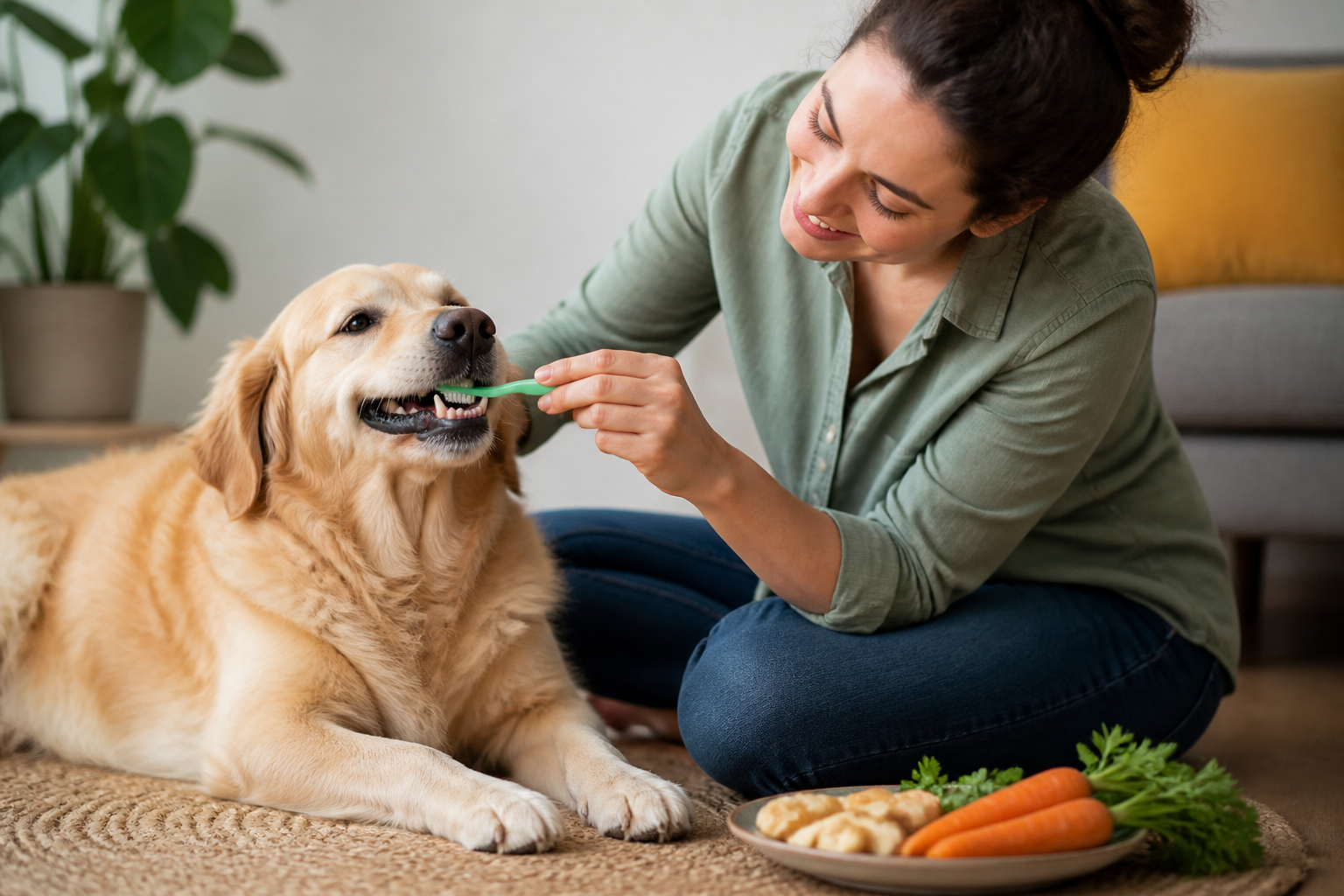
Step 1: Apply a small amount of organic, unrefined coconut oil to a soft dog toothbrush or a piece of clean gauze. Step 2: Gently lift your dog's lips and brush in a circular motion. Focus on the area where the tooth meets the gum. Step 3: Let your dog lick a tiny bit of the oil afterward. This can help fight bacteria on the tongue.
DIY Natural Toothpaste Options
You can make a simple paste at home using basic ingredients. Mix a tablespoon of coconut oil with a pinch of cinnamon. Cinnamon has antioxidant properties and can help with breath. Some owners also add a tiny amount of parsley for extra freshness. Never use baking soda in large amounts, as it can upset a dog's stomach if swallowed.
Mechanical Cleaning with Raw Bones
In the wild, canines kept their teeth clean by gnawing on the bones of their prey. This mechanical action scrapes the surface of the teeth and massages the gums. You can replicate this at home with raw, meaty bones.
Choosing the Right Bone
Never give your dog cooked bones. Cooking makes bones brittle. They can splinter and cause internal injuries or choking. Raw bones are softer and more flexible. Choose a bone that is appropriate for your dog's size. A bone that is too small can be swallowed whole. A bone that is too hard, like a large marrow bone from a cow, can sometimes cause tooth fractures in aggressive chewers.
Safety First with Chewing
Always supervise your dog when they are chewing on a bone. If the bone starts to splinter or becomes small enough to swallow, take it away immediately. Raw bones should be handled with the same food safety rules as raw meat. Wash your hands and clean the area where your dog was chewing to prevent the spread of bacteria.
Vet Tip: If your dog has existing dental issues like loose teeth or thin enamel, avoid hard bones. Consult your veterinarian to see if your dog's mouth is healthy enough for recreational bone chewing.
Natural Dental Chews and Toys
If you are not comfortable with raw bones, many natural dental chews provide similar benefits. Brands like Greenies use a flexible texture that allows the tooth to sink in, scraping away plaque down to the gum line. You can compare options in our selection of Greenies products.
Rubber Toys for Dental Health
Toys can also be a part of a natural cleaning routine. Our collection includes durable rubber toys from brands like Kong. These toys often have ridges or nubs designed to clean teeth as the dog chews. You can even smear a little coconut oil or natural peanut butter inside the ridges to encourage longer chewing sessions.
The Role of Cotton Rope Toys
Rope toys act like dental floss. When a dog bites down on the cotton fibers, the strands slide between the teeth. This helps remove food particles and plaque from hard to reach places. Make sure to replace rope toys once they start to fray. Swallowing loose strings can lead to serious digestive blockages.
Fruits and Vegetables That Clean Teeth
Certain crunchy foods act as natural toothbrushes. They require a lot of chewing, which stimulates saliva production and mechanically cleans the tooth surface.
- Carrots: Raw carrots are high in fiber and very crunchy. They are a low calorie treat that helps scrape off plaque.
- Apples: Slices of apple can help freshen breath and clean teeth. Always remove the seeds and the core first.
- Celery: Many dogs enjoy the crunch of celery. The long fibers can help clean between teeth much like a rope toy.
While these are helpful, they are not a substitute for brushing. They contain natural sugars, so they should be given in moderation as part of a balanced diet.
Supplements and Water Additives
Sometimes the best way to clean teeth is from the inside out. Certain natural supplements change the chemistry of the saliva to make it harder for plaque to stick.
Seaweed and Kelp Supplements
Specific types of brown seaweed are known to improve oral health. When ingested, the compounds in the seaweed enter the bloodstream and eventually reach the saliva. This helps soften existing tartar and prevents new plaque from forming. This is a very "hands off" way to support dental health for dogs that do not enjoy brushing.
Natural Water Additives
Some water additives use enzymes or green tea extract to fight bacteria in the mouth. These are simply added to the water bowl. They work every time your dog takes a drink. Look for products that are free from artificial flavors and dyes to keep the routine as natural as possible. OxyFresh Pet Dental Water Additive is one brushless option designed for a dog's daily routine.
The Importance of a Quality Diet
The food your dog eats every day has a massive impact on their dental health. There is a common myth that all dry kibble cleans teeth. In reality, most kibble is small and shatters easily. It does not provide much mechanical cleaning.
Prescription Dental Diets
For dogs prone to heavy tartar, a specialized diet might be necessary. Some brands, like Farmina Vet Life, offer formulations specifically for health management. These larger, fibrous kibbles are designed to stay intact longer, forcing the dog to chew and scrape their teeth.
Our pharmacy carries FDA approved medications and prescription pet foods through a partnership with Pet's Choice. If your vet recommends a specific dental diet or a treatment for a mouth infection, you can easily manage those needs through us. Using a prescription diet alongside natural treats is a great way to balance clinical needs with a holistic lifestyle.
Key Takeaway: Diet is the foundation of oral health. Combining high quality nutrition with natural mechanical cleaning provides the best defense against dental disease.
How to Transition Your Dog to a Dental Routine
Most dogs are not born loving the idea of a toothbrush. You need to introduce the process slowly to ensure they stay calm and cooperative. For more brushing guidance, review these pet dental care tips.
Step 1: Get them used to your touch. Spend a few days just lifting their lips and touching their teeth with your finger. Step 2: Introduce the flavor. Let them lick the coconut oil or natural toothpaste off your finger or the brush. Step 3: Start small. Brush just the front teeth for a few seconds. Give them a high value treat afterward. Step 4: Gradually increase the time. Work your way to the back molars over several weeks.
If your dog remains very resistant, do not force the issue. Stress can make the experience negative for both of you. In these cases, rely more heavily on natural chews, water additives, and crunchy vegetables to do the work.
Recognizing Signs of Dental Trouble
Natural cleaning is a preventive measure. It cannot fix advanced dental disease. It is important to know when the "natural" approach is no longer enough and a vet visit is required.
- Persistent Bad Breath: While "dog breath" is normal, a truly foul or rotting smell indicates infection.
- Bleeding Gums: If you see blood on their chew toys or when you brush, their gums are likely inflamed.
- Discolored Teeth: Yellow or brown deposits that do not come off with brushing are tartar.
- Changes in Eating: If your dog starts dropping food or only chewing on one side, they may be in pain.
- Bumps or Swelling: Any unusual lumps on the gums or swelling under the eye can signal a tooth root abscess.
Vet Tip: Dental health affects the whole body. Bacteria from a mouth infection can enter the bloodstream and damage the heart, liver, and kidneys. Regular veterinary checkups are the only way to ensure hidden problems are caught early.
The Value of Professional Cleaning
Even with the best natural routine, some dogs are genetically predisposed to dental issues. Smaller breeds and flat faced dogs often have crowded teeth. This makes natural cleaning much harder. A professional cleaning under anesthesia allows the vet to clean deep under the gum line where brushes cannot reach. They can also take X-rays to check for bone loss. Think of natural home care as the daily maintenance that makes these professional cleanings less frequent and less complicated.
Summary of Natural Dental Care
Caring for your dog's mouth naturally is about consistency and variety. There is no single "magic" solution. Instead, a combination of methods works best.
- Brush at least three times a week with coconut oil or a natural paste.
- Provide safe, raw bones or natural dental chews for mechanical scraping.
- Use crunchy vegetables like carrots as healthy, tooth cleaning treats.
- Add seaweed or natural water additives to support healthy saliva.
- Monitor your dog's mouth regularly for signs of pain or infection.
At BaxterBoo, we want to help you keep your dog's smile bright and healthy. By choosing the right toys and supplements, you can create a routine that feels like play rather than a chore. For more ideas, explore these dental chews for dogs.
Bottom line: Natural dental care is a lifelong commitment that improves your dog's breath and their overall quality of life.
Conclusion
Natural dental care is an achievable goal for every pet owner. By using simple tools like coconut oil, raw bones, and crunchy vegetables, you can significantly reduce plaque buildup. These habits do more than just freshen breath. They protect your dog from the pain and systemic health risks associated with gum disease. Remember to move slowly and keep the experience positive for your pet. Our Medical and Mobility category offers many of the supplements and dental aids mentioned here to help you get started. For repeat-purchase dental supplies, you can also explore our Autoship programme. For the best results, pair your home routine with regular veterinary exams and a high quality diet.
FAQ
Do carrots really clean a dog's teeth?
Carrots provide mechanical cleaning as your dog chews on the hard, fibrous surface. This helps scrape away soft plaque before it can harden into tartar. However, carrots also contain natural sugars and should be viewed as a supplement to brushing, not a total replacement.
Is coconut oil safe for cleaning a dog's teeth every day?
Yes, coconut oil is generally safe for daily use in small amounts. Its antibacterial properties help reduce the bacteria that cause plaque and bad breath. If your dog has a history of pancreatitis or is on a very low fat diet, check with your vet before adding coconut oil to their routine.
Can I use human baking soda toothpaste on my dog?
You should never use human toothpaste on a dog because it often contains xylitol or fluoride, which are toxic to pets. While plain baking soda is sometimes used in DIY dog pastes, it can be abrasive and may cause stomach upset if swallowed. It is much safer to use a dedicated enzymatic dog toothpaste or plain coconut oil.
How often should I use natural cleaning methods?
Ideally, you should aim to clean your dog's teeth every day. Plaque begins to harden into tartar within 24 to 48 hours, so daily intervention is the most effective. If daily brushing is not possible, try to incorporate dental chews or crunchy vegetables on the days you skip brushing.






