
 Save 15% on your 1st Autoship learn more

 Email us
 Live Chat
 FAQs
FAQs





Introduction
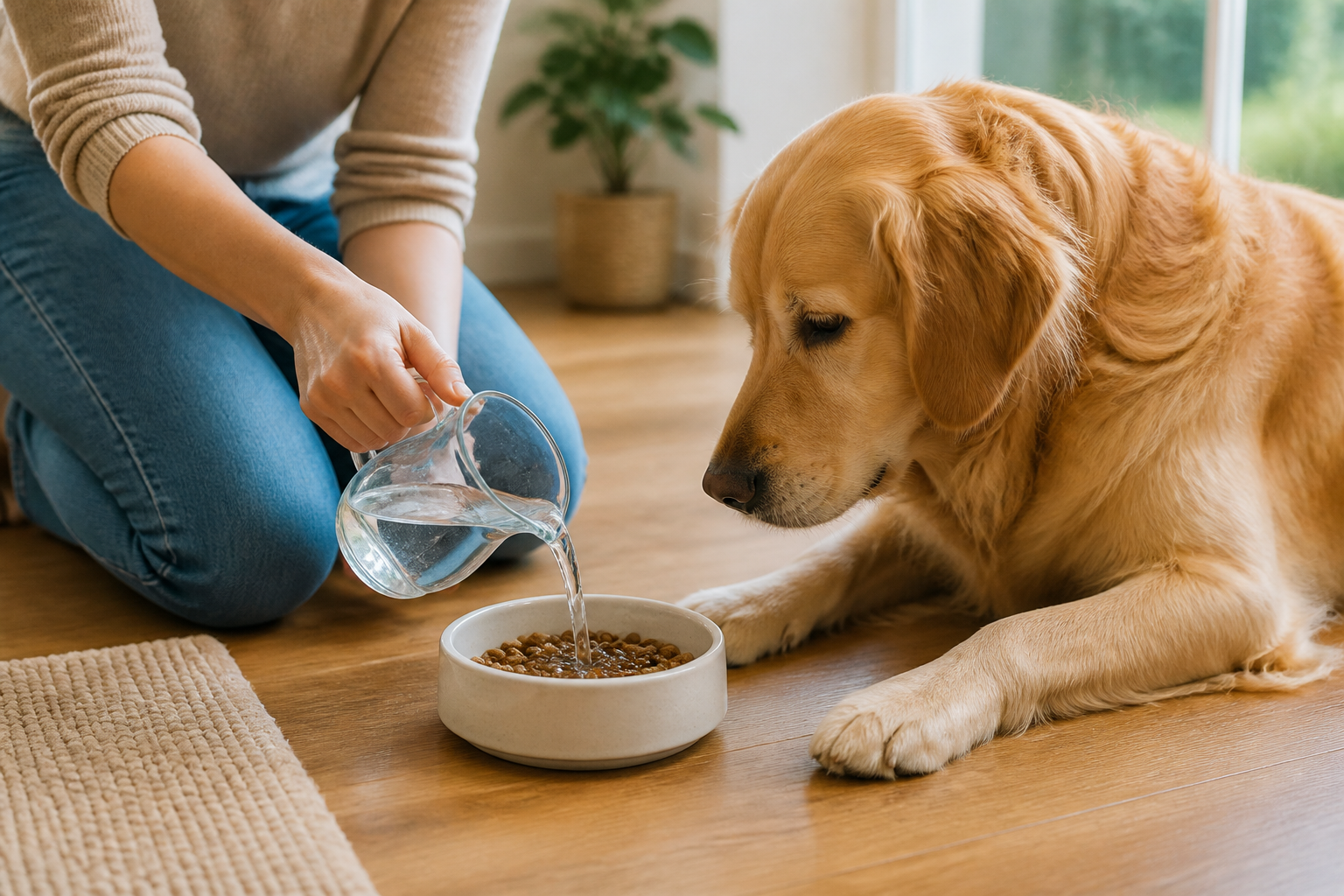
You might notice your dog standing over their bowl, hesitating to take that first bite of crunchy kibble. Perhaps they are an older pet with a few missing teeth, or a young puppy finding hard biscuits a bit too much for their developing mouth. When a dog refuses dry food, it often creates a sense of worry for the owner. At BaxterBoo, we understand that mealtime is about more than just calories. It is a moment of connection and comfort. This guide explores the most effective ways to add moisture to your dog's diet. We will cover simple kitchen techniques and premium additions like broths and toppers. By the end of this article, you will know exactly how to make every meal more accessible and appetizing for your companion. Softening food can improve hydration and support long term wellness.
Why You Might Need to Soften Dry Dog Food
Dry kibble is a convenient and shelf stable way to feed your dog. However, its hard texture is not always the best fit for every life stage or health condition. Some dogs simply prefer a texture that mimics the fresh meat their ancestors ate. Others have physical needs that make hard biscuits difficult to manage. Understanding the "why" behind softening food helps you choose the best method for your specific pet.
Supporting Dental Health and Comfort
Dental issues are one of the most common reasons owners look into how to soften dry dog food. Senior dogs often struggle with gum sensitivity, loose teeth, or general oral pain. When every bite causes discomfort, a dog may start to lose weight or skip meals entirely. Softening the food removes the need for forceful crunching. This allows them to eat without pain.
Even younger dogs can benefit from a softer texture if they have recently had a dental cleaning or tooth extraction. During the recovery period, your veterinarian will likely recommend a soft diet. Instead of buying entirely new food, you can often adapt their current kibble.
Vet Tip: If you notice your dog dropping food, chewing on only one side of their mouth, or bleeding from the gums, schedule a dental exam. While softening food helps with the symptoms of dental pain, it does not treat the underlying cause of decay or infection.
Helping Puppies Transition to Solids
Puppies go through a significant transition when they move from mother's milk or milk replacer to solid food. Their "milk teeth" are sharp but small. They do not always have the jaw strength to crush dense kibble meant for adult dogs. By softening the biscuits, you create a mash that is much easier for a puppy to lap up. This helps ensure they get the dense nutrition they need during their fastest growth phase.
Encouraging Hydration in All Life Stages
Many dogs do not drink enough standing water from a bowl. This is particularly true for certain breeds or older pets who may have decreased thirst drives. Since dry kibble typically contains only about 10 percent moisture, it does not contribute much to their daily water intake. By adding liquid directly to the food, you ensure they are hydrating while they eat. Proper hydration supports kidney function, aids in temperature regulation, and keeps their skin and coat healthy.
Enhancing Scent for Picky Eaters
A dog’s sense of smell is their primary way of experiencing the world. It is also their primary way of experiencing food. Dry kibble has a relatively mild scent when it is cold and dry. When you add warm liquid, it releases the fats and aromas within the food. This makes the meal much more enticing. For a dog who has lost some interest in their food due to age or illness, the increased aroma can be the difference between an empty bowl and a full stomach.
Key Takeaway: Softening dry food is a versatile tool for managing dental pain, improving hydration, and making meals more appealing to picky or senior dogs.
The Best Methods for Softening Kibble
There are several ways to change the texture of your dog's food. The best choice depends on your dog's nutritional needs and how much time you have to prepare the meal. We always recommend starting with the simplest method and observing your dog's reaction.
Method 1: The Warm Water Soak
Adding warm water is the most cost effective and straightforward way to soften dog food. Most dogs accept this method without any issues because it does not change the flavor profile of their familiar diet.
Step 1: Measure your dog's standard portion of dry kibble into a clean bowl. / Ensure you are using their regular daily amount to maintain weight.
Step 2: Add warm water to the bowl. / Use a ratio of roughly one part water to two parts kibble, but you can adjust this based on how soft you want the food to be.
Step 3: Let the bowl sit for 10 to 15 minutes. / The kibble will slowly absorb the water and expand in size.
Step 4: Stir the mixture. / This helps distribute the moisture and creates a consistent texture throughout the meal.
Note: Use warm water, not boiling water. Boiling water can destroy some of the heat sensitive vitamins and minerals added to the kibble during manufacturing. It also creates a burn risk for your dog's mouth.
Method 2: Adding Nutrient Dense Broths
If water does not interest your dog, a pet safe broth is an excellent alternative. Broths add a punch of flavor and extra nutrients like collagen and amino acids. If you want a place to start, our dog food topper and broth category is a helpful option to browse for mealtime mixers.
Step 1: Choose a pet safe broth. / Avoid human grade canned broths, as they often contain high levels of sodium, onions, or garlic, which are toxic to dogs.
Step 2: Warm the broth slightly. / You can do this on the stove or in a microwave safe container.
Step 3: Pour the broth over the dry biscuits. / Allow it to soak for at least 10 minutes.
Step 4: Mash with a fork if needed. / For dogs with severe dental issues, mashing the soaked kibble creates a pate like consistency that requires zero chewing.
Method 3: Mixing with Wet Food or Toppers
Mixing wet and dry food is often called "topper feeding." This method provides a variety of textures and can significantly increase the protein content of the meal. Brands like our selection of Stella & Chewy's products or our selection of The Honest Kitchen products offer many options that pair perfectly with dry kibble.
Step 1: Reduce the amount of dry kibble. / Since you are adding wet food, you must remove some dry food to avoid overfeeding.
Step 2: Add a few tablespoons of wet food. / You can use canned food or pouches.
Step 3: Add a splash of warm water. / This helps the juices from the wet food coat the dry biscuits more effectively.
Step 4: Mix thoroughly. / Ensure the wet food is well incorporated so your dog does not just "pick out" the soft parts and leave the dry kibble behind.
Method 4: Using the Microwave Safely
If you are in a rush, the microwave can speed up the softening process. The heat helps the moisture penetrate the center of the kibble much faster than a room temperature soak.
Step 1: Place the kibble and water in a microwave safe bowl. / Never use plastic bowls that are not rated for microwave use.
Step 2: Heat on low for 15 to 20 seconds. / You are only looking to warm the liquid, not cook the food.
Step 3: Let it stand for one minute. / This allows the heat to distribute evenly.
Step 4: Check the temperature with your finger. / Always test the center of the food to ensure there are no "hot spots" that could burn your dog's tongue.
Bottom line: Warm water is the simplest softening agent, while pet safe broths and wet food mixers provide extra flavor and nutrition for more demanding eaters.
Managing Mealtime for Seniors and Dogs with Health Conditions
As dogs age, their nutritional needs change. They may require specific diets for joint support, kidney health, or weight management. Softening food becomes a vital part of managing these conditions. If your dog is on a prescription diet, our pet pharmacy category can help you explore prescription options that may fit their needs.
Our pharmacy provides access to FDA approved medications and prescription pet foods through our partnership with Pet's Choice. If your veterinarian has prescribed a specific diet for a chronic condition, softening that kibble can help ensure your dog actually consumes the medicine or nutrients they need.
Hydration and Kidney Support
For dogs managing kidney issues, moisture is everything. The kidneys work hard to filter toxins, and they need plenty of water to do so. Softened kibble acts as a "stealth" hydration method. It is much easier to get a dog to eat a bowl of hydrated food than it is to force them to drink an extra cup of water.
Weight Management
Obesity is a major concern for many household pets. Interestingly, softening food can help with weight loss. When you add water to kibble, the food expands. This fills the dog's stomach more quickly, helping them feel satiated on fewer calories. It also encourages them to eat more slowly. Dogs that "inhale" their food are often more prone to digestive upset and weight gain.
Key Takeaway: Softening food is not just about texture. It is a functional way to support dogs with kidney disease, obesity, and other age related health concerns.
Tips for a Successful Transition
If your dog has eaten dry kibble their entire life, a sudden change in texture might be confusing. Some dogs are suspicious of "soggy" food at first. Following a structured approach can help them adjust without stress.
- Start with a light crunch: For the first few days, only let the food soak for 2 or 3 minutes. This leaves a bit of crunch in the center while softening the outside.
- Consistency is key: Try to use the same amount of liquid at every meal. Dogs thrive on routine and predictable textures.
- Watch the temperature: Most dogs prefer their food at roughly body temperature. Too cold and the aroma is muted. Too hot and it becomes unpalatable.
- Monitor the stool: Whenever you add new liquids like broth or wet food, keep an eye on your dog's digestion. If they experience loose stools, reduce the amount of liquid and slowly build back up.
- The 10 Percent Rule: If you are using toppers or broths, ensure these additions do not make up more than 10 percent of your dog's total daily calorie intake. This prevents nutritional imbalances.
Vet Tip: If your dog suddenly stops eating or shows a dramatic change in appetite, do not just try to "fix" it by softening the food. A sudden loss of appetite can be a symptom of many underlying health issues. Consult your veterinarian to rule out illness before assuming it is just a preference for softer food.
Safety and Storage Considerations
Softened dog food requires more care than dry kibble. Once you add moisture to a dry product, you have changed its shelf life and safety profile.
Bacteria Concerns
Dry kibble is processed to be shelf stable at room temperature. When you add water or broth, you create an environment where bacteria can grow. Never leave softened food sitting out for more than 30 to 60 minutes. If your dog does not finish their meal within that window, throw the leftovers away.
Prepping in Advance
We generally do not recommend softening large batches of food in advance. However, if you must prepare food for the next meal, it must be stored in the refrigerator in an airtight container. Use it within 24 hours. Cold, softened food may be less appealing, so you might need to warm it slightly before serving.
Keeping Bowls Clean
Moist food leaves behind more residue than dry kibble. This residue can quickly become a breeding ground for mold and bacteria. Wash your dog's bowl with hot, soapy water after every meal where softened food was served. Stainless steel or ceramic bowls are much easier to keep sanitary than plastic ones.
Enhancing the Meal with Supplements
While you are already in the process of mixing and softening the food, it is the perfect time to add supplements. Many supplements come in powder or oil forms that blend perfectly into a softened food mash.
At BaxterBoo, we carry a wide range of supplements like our Cosequin supplement selection and our Zesty Paws supplement collection. Adding these to a water or broth soak ensures the supplement is evenly distributed. Your dog is less likely to pick around a pill or powder when it is integrated into a delicious, moist meal.
Useful Additions for Health:
- Probiotics: Help support a healthy gut, especially if you are transitioning to a new food.
- Omega Oils: Support skin and coat health. These mix very well with warm water and kibble.
- Pumpkin Puree: A great addition for dogs with sensitive stomachs. It adds fiber and moisture.
Bottom line: Always ensure that any food with added moisture is consumed quickly and that the bowl is cleaned thoroughly to prevent bacterial growth.
Conclusion
Learning how to soften dry dog food is one of the simplest things you can do to improve your pet's daily life. Whether you are helping a senior dog manage dental discomfort, encouraging a puppy to eat, or simply trying to keep your dog hydrated during the summer, these methods are effective and easy to implement. We recommend starting with simple warm water and exploring broths or wet food toppers if your dog needs more incentive. Our team at BaxterBoo has been helping pet owners find the right solutions since 2006. We carry over 500 brands to ensure you have the best selection for your dog's specific needs. If your dog's eating habits change significantly, remember to consult your veterinarian to ensure they are healthy and happy.
Ready to upgrade your dog's mealtime? Browse our collection of pet safe broths, wet food toppers, and high quality kibble. If you are looking for long term savings, consider our Autoship programme. You will save on your first order and receive a free MVP Rewards programme membership to earn rewards on every purchase.
FAQ
Can I leave softened dog food out all day for my dog?
No, you should never leave softened dog food out for more than an hour. Once moisture is added to kibble, it becomes a breeding ground for bacteria and mold. If your dog does not eat the food within 30 to 60 minutes, discard the remains and wash the bowl thoroughly.
Does softening kibble cause more dental plaque?
While the mechanical action of chewing hard kibble can help scrape some plaque away, it is not a substitute for dental care. Softened food does not necessarily cause more plaque, but it does lack the slight cleaning benefit of dry biscuits. You should continue to brush your dog's teeth or provide dental chews regardless of food texture.
Can I use milk to soften my dog's dry food?
We do not recommend using cow's milk to soften dog food. Many dogs are lactose intolerant and can experience severe digestive upset, including gas and diarrhea. If you want to use a liquid other than water, a pet safe bone broth or a specially formulated "dog milk" supplement is a much safer choice.
How long should I let the kibble soak before serving?
For most brands of kibble, a soak time of 10 to 15 minutes is ideal. This allows the water to reach the center of the biscuit without making it completely fall apart. If you are using cold water, it may take up to 30 minutes, which is why we recommend using warm water to speed up the process.






