Save 15% on your 1st Autoship learn more

 Email us
 Live Chat
 FAQs
FAQs





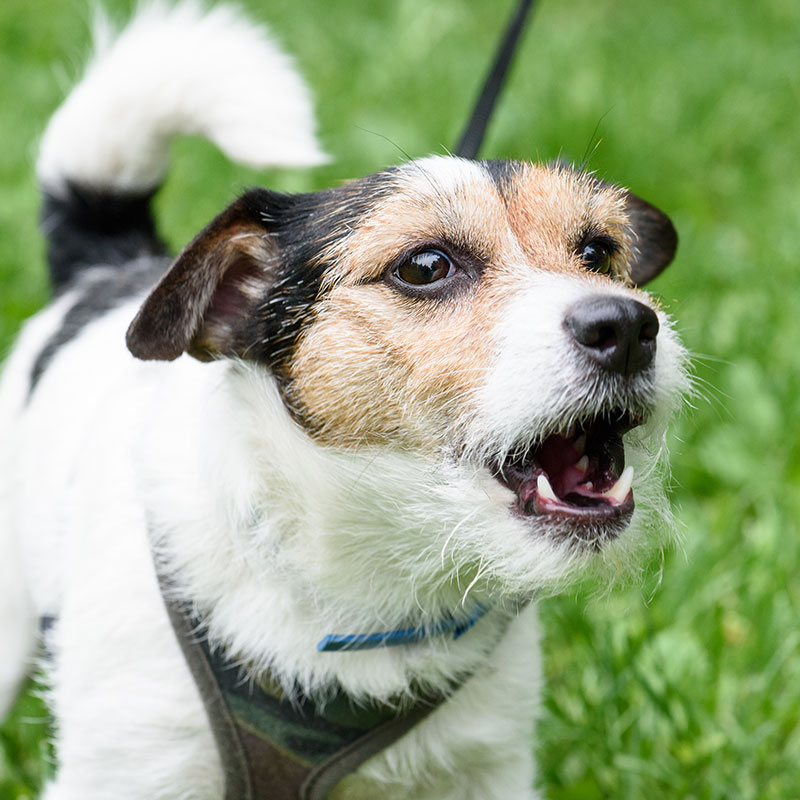
Your dog has a variety of ways to communicate with you, from using its body language to vocalizing with whines, growling and barking. These can all help you understand what your pet needs or how he is feeling. However, when barking becomes excessive due to boredom, to get your attention or because of anxiety, it can become troublesome for both you and your neighbors. If your dog barks too much, there are a few strategies you can use to curb this behavior and train your dog to bark only when necessary.
1. Stay Calm
If you become frustrated at your dog when he barks without reason and yell at him to stop, your tone of voice will probably only excite him further and increase the behavior. When he starts barking, redirect him to a different activity, such as a game or practicing a trick. Reward your dog with a naturally-flavored treat during the session and to offer your dog positive reinforcement if he responds to your calm command of, “No bark” or “Quiet.”
2. Use Click Training
The sooner you teach your dog a quiet or hush command, the lower the risk that he will be a problem barker as he grows. Consider using click training, which teaches your dog to respond to a click device . Help your dog to understand that the click sound means a treat is coming if he obeys your command. When your dog barks, use the clicker, and if he stops barking, repeat the command, such as “Hush, good,” as you offer the treat. Your dog will learn to associate the click and the accompanying command with his favorite treat, which can help you control problem barking.
3. Increase Daily Exercise
One main reason dogs bark excessively is because of boredom. Some high-energy breeds like collies, shepherds and terriers may be more likely to develop barking issues because they are not exercised enough. If your dog barks and paces your yard, he may be trying to tell you that he needs more than one short walk per day. A trip to the dog park a few times a week with a high-flying chase toy can drain your dog’s excess energy. Remember to provide your dog with plenty of fresh water on these outings, especially on warm summer days.
4. Interrupt the Behavior
As mentioned earlier, shouting at your dog when he barks for no reason usually has little effect. A sharp noise that gets your dog’s attention and diverts the behavior, such as a pet corrector device , may be more useful. This is a simple training tool that makes a hissing noise and works to stop the unwanted behavior. Remember to use an accompanying vocal command as well, so your dog can associate the command with the sound.
5. Ignore Then Reward
Your dog may bark to get your attention, especially if they are on a steady daily schedule and know when it is time for a walk or his evening meal. However, giving your dog what he wants when he barks only encourages the behavior and over time, it may be harder to break the behavior. One way to deter this is to ignore your dog when he starts to bark for what he wants. If he barks at mealtime, pause in filling his dish and make him sit quietly before he receives the food. If he barks as you get his leash ready for his walk, set it down and turn your back until he quiets. Once he does, offer him an organic training treat so he learns that staying quiet will earn him a tasty reward.
6. Use Electronic Devices
Sometimes nuisance barking can be difficult to quell, even with training and positive reinforcement. If you find that your dog has not responded well to other kinds of techniques, you may want to consider using electronic training devices, such as a vibration collar . This type of collar is programmed to startle your dog out of excessive barking with a sudden and harmless vibration. When worn consistently, your dog will learn when his barking is appropriate, such as to let you know when someone comes to the door. You may want to ask your vet about these collars and whether your dog is likely to respond to this type of training.
7. Start Early
The older your dog is, the more difficult it can be to curb nuisance barking, so it is wise to train your puppy early on. Distracting them with chew toys and giving them a positive way to expend their excess energy can prevent the formation of bad barking habits later on. If you adopted a young dog from a shelter, try to get him on a daily training schedule as soon as possible so he understands that barking for no reason is not acceptable behavior.
8. Stay the Course
When your dog is a problem barker, it can be a frustrating experience when you first begin, and you may not see success right away. However, it is important that you do not abandon the training and be patient when your dog makes mistakes. After all, you are learning together and forming a bond of trust, and with trust and perseverance, you are likely to see results.
When your dog barks excessively, the cause can be difficult to figure out at first. Speak with your vet about which kind of training is best for your dog’s breed, age and temperament and remember that proper exercise, trust and patience are all keys to success.