
 Save 15% on your 1st Autoship learn more

 Email us
 Live Chat
 FAQs
FAQs





Introduction
You might notice it when your dog leans in for a greeting: a scent that is a bit more pungent than usual. Bad breath is often the first sign that oral hygiene needs attention. Many dog owners are looking for natural ways to support dental health without the stress of a traditional toothbrushing session. Coconut oil has emerged as a popular choice for this very reason. At BaxterBoo, we have been helping pet parents navigate health and wellness since 2006. We know that the best solutions are the ones you can actually stick to every day. This post covers how coconut oil interacts with oral bacteria, the safest ways to use it, and how to tell if your dog needs more advanced care.
Quick Answer: Coconut oil is a helpful supplement for dog dental health because it contains lauric acid, which has antimicrobial properties. It can help reduce the bacteria that cause plaque and bad breath, though it should be used alongside regular brushing and professional cleanings.
The Science of Lauric Acid and Oral Health
To understand why coconut oil is effective, we have to look at its chemical makeup. Coconut oil is unique because it is composed mostly of medium chain triglycerides. The most important of these is lauric acid. This specific fatty acid makes up about 50 percent of the oil. When lauric acid interacts with saliva, it can help break down the cell walls of harmful bacteria.
In a dog's mouth, bacteria like Streptococcus mutans are the primary culprits behind plaque. These bacteria feed on sugars and starches left behind from meals. They create a sticky biofilm that eventually hardens into tartar. Lauric acid is particularly good at disrupting this biofilm. By reducing the bacterial load, coconut oil makes it harder for plaque to gain a foothold on the enamel.
This process is sometimes compared to "oil pulling" in humans. While dogs cannot swish oil around their mouths, the simple presence of the oil on the teeth and gums provides similar benefits. It acts as a mild antiseptic that works without the harsh chemicals found in some commercial dental products. It also creates a slippery surface on the teeth. This makes it slightly more difficult for new debris to stick to the surface between cleanings.
Key Takeaway: The lauric acid in coconut oil acts as a natural antimicrobial agent that disrupts the bacteria responsible for plaque and bad breath.
Choosing the Right Type of Coconut Oil
Not all oils are created equal. When you walk down the aisle of a store or browse our dog dental care category, you will see several different labels. The way the oil is processed determines how many of those beneficial fatty acids actually make it into your dog's mouth.
Virgin and Unrefined Options
You should always look for "virgin" or "unrefined" coconut oil. This means the oil was extracted from fresh coconut meat without the use of high heat or harsh chemicals. This cold pressed method preserves the lauric acid content. Refined coconut oil is often bleached and deodorized. This process can strip away the very nutrients that make the oil useful for dental care.
Organic Sourcing
Organic certification is another important factor. This ensures that the coconuts were grown without synthetic pesticides. Since your dog will be ingesting a small amount of the oil during the cleaning process, you want the purest product possible. A pure, organic oil should have a mild, pleasant coconut scent. If the oil has no smell at all, it has likely been heavily processed.
Avoiding Additives
Some brands add flavorings or sweeteners to make the oil more palatable to humans. You must avoid any product containing xylitol. While safe for humans, xylitol is highly toxic to dogs and can cause life threatening drops in blood sugar. Stick to one ingredient: 100 percent pure coconut oil.
Bottom line: Choose cold pressed, virgin, organic coconut oil to ensure the highest levels of lauric acid and the fewest chemical residues.
Step-by-Step Guide to Cleaning Teeth with Coconut Oil
Introducing a new routine to a dog requires patience. Some dogs love the taste of coconut oil immediately, while others might be suspicious of the texture. If your dog is not used to having their mouth handled, take it slow.
Step 1: The taste test. / Place a tiny amount of coconut oil on your finger and let your dog lick it off. This builds a positive association with the oil before you even touch their teeth.
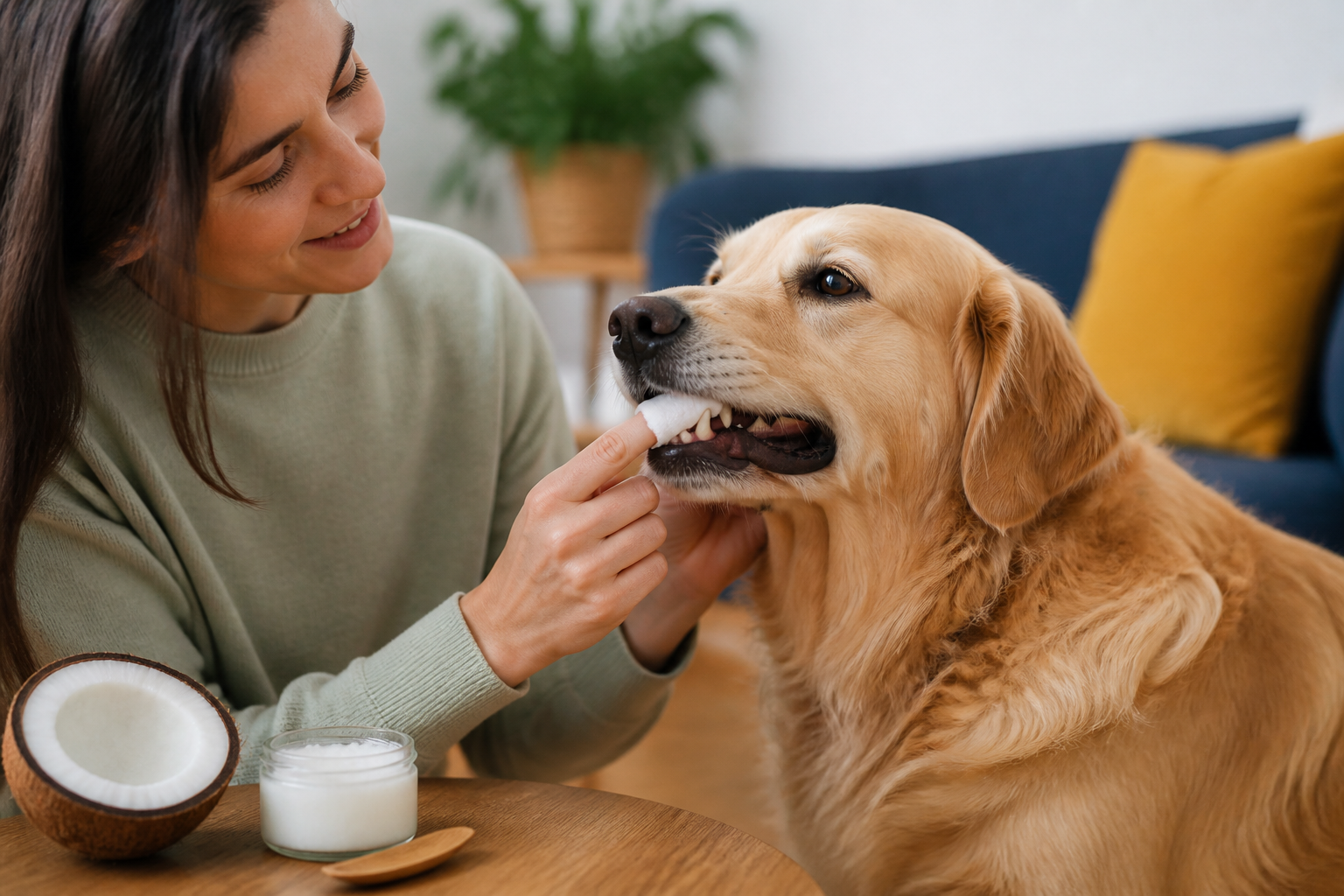
Step 2: Finger brushing. / Once they enjoy the taste, put a small amount of oil on your index finger. Gently rub it along the outside of their teeth and gums. Focus on the back molars where plaque accumulates most.
Step 3: Introduce a tool. / If your dog is comfortable with your finger, you can move to a soft silicone finger brush or a pet-specific toothbrush. Apply the oil to the bristles and brush in a circular motion. A product such as Pure and Natural Pet Organic Dental Solutions Canine Tooth Gel can also be used as part of a brushing routine.
Step 4: Consistency. / Aim for two to three times per week. While daily is best, a consistent schedule a few times a week is far better than a deep cleaning once a month.
Vet Tip: If you notice bleeding gums, loose teeth, or a sudden change in eating habits, stop the home routine and consult your veterinarian. These can be signs of advanced periodontal disease that require professional intervention.
Training Tips for a Cooperative Dog
If your dog resists having their mouth touched, you can still use coconut oil to help their dental health. For some, the direct approach is too stressful. You can try these alternative methods to get the oil where it needs to go.
Many owners find success by putting coconut oil on a textured chew toy. As the dog licks and chews the toy, the oil is spread across the teeth and gums. This turns a grooming task into a game. You can also mix a small amount into their food, though this is less effective for dental health than direct topical application. The direct contact is what really helps disrupt the bacteria on the teeth.
- Start with very short sessions of only 30 seconds.
- Reward your dog with praise or a low calorie treat after each session.
- Always stay calm and use a soothing voice.
- If the dog pulls away, give them a break and try again later.
For more ideas on building a cooperative routine, read these pet dental care tips.
Understanding the Risks and Limitations
While coconut oil is a great tool, it is not a magic wand. There are some practical considerations you need to manage. The most significant concern is the calorie count. Coconut oil is pure fat. It contains about 120 calories per tablespoon.
For a small dog, even a teaspoon a day can contribute to unwanted weight gain. If your dog is already struggling with their weight, you must account for these calories in their daily total. Excess fat can also lead to digestive upset. Some dogs may experience loose stools if the oil is introduced too quickly.
There is also the risk of pancreatitis. This is a serious condition where the pancreas becomes inflamed, often triggered by high fat meals. Dogs with a history of pancreatitis should generally avoid coconut oil. Always speak with your vet before adding a high fat supplement to the diet of a dog with a sensitive stomach.
Key Takeaway: Coconut oil is high in calories and fat, so it must be used in moderation to avoid weight gain or digestive issues like pancreatitis.
Determining the Correct Dosage
The amount of coconut oil you use should be based on your dog's size and their tolerance for fat. It is always better to start with less and work your way up.
For small dogs under 15 pounds, start with a tiny dab about the size of a pea. You can gradually increase this to a quarter teaspoon per day if they tolerate it well. Medium dogs between 15 and 40 pounds can usually handle a half teaspoon. Large dogs over 40 pounds might be able to have up to a full teaspoon.
Monitor your dog's stools closely during the first week. If you see any signs of diarrhea or if your dog seems lethargic, reduce the amount immediately. At our warehouse in Vernon Hills, we often talk to customers who are worried about their senior dogs. Seniors often have slower metabolisms, so they may need even smaller doses to maintain a healthy weight.
Integrating Coconut Oil into a Total Dental Plan
Coconut oil should be one piece of a larger puzzle. A complete dental plan for your dog includes nutrition, mechanical cleaning, and professional oversight.
The Role of Nutrition
What your dog eats affects their mouth environment. Diets high in simple carbohydrates can lead to more plaque buildup. Some dogs benefit from prescription dental diets. These kibbles are designed with a specific texture that helps scrub the teeth as the dog eats. Our pharmacy carries FDA-approved prescription pet foods and medications through our partnership with Pet's Choice. If your vet recommends a specific diet for dental health, we can help you fulfill that prescription easily.
Mechanical Cleaning
The physical action of brushing or chewing is what removes the bulk of the plaque. Coconut oil softens the plaque, but the brush or chew toy is what actually moves it away. Combine coconut oil with Virbac C.E.T. Enzymatic Oral Hygiene Chews for Dogs or natural dental treats. These items are designed to reach into the crevices between the teeth that a finger might miss.
Professional Cleanings
No home routine can remove tartar once it has hardened into calculus. This requires professional scaling under anesthesia by a veterinarian. Think of coconut oil as the daily maintenance that extends the time between these professional cleanings.
Bottom line: Use coconut oil as a supportive tool alongside mechanical brushing, high quality nutrition, and regular veterinary checkups.
For additional ideas, explore 10 dental chews for dogs.
Identifying Signs of Dental Distress
You should be aware of the signs that coconut oil is not enough. Dogs are very good at hiding pain. Often, they will continue to eat even if they have a painful tooth or infected gums.
Look for "pawning" at the mouth or dropping food while eating. If you see your dog chewing only on one side, they may have a problem on the other. Heavy drooling and a sudden aversion to hard treats are also red flags. If the gums look bright red or purple instead of a healthy pink, there is likely an underlying infection.
In these cases, a topical treatment like coconut oil is not the solution. Your dog may need antibiotics or a tooth extraction. Our pharmacy is a great resource for medications prescribed by your vet to treat these infections. We work closely with pet owners to ensure they have access to the specific treatments their dogs need for chronic health management.
Read more about warning signs of bad teeth in dogs if you are concerned about changes in your dog's mouth.
Comparing Coconut Oil to Other Natural Options
Many people ask how coconut oil compares to other natural dental aids. You might have heard of cinnamon, parsley, or even kelp supplements.
Cinnamon has mild antibacterial properties, but it can be irritating to some dogs' mouths if used in large amounts. Parsley is excellent for freshening breath temporarily, but it does very little to actually combat plaque. Kelp supplements are often added to food to change the chemistry of the saliva, making plaque less likely to stick.
Coconut oil stands out because it offers both chemical benefits from the lauric acid and physical benefits from the oily texture. It is also highly palatable. Most dogs view it as a treat, which makes the grooming process much easier for the owner. It is one of the most versatile and safe options available when used correctly.
The Importance of Starting Early
The best time to start a dental routine is when your dog is a puppy. Puppies have very clean teeth and healthy gums. By starting with coconut oil and gentle handling now, you prevent the fear and resistance that often comes with adult dogs.
Even if you have an older dog, it is never too late to start. You just have to move more slowly. Senior dogs are more prone to dental issues, so they have the most to gain from a consistent routine. Keeping the mouth healthy can actually improve their overall lifespan. Chronic dental infections can send bacteria into the bloodstream, which may impact the heart and kidneys over time.
We want every pet to live a long, comfortable life. Small habits like a coconut oil rub can make a massive difference over several years. It is a low cost, high reward addition to your weekly care schedule.
Conclusion
Coconut oil is a practical and effective way to support your dog's dental hygiene. Its natural antimicrobial properties help manage the bacteria that lead to plaque and bad breath. When you choose a high quality, unrefined product and use it in moderation, it becomes a valuable tool in your grooming kit. Remember to start with small amounts to avoid digestive upset and always keep an eye on your dog's overall calorie intake. While it cannot replace the need for professional veterinary cleanings, it can certainly make those visits easier.
- Use virgin, organic coconut oil for the best results.
- Introduce the oil slowly to prevent stomach issues.
- Combine oil with brushing or textured chew toys.
- Monitor for signs of pain or infection that require a vet.
Bottom line: Coconut oil is an excellent natural supplement for oral health, but it works best when integrated into a comprehensive care plan that includes professional veterinary guidance.
If you are looking for more ways to support your dog's wellness, explore our full range of dental care supplies at BaxterBoo. From specialized toothbrushes to dental-friendly toys, we have everything you need to keep those puppy kisses fresh. Consider signing up for our Autoship programme to save on your favorite dental treats and health supplements so you never run out.
FAQ
Does coconut oil actually remove tartar from a dog's teeth?
Coconut oil cannot remove tartar once it has hardened into calculus. It is effective at reducing the bacteria that form plaque, which is the soft film that eventually turns into tartar. To remove existing hardened tartar, your dog will need a professional dental scaling performed by a veterinarian.
Can coconut oil cause diarrhea in dogs?
Yes, coconut oil is very high in fat and can lead to loose stools or diarrhea if introduced too quickly or given in large amounts. It is important to start with a very small dab and gradually increase the dose over several weeks. If your dog has a sensitive stomach, talk to your vet before starting a coconut oil routine.
Is coconut oil safe for dogs with pancreatitis?
Dogs with a history of pancreatitis should generally avoid coconut oil and other high fat supplements. Pancreatitis is often triggered by fat intake and can be a life threatening condition. Always consult your veterinarian before adding coconut oil to the diet of a dog who has had pancreatic issues or is prone to obesity.
How often should I put coconut oil on my dog's teeth?
For the best results, you should aim to apply coconut oil to your dog's teeth and gums two to three times per week. While daily application is safe for most dogs as long as the calories are monitored, a few times a week is usually enough to see an improvement in breath and plaque levels. Consistency is more important than the frequency of any single session.






